Loading...
Anthony Ulrich of Brunswick vs Rafael Trujillo
Rafael Trujillo leads by 18.6 pts · 2 figures compared
…
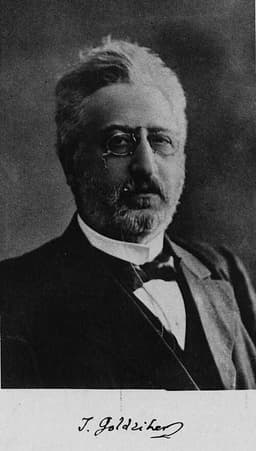
Anthony Ulrich of Brunswick
General · Modern
36.9Total
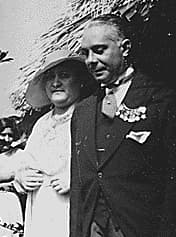
Rafael Trujillo
General · Modern
55.5Total
Basic Information
Born
1714
1891
Died
1774
1961
Era
Modern
Modern
Nationality
Brunswick
Dominican Republic
Occupation
General
General
Civilization
Western
Western
Score Comparison
Military (10%)
10.2
50.0
Political (20%)
27.9
45.0
Influence (20%)
50.2
57.2
Legacy (20%)
37.5
45.8
Leadership (15%)
35.4
80.0
Strategy (15%)
45.0
60.0
TOTAL
36.9
55.5
Anthony Ulrich of Brunswick — Complete Timeline
1740 AD
Appointed Generalissimo of Russian forcesPolitical Action◆ Major
After the death of Empress Anna, Anthony Ulrich was appointed Generalissimo of the Russian army during the brief reign of his infant son Ivan VI. He held supreme military command but lacked real power.
Military CommandRegency
Impact: national
1741 AD
Arrested and imprisoned by Empress ElizabethPolitical Action◆ Major
Following the coup that placed Elizabeth Petrovna on the throne, Anthony Ulrich was arrested along with his family. He was stripped of all titles and imprisoned in Kholmogory for the next 33 years.
CoupImprisonment
Impact: nationaltragic
1774 AD
Died in captivityOther◆ Major
Anthony Ulrich died in prison at Kholmogory after 33 years of confinement. He was buried in a simple grave, his death marking the end of the Brunswick line's claim to the Russian throne.
DeathImprisonment
Impact: nationaltragic
Rafael Trujillo — Complete Timeline
1930 AD
1930 Dominican Republic coup d'étatPolitical Action
Trujillo, as commander of the National Army, staged a coup against President Horacio V
CoupDictatorshipPower Seizure
Impact: nationaldestructive
1937 AD
Parsley MassacreWar◆ Major
Trujillo ordered the massacre of Haitians living in the Dominican border region. Soldiers killed an estimated 20,000 to 30,000 people using machetes. The event was named for the shibboleth used to distinguish Haitians from Dominicans.
MassacreGenocideEthnic Cleansing
Impact: regionaldestructive
1952 AD
Nationalization of the Dominican sugar industryReform
Trujillo used state power to acquire control over the sugar industry, the country's main economic sector. He and his family became the largest landowners and sugar producers, enriching themselves while the state managed the industry.
Economic ControlCorruptionSugar Industry
Impact: nationaldestructive
1961 AD
Assassination of Rafael TrujilloPolitical Action
Trujillo was ambushed and killed by a group of Dominican dissidents on a highway near Ciudad Trujillo. The assassination was aided by the U.S. Central Intelligence Agency, which provided weapons. His death ended the dictatorship.
AssassinationRegime ChangeCIA Involvement
Impact: national
Expert Analysis
Origins
Anthony Ulrich of Brunswick (1714–1774) was born into the House of Brunswick-Bevern, a minor German princely family. He was the second son of Ferdinand Albert II, Duke of Brunswick. His early life was shaped by the political maneuvers of the Russian court, leading to his marriage to Grand Duchess Anna Leopoldovna, niece of Empress Anna of Russia. This union was orchestrated to secure the succession. Anthony had little formal military training but was thrust into high command due to his marriage.
Rafael Trujillo (1891–1961) was born in San Cristóbal, Dominican Republic, into a modest family of mixed heritage. His father was a storekeeper, and his mother a homemaker. Trujillo received limited formal education but showed early aptitude for organization and violence. He worked as a telegraph operator and later joined the National Guard during the U.S. occupation (1916–1924). His military training under U.S. Marines gave him discipline and connections.
Rise to Power
Anthony Ulrich's rise was entirely dynastic. In 1739, he married Grand Duchess Anna Leopoldovna, and after Empress Anna's death in 1740, their infant son Ivan VI became emperor. Anthony was appointed Generalissimo of the Russian army on November 12, 1740, despite having no military experience. His position was purely ceremonial. The real power lay with Anna's favorite, Ernst Biron, and later with Anna Leopoldovna as regent. Anthony's inability to assert authority led to his irrelevance.
Trujillo's rise was through calculated violence. In 1930, he led a coup against President Horacio Vásquez, using his position as commander of the National Army. After a brief period of puppet presidents, Trujillo was formally elected in 1930. He consolidated power by eliminating rivals, controlling the military, and creating a personality cult. Key turning point: the 1937 Parsley Massacre, which solidified his control over the border region and terrified opponents.
Leadership & Governance
Anthony Ulrich's leadership score of 35.4 reflects his ineffectiveness. As Generalissimo, he issued no decisive orders and failed to command loyalty. His governance was nonexistent; he was a pawn of the regent. After his arrest in 1741, he spent 33 years in captivity, unable to influence events. His political score of 27.9 indicates complete lack of agency.
Trujillo's leadership score of 80.0 shows his iron grip. He ruled with absolute control, using secret police (SIM), censorship, and assassinations. He modernized infrastructure but at the cost of human rights. His political score of 45.0 is moderate due to his reliance on coercion rather than consent. He nationalized the sugar industry, making his family the largest landowners. However, his economic policies enriched himself, not the nation.
Triumph & Tragedy
Anthony Ulrich's triumph was minimal: he fathered a future emperor and briefly held the title of Generalissimo. His tragedy was profound: he lost his son, his freedom, and died in obscurity. He scored 10.2 in military and 37.5 in legacy, reflecting his negligible impact.
Trujillo's triumphs include stabilizing the Dominican economy after the U.S. occupation, building roads and schools, and maintaining order for 31 years. His tragedies are numerous: the Parsley Massacre (20,000–30,000 dead), the assassination of political opponents, and the corruption that left the country impoverished. His military score of 50.0 and legacy of 45.8 reflect his mixed record.
Character & Destiny
Anthony Ulrich was passive, indecisive, and ill-suited for leadership. His character led to his downfall: he failed to act when Empress Elizabeth staged her coup in 1741. Historical assessments paint him as a tragic figure, a victim of dynastic politics. His score of 36.9 total reflects his weakness.
Trujillo was ruthless, ambitious, and paranoid. He micromanaged the state and eliminated threats. His character led to his assassination in 1961, when dissidents, with CIA help, ambushed him. He died as he lived—by violence. His total score of 55.5 shows his effectiveness but also his moral bankruptcy.
Legacy
Anthony Ulrich's legacy is minimal. He is remembered as a footnote in Russian history, the father of the deposed Ivan VI. His influence score of 50.2 is inflated by his title, but his actual impact is near zero.
Trujillo's legacy is profound. He shaped the Dominican Republic's political culture, leaving a legacy of authoritarianism and economic inequality. His influence score of 57.2 reflects his lasting impact. The post-Trujillo era struggled with democracy, and his family's wealth still affects the economy. He is a symbol of dictatorship in Latin America.
Conclusion
Rafael Trujillo had far greater impact than Anthony Ulrich. With a total score of 55.5 versus 36.9, Trujillo's influence on his country's history is undeniable. While Anthony Ulrich was a passive victim, Trujillo was an active architect of a brutal regime. His legacy, though negative, is more significant. Therefore, Trujillo is the more impactful figure.
Rankings
🥇
Rafael TrujilloLeader
Mil: 50.0Pol: 45.0Inf: 57.2
55.5
🥈
Anthony Ulrich of Brunswick
Mil: 10.2Pol: 27.9Inf: 50.2
36.9
+18.6 behind
How This Comparison Works
Algorithm
Each figure is scored on 6 dimensions (0—100 scale) based on structured historical data: Military (10%), Political (20%), Influence (20%), Legacy (20%), Leadership (15%), Strategy (15%). The weighted total produces the final ranking.
Data Sources
Scores are computed from structured sub-indicators in the database. Scale factors adjust for era (Ancient ×0.85, Modern ×1.0) and civilization size (Eastern ×1.05, Other ×0.80) to account for differences in population and military scale.
Maximum 3 Figures
Comparisons are limited to 2—3 figures to ensure readability and statistical meaningfulness.
Error Margins
±5 points per dimension — Sub-scores are derived from historical records with inherent uncertainty. Two figures within 5 points on a dimension should be considered roughly equivalent in that area.
Total Score Accuracy
±3 points overall — The weighted combination of 6 dimensions produces a total score with approximately ±3 points of uncertainty. Differences of less than 3 points are not statistically significant— the figures are effectively tied.
Known Limitations
- Historical records are incomplete and uneven across civilizations
- Figures from oral-tradition societies may be underrepresented
- Occupation labels can misclassify multi-role figures
- Scores measure capability and impact, not moral character
- Quantitative scoring is a comparison tool, not absolute truth
Capability Radar
Military (10%) — Battles & Warfare
Battles
5
15
Win Rate
5
20
Expansion
5
10
Political (20%) — Governance & Reform
Reform
5
60
Diplomacy
5
50
Economy
5
55
Influence (20%) — Cultural & Global Reach
Cultural
5
40
Global
5
35
Legacy (20%) — Historical Impact
Historical
10
45
Longevity
5
30
Leadership (15%) — Power & Stability
Tenure
10
85
Stability
5
70
Strategy (15%) — Tactics & Innovation
Strategy
5
30
Tactics
5
25
Reform
5
40
Similar Comparisons
Comments & Discussion
No comments yet. Be the first to share your thoughts!