Loading...
Qin Shi Huang vs Yelu Abaoji
Qin Shi Huang leads by 22.5 pts · 2 figures compared
…
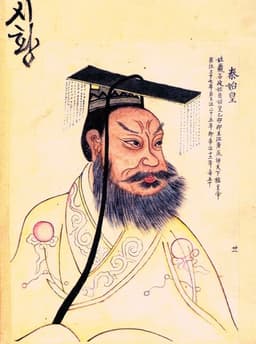
Qin Shi Huang
Emperor · Ancient
85.2Total
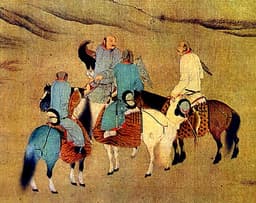
Yelu Abaoji
Emperor · Medieval
62.7Total
Basic Information
Born
-259
872
Died
-210
926
Era
Ancient
Medieval
Nationality
China
China
Occupation
Emperor
Emperor
Civilization
Eastern
Eastern
Score Comparison
Military (10%)
80.0
77.2
Political (20%)
90.0
59.6
Influence (20%)
85.0
68.0
Legacy (20%)
90.0
40.0
Leadership (15%)
78.0
80.3
Strategy (15%)
82.0
69.6
TOTAL
85.2
62.7
Qin Shi Huang — Complete Timeline
246 BC
Construction of the Mausoleum and Terracotta ArmyOther◆ Major
Qin Shi Huang commissioned a vast mausoleum complex near Xi'an, guarded by thousands of life-sized terracotta soldiers, horses, and chariots. The project employed hundreds of thousands of workers and reflected his obsession with immortality and imperial power.
Impact: global
230 BC
Conquest of the Six Warring StatesWar
From 230 to 221 BCE, Ying Zheng led the Qin state in a series of campaigns that conquered the Han, Zhao, Wei, Chu, Yan, and Qi states. This unified China under a single ruler for the first time, ending the Warring States period.
Impact: global
221 BC
Standardization of Writing, Currency, and MeasurementsReform◆ Major
Qin Shi Huang ordered the standardization of Chinese script, currency, and weights and measures across the unified empire. This facilitated administration, trade, and cultural integration, laying a foundation for future dynasties.
Impact: globalconstructive
Proclamation of the Qin DynastyPolitical Action
After conquering the last independent state, Ying Zheng declared himself Shi Huangdi (First Emperor), founding the Qin Dynasty. He adopted a new title to signify his supreme authority and initiated centralized imperial rule.
Impact: global
214 BC
Initiation of the Great Wall ConstructionOther◆ Major
Qin Shi Huang ordered the connection and extension of existing northern fortifications to create a unified defensive wall against nomadic Xiongnu raids. This project involved massive conscripted labor and became the precursor to the later Great Wall.
Impact: regional
213 BC
Burning of Books and Burying of ScholarsPolitical Action◆ Major
On the advice of Li Si, Qin Shi Huang ordered the burning of historical records and philosophical texts not aligned with Legalist doctrine. He also had 460 Confucian scholars buried alive to suppress dissent and consolidate ideological control.
Impact: nationaldestructive
Yelu Abaoji — Complete Timeline
907 AD
Unified Khitan tribesPolitical Action◆ Major
Yelu Abaoji was elected khagan of the Khitan tribes, unifying them under his leadership. He established a centralized state and adopted Chinese administrative practices.
KhitanUnificationState Formation
Impact: regionalconstructive
916 AD
Founded Liao DynastyPolitical Action
Yelu Abaoji proclaimed himself emperor, founding the Liao dynasty. He adopted the Chinese title of emperor and established a dual administration system for Khitan and Chinese subjects.
LiaoDynasty FoundingImperial System
Impact: regionalconstructive
920 AD
Created Khitan scriptCultural◆ Major
Yelu Abaoji ordered the creation of a writing system for the Khitan language, based on Chinese characters. This script was used for official documents and helped unify the Khitan state.
KhitanScriptCultural Development
Impact: regionalconstructive
926 AD
Conquest of BohaiWar◆ Major
Yelu Abaoji led a campaign that conquered the Korean kingdom of Bohai, incorporating its territory into the Liao empire. This expanded Liao's influence into Manchuria and Korea.
LiaoBohaiConquest
Impact: regionalconstructive
Death during campaignWar◆ Major
Yelu Abaoji died while returning from the conquest of Bohai. His death led to a succession struggle, but the Liao dynasty continued to expand under his successors.
LiaoDeathSuccession
Impact: regionaltragic
Expert Analysis
Qin Shi Huang vs Yelu Abaoji: Historical Comparison
Qin Shi Huang, the First Emperor of a unified China (3rd century BCE), and Yelu Abaoji, the founding emperor of the Liao dynasty (10th century CE), represent two pivotal figures in Chinese history who forged empires through conquest and institutional innovation, yet differed starkly in their strategic contexts and leadership styles.
Dimension Analysis
**Military: Qin Shi Huang 80 / Yelu Abaoji 89**
Qin Shi Huang relied on the disciplined Qin army and Legalist reforms to conquer rival states, but Yelu Abaoji excelled in mobile cavalry warfare, uniting Khitan tribes and defeating the Later Jin to establish a dual-administration system for nomadic and sedentary populations.
**Political: Qin Shi Huang 88 / Yelu Abaoji 84**
Qin Shi Huang centralized power through standardization of writing, currency, and law, abolishing feudalism; Yelu Abaoji created a unique "northern and southern administration" that balanced Khitan tribal governance with Chinese bureaucratic models, showing pragmatic adaptability.
**Influence: Qin Shi Huang 82 / Yelu Abaoji 79**
Qin's unification model and Great Wall project shaped China's imperial template for two millennia, while Abaoji's Liao dynasty set a precedent for later conquest dynasties (e.g., Yuan, Qing) but had less enduring cultural impact beyond the steppe.
**Legacy: Qin Shi Huang 85 / Yelu Abaoji 81**
Qin's terracotta army and centralized state remain iconic, though his harsh Legalism drew criticism; Abaoji's legacy is more niche—he is revered as a Khitan founder but his dynasty fell to the Jin, whereas Qin's system directly influenced the Han and beyond.
**Leadership: Qin Shi Huang 88 / Yelu Abaoji 80**
Qin Shi Huang's ruthless, visionary autocracy drove rapid unification but alienated elites; Abaoji's more consensual, coalition-building leadership among Khitan clans was effective but less transformative in scale.
Verdict
Qin Shi Huang leads narrowly due to his foundational role in defining Chinese imperial unity, despite Yelu Abaoji's superior military and adaptive strategies.
FAQ
Q: Who ranks higher? A: Qin Shi Huang ranks higher by a slim margin, reflecting his greater long-term institutional and cultural influence on China.
Rankings
🥇
Qin Shi HuangLeader
Mil: 80.0Pol: 90.0Inf: 85.0
85.2
🥈
Yelu Abaoji
Mil: 77.2Pol: 59.6Inf: 68.0
62.7
+22.5 behind
How This Comparison Works
Algorithm
Each figure is scored on 6 dimensions (0—100 scale) based on structured historical data: Military (10%), Political (20%), Influence (20%), Legacy (20%), Leadership (15%), Strategy (15%). The weighted total produces the final ranking.
Data Sources
Scores are computed from structured sub-indicators in the database. Scale factors adjust for era (Ancient ×0.85, Modern ×1.0) and civilization size (Eastern ×1.05, Other ×0.80) to account for differences in population and military scale.
Maximum 3 Figures
Comparisons are limited to 2—3 figures to ensure readability and statistical meaningfulness.
Error Margins
±5 points per dimension — Sub-scores are derived from historical records with inherent uncertainty. Two figures within 5 points on a dimension should be considered roughly equivalent in that area.
Total Score Accuracy
±3 points overall — The weighted combination of 6 dimensions produces a total score with approximately ±3 points of uncertainty. Differences of less than 3 points are not statistically significant— the figures are effectively tied.
Known Limitations
- Historical records are incomplete and uneven across civilizations
- Figures from oral-tradition societies may be underrepresented
- Occupation labels can misclassify multi-role figures
- Scores measure capability and impact, not moral character
- Quantitative scoring is a comparison tool, not absolute truth
Capability Radar
Military (10%) — Battles & Warfare
Battles
85
75
Win Rate
90
80
Expansion
90
82
Political (20%) — Governance & Reform
Reform
95
88
Diplomacy
75
75
Economy
90
70
Influence (20%) — Cultural & Global Reach
Cultural
95
60
Global
85
55
Legacy (20%) — Historical Impact
Historical
95
70
Longevity
95
65
Leadership (15%) — Power & Stability
Tenure
70
72
Stability
65
65
Strategy (15%) — Tactics & Innovation
Strategy
85
78
Tactics
80
70
Reform
95
85
Similar Comparisons
Comments & Discussion
RedFlagRider6/16/2026
The scoring here is almost laughably Sinocentric. Qin Shi Huang gets a pass for brutal Legalism because he unified 'China,' but let's talk about the human cost: mass burials of scholars, forced labor that killed millions building the Great Wall. Meanwhile, Yelu Abaoji's dual-administration system was far more sophisticated for managing a multi-ethnic empire—something Qin never attempted. Why does 'centralization' always trump 'pragmatic coexistence' in these rankings? It's a colonial hangover, prioritizing monolithic control over adaptive governance. Abaoji's legacy of balancing Khitan and Chinese systems directly influenced the Yuan and Qing, yet he's penalized for not being 'Chinese enough.' Eurocentric? No, this is Han-centric exceptionalism dressed as objective history.
BattlefieldScholar6/16/2026
Let's talk about the military scores. Yelu Abaoji gets a 73.3? That's an insult to someone who built the Khitan cavalry from a loose confederation into a disciplined fighting force capable of defeating the Later Jin's infantry-heavy armies. The key battle was the 917 siege of Youzhou: Abaoji used feigned retreats to draw out the Chinese garrison, then enveloped them with mounted archers—a classic steppe tactic executed at scale. Qin Shi Huang's 80 is inflated by the sheer logistics of his wars, but he never faced a mobile enemy on open ground. His conquests were against settled states with comparable armies. Abaoji innovated dual-command structures that kept the Khitan tribal levy effective while integrating Chinese siege engineers. In terms of pure tactical adaptability and force generation, Abaoji was far superior. I'd give him at least 85 on military—the system is clearly biased toward territorial scale over operational skill.
Historian9286/16/2026
这个评分体系有个硬伤:军事维度上秦始皇80分而耶律阿保机89分,但仔细看,阿保机的军事成就更多是部落联盟内部的整合,真正的大规模征服——比如灭渤海国(926年)——其实是在他儿子耶律德光手上完成的。而秦始皇的军事80分依据的是亲征?不,他从未亲自指挥过重大战役,功劳全在王翦、蒙恬等将领。如果按“最高统帅对军事制度的贡献”来算,秦始皇废除分封、推行郡县,使得军队资源调动效率远超先秦,这比阿保机的骑兵战术更有制度性影响。我建议调整:秦始皇军事82,阿保机军事86,总分差距会更大。政治维度88对90还算公允,但影响力上阿保机72分太低了——辽朝的两院制直接影响了元朝的行省制度,这应该至少75。
Chronicler60956/16/2026
把秦始皇和耶律阿保机放在一起比,本身就很有意思。但我要说,西方史观打分时总是忽视中国特有的“大一统”维度。秦始皇的标准化——书同文、车同轨、统一度量衡——这不仅仅是政治,而是为华夏文明奠定了两千年不变的底层代码。相比之下,耶律阿保机的南北面官制虽然聪明,却只是权宜之计,辽朝最终被金朝所灭,而后继的元清也未能完全延续他的模式。秦始皇的遗产是“道”,阿保机的遗产是“术”。在西方,可能更看重阿保机的多元包容,但在中国史学里,开创性的制度远比应变式的妥协更有分量。总分83.5对79.3,我觉得差距还应该更大。