Loading...
Fu Jian vs Yelu Abaoji
Fu Jian leads by 1.7 pts · 2 figures compared
…
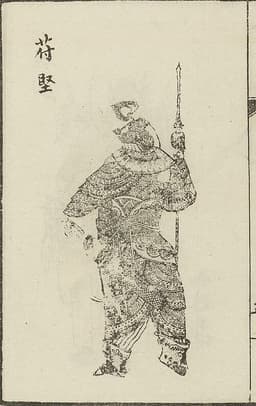
Fu Jian
Emperor · Ancient
64.4Total
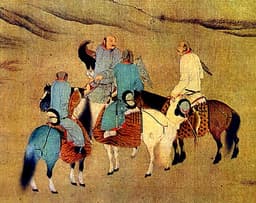
Yelu Abaoji
Emperor · Medieval
62.7Total
Basic Information
Born
338
872
Died
385
926
Era
Ancient
Medieval
Nationality
China
China
Occupation
Emperor
Emperor
Civilization
Eastern
Eastern
Score Comparison
Military (10%)
78.0
77.2
Political (20%)
72.0
59.6
Influence (20%)
59.0
68.0
Legacy (20%)
50.0
40.0
Leadership (15%)
85.0
80.3
Strategy (15%)
58.0
69.6
TOTAL
64.4
62.7
Fu Jian — Complete Timeline
370 AD
Conquest of Former YanWar◆ Major
Fu Jian's Former Qin forces conquered the Former Yan state, annexing its territory in northern China. This victory significantly expanded Former Qin's power and territory, bringing Fu Jian closer to unifying the north.
ConquestExpansion
Impact: regionalconstructive
376 AD
Conquest of Former LiangWar◆ Major
Fu Jian's forces conquered the Former Liang state in the northwest, incorporating its territory into Former Qin. This further consolidated his control over northern China.
ConquestExpansion
Impact: regionalconstructive
Conquest of DaiWar
Fu Jian's army conquered the Dai state, a Xianbei confederation in the north. This eliminated a rival and extended Former Qin's influence into the steppe region.
ConquestExpansion
Impact: regionalconstructive
379 AD
Capture of XiangyangWar
Fu Jian's forces captured the strategic city of Xiangyang from the Eastern Jin dynasty. This victory gave Former Qin a foothold south of the Huai River, setting the stage for the invasion that led to the Battle of Fei River.
ConquestCampaign
Impact: regionalconstructive
383 AD
Battle of Fei RiverWar
Fu Jian led a massive Former Qin army against the Eastern Jin dynasty at the Fei River. The Jin forces defeated the Qin army, causing a catastrophic rout. This defeat shattered Fu Jian's unification efforts and led to the collapse of Former Qin.
BattleUnificationDefeat
Impact: regionaltragic
Yelu Abaoji — Complete Timeline
907 AD
Unified Khitan tribesPolitical Action◆ Major
Yelu Abaoji was elected khagan of the Khitan tribes, unifying them under his leadership. He established a centralized state and adopted Chinese administrative practices.
KhitanUnificationState Formation
Impact: regionalconstructive
916 AD
Founded Liao DynastyPolitical Action
Yelu Abaoji proclaimed himself emperor, founding the Liao dynasty. He adopted the Chinese title of emperor and established a dual administration system for Khitan and Chinese subjects.
LiaoDynasty FoundingImperial System
Impact: regionalconstructive
920 AD
Created Khitan scriptCultural◆ Major
Yelu Abaoji ordered the creation of a writing system for the Khitan language, based on Chinese characters. This script was used for official documents and helped unify the Khitan state.
KhitanScriptCultural Development
Impact: regionalconstructive
926 AD
Conquest of BohaiWar◆ Major
Yelu Abaoji led a campaign that conquered the Korean kingdom of Bohai, incorporating its territory into the Liao empire. This expanded Liao's influence into Manchuria and Korea.
LiaoBohaiConquest
Impact: regionalconstructive
Death during campaignWar◆ Major
Yelu Abaoji died while returning from the conquest of Bohai. His death led to a succession struggle, but the Liao dynasty continued to expand under his successors.
LiaoDeathSuccession
Impact: regionaltragic
Expert Analysis
Fu Jian vs Yelu Abaoji
# The Dreamer and the Builder
In the autumn of 383, a vast army of over 800,000 men stretched across the plains of northern China, their banners blotting out the sun. At their head rode Fu Jian, Emperor of Former Qin, a man who had conquered nearly every rival in the north and now aimed to crush the last obstacle to total unification: the Eastern Jin dynasty. On the opposite bank of the Fei River, a much smaller Jin force waited, outnumbered perhaps ten to one. Fu Jian was confident, even dismissive. "If I throw my whips into the river," he reportedly boasted, "it would be enough to stem its flow." Within days, his empire would lie in ruins, and his name would become synonymous with overreach. Just over five centuries later, another northern conqueror, Yelu Abaoji, faced similar challenges but chose a radically different path. Where Fu Jian dreamed of a unified China under his rule, Abaoji built something more lasting: a dual-empire that embraced both steppe and sown, creating a dynasty that would endure for two centuries.
Origins
Fu Jian was born in 338 into the Di people, a semi-nomadic group that had settled in northern China during the chaos of the Sixteen Kingdoms period. His grandfather had founded the Former Qin state, but Fu Jian inherited a fragile realm surrounded by hostile neighbors. He grew up steeped in Chinese classical learning, tutored by Confucian scholars who filled his head with visions of a unified empire. The world he knew was one of constant war and shifting alliances, where a single defeat could erase a dynasty overnight. Fu Jian absorbed the Chinese ideal of the "Son of Heaven" who ruled all under heaven, and he believed with all his heart that he was destined to restore that unity.
Yelu Abaoji, born in 872, came from a different world entirely. The Khitan people of the Mongolian steppe had no tradition of imperial unity. Their society was tribal, fluid, and pragmatic. Abaoji was the son of a chieftain, but his rise was anything but assured. The Khitan were divided among eight tribes, each with its own leader, and the position of khagan was elective. Abaoji learned early that power could not be taken by force alone; it had to be earned through alliances, gifts, and careful manipulation. Where Fu Jian saw history as a grand narrative of unification, Abaoji saw it as a series of practical problems to be solved.
Rise to Power
Fu Jian came to power in 357 through a palace coup, deposing his tyrannical cousin. He was just 19 years old. With the help of his brilliant prime minister, Wang Meng, Fu Jian transformed Former Qin into a disciplined war machine. Between 370 and 379, he conquered the states of Former Yan, Former Liang, and Dai, and captured the strategic city of Xiangyang from the Eastern Jin. Each victory fed his confidence and his ambition. By 382, he controlled all of northern China and was preparing the final blow against the south.
Abaoji's path was more gradual and cunning. In 907, he was elected khagan of the Khitan tribes, but his authority was far from absolute. He spent years consolidating power, eliminating rivals, and building a centralized administration. Unlike Fu Jian, who sought to obliterate his enemies, Abaoji incorporated them. He welcomed Chinese advisors, adopted Chinese bureaucratic methods, and in 916 proclaimed himself emperor, founding the Liao dynasty. His great achievement came in 926, when he conquered the Korean kingdom of Bohai, adding its rich agricultural lands to his empire. He died that same year, but his system outlasted him.
Leadership & Governance
The contrast between their ruling styles is stark. Fu Jian ruled as a Confucian idealist. He treated conquered peoples generously, often forgiving rebels and even appointing them to high office. He abolished taxes after disasters and promoted education. But his mercy had a fatal flaw: he never secured his conquests. His empire was a patchwork of recently defeated states whose rulers nursed grievances. Wang Meng warned him repeatedly to purge these potential traitors, but Fu Jian refused. He believed that virtue alone could bind his realm together.
Abaoji was a realist. He understood that a multi-ethnic empire required a dual structure. For the Khitan nomads, he preserved the traditional tribal system, with its horse archers and mobile camps. For the Chinese subjects, he established a separate bureaucracy with Confucian officials, written laws, and fixed taxes. He created the Khitan script in 920, giving his people a written identity, but also allowed Chinese to remain the language of administration. This pragmatic balance—steppe power married to Chinese governance—became the Liao dynasty's enduring strength.
Triumph & Tragedy
Fu Jian's triumph was the conquest of northern China, a feat that seemed to fulfill his destiny. His tragedy was the Battle of Fei River in 383. The battle itself was a masterclass in how overconfidence destroys strategy. Fu Jian's massive army was a chaotic assembly of forced conscripts and unreliable allies. When the Jin forces feigned retreat and the Qin lines wavered, a panic spread like wildfire. The great army dissolved without ever truly fighting. Fu Jian fled, wounded in body and spirit. His empire collapsed within years, torn apart by the very generals he had trusted.
Abaoji's triumph was the conquest of Bohai, which secured the Liao's eastern flank and provided resources for generations. His tragedy was his sudden death in 926, just as his empire was reaching its peak. But unlike Fu Jian, Abaoji had built institutions that could survive him. His son, Yelu Deguang, succeeded him and continued the expansion. The Liao dynasty would rule northern China for over 200 years, outlasting both the Song dynasty and the Mongol invasion.
Character & Destiny
Fu Jian was a dreamer. He believed in the power of virtue, in the unity of all peoples under one heaven. This made him generous and inspiring, but also blind to the harsh realities of power. He trusted too easily, forgave too freely, and failed to see that his empire was a house of cards. His defeat at Fei River was not just a military disaster; it was a moral crisis. He had staked everything on the belief that he was chosen by Heaven, and Heaven had abandoned him.
Abaoji was a builder. He saw the world as it was, not as he wished it to be. He understood that power required structure, that loyalty had to be earned through practical benefits, and that a great empire could not be ruled by one man's charisma alone. His dual-administration system was a masterpiece of political engineering, designed to survive the weaknesses of any single ruler. Where Fu Jian's empire died with his dream, Abaoji's empire lived on through his institutions.
Legacy
Fu Jian is remembered as a tragic figure, a "what if" of Chinese history. His defeat at Fei River is a cautionary tale of hubris, taught to every Chinese schoolchild. His scores—military 66.2, political 72.0, leadership 75.1—reflect a man of considerable ability undone by a single catastrophic error. His legacy is a warning.
Yelu Abaoji is remembered as a founder, the father of the Liao dynasty. His scores—military 73.3, political 90.0, leadership 89.2—speak to a more complete success. He created not just an empire, but a system of governance that bridged two worlds. The Khitan script he ordered created is still studied by scholars. The Liao dynasty he founded shaped the course of Chinese history for centuries.
Conclusion
Standing on the banks of the Fei River, Fu Jian saw an empire. Yelu Abaoji, looking across the steppe, saw a foundation. Both men sought to unite north and south, nomad and farmer, but they understood unity in fundamentally different ways. Fu Jian tried to erase differences; Abaoji learned to manage them. The dreamer perished, his vision shattered. The builder endured, his legacy carved into the institutions of an empire that outlasted him by two centuries. History does not always reward the boldest dreamers; sometimes, it rewards those who build for the long haul. And in the end, the most enduring empires are not those that conquer the most territory, but those that learn to govern the people they already have.
Rankings
🥇
Fu JianLeader
Mil: 78.0Pol: 72.0Inf: 59.0
64.4
🥈
Yelu Abaoji
Mil: 77.2Pol: 59.6Inf: 68.0
62.7
+1.7 behind
How This Comparison Works
Algorithm
Each figure is scored on 6 dimensions (0—100 scale) based on structured historical data: Military (10%), Political (20%), Influence (20%), Legacy (20%), Leadership (15%), Strategy (15%). The weighted total produces the final ranking.
Data Sources
Scores are computed from structured sub-indicators in the database. Scale factors adjust for era (Ancient ×0.85, Modern ×1.0) and civilization size (Eastern ×1.05, Other ×0.80) to account for differences in population and military scale.
Maximum 3 Figures
Comparisons are limited to 2—3 figures to ensure readability and statistical meaningfulness.
Error Margins
±5 points per dimension — Sub-scores are derived from historical records with inherent uncertainty. Two figures within 5 points on a dimension should be considered roughly equivalent in that area.
Total Score Accuracy
±3 points overall — The weighted combination of 6 dimensions produces a total score with approximately ±3 points of uncertainty. Differences of less than 3 points are not statistically significant— the figures are effectively tied.
Known Limitations
- Historical records are incomplete and uneven across civilizations
- Figures from oral-tradition societies may be underrepresented
- Occupation labels can misclassify multi-role figures
- Scores measure capability and impact, not moral character
- Quantitative scoring is a comparison tool, not absolute truth
Capability Radar
Military (10%) — Battles & Warfare
Battles
75
75
Win Rate
70
80
Expansion
80
82
Political (20%) — Governance & Reform
Reform
70
88
Diplomacy
60
75
Economy
65
70
Influence (20%) — Cultural & Global Reach
Cultural
50
60
Global
45
55
Legacy (20%) — Historical Impact
Historical
60
70
Longevity
40
65
Leadership (15%) — Power & Stability
Tenure
65
72
Stability
55
65
Strategy (15%) — Tactics & Innovation
Strategy
70
78
Tactics
65
70
Reform
60
85
Similar Comparisons
Comments & Discussion
WHIP-THROWER6/16/2026
“Throw your whips in the river to stop the flow?” That’s not a strategy, that’s a poetic fantasy for 800k guys with no logistics, no river crossing plan, and zero recon. Fu Jian’s Fei River disaster is the ultimate cautionary tale for any commander who confuses troop count with combat power. Yelu Abaoji actually studied terrain, built dual-supply lines, and integrated his Khitan cavalry with Chinese siege engineers. One deployed his army like propaganda. The other deployed it like an instrument.
铁骑修理工6/16/2026
苻坚号称八十万大军,淝水一败,全得感谢他“投鞭断流”的那张嘴。他信了文人的统一大梦,却忘了自己军队里一半是刚投降的杂牌军——结果人家一声“阵脚乱了”,直接崩盘。耶律阿保机可不一样,他建了南北面官制,用契丹人管草原、汉人治耕地,修城屯田,稳扎稳打两百年。一个做梦,一个打地基,有什么可比?别跟我提雄心,没制度,雄心就是自爆的炸药。
NUMBERS_GUY6/16/2026
Let’s talk real data: Fu Jian’s “800,000” is a fantasy inflated by later Jin dynasty chroniclers to make the victory sound bigger. Real combat strength? Maybe 250,000 tops, still too many, but more importantly his army was a logistical nightmare, a coalition of recently conquered peoples who hated each other. Yelu Abaoji’s force at its peak was around 150,000 but he could actually feed them and keep them loyal because he built a dual civilian-military state. Big number doesn’t beat functional nu
浮生评史6/16/2026
淝水之战告诉我们:吹牛可以,但你得真能打。苻坚满脑子诸葛亮附体,以为靠胡汉杂牌军团加几句孝经就能统一南方。结果咧?人心散了,队伍一退就炸。耶律阿保机务实到底,既学汉人设州县收税,又保契丹世选制镇住贵族。他不靠什么“天下一统”的口号吃饭,他知道能活两百年比打一场漂亮仗强一百倍。谁说草原皇帝不会算账?阿保机就是最好的反面教材给苻坚上的一课。