Loading...
Ptolemy XII Auletes vs Tanshihuai
Tanshihuai leads by 13.8 pts · 2 figures compared
…

Ptolemy XII Auletes
Emperor · Ancient
45.4Total
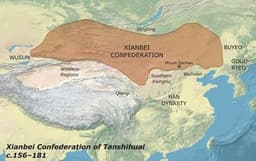
Tanshihuai
Emperor · Ancient
59.2Total
Basic Information
Born
-117
141
Died
-51
181
Era
Ancient
Ancient
Nationality
Egypt
Xianbei
Occupation
Emperor
Emperor
Civilization
Middle Eastern
Eastern
Score Comparison
Military (10%)
22.6
82.0
Political (20%)
37.9
68.0
Influence (20%)
53.3
52.5
Legacy (20%)
43.3
44.2
Leadership (15%)
62.2
74.0
Strategy (15%)
39.6
55.0
TOTAL
45.4
59.2
Ptolemy XII Auletes — Complete Timeline
80 BC
Accession as Pharaoh of EgyptPolitical Action◆ Major
Ptolemy XII Auletes became pharaoh of Egypt after the death of Ptolemy XI Alexander II. His reign was marked by political instability, economic decline, and increasing Roman influence. He was known for his pro-Roman policies and lavish spending.
AccessionPtolemaic DynastyRoman Influence
Impact: regional
58 BC
Exile from EgyptPolitical Action◆ Major
Ptolemy XII was driven from Egypt by a popular revolt, likely due to his heavy taxation and pro-Roman stance. He fled to Rome, where he sought support for his restoration. His daughter Berenice IV took the throne in his absence.
ExileRevoltRoman Support
Impact: regionaltragic
55 BC
Restoration to the ThronePolitical Action◆ Major
Ptolemy XII was restored to the Egyptian throne with military support from the Roman governor of Syria, Aulus Gabinius. The Roman army helped him defeat the forces of Berenice IV. He executed his daughter and resumed his pro-Roman policies.
RestorationRoman InterventionExecution
Impact: regionaldestructive
Will Naming Rome as GuardianPolitical Action◆ Major
Ptolemy XII made a will naming the Roman Republic as the guardian of his children and the Egyptian kingdom. This will later be used by Julius Caesar to justify Roman intervention in Egypt after Ptolemy's death, leading to the Alexandrian War.
WillRoman GuardianshipSuccession
Impact: regional
Tanshihuai — Complete Timeline
156 AD
Raid on the Han frontier (156 AD)War
Tanshihuai led a large-scale raid into Han territory, attacking commanderies in the northern provinces. The Han forces were unable to stop him, and the raid caused significant destruction and loss of life, demonstrating Xianbei military power.
Han-Xianbei WarRaid
Impact: regionaldestructive
Unification of the Xianbei tribesPolitical Action◆ Major
Tanshihuai united the disparate Xianbei tribes of the Mongolian steppe into a powerful confederation. He established a centralized leadership and expanded Xianbei territory, creating a major rival to the Han dynasty in the north.
UnificationXianbei Confederation
Impact: regionalconstructive
158 AD
Defeat of the Han army at the Battle of the Yinshan MountainsWar◆ Major
Tanshihuai ambushed and defeated a Han punitive expedition in the Yinshan Mountains. The Han commander was killed, and the Xianbei captured large amounts of supplies and weapons, solidifying Tanshihuai's reputation as a formidable military leader.
BattleHan-Xianbei War
Impact: regionaldestructive
160 AD
Establishment of a Xianbei legal codeReform
Tanshihuai implemented a unified legal code for the Xianbei confederation, replacing tribal customs with standardized laws. This reform strengthened central authority and facilitated the administration of the growing empire.
Legal ReformXianbei Empire
Impact: regionalconstructive
Expert Analysis
Origins
Ptolemy XII Auletes, born around 112 BC, was a member of the Ptolemaic dynasty, the Macedonian Greek rulers of Egypt. He was an illegitimate son of Ptolemy IX Soter II, and his mother is unknown. His early life was marked by the dynastic struggles typical of the Ptolemies. He likely received a Greek education, but little is known of his formative years. He ascended the throne in 80 BC after the murder of Ptolemy XI Alexander II, who had no heir. His reign was immediately contested due to his questionable legitimacy.
Tanshihuai, born around 130 AD, was a leader of the Xianbei, a nomadic confederation from the Mongolian steppe. His father was a minor chieftain, but Tanshihuai rose through his own prowess. He was known for his strength and intelligence from a young age. By his teens, he had begun to attract followers. He unified the Xianbei tribes through a combination of marriage alliances and military conquest, creating a centralized state by the mid-2nd century AD.
Rise to Power
Ptolemy XII's rise was largely due to the assassination of his predecessor. He secured his position by cultivating ties with Rome. He paid large bribes to Roman senators to secure recognition of his kingship. In 58 BC, his subjects revolted due to heavy taxes to pay for Roman bribes, forcing him into exile. He fled to Rome, where he spent three years lobbying for restoration. In 55 BC, with Roman military support from Aulus Gabinius, he was restored to the throne. The cost was immense: he had to pay an enormous bribe to Gabinius, plunging Egypt further into debt.
Tanshihuai's rise was organic. He began as a tribal leader, but his military successes attracted followers. In 156 AD, he led a major raid into Han territory, defeating a Han army and capturing supplies. This victory cemented his reputation. By 166 AD, he had unified the Xianbei tribes under his rule. He established a capital near the Orkhon River and created a legal code to standardize governance. His confederation controlled territory from Lake Baikal to the Great Wall, rivaling the Han Empire.
Leadership & Governance
Ptolemy XII's leadership was characterized by weakness and dependence on Rome. He prioritized his own survival over Egyptian interests, imposing crushing taxes to fund Roman bribes. He neglected the administration, leading to economic decline. He did not undertake significant reforms. His only major act was naming Rome as guardian of his children in his will, a decision that later enabled Roman intervention. His governance score of 62.2 reflects his ability to maintain power, but his political score of 37.9 shows his failure to govern effectively.
Tanshihuai was a strong, centralized leader. He unified the Xianbei under a single legal code, replacing tribal customs with standardized laws. This strengthened control and facilitated trade. He organized the confederation into three divisions: eastern, central, and western, each under a commander. He maintained order through a mix of reward and punishment. His leadership score of 74.0 reflects his ability to command loyalty. His political score of 68.0 shows his skill in managing a diverse confederation.
Triumph & Tragedy
Ptolemy XII's greatest success was surviving as pharaoh for 28 years despite internal and external threats. He restored his throne with Roman help, a feat of political maneuvering. However, his greatest failure was his pro-Roman policy, which bankrupted Egypt and lost him popular support. His reign saw the loss of Cyprus to Rome in 58 BC. His will set the stage for Roman annexation after Cleopatra's death. He died in 51 BC, leaving a debt-ridden kingdom to his daughter Cleopatra VII.
Tanshihuai's greatest success was uniting the Xianbei and defeating the Han army at the Battle of the Yinshan Mountains (166 AD). This victory established Xianbei dominance on the steppe. He also created a legal code that outlasted him. However, his confederation was fragile. After his death in 181 AD, it fragmented within decades due to lack of a strong successor. He failed to create institutions that could survive without him. His military score of 82.0 and strategy score of 55.0 show his tactical prowess but strategic limitations.
Character & Destiny
Ptolemy XII was pragmatic and self-serving. He was willing to sacrifice Egyptian sovereignty for personal power. He was also culturally Greek, not Egyptian, which alienated him from his subjects. His character led him to rely on Rome, ultimately sealing Egypt's fate as a Roman province. Historical assessments view him as a weak ruler who accelerated Egypt's decline. His total score of 45.4 reflects his limited impact and poor governance.
Tanshihuai was ambitious and charismatic. He inspired loyalty through his military successes and fair laws. However, he was also autocratic and did not groom a successor. His character drove him to expand his power but also made his confederation dependent on his personal authority. Historians see him as a key figure in Xianbei history but note his failure to build a lasting state. His total score of 59.2 reflects his military achievements and leadership.
Legacy
Ptolemy XII's legacy is largely negative. He is remembered as the pharaoh who sold Egypt to Rome. His will provided the legal basis for Roman intervention. His daughter Cleopatra VII overshadowed him. His reign marked the end of Ptolemaic independence. Egypt became a Roman province in 30 BC. His influence score of 53.3 reflects his indirect role in history through Cleopatra.
Tanshihuai's legacy is mixed. He is celebrated as a unifier of the Xianbei and a formidable opponent of the Han. His legal code influenced later Xianbei and Mongol governance. However, his confederation did not endure. The Xianbei later fragmented and were absorbed by other steppe empires. His influence score of 52.5 is similar to Ptolemy's, but his military legacy is more significant.
Conclusion
Tanshihuai had a greater impact than Ptolemy XII Auletes. His military score of 82.0 dwarfs Ptolemy's 22.6. He built a powerful confederation that challenged the Han Empire, while Ptolemy presided over Egypt's decline. Tanshihuai's unification of the Xianbei created a model for later steppe empires, such as the Mongols. Ptolemy's legacy is primarily as a footnote to Cleopatra's story. Although Tanshihuai's state did not last, his achievements in military and governance were more substantial. The score gap of 13.8 points reflects this. Tanshihuai's total score of 59.2 versus Ptolemy's 45.4 confirms his greater historical significance.
Rankings
🥇
TanshihuaiLeader
Mil: 82.0Pol: 68.0Inf: 52.5
59.2
🥈
Ptolemy XII Auletes
Mil: 22.6Pol: 37.9Inf: 53.3
45.4
+13.8 behind
How This Comparison Works
Algorithm
Each figure is scored on 6 dimensions (0—100 scale) based on structured historical data: Military (10%), Political (20%), Influence (20%), Legacy (20%), Leadership (15%), Strategy (15%). The weighted total produces the final ranking.
Data Sources
Scores are computed from structured sub-indicators in the database. Scale factors adjust for era (Ancient ×0.85, Modern ×1.0) and civilization size (Eastern ×1.05, Other ×0.80) to account for differences in population and military scale.
Maximum 3 Figures
Comparisons are limited to 2—3 figures to ensure readability and statistical meaningfulness.
Error Margins
±5 points per dimension — Sub-scores are derived from historical records with inherent uncertainty. Two figures within 5 points on a dimension should be considered roughly equivalent in that area.
Total Score Accuracy
±3 points overall — The weighted combination of 6 dimensions produces a total score with approximately ±3 points of uncertainty. Differences of less than 3 points are not statistically significant— the figures are effectively tied.
Known Limitations
- Historical records are incomplete and uneven across civilizations
- Figures from oral-tradition societies may be underrepresented
- Occupation labels can misclassify multi-role figures
- Scores measure capability and impact, not moral character
- Quantitative scoring is a comparison tool, not absolute truth
Capability Radar
Military (10%) — Battles & Warfare
Battles
10
65
Win Rate
10
70
Expansion
5
80
Political (20%) — Governance & Reform
Reform
20
50
Diplomacy
50
55
Economy
30
45
Influence (20%) — Cultural & Global Reach
Cultural
30
40
Global
30
35
Legacy (20%) — Historical Impact
Historical
40
55
Longevity
30
30
Leadership (15%) — Power & Stability
Tenure
60
60
Stability
20
50
Strategy (15%) — Tactics & Innovation
Strategy
10
75
Tactics
10
60
Reform
5
55
Similar Comparisons
Comments & Discussion
No comments yet. Be the first to share your thoughts!