Loading...
King Gwanggaeto vs Tanshihuai
King Gwanggaeto leads by 0.3 pts · 2 figures compared
…

King Gwanggaeto
Emperor · Ancient
59.5Total
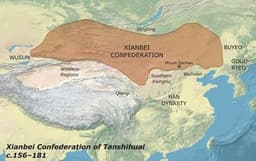
Tanshihuai
Emperor · Ancient
59.2Total
Basic Information
Born
374
141
Died
413
181
Era
Ancient
Ancient
Nationality
Korea
Xianbei
Occupation
Emperor
Emperor
Civilization
Eastern
Eastern
Score Comparison
Military (10%)
75.0
82.0
Political (20%)
45.0
68.0
Influence (20%)
55.0
52.5
Legacy (20%)
55.0
44.2
Leadership (15%)
72.0
74.0
Strategy (15%)
70.0
55.0
TOTAL
59.5
59.2
King Gwanggaeto — Complete Timeline
391 AD
Ascended to the Throne of GoguryeoPolitical Action◆ Major
Gwanggaeto became king of Goguryeo, one of the Three Kingdoms of Korea. His reign marked the beginning of a period of aggressive territorial expansion.
AccessionGoguryeoKorea
Impact: regional
396 AD
Conquered Baekje and Silla TerritoriesWar◆ Major
Gwanggaeto led military campaigns that conquered large parts of Baekje and brought Silla under Goguryeo's protection. These victories expanded Goguryeo's control over the Korean Peninsula.
ConquestGoguryeoThree Kingdoms
Impact: regional
400 AD
Defeated Japanese InvasionsWar◆ Major
Gwanggaeto repelled Japanese (Wa) forces that had invaded the Korean Peninsula in support of Baekje. His victory secured Goguryeo's dominance and is recorded on the Gwanggaeto Stele.
DefenseGoguryeoJapan
Impact: regionalconstructive
410 AD
Expanded into ManchuriaWar◆ Major
Gwanggaeto extended Goguryeo's territory into Manchuria, conquering the Xianbei and other nomadic tribes. This expansion made Goguryeo a major power in Northeast Asia.
ExpansionManchuriaGoguryeo
Impact: regional
414 AD
Erected the Gwanggaeto SteleCultural◆ Major
After his death, a large stele was erected in his honor at the site of his tomb in Ji'an, China. The stele's inscription details his military campaigns and achievements, serving as a key historical source.
MonumentInscriptionGoguryeo
Impact: regional
Tanshihuai — Complete Timeline
156 AD
Raid on the Han frontier (156 AD)War
Tanshihuai led a large-scale raid into Han territory, attacking commanderies in the northern provinces. The Han forces were unable to stop him, and the raid caused significant destruction and loss of life, demonstrating Xianbei military power.
Han-Xianbei WarRaid
Impact: regionaldestructive
Unification of the Xianbei tribesPolitical Action◆ Major
Tanshihuai united the disparate Xianbei tribes of the Mongolian steppe into a powerful confederation. He established a centralized leadership and expanded Xianbei territory, creating a major rival to the Han dynasty in the north.
UnificationXianbei Confederation
Impact: regionalconstructive
158 AD
Defeat of the Han army at the Battle of the Yinshan MountainsWar◆ Major
Tanshihuai ambushed and defeated a Han punitive expedition in the Yinshan Mountains. The Han commander was killed, and the Xianbei captured large amounts of supplies and weapons, solidifying Tanshihuai's reputation as a formidable military leader.
BattleHan-Xianbei War
Impact: regionaldestructive
160 AD
Establishment of a Xianbei legal codeReform
Tanshihuai implemented a unified legal code for the Xianbei confederation, replacing tribal customs with standardized laws. This reform strengthened central authority and facilitated the administration of the growing empire.
Legal ReformXianbei Empire
Impact: regionalconstructive
Expert Analysis
Origins
King Gwanggaeto (374–413 AD) was born into the royal family of Goguryeo, one of the Three Kingdoms of Korea. His father, King Gogukyang, ruled a kingdom constantly threatened by Baekje and the Xianbei. Gwanggaeto received a military education and ascended the throne at age 17 in 391 AD. In contrast, Tanshihuai (c. 130–180 AD) was born into a Xianbei tribal chief's family on the Mongolian steppe. His father was a minor leader, and Tanshihuai grew up amidst tribal warfare. He rose to prominence by personally leading raids and demonstrating strategic acumen.
Rise to Power
Gwanggaeto became king in 391 AD upon his father's death. Immediately, he launched campaigns against Baekje, capturing ten fortresses in 392 AD. In 395 AD, he conquered the Xianbei tribes in Manchuria, and by 399 AD, he had forced Silla to become a protectorate. His greatest triumph came in 400 AD when he repelled a Japanese (Wa) invasion supporting Baekje, securing Goguryeo's dominance. Tanshihuai unified the Xianbei tribes around 156 AD after defeating rival chiefs. He then defeated a Han army at the Battle of the Yinshan Mountains (156 AD), killing the Han commander. This victory allowed him to raid the Han frontier extensively, establishing his reputation as a formidable leader.
Leadership & Governance
Gwanggaeto ruled as an absolute monarch, centralizing power and personally leading campaigns. He implemented a system of tribute from conquered states like Silla and Baekje. His governance focused on military expansion; he did not introduce major administrative reforms. Tanshihuai, on the other hand, created a centralized confederation with a unified legal code, replacing tribal customs. He appointed officials to oversee conquered territories, showing political innovation. While Gwanggaeto scored 72 in leadership and 70 in strategy, Tanshihuai scored 74 in leadership but only 55 in strategy, reflecting his reliance on brute force.
Triumph & Tragedy
Gwanggaeto's greatest success was the expansion of Goguryeo's territory to its largest extent, covering much of Manchuria and northern Korea. His victories are recorded on the Gwanggaeto Stele, a key historical source. However, his death at age 39 left his kingdom overextended; his successor faced rebellions. Tanshihuai's triumph was uniting the Xianbei and humiliating the Han dynasty. His raids forced the Han to fortify the northern frontier. Yet his confederation fragmented after his death around 180 AD, as no successor could maintain unity. His legal code did not survive, limiting his legacy.
Character & Destiny
Gwanggaeto was aggressive and expansionist, driven by a vision of Goguryeo hegemony. His early death suggests a life of constant warfare. Tanshihuai was charismatic and ruthless, unifying tribes through personal valor. Both built empires that collapsed quickly after their deaths. Gwanggaeto's stele shows a king concerned with legacy, while Tanshihuai's lack of written records indicates a more ephemeral rule. Historical assessments differ: Gwanggaeto is revered in Korea as a national hero, while Tanshihuai is seen as a transient raider.
Legacy
Gwanggaeto's legacy endures through the Gwanggaeto Stele, which provides critical information on ancient Korean and Japanese history. His territorial gains laid the foundation for Goguryeo's golden age. Tanshihuai's impact was short-lived; his confederation dissolved, and the Xianbei later fragmented. However, his raids weakened the Han dynasty, contributing to its decline. In terms of scores, Gwanggaeto's political score (45) is lower than Tanshihuai's (68), but his military (75) and strategy (70) are high. Tanshihuai's military score (82) is higher, but his legacy (44) and influence (52.5) are lower.
Conclusion
While Tanshihuai achieved a higher military score (82 vs 75), Gwanggaeto's lasting impact through the stele and his role in Korean history gives him greater overall influence. Gwanggaeto's total score (59.5) edges Tanshihuai's (59.2), but the margin is slim. However, Gwanggaeto's territorial expansions directly shaped Korean state formation, whereas Tanshihuai's confederation faded. Therefore, Gwanggaeto had a more enduring impact on history.
Rankings
🥇
King GwanggaetoLeader
Mil: 75.0Pol: 45.0Inf: 55.0
59.5
🥈
Tanshihuai
Mil: 82.0Pol: 68.0Inf: 52.5
59.2
+0.3 behind
How This Comparison Works
Algorithm
Each figure is scored on 6 dimensions (0—100 scale) based on structured historical data: Military (10%), Political (20%), Influence (20%), Legacy (20%), Leadership (15%), Strategy (15%). The weighted total produces the final ranking.
Data Sources
Scores are computed from structured sub-indicators in the database. Scale factors adjust for era (Ancient ×0.85, Modern ×1.0) and civilization size (Eastern ×1.05, Other ×0.80) to account for differences in population and military scale.
Maximum 3 Figures
Comparisons are limited to 2—3 figures to ensure readability and statistical meaningfulness.
Error Margins
±5 points per dimension — Sub-scores are derived from historical records with inherent uncertainty. Two figures within 5 points on a dimension should be considered roughly equivalent in that area.
Total Score Accuracy
±3 points overall — The weighted combination of 6 dimensions produces a total score with approximately ±3 points of uncertainty. Differences of less than 3 points are not statistically significant— the figures are effectively tied.
Known Limitations
- Historical records are incomplete and uneven across civilizations
- Figures from oral-tradition societies may be underrepresented
- Occupation labels can misclassify multi-role figures
- Scores measure capability and impact, not moral character
- Quantitative scoring is a comparison tool, not absolute truth
Capability Radar
Military (10%) — Battles & Warfare
Battles
85
65
Win Rate
90
70
Expansion
90
80
Political (20%) — Governance & Reform
Reform
65
50
Diplomacy
70
55
Economy
60
45
Influence (20%) — Cultural & Global Reach
Cultural
75
40
Global
55
35
Legacy (20%) — Historical Impact
Historical
80
55
Longevity
70
30
Leadership (15%) — Power & Stability
Tenure
75
60
Stability
70
50
Strategy (15%) — Tactics & Innovation
Strategy
85
75
Tactics
80
60
Reform
70
55
Similar Comparisons
Comments & Discussion
No comments yet. Be the first to share your thoughts!