Loading...
Prithviraj Chauhan vs Vladislaus II of Hungary
Prithviraj Chauhan leads by 6.7 pts · 2 figures compared
…
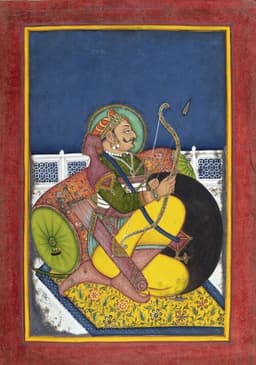
Prithviraj Chauhan
Emperor · Medieval
55.5Total
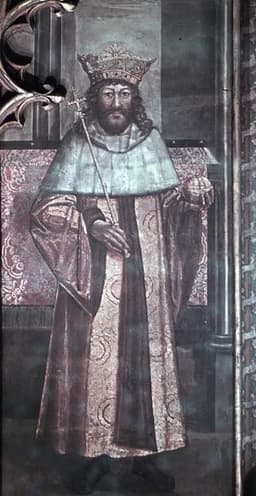
Vladislaus II of Hungary
Emperor · Medieval
48.8Total
Basic Information
Born
1166
1456
Died
1192
1516
Era
Medieval
Medieval
Nationality
India
Bohemia
Occupation
Emperor
Emperor
Civilization
Indian
Western
Score Comparison
Military (10%)
60.0
50.0
Political (20%)
39.4
43.7
Influence (20%)
59.0
51.8
Legacy (20%)
54.0
43.3
Leadership (15%)
67.0
65.7
Strategy (15%)
52.5
35.7
TOTAL
55.5
48.8
Prithviraj Chauhan — Complete Timeline
1177 AD
Accession to the Chauhan ThronePolitical Action
Prithviraj Chauhan succeeded his father Someshvara as ruler of the Chauhan kingdom of Ajmer and Delhi. He was a young king who soon faced threats from the Ghurid Empire under Muhammad of Ghor.
ChauhanAjmerDelhi
Impact: regional
1191 AD
First Battle of TarainWar◆ Major
Prithviraj Chauhan defeated Muhammad of Ghor at the First Battle of Tarain near Thanesar. The Ghurid army was routed, and Muhammad was captured but later released. This victory temporarily halted Ghurid expansion into northern India.
TarainGhuridVictory
Impact: regional
1192 AD
Second Battle of TarainWar
Muhammad of Ghor returned with a larger army and defeated Prithviraj Chauhan at the Second Battle of Tarain. Prithviraj was captured and executed, and the Chauhan kingdom was annexed by the Ghurids, leading to the establishment of Muslim rule in Delhi.
TarainGhuridDefeat
Impact: regionaltragic
Capture and Execution by Muhammad of GhorWar◆ Major
After the Second Battle of Tarain, Prithviraj Chauhan was taken prisoner by Muhammad of Ghor. He was executed shortly after, ending the Chauhan dynasty's rule. His death marked the beginning of the Delhi Sultanate.
ExecutionDelhi SultanateChauhan
Impact: regionaltragic
Vladislaus II of Hungary — Complete Timeline
1479 AD
Peace of OlomoucPolitical Action◆ Major
Vladislaus II signed the Peace of Olomouc with Matthias Corvinus, dividing the Bohemian crown lands. Vladislaus retained Bohemia while Matthias held Moravia, Silesia, and Lusatia, ending a period of conflict between the two kings.
TreatyTerritorial DivisionConflict Resolution
Impact: regional
1490 AD
Vladislaus BenePolitical Action◆ Major
Vladislaus II was elected King of Hungary after the death of Matthias Corvinus. His reign was marked by weak governance, earning him the nickname 'Vladislaus Bene' for his tendency to agree with all petitioners, leading to administrative decay.
ElectionWeak RuleHungary
Impact: regional
Expert Analysis
Origins
Prithviraj Chauhan was born around 1166 into the Chauhan Rajput clan, which ruled the kingdom of Ajmer and Delhi in northern India. His father, Someshvara, was a capable ruler who expanded Chauhan territories. Prithviraj received traditional Rajput education in warfare, statecraft, and chivalry, and ascended the throne at a young age after his father's death in 1177. He quickly faced challenges from neighboring Rajput kingdoms and the expanding Ghurid Empire.
Vladislaus II of Hungary was born in 1456 as the son of King Vladislaus I of Bohemia and Catherine of Poděbrady. He belonged to the Jagiellonian dynasty, which ruled Poland, Lithuania, Bohemia, and Hungary. His early life was shaped by the complex politics of Central Europe, where the Habsburgs and Ottomans vied for power. He was educated in humanist traditions and became King of Bohemia in 1471 and later King of Hungary in 1490.
Rise to Power
Prithviraj Chauhan's rise was swift but contested. After succeeding his father, he had to assert his authority over rebellious vassals and rival Rajput clans. He expanded his kingdom through military campaigns, subjugating neighboring states like the Chandelas. His defining moment came in 1191 at the First Battle of Tarain, where he defeated Muhammad of Ghor, a Ghurid invader. This victory cemented his reputation as a defender of Rajput independence. However, his inability to follow up with a decisive campaign allowed Ghor to regroup.
Vladislaus II's rise was more diplomatic. He was elected King of Bohemia in 1471 after the death of George of Poděbrady, but faced opposition from Matthias Corvinus of Hungary. The Peace of Olomouc in 1479 divided Bohemia, with Vladislaus retaining control. In 1490, after Matthias Corvinus's death, Vladislaus was elected King of Hungary, largely due to the support of the Hungarian nobility who feared strong central authority. His nickname 'Vladislaus Bene' reflected his passive, agreeable nature.
Leadership & Governance
Prithviraj Chauhan's leadership was typical of a medieval Rajput king: military-focused, honor-bound, and decentralized. He led his armies personally in battle, demonstrating personal bravery. However, his governance relied on feudal alliances with other Rajput chiefs, who often pursued their own interests. After the First Battle of Tarain, he failed to strengthen defenses or pursue the retreating Ghurids, a strategic error. His court was known for patronage of poets and scholars, but his administrative reforms were limited.
Vladislaus II's leadership was weak and indecisive. He is often criticized for allowing the nobility to usurp royal power, leading to the decline of central authority. In Hungary, he granted extensive privileges to the magnates, weakening the crown. His military score of 50.0 reflects his lack of direct involvement in campaigns; he did not lead armies. The Battle of Mohács (1526), which proved disastrous for Hungary, occurred after his death but was a consequence of his neglect of military preparedness. His political score of 43.7 underscores his failure to maintain strong governance.
Triumph & Tragedy
Prithviraj Chauhan's greatest triumph was the First Battle of Tarain (1191), where he decisively defeated Muhammad of Ghor, capturing him and then releasing him—a chivalrous but ultimately fatal mistake. His tragedy was the Second Battle of Tarain (1192), where he was defeated, captured, and executed. His death marked the collapse of Rajput resistance and the establishment of Muslim rule in northern India. His legacy as a symbol of Hindu resistance is strong, but his strategic failure had long-term consequences.
Vladislaus II's triumph was securing the crowns of both Bohemia and Hungary, creating a Jagiellonian bloc in Central Europe. He also signed the Peace of Olomouc, which stabilized Bohemian borders. His tragedy was his inability to curb noble power and prepare for the Ottoman threat. The death of his son Louis II at Mohács in 1526 led to Habsburg succession and centuries of Ottoman domination in Hungary. His reign is seen as a period of stagnation and decline.
Character & Destiny
Prithviraj Chauhan was proud, chivalrous, and bound by Rajput codes of honor. His decision to release Muhammad of Ghor after the first battle reflected his adherence to these codes, but it was a strategic blunder. He was impulsive and underestimated his enemy's resilience. His character—brave but inflexible—shaped his fate: a heroic but tragic end.
Vladislaus II was passive, easygoing, and conflict-averse. His nickname 'Bene' (meaning 'good') came from his tendency to agree with everyone. He lacked the ambition or ruthlessness needed to consolidate power. His character led to a reign of weak governance, leaving his kingdoms vulnerable. Historians assess him as a well-meaning but ineffective ruler who allowed the nobility to dominate.
Legacy
Prithviraj Chauhan is remembered as a national hero in India, symbolizing resistance against foreign invasion. His story is immortalized in the epic poem 'Prithviraj Raso' and has been adapted into films and television. His legacy score of 54.0 reflects his enduring cultural impact, though his political and military achievements were limited. He scored 60.0 in military, 39.4 in political, and 52.5 in strategy.
Vladislaus II's legacy is largely negative. He is seen as a weak king who accelerated the decline of both Bohemia and Hungary. His reign is overshadowed by the subsequent Habsburg rule and Ottoman wars. His scores reflect this: military 50.0, political 43.7, strategy 35.7. He left no lasting institutions or reforms, and his name is often associated with the 'Jagiellonian stagnation.'
Conclusion
Prithviraj Chauhan had a greater impact than Vladislaus II, despite his ultimate defeat. His resistance delayed the Ghurid conquest and became a powerful symbol of Indian defiance. Vladislaus II, by contrast, presided over the erosion of royal authority and failed to prepare for existential threats. With a total score of 55.5 versus 48.8, Prithviraj Chauhan edges ahead in leadership, military, and legacy. While Vladislaus achieved a larger territorial inheritance, his weak governance led to the collapse of Jagiellonian power. Prithviraj's story continues to inspire, whereas Vladislaus is a cautionary tale of ineffectiveness.
Rankings
🥇
Prithviraj ChauhanLeader
Mil: 60.0Pol: 39.4Inf: 59.0
55.5
🥈
Vladislaus II of Hungary
Mil: 50.0Pol: 43.7Inf: 51.8
48.8
+6.7 behind
How This Comparison Works
Algorithm
Each figure is scored on 6 dimensions (0—100 scale) based on structured historical data: Military (10%), Political (20%), Influence (20%), Legacy (20%), Leadership (15%), Strategy (15%). The weighted total produces the final ranking.
Data Sources
Scores are computed from structured sub-indicators in the database. Scale factors adjust for era (Ancient ×0.85, Modern ×1.0) and civilization size (Eastern ×1.05, Other ×0.80) to account for differences in population and military scale.
Maximum 3 Figures
Comparisons are limited to 2—3 figures to ensure readability and statistical meaningfulness.
Error Margins
±5 points per dimension — Sub-scores are derived from historical records with inherent uncertainty. Two figures within 5 points on a dimension should be considered roughly equivalent in that area.
Total Score Accuracy
±3 points overall — The weighted combination of 6 dimensions produces a total score with approximately ±3 points of uncertainty. Differences of less than 3 points are not statistically significant— the figures are effectively tied.
Known Limitations
- Historical records are incomplete and uneven across civilizations
- Figures from oral-tradition societies may be underrepresented
- Occupation labels can misclassify multi-role figures
- Scores measure capability and impact, not moral character
- Quantitative scoring is a comparison tool, not absolute truth
Capability Radar
Military (10%) — Battles & Warfare
Battles
65
20
Win Rate
60
25
Expansion
45
10
Political (20%) — Governance & Reform
Reform
30
30
Diplomacy
40
55
Economy
35
35
Influence (20%) — Cultural & Global Reach
Cultural
55
30
Global
40
20
Legacy (20%) — Historical Impact
Historical
60
35
Longevity
55
25
Leadership (15%) — Power & Stability
Tenure
50
60
Stability
40
25
Strategy (15%) — Tactics & Innovation
Strategy
55
20
Tactics
70
15
Reform
30
10
Similar Comparisons
Comments & Discussion
No comments yet. Be the first to share your thoughts!