Loading...
Harald Hardrada vs Prithviraj Chauhan
Harald Hardrada leads by 3.2 pts · 2 figures compared
…
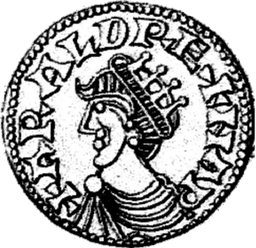
Harald Hardrada
Emperor · Medieval
58.7Total
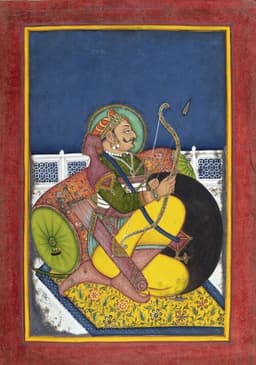
Prithviraj Chauhan
Emperor · Medieval
55.5Total
Basic Information
Born
1015
1166
Died
1066
1192
Era
Medieval
Medieval
Nationality
Norway
India
Occupation
Emperor
Emperor
Civilization
Western
Indian
Score Comparison
Military (10%)
67.3
60.0
Political (20%)
48.0
39.4
Influence (20%)
60.0
59.0
Legacy (20%)
54.0
54.0
Leadership (15%)
64.0
67.0
Strategy (15%)
66.3
52.5
TOTAL
58.7
55.5
Harald Hardrada — Complete Timeline
1030 AD
Fought at the Battle of StiklestadWar◆ Major
Harald Hardrada fought at the Battle of Stiklestad at age 15, supporting his half-brother Olaf II. The battle ended in defeat and Olaf's death, forcing Harald into exile. This event shaped his later ambition to reclaim power in Norway.
BattleExileNorway
Impact: regionaltragic
1034 AD
Served as a mercenary in the Varangian GuardWar◆ Major
After Stiklestad, Harald Hardrada traveled to Constantinople and served as a commander in the Varangian Guard of the Byzantine Empire. He fought in campaigns in the Mediterranean, Sicily, and the Balkans, amassing wealth and military experience.
MercenaryByzantine EmpireVarangian Guard
Impact: regional
1046 AD
Became King of NorwayPolitical Action◆ Major
Harald Hardrada returned to Scandinavia and claimed the Norwegian throne, initially co-ruling with Magnus the Good. After Magnus's death in 1047, Harald became sole king of Norway, ruling until 1066. His reign was marked by centralization and conflict with Denmark.
CoronationNorwayKingship
Impact: regional
1048 AD
Invaded DenmarkWar◆ Major
Harald Hardrada launched a prolonged war against Sweyn Estridsson of Denmark, seeking to reclaim the Danish throne. The conflict lasted for years with raids and battles, but Harald failed to conquer Denmark, eventually making peace in 1064.
InvasionDenmarkWar
Impact: regional
1066 AD
Invaded England and was killed at the Battle of Stamford BridgeWar
Harald Hardrada invaded England in September 1066, claiming the English throne. He was defeated and killed by King Harold Godwinson's forces at the Battle of Stamford Bridge. His death marked the end of the Viking Age and the last major Viking invasion of England.
BattleViking AgeEngland
Impact: regionaltragic
Prithviraj Chauhan — Complete Timeline
1177 AD
Accession to the Chauhan ThronePolitical Action
Prithviraj Chauhan succeeded his father Someshvara as ruler of the Chauhan kingdom of Ajmer and Delhi. He was a young king who soon faced threats from the Ghurid Empire under Muhammad of Ghor.
ChauhanAjmerDelhi
Impact: regional
1191 AD
First Battle of TarainWar◆ Major
Prithviraj Chauhan defeated Muhammad of Ghor at the First Battle of Tarain near Thanesar. The Ghurid army was routed, and Muhammad was captured but later released. This victory temporarily halted Ghurid expansion into northern India.
TarainGhuridVictory
Impact: regional
1192 AD
Second Battle of TarainWar
Muhammad of Ghor returned with a larger army and defeated Prithviraj Chauhan at the Second Battle of Tarain. Prithviraj was captured and executed, and the Chauhan kingdom was annexed by the Ghurids, leading to the establishment of Muslim rule in Delhi.
TarainGhuridDefeat
Impact: regionaltragic
Capture and Execution by Muhammad of GhorWar◆ Major
After the Second Battle of Tarain, Prithviraj Chauhan was taken prisoner by Muhammad of Ghor. He was executed shortly after, ending the Chauhan dynasty's rule. His death marked the beginning of the Delhi Sultanate.
ExecutionDelhi SultanateChauhan
Impact: regionaltragic
Expert Analysis
Origins
Harald Hardrada was born in 1015 in Norway, the half-brother of King Olaf II. His early life was shaped by the Battle of Stiklestad in 1030, where he fought at age 15. After Olaf's defeat, Harald fled to Kievan Rus' and later Constantinople. Prithviraj Chauhan was born around 1166 in Ajmer, India, the son of King Someshvara of the Chauhan dynasty. He inherited the throne at a young age and was educated in martial arts and statecraft.
Rise to Power
Harald's rise began as a mercenary in the Varangian Guard of the Byzantine Empire, where he fought in campaigns across the Mediterranean. Amassing wealth and reputation, he returned to Scandinavia in 1045 and claimed the Norwegian throne, initially co-ruling with his nephew Magnus the Good. After Magnus's death in 1047, Harald became sole king. Prithviraj ascended the Chauhan throne around 1177, facing immediate threats from rival Rajput kingdoms and the expanding Ghurid Empire. His early reign focused on consolidating power in Ajmer and Delhi.
Leadership & Governance
Harald ruled Norway with authoritarian methods, suppressing internal opposition and launching aggressive campaigns against Denmark. He centralized power, but his constant warfare drained resources. Prithviraj governed through a feudal system, relying on Rajput vassals. His court was known for patronage of arts, but he failed to modernize his military. While Harald's governance was pragmatic and expansionist, Prithviraj's was traditional and defensive.
Triumph & Tragedy
Harald's greatest triumph was becoming King of Norway and projecting Viking power across Scandinavia. His tragedy was his death at Stamford Bridge in 1066, where he invaded England but was defeated by Harold Godwinson. Prithviraj's triumph was his victory at the First Battle of Tarain in 1191, where he defeated Muhammad of Ghor. His tragedy was the Second Battle of Tarain in 1192, where he was captured and executed, leading to the fall of the Chauhan kingdom.
Character & Destiny
Harald was ambitious and ruthless, traits that fueled his rise but also led to his downfall. His decision to invade England in 1066 was a gamble that failed. Prithviraj was courageous but overconfident; after his initial victory, he released Muhammad of Ghor, a fatal mistake. Historians note his lack of strategic foresight. Harald scores 66.3 in strategy to Prithviraj's 52.5, reflecting better planning.
Legacy
Harald's death marked the end of the Viking Age. He is remembered as the last great Viking king. Prithviraj's defeat opened India to Muslim rule, leading to the Delhi Sultanate. He became a symbol of Rajput resistance. Harald's influence score of 60.0 vs Prithviraj's 59.0 shows similar cultural impact, but Harald's legacy is more global due to Viking lore.
Conclusion
Harald Hardrada had a greater impact on history. His military score of 67.3 vs 60.0, political score of 48.0 vs 39.4, and total score of 58.7 vs 55.5 demonstrate superior effectiveness. While Prithviraj's resistance was heroic, Harald's campaigns shaped the end of an era and influenced European history more broadly.
Rankings
🥇
Harald HardradaLeader
Mil: 67.3Pol: 48.0Inf: 60.0
58.7
🥈
Prithviraj Chauhan
Mil: 60.0Pol: 39.4Inf: 59.0
55.5
+3.2 behind
How This Comparison Works
Algorithm
Each figure is scored on 6 dimensions (0—100 scale) based on structured historical data: Military (10%), Political (20%), Influence (20%), Legacy (20%), Leadership (15%), Strategy (15%). The weighted total produces the final ranking.
Data Sources
Scores are computed from structured sub-indicators in the database. Scale factors adjust for era (Ancient ×0.85, Modern ×1.0) and civilization size (Eastern ×1.05, Other ×0.80) to account for differences in population and military scale.
Maximum 3 Figures
Comparisons are limited to 2—3 figures to ensure readability and statistical meaningfulness.
Error Margins
±5 points per dimension — Sub-scores are derived from historical records with inherent uncertainty. Two figures within 5 points on a dimension should be considered roughly equivalent in that area.
Total Score Accuracy
±3 points overall — The weighted combination of 6 dimensions produces a total score with approximately ±3 points of uncertainty. Differences of less than 3 points are not statistically significant— the figures are effectively tied.
Known Limitations
- Historical records are incomplete and uneven across civilizations
- Figures from oral-tradition societies may be underrepresented
- Occupation labels can misclassify multi-role figures
- Scores measure capability and impact, not moral character
- Quantitative scoring is a comparison tool, not absolute truth
Capability Radar
Military (10%) — Battles & Warfare
Battles
75
65
Win Rate
70
60
Expansion
70
45
Political (20%) — Governance & Reform
Reform
40
30
Diplomacy
50
40
Economy
45
35
Influence (20%) — Cultural & Global Reach
Cultural
55
55
Global
45
40
Legacy (20%) — Historical Impact
Historical
65
60
Longevity
50
55
Leadership (15%) — Power & Stability
Tenure
55
50
Stability
40
40
Strategy (15%) — Tactics & Innovation
Strategy
75
55
Tactics
80
70
Reform
60
30
Similar Comparisons
Comments & Discussion
No comments yet. Be the first to share your thoughts!