Loading...
Edward I vs Prithviraj Chauhan
Edward I leads by 6.7 pts · 2 figures compared
…
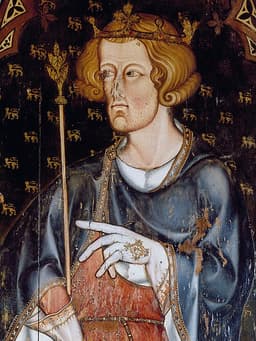
Edward I
Emperor · Medieval
62.2Total
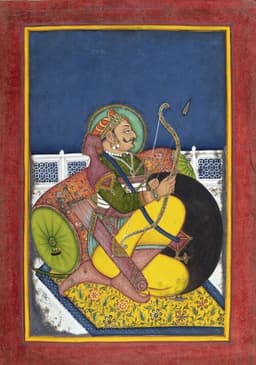
Prithviraj Chauhan
Emperor · Medieval
55.5Total
Basic Information
Born
1239
1166
Died
1307
1192
Era
Medieval
Medieval
Nationality
England
India
Occupation
Emperor
Emperor
Civilization
Western
Indian
Score Comparison
Military (10%)
74.7
60.0
Political (20%)
60.0
39.4
Influence (20%)
56.7
59.0
Legacy (20%)
55.0
54.0
Leadership (15%)
72.0
67.0
Strategy (15%)
70.0
52.5
TOTAL
62.2
55.5
Edward I — Complete Timeline
1282 AD
Conquest of WalesWar◆ Major
Edward I led a military campaign that resulted in the conquest of Wales. After the death of Llywelyn ap Gruffudd, Edward built a ring of castles (including Caernarfon and Conwy) to control the region. The Statute of Rhuddlan in 1284 annexed Wales to England.
ConquestWalesCastles
Impact: regional
1290 AD
Expulsion of the Jews from EnglandPolitical Action◆ Major
Edward I issued the Edict of Expulsion, ordering all Jews to leave England. The expulsion was motivated by financial and religious pressures. Jews were given until November 1 to depart, and their property was confiscated by the crown. The ban lasted until 1656.
ExpulsionJewsReligious Persecution
Impact: nationaldestructive
1295 AD
Model ParliamentPolitical Action◆ Major
Edward I summoned the Model Parliament, which included representatives of the commons (knights and burgesses) alongside nobles and clergy. This assembly set a precedent for the composition of the English Parliament. It was called to approve taxes for wars in Scotland and France.
ParliamentRepresentationTaxation
Impact: nationalconstructive
1296 AD
First War of Scottish IndependenceWar◆ Major
Edward I invaded Scotland after the Scots refused to support his war in France. He captured Berwick and defeated the Scots at the Battle of Dunbar. Edward forced the submission of Scottish nobles and removed the Stone of Scone to Westminster Abbey.
ScotlandInvasionStone of Scone
Impact: regional
Prithviraj Chauhan — Complete Timeline
1177 AD
Accession to the Chauhan ThronePolitical Action
Prithviraj Chauhan succeeded his father Someshvara as ruler of the Chauhan kingdom of Ajmer and Delhi. He was a young king who soon faced threats from the Ghurid Empire under Muhammad of Ghor.
ChauhanAjmerDelhi
Impact: regional
1191 AD
First Battle of TarainWar◆ Major
Prithviraj Chauhan defeated Muhammad of Ghor at the First Battle of Tarain near Thanesar. The Ghurid army was routed, and Muhammad was captured but later released. This victory temporarily halted Ghurid expansion into northern India.
TarainGhuridVictory
Impact: regional
1192 AD
Second Battle of TarainWar
Muhammad of Ghor returned with a larger army and defeated Prithviraj Chauhan at the Second Battle of Tarain. Prithviraj was captured and executed, and the Chauhan kingdom was annexed by the Ghurids, leading to the establishment of Muslim rule in Delhi.
TarainGhuridDefeat
Impact: regionaltragic
Capture and Execution by Muhammad of GhorWar◆ Major
After the Second Battle of Tarain, Prithviraj Chauhan was taken prisoner by Muhammad of Ghor. He was executed shortly after, ending the Chauhan dynasty's rule. His death marked the beginning of the Delhi Sultanate.
ExecutionDelhi SultanateChauhan
Impact: regionaltragic
Expert Analysis
Origins
Edward I, born 1239, was the son of King Henry III of England and Eleanor of Provence. He grew up amid baronial conflicts, including the Second Barons' War, which shaped his autocratic tendencies. His education focused on chivalry, law, and military training. He participated in the Ninth Crusade (1270-1272), gaining experience in warfare and administration.
Prithviraj Chauhan, born around 1166, was the son of King Someshvara of the Chauhan dynasty, ruling Ajmer and Delhi. He was raised in a Rajput warrior tradition, learning martial skills, statecraft, and poetry. His early life was marked by internal family rivalries and threats from neighboring kingdoms, including the Ghaznavids and Ghurids.
Rise to Power
Edward I ascended the throne in 1272 upon his father's death, but he was in Sicily returning from crusade; he was crowned in 1274. His early reign focused on consolidating royal authority after the baronial wars. He initiated administrative reforms, including the Statute of Westminster I (1275), and began his campaign to conquer Wales in 1277. The death of Llywelyn ap Gruffudd in 1282 allowed Edward to complete the conquest, securing English control through a network of castles.
Prithviraj Chauhan succeeded his father around 1177, but faced immediate challenges from rival Rajput clans and the Ghurid Empire under Muhammad of Ghor. He expanded his territory by defeating neighboring kingdoms, such as the Chandelas of Bundelkhand. His victory at the First Battle of Tarain (1191) against Muhammad of Ghor established him as a major power in northern India. However, his refusal to form alliances with other Rajput rulers weakened his position.
Leadership & Governance
Edward I was a centralized monarch who strengthened the English state through legal and parliamentary reforms. He summoned the Model Parliament in 1295, including commons, to gain support for taxation and war. He also issued the Statute of Mortmain (1279) to limit church land ownership. His governance was pragmatic but authoritarian, using fines and confiscations to fill the treasury. He expelled the Jews from England in 1290, seizing their assets, which provided short-term financial relief but damaged the economy.
Prithviraj Chauhan ruled as a feudal Rajput king, relying on a network of vassals and clan loyalties. He patronized Hindu culture and literature, composing poetry himself (the Prithviraj Raso). However, his governance lacked centralization; he failed to create a unified command against external threats. His leniency after the First Tarain—releasing Muhammad of Ghor—was a strategic error, as it allowed the enemy to regroup. He also alienated potential allies, such as the Solanki king of Gujarat.
Triumph & Tragedy
Edward I's greatest triumph was the conquest of Wales, integrating it into England through legal and administrative measures. He also successfully asserted English overlordship over Scotland temporarily, winning victories at Dunbar (1296) and Falkirk (1298). His Model Parliament set a precedent for representative government. However, his failure to conquer Scotland permanently and the heavy taxation caused widespread rebellion, including the Scottish Wars of Independence under William Wallace and Robert the Bruce. His expulsion of the Jews was a moral and economic blunder, leading to a loss of skilled financiers.
Prithviraj Chauhan's triumph was his victory at the First Battle of Tarain, where he defeated a numerically superior Ghurid army. He defended Hindu kingdoms from invasion for a time. His tragedy was his defeat and death at the Second Battle of Tarain (1192), largely due to his tactical rigidity and failure to anticipate Ghurid reinforcements. He was captured and executed, leading to the collapse of the Chauhan kingdom and the establishment of Muslim rule in Delhi. His legacy as a Rajput hero endures, but his strategic miscalculations sealed his fate.
Character & Destiny
Edward I was determined, ruthless, and methodical. His nickname 'Longshanks' reflected his imposing physical stature. He was a skilled diplomat but also vindictive, as seen in his execution of William Wallace and his harsh treatment of the Scots. His character drove him to pursue total control, which ultimately overextended his resources. He scored 72.0 in leadership and 70.0 in strategy, indicating strong command but flawed long-term planning.
Prithviraj Chauhan was brave, chivalrous, and cultured but also prideful and indecisive. He is celebrated in folklore for his honor, but his failure to consolidate alliances and his premature mercy toward Muhammad of Ghor showed a lack of strategic foresight. His leadership score of 67.0 reflects his battlefield prowess but weak political acumen. His destiny was shaped by his inability to adapt to the changing nature of warfare, as the Ghurids employed more mobile cavalry tactics.
Legacy
Edward I's legacy is profound: he transformed England into a centralized state with a parliamentary system that influenced later democratic developments. His conquest of Wales left a lasting cultural and political impact, and his legal reforms (e.g., the Statute of Westminster) shaped English common law. However, his Scottish wars sowed centuries of conflict. He scored 55.0 in legacy, reflecting both achievements and failures.
Prithviraj Chauhan is remembered as a symbol of Rajput resistance against Islamic invasions. His story is romanticized in the epic 'Prithviraj Raso' and popular culture. However, his defeat opened the door to the Delhi Sultanate, which transformed Indian society and politics. His legacy score of 54.0 is comparable, but his impact was more localized and symbolic than structural.
Conclusion
Edward I had a greater overall impact measured by the score gap of 6.7 points (62.2 vs 55.5). His military score of 74.7 and political score of 60.0 demonstrate a more comprehensive skill set compared to Prithviraj's 60.0 military and 39.4 political. Edward I's reforms shaped English governance for centuries, while Prithviraj's defeat marked a turning point in Indian history but did not build enduring institutions. Edward I's leadership and strategy scores (72.0 and 70.0) also exceed Prithviraj's (67.0 and 52.5). While Prithviraj's cultural legacy is strong, Edward I's concrete state-building achievements give him the edge in historical significance.
Rankings
🥇
Edward ILeader
Mil: 74.7Pol: 60.0Inf: 56.7
62.2
🥈
Prithviraj Chauhan
Mil: 60.0Pol: 39.4Inf: 59.0
55.5
+6.7 behind
How This Comparison Works
Algorithm
Each figure is scored on 6 dimensions (0—100 scale) based on structured historical data: Military (10%), Political (20%), Influence (20%), Legacy (20%), Leadership (15%), Strategy (15%). The weighted total produces the final ranking.
Data Sources
Scores are computed from structured sub-indicators in the database. Scale factors adjust for era (Ancient ×0.85, Modern ×1.0) and civilization size (Eastern ×1.05, Other ×0.80) to account for differences in population and military scale.
Maximum 3 Figures
Comparisons are limited to 2—3 figures to ensure readability and statistical meaningfulness.
Error Margins
±5 points per dimension — Sub-scores are derived from historical records with inherent uncertainty. Two figures within 5 points on a dimension should be considered roughly equivalent in that area.
Total Score Accuracy
±3 points overall — The weighted combination of 6 dimensions produces a total score with approximately ±3 points of uncertainty. Differences of less than 3 points are not statistically significant— the figures are effectively tied.
Known Limitations
- Historical records are incomplete and uneven across civilizations
- Figures from oral-tradition societies may be underrepresented
- Occupation labels can misclassify multi-role figures
- Scores measure capability and impact, not moral character
- Quantitative scoring is a comparison tool, not absolute truth
Capability Radar
Military (10%) — Battles & Warfare
Battles
75
65
Win Rate
70
60
Expansion
75
45
Political (20%) — Governance & Reform
Reform
75
30
Diplomacy
65
40
Economy
70
35
Influence (20%) — Cultural & Global Reach
Cultural
65
55
Global
60
40
Legacy (20%) — Historical Impact
Historical
75
60
Longevity
70
55
Leadership (15%) — Power & Stability
Tenure
80
50
Stability
60
40
Strategy (15%) — Tactics & Innovation
Strategy
85
55
Tactics
80
70
Reform
70
30
Similar Comparisons
Comments & Discussion
No comments yet. Be the first to share your thoughts!