Loading...
Philip III of France vs Vladislaus II of Hungary
Philip III of France leads by 7.7 pts · 2 figures compared
…
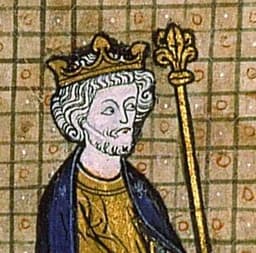
Philip III of France
Emperor · Medieval
56.5Total
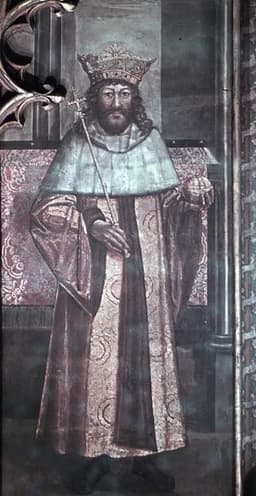
Vladislaus II of Hungary
Emperor · Medieval
48.8Total
Basic Information
Born
1245
1456
Died
1285
1516
Era
Medieval
Medieval
Nationality
France
Bohemia
Occupation
Emperor
Emperor
Civilization
Western
Western
Score Comparison
Military (10%)
72.5
50.0
Political (20%)
48.0
43.7
Influence (20%)
54.1
51.8
Legacy (20%)
45.8
43.3
Leadership (15%)
74.0
65.7
Strategy (15%)
60.0
35.7
TOTAL
56.5
48.8
Philip III of France — Complete Timeline
1258 AD
Treaty of CorbeilPolitical Action
Philip III's father, Louis IX, signed the Treaty of Corbeil, which renounced French claims to Catalonia and Roussillon in exchange for Aragonese renunciation of claims to Provence and Languedoc. Philip III inherited this settlement.
TreatyDiplomacyCapetian
Impact: regional
1274 AD
Invasion of NavarreWar◆ Major
Philip III invaded Navarre to enforce his claim as regent for his niece, Joan I of Navarre. He secured control of the kingdom, which later passed to his son Philip IV through marriage, expanding French influence in the Pyrenees.
InvasionTerritorial ExpansionCapetian
Impact: regional
1285 AD
Aragonese CrusadeWar◆ Major
Philip III led the Aragonese Crusade, a papal-sanctioned invasion of Aragon to depose King Peter III. The French army was defeated at the Battle of the Col de Panissars and forced to retreat, suffering heavy losses. Philip III died during the retreat.
CrusadeDefeatCapetian
Impact: regionaltragic
Vladislaus II of Hungary — Complete Timeline
1479 AD
Peace of OlomoucPolitical Action◆ Major
Vladislaus II signed the Peace of Olomouc with Matthias Corvinus, dividing the Bohemian crown lands. Vladislaus retained Bohemia while Matthias held Moravia, Silesia, and Lusatia, ending a period of conflict between the two kings.
TreatyTerritorial DivisionConflict Resolution
Impact: regional
1490 AD
Vladislaus BenePolitical Action◆ Major
Vladislaus II was elected King of Hungary after the death of Matthias Corvinus. His reign was marked by weak governance, earning him the nickname 'Vladislaus Bene' for his tendency to agree with all petitioners, leading to administrative decay.
ElectionWeak RuleHungary
Impact: regional
Expert Analysis
Origins
Philip III of France, born in 1245, was the second son of King Louis IX (Saint Louis) and Margaret of Provence. He was not initially destined for the throne, but the death of his older brother Louis in 1260 made him heir. Philip grew up in a deeply religious court, heavily influenced by his father's piety and crusading zeal. His education emphasized chivalry and feudal duties, but he lacked the intellectual depth of his father.
Vladislaus II of Hungary, born in 1456, was the son of King George of Poděbrady of Bohemia and Kunigunde of Sternberg. He was raised as a Catholic despite his father's Hussite leanings, and was educated in Prague. His early life was marked by the political turmoil of Bohemia, where his father struggled to maintain power. Vladislaus was elected King of Bohemia in 1471 after his father's death, but faced immediate challenges from Matthias Corvinus of Hungary.
Rise to Power
Philip III ascended to the French throne in 1270 upon the death of his father Louis IX during the Eighth Crusade. He was crowned at Reims in 1271. His rise was smooth due to his father's strong legacy, but he was immediately confronted with the need to assert royal authority over rebellious nobles and expand French influence. His key ally was his uncle, Charles of Anjou, King of Sicily, who provided military support.
Vladislaus II became King of Bohemia in 1471 after his father's death, but his rule was contested by Matthias Corvinus, who claimed the Bohemian throne. The conflict ended with the Peace of Olomouc in 1479, where Vladislaus retained Bohemia while Matthias held Moravia, Silesia, and Lusatia. In 1490, after Matthias's death, Vladislaus was elected King of Hungary, partly due to his reputation as a weak ruler who would not threaten the nobility's privileges.
Leadership & Governance
Philip III's governance was characterized by a reliance on his father's advisors and a continuation of Capetian centralization. He expanded the royal domain through marriage and inheritance, notably acquiring the County of Toulouse and the Kingdom of Navarre. However, his leadership was often indecisive; he scored 74.0 in leadership but only 48.0 in political acumen, reflecting his inability to manage nobles effectively. His military score of 72.5 was driven by the Aragonese Crusade, which ultimately failed.
Vladislaus II's reign in Hungary was marked by weak governance, earning him the nickname 'Vladislaus Bene' (or 'King All Right') for his tendency to agree with everyone. He scored 65.7 in leadership but only 43.7 in politics, reflecting his inability to control the nobles. He made concessions to the Hungarian nobility, reducing royal revenues and weakening the central government. His military score of 50.0 and strategy of 35.7 indicate a lack of military initiative, as he avoided conflicts and relied on diplomacy.
Triumph & Tragedy
Philip III's greatest success was the expansion of French territory. He secured the County of Toulouse through the Treaty of Paris (1271) and inherited the Kingdom of Navarre through his wife, Joan I of Navarre. His greatest failure was the Aragonese Crusade (1284-1285), a papal-sanctioned invasion of Aragon that ended in disaster. The French army was defeated at the Battle of the Col de Panissars, and Philip died of dysentery during the retreat. The crusade drained the treasury and damaged French prestige.
Vladislaus II's triumph was his election as King of Hungary in 1490, which briefly unified the crowns of Bohemia and Hungary. However, his reign was a tragedy of missed opportunities. His weak rule allowed the nobility to gain power, leading to the decline of royal authority. The ultimate tragedy was the Battle of Mohács in 1526, where his son Louis II died, leading to the Ottoman conquest of much of Hungary. Vladislaus's inaction set the stage for this disaster.
Character & Destiny
Philip III was known as 'the Bold' (le Hardi), but his actions often contradicted this epithet. He was pious and chivalrous, like his father, but lacked his father's wisdom and decisiveness. His character led him to undertake the Aragonese Crusade under papal pressure, despite poor planning. His death at age 40 cut short his reign, preventing him from consolidating his gains. Historians assess him as a capable but uninspired ruler, overshadowed by his father and his son Philip IV.
Vladislaus II was nicknamed 'Vladislaus Bene' for his accommodating nature. He was a peace-loving ruler who avoided conflict, but this led to a loss of control. His character was shaped by the need to balance Catholic and Hussite factions in Bohemia and the powerful Hungarian nobility. His destiny was to preside over the decline of two kingdoms, as his weakness emboldened rivals and the Ottoman Empire. He died in 1516, leaving a fragile inheritance to his son.
Legacy
Philip III's legacy is mixed. He expanded French territory but failed in his major military campaign. His reign strengthened the Capetian dynasty's control over southern France, but his son Philip IV would eclipse him. His legacy score of 45.8 reflects his limited long-term impact. He is remembered as a transitional figure between his father's saintly reign and his son's authoritarian rule.
Vladislaus II's legacy is largely negative. His weak governance contributed to the decline of Hungary and Bohemia, paving the way for Ottoman expansion. His legacy score of 43.3 is the lowest among the two. He is often cited as an example of the dangers of weak kingship. The Peace of Olomouc and his election in Hungary were temporary solutions that ultimately failed to preserve stability.
Conclusion
Philip III of France had a greater impact than Vladislaus II of Hungary, as reflected in his higher total score of 56.5 versus 48.8. Philip expanded French territory and maintained royal authority, despite the failure of the Aragonese Crusade. Vladislaus, by contrast, weakened both Bohemia and Hungary through his inaction. Philip's territorial gains endured, while Vladislaus's reign led to the collapse of Hungarian independence. Although neither was a great ruler, Philip's tangible achievements in expanding the French crown outweigh Vladislaus's failures. The score gap of 7.7 points underscores Philip's advantage in military and leadership, while Vladislaus's political ineptitude sealed his negative legacy.
Rankings
🥇
Philip III of FranceLeader
Mil: 72.5Pol: 48.0Inf: 54.1
56.5
🥈
Vladislaus II of Hungary
Mil: 50.0Pol: 43.7Inf: 51.8
48.8
+7.7 behind
How This Comparison Works
Algorithm
Each figure is scored on 6 dimensions (0—100 scale) based on structured historical data: Military (10%), Political (20%), Influence (20%), Legacy (20%), Leadership (15%), Strategy (15%). The weighted total produces the final ranking.
Data Sources
Scores are computed from structured sub-indicators in the database. Scale factors adjust for era (Ancient ×0.85, Modern ×1.0) and civilization size (Eastern ×1.05, Other ×0.80) to account for differences in population and military scale.
Maximum 3 Figures
Comparisons are limited to 2—3 figures to ensure readability and statistical meaningfulness.
Error Margins
±5 points per dimension — Sub-scores are derived from historical records with inherent uncertainty. Two figures within 5 points on a dimension should be considered roughly equivalent in that area.
Total Score Accuracy
±3 points overall — The weighted combination of 6 dimensions produces a total score with approximately ±3 points of uncertainty. Differences of less than 3 points are not statistically significant— the figures are effectively tied.
Known Limitations
- Historical records are incomplete and uneven across civilizations
- Figures from oral-tradition societies may be underrepresented
- Occupation labels can misclassify multi-role figures
- Scores measure capability and impact, not moral character
- Quantitative scoring is a comparison tool, not absolute truth
Capability Radar
Military (10%) — Battles & Warfare
Battles
55
20
Win Rate
60
25
Expansion
65
10
Political (20%) — Governance & Reform
Reform
40
30
Diplomacy
50
55
Economy
45
35
Influence (20%) — Cultural & Global Reach
Cultural
30
30
Global
25
20
Legacy (20%) — Historical Impact
Historical
40
35
Longevity
35
25
Leadership (15%) — Power & Stability
Tenure
55
60
Stability
50
25
Strategy (15%) — Tactics & Innovation
Strategy
50
20
Tactics
45
15
Reform
30
10
Similar Comparisons
Comments & Discussion
No comments yet. Be the first to share your thoughts!