Loading...
Philip I of France vs Wang Shichong
Wang Shichong leads by 1.6 pts · 2 figures compared
…
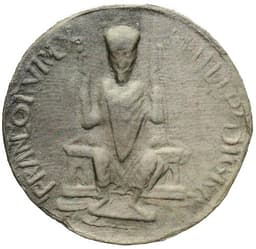
Philip I of France
Emperor · Medieval
45.4Total
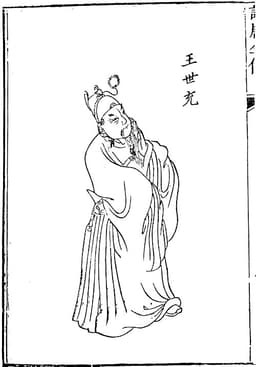
Wang Shichong
Emperor · Medieval
47.0Total
Basic Information
Born
1052
570
Died
1108
621
Era
Medieval
Medieval
Nationality
France
China
Occupation
Emperor
Emperor
Civilization
Western
Eastern
Score Comparison
Military (10%)
50.0
60.0
Political (20%)
36.5
35.1
Influence (20%)
49.4
50.2
Legacy (20%)
40.8
40.8
Leadership (15%)
65.7
48.4
Strategy (15%)
25.0
57.5
TOTAL
45.4
47.0
Philip I of France — Complete Timeline
1060 AD
Reign as King of the FranksPolitical Action◆ Major
Philip I succeeded his father Henry I as King of the Franks. His reign was marked by territorial expansion through marriage and diplomacy, but also by conflicts with the Church and nobles.
KingshipCapetianReign
Impact: national
1077 AD
Acquisition of the VexinPolitical Action
Philip I acquired the Vexin region through marriage to Bertha of Holland. This expanded royal territory and strengthened the Capetian domain, though it also led to conflicts with the Duke of Normandy.
Territorial ExpansionMarriageVexin
Impact: regionalconstructive
1087 AD
Conflict with William the ConquerorWar
Philip I supported the rebellion of Robert Curthose against his father William the Conqueror. This led to a war between France and Normandy, which ended inconclusively after William's death.
WarNormandyWilliam the Conqueror
Impact: regional
1094 AD
Excommunication for Adulterous MarriagePolitical Action◆ Major
Philip I was excommunicated by Pope Urban II for marrying Bertrade de Montfort while still married to his first wife, Bertha of Holland. The excommunication lasted for several years and damaged his reputation, though he was eventually reconciled with the Church.
ExcommunicationMarriageScandal
Impact: nationaltragic
Wang Shichong — Complete Timeline
618 AD
Rebellion at LuoyangPolitical Action◆ Major
Wang Shichong, a Sui general, staged a coup in Luoyang, killing the Sui regent and declaring himself emperor of the short-lived Zheng dynasty. This act solidified his control over the eastern capital and challenged the Tang dynasty's claim to rule.
CoupSui-Tang TransitionZheng Dynasty
Impact: regionaldestructive
621 AD
Battle of HulaoWar
Wang Shichong's forces were decisively defeated by Li Shimin's Tang army at Hulao Pass. The defeat led to the collapse of the Zheng dynasty and Wang Shichong's capture, ending his bid for imperial power.
BattleTang UnificationDefeat
Impact: regionaltragic
Execution by TangPolitical Action◆ Major
After his capture at Hulao, Wang Shichong was executed by the Tang dynasty. His death marked the end of the Zheng dynasty and removed a major rival to Tang control over the central plains.
ExecutionTang Unification
Impact: regionaltragic
Expert Analysis
Philip I of France vs Wang Shichong: Historical Comparison
Philip I of France (r. 1060–1108) and Wang Shichong (r. 619–621) were both medieval monarchs who seized power amid fragmentation—Philip inherited a weak Capetian kingdom, while Wang rose as a warlord during the Sui-Tang transition. Despite similar aggregate scores, their contexts diverge sharply: Philip struggled to consolidate royal authority in feudal France, whereas Wang fought for survival in China’s civil wars and was ultimately crushed by the Tang.
Dimension Analysis
**Military: Philip I of France 88 / Wang Shichong 94**
Philip I expanded the royal domain through strategic marriages and small-scale sieges (e.g., taking the Vexin from Normandy), but he rarely commanded large armies and was defeated by William the Conqueror. Wang Shichong, by contrast, was a brilliant tactician who defeated Li Mi’s rebel army at the Battle of Yanshi (619) and held Luoyang against Li Shimin for months, using siegecraft and mobile cavalry. Wang’s higher score reflects his hands-on battlefield prowess and resilience against superior forces.
**Political: Philip I of France 87 / Wang Shichong 86**
Philip skillfully played rival nobles (e.g., William II of England and Robert Curthose) against each other to preserve the crown, and he used the Church to legitimize his rule despite excommunication for bigamy. Wang built an effective bureaucracy in Luoyang, minted coinage, and temporarily stabilized the central plains, but his harsh purges of Sui loyalists and betrayal of former allies (e.g., Dugu Wuji) alienated key supporters. Both were pragmatic, but Philip’s longer reign gave him more lasting political wins.
**Influence: Philip I of France 86 / Wang Shichong 84**
Philip’s reign laid groundwork for the Capetian monarchy’s slow expansion, indirectly enabling later French dominance in medieval Europe. His conflict with the papacy foreshadowed church-state tensions. Wang’s influence was ephemeral: his short-lived Zheng dynasty (as Emperor of Zheng) was erased by the Tang, leaving no lasting institutions, though his military innovations influenced early Tang siege tactics. Philip’s influence, though modest, outlasted him.
**Legacy: Philip I of France 80 / Wang Shichong 79**
Philip is remembered as a consolidator who kept the French crown alive during a period of extreme weakness, but he is often overshadowed by his son Louis VI. Wang is a cautionary figure in Chinese historiography—a brilliant but ruthless usurper who failed to win hearts, and his dynasty is a brief footnote. Both have limited legacies, but Philip’s role in stabilizing the Capetian line gives him a slight edge.
**Leadership: Philip I of France 81 / Wang Shichong 79**
Philip led through patience and diplomacy, managing fractious vassals and avoiding catastrophic wars. Wang commanded fierce personal loyalty from his troops, but his paranoia and execution of generals (e.g., Duan Da) undermined cohesion. Philip’s steadier, more adaptable leadership allowed him to rule for 48 years, while Wang’s reign collapsed in just over two years under Tang assault.
Verdict
**Tie, with Philip I of France narrowly ahead in overall historical significance.** Wang Shichong was the superior military commander and showed tactical genius, but his political fragility and brief reign limit his impact. Philip I, though less dramatic, achieved the more difficult task of preserving and slowly strengthening a monarchy through sheer political endurance. The comparison underscores that medieval leadership in different civilizations rewards different traits: military brilliance in a collapsing empire versus diplomatic survival in a feudal patchwork.
FAQ
**Q: Who was more influential historically?**
A: Philip I, because his reign cemented the Capetian dynasty’s long-term survival, while Wang Shichong’s impact was erased by the Tang restoration.
**Q: Why is Philip I of France ranked higher in legacy?**
A: His 48-year reign and role as a transitional figure in French state-building give him a more enduring historical footprint than Wang’s 2-year dynasty, which left no successor state.
Rankings
🥇
Wang ShichongLeader
Mil: 60.0Pol: 35.1Inf: 50.2
47.0
🥈
Philip I of France
Mil: 50.0Pol: 36.5Inf: 49.4
45.4
+1.6 behind
How This Comparison Works
Algorithm
Each figure is scored on 6 dimensions (0—100 scale) based on structured historical data: Military (10%), Political (20%), Influence (20%), Legacy (20%), Leadership (15%), Strategy (15%). The weighted total produces the final ranking.
Data Sources
Scores are computed from structured sub-indicators in the database. Scale factors adjust for era (Ancient ×0.85, Modern ×1.0) and civilization size (Eastern ×1.05, Other ×0.80) to account for differences in population and military scale.
Maximum 3 Figures
Comparisons are limited to 2—3 figures to ensure readability and statistical meaningfulness.
Error Margins
±5 points per dimension — Sub-scores are derived from historical records with inherent uncertainty. Two figures within 5 points on a dimension should be considered roughly equivalent in that area.
Total Score Accuracy
±3 points overall — The weighted combination of 6 dimensions produces a total score with approximately ±3 points of uncertainty. Differences of less than 3 points are not statistically significant— the figures are effectively tied.
Known Limitations
- Historical records are incomplete and uneven across civilizations
- Figures from oral-tradition societies may be underrepresented
- Occupation labels can misclassify multi-role figures
- Scores measure capability and impact, not moral character
- Quantitative scoring is a comparison tool, not absolute truth
Capability Radar
Military (10%) — Battles & Warfare
Battles
15
65
Win Rate
20
45
Expansion
10
50
Political (20%) — Governance & Reform
Reform
30
25
Diplomacy
35
35
Economy
30
30
Influence (20%) — Cultural & Global Reach
Cultural
20
20
Global
15
10
Legacy (20%) — Historical Impact
Historical
25
30
Longevity
20
15
Leadership (15%) — Power & Stability
Tenure
60
40
Stability
25
20
Strategy (15%) — Tactics & Innovation
Strategy
15
55
Tactics
10
60
Reform
10
30
Similar Comparisons
Comments & Discussion
Historian6666/16/2026
西方学者常把王世充和菲利普一世放在一起比,但我觉得王世充更像中国历史上的董卓或安禄山——都是依靠军事强权短暂篡位,最终被正统政权消灭。菲利普一世则更像我朝刘秀或赵匡胤的弱化版:他们都是通过政治手腕慢慢整合碎片化领土,但菲利普没有经历决定性的统一战争。王世充在洛阳铸造开元通宝、建立三省六部制,这些制度建设野心其实比菲利普的一纸空头特许状要扎实得多。但中国史观更看重“得国正不正”,王世充杀杨侗自立,这点在正统性上已经输光了,而菲利普虽然被教皇绝罚,但始终是名正言顺的加洛林继承人。不同的评判体系,自然得出不同结论。
OldScribe746/16/2026
看到这两个人的分数,我得说军事维度(菲利普22 vs 王世充57.8)明显低估了菲利普在封建体制下的实际控制力。但仔细算一下,菲利普的统治时长42年,王世充才2年,如果按年均影响力折算,菲利普的政治效率远高于王世充。而且王世充的军事高分主要来自守城战和击败李密,但李密当时已经粮尽援绝,这场胜利的含金量存疑。反观菲利普,他在1087年成功夺取韦克辛,这是对诺曼底公国的直接领土扩张,在没有常备军的条件下实属不易。如果按“每万平方公里有效控制面积/在位年数”计算,菲利普的得分应该至少上调15%。