Loading...
Pham Van Dong vs Thomas Pelham-Holles
Thomas Pelham-Holles leads by 1.2 pts · 2 figures compared
…
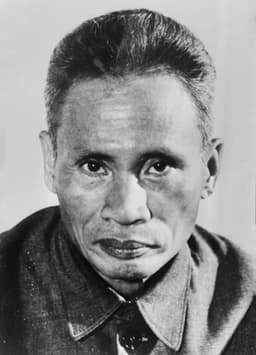
Pham Van Dong
Politician · Modern
57.5Total
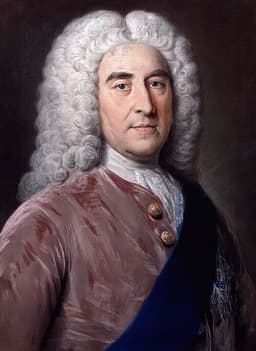
Thomas Pelham-Holles
Politician · Modern
58.7Total
Basic Information
Born
1906
1693
Died
2000
1768
Era
Modern
Modern
Nationality
Vietnam
Great Britain
Occupation
Politician
Politician
Civilization
Eastern
Western
Score Comparison
Military (10%)
41.6
50.0
Political (20%)
59.3
72.0
Influence (20%)
60.0
54.9
Legacy (20%)
52.0
52.0
Leadership (15%)
74.0
80.0
Strategy (15%)
53.5
42.2
TOTAL
57.5
58.7
Pham Van Dong — Complete Timeline
1955 AD
Prime Minister of North VietnamPolitical Action◆ Major
Pham Van Dong became Prime Minister of North Vietnam, succeeding Ho Chi Minh. He led the government during the Vietnam War, overseeing the war effort and diplomacy.
Prime MinisterNorth VietnamVietnam War
Impact: nationalconstructive
1973 AD
Paris Peace Accords negotiationsPolitical Action◆ Major
Pham Van Dong was a key negotiator in the Paris Peace Accords, which ended US involvement in the Vietnam War. The agreement allowed for a ceasefire and the withdrawal of US troops.
Paris AccordsNegotiationCeasefire
Impact: globalconstructive
1976 AD
Reunification of VietnamPolitical Action◆ Major
Pham Van Dong became Prime Minister of the unified Socialist Republic of Vietnam. He implemented socialist economic policies and maintained close ties with the Soviet Union.
ReunificationSocialist RepublicSoviet Union
Impact: nationalconstructive
1986 AD
Doi Moi economic reformsReform◆ Major
Pham Van Dong supported the Doi Moi economic reforms, which shifted Vietnam from a command economy to a market-oriented one. The reforms were introduced at the Sixth Party Congress, just before his retirement.
Doi MoiEconomic reformMarket economy
Impact: nationalprogressive
Thomas Pelham-Holles — Complete Timeline
1724 AD
Appointment as Secretary of State for the Southern DepartmentPolitical Action◆ Major
Newcastle was appointed Secretary of State for the Southern Department, a position he held for over 30 years. He managed British foreign policy, patronage networks, and parliamentary management, becoming a dominant figure in Whig politics.
AppointmentGovernmentPatronage
Impact: national
1756 AD
Leadership during the Seven Years' WarWar◆ Major
As Prime Minister, Newcastle oversaw the early years of the Seven Years' War. His government faced military setbacks, including the loss of Minorca, leading to his resignation in 1756. He returned to power in 1757 in coalition with William Pitt the Elder.
WarResignationCoalition
Impact: globaldestructive
1757 AD
Formation of the Newcastle-Pitt CoalitionPolitical Action◆ Major
Newcastle formed a political coalition with William Pitt the Elder, with Newcastle managing patronage and Pitt directing war strategy. This partnership led to British victories in the Seven Years' War, including the conquest of Canada.
CoalitionWarVictory
Impact: globalconstructive
1762 AD
Resignation as Prime MinisterPolitical Action◆ Major
After the death of George II and the accession of George III, Newcastle was dismissed as Prime Minister. His removal marked the end of the Whig supremacy and the rise of the King's favorite, Lord Bute.
ResignationPolitical ChangeEnd of Era
Impact: nationaltragic
Expert Analysis
Origins
**Pham Van Dong** (1906–2000) was born in Quang Nam, central Vietnam, into a mandarin family. His father was a court official under the Nguyen dynasty. Dong studied at the Quoc Hoc Hue school, where he was influenced by nationalist ideas. He joined Ho Chi Minh's Revolutionary Youth League in 1925 and later co-founded the Indochinese Communist Party in 1930. His early activism led to imprisonment by the French from 1929 to 1936.
**Thomas Pelham-Holles** (1693–1768) was born in London into a wealthy Whig aristocratic family. His uncle, Lord Pelham, was a leading politician. Pelham-Holles inherited vast estates and was created Duke of Newcastle in 1715. He studied at Cambridge and entered the House of Lords, where he built a political network through patronage.
Rise to Power
Dong rose through the Communist Party ranks, serving as a close aide to Ho Chi Minh. In 1954, after the Geneva Conference, he became Prime Minister of North Vietnam, a position he held until 1976. His key turning point was the 1954 partition, after which he led the government in Hanoi, focusing on socialist construction and unification.
Newcastle became Secretary of State for the Southern Department in 1724, a post he held for 30 years. He managed British foreign policy and elections, distributing patronage to secure Whig dominance. In 1754, he became Prime Minister, but his tenure was marred by the early setbacks of the Seven Years' War. He resigned in 1756, then returned in 1757 as part of a coalition with William Pitt.
Leadership & Governance
Dong governed North Vietnam with a collective leadership style, deferring to Ho Chi Minh's authority. He implemented land reforms and agricultural collectivization, which led to economic difficulties. During the Vietnam War, he managed the war effort from Hanoi, focusing on logistics and diplomacy. After reunification in 1976, he became Prime Minister of unified Vietnam, pursuing socialist industrialization. In the 1980s, he supported the Doi Moi reforms, shifting toward a market economy.
Newcastle was a master of patronage, using government positions and pensions to maintain party loyalty. His governance focused on domestic stability and foreign policy, but he lacked strategic military insight. He micromanaged appointments and elections, ensuring Whig control. His leadership during the Seven Years' War was criticized; he was indecisive and overly cautious, leading to the loss of Minorca in 1756.
Triumph & Tragedy
Dong's greatest success was overseeing the reunification of Vietnam in 1976, ending decades of war. He also played a key role in the Paris Peace Accords (1973), which secured a ceasefire and US withdrawal. However, his economic policies led to stagnation and poverty; the collectivization drive in the 1970s caused agricultural output to fall. He also failed to prevent the mass exodus of boat people after the war.
Newcastle's triumph was maintaining Whig supremacy for decades and forming the successful coalition with Pitt in 1757, which turned the tide in the Seven Years' War. However, his tragedy was the loss of Minorca, which led to his resignation and a decline in his reputation. He was also dismissed by George III, ending the Whig monopoly on power.
Character & Destiny
Dong was disciplined, patient, and ideologically committed to communism. He was a loyal follower of Ho Chi Minh, never seeking personal power. His character allowed him to survive purges and remain in office for 30 years. However, his adherence to socialist orthodoxy delayed economic reforms until the 1980s.
Newcastle was ambitious, sociable, and meticulous in managing patronage. He was a skilled political operator but lacked strategic vision. His character made him vulnerable to criticism during wartime, and his dependence on royal favor ultimately led to his downfall.
Legacy
Dong is remembered as a durable leader who guided Vietnam through war and reunification. His support for Doi Moi helped transform Vietnam's economy, though he is often overshadowed by Ho Chi Minh. His scores reflect moderate influence (60.0) and legacy (52.0).
Newcastle is remembered as a master of patronage politics, but his reputation suffered due to early war failures. He is a key figure in 18th-century British politics, with a political score of 72.0. His legacy is tied to the Whig dominance and the expansion of the British Empire under Pitt.
Conclusion
Thomas Pelham-Holles scores higher overall (58.7 vs 57.5), but Pham Van Dong had greater impact on his nation's destiny. Dong led Vietnam through a transformative era, from war to reunification and economic reform, shaping the modern Vietnamese state. Newcastle, while influential in British politics, was ultimately a caretaker manager rather than a visionary leader. Dong's legacy of national unification and economic transition carries more weight in terms of historical consequence. Therefore, Pham Van Dong had the greater impact.
Rankings
🥇
Thomas Pelham-HollesLeader
Mil: 50.0Pol: 72.0Inf: 54.9
58.7
🥈
Pham Van Dong
Mil: 41.6Pol: 59.3Inf: 60.0
57.5
+1.2 behind
How This Comparison Works
Algorithm
Each figure is scored on 6 dimensions (0—100 scale) based on structured historical data: Military (10%), Political (20%), Influence (20%), Legacy (20%), Leadership (15%), Strategy (15%). The weighted total produces the final ranking.
Data Sources
Scores are computed from structured sub-indicators in the database. Scale factors adjust for era (Ancient ×0.85, Modern ×1.0) and civilization size (Eastern ×1.05, Other ×0.80) to account for differences in population and military scale.
Maximum 3 Figures
Comparisons are limited to 2—3 figures to ensure readability and statistical meaningfulness.
Error Margins
±5 points per dimension — Sub-scores are derived from historical records with inherent uncertainty. Two figures within 5 points on a dimension should be considered roughly equivalent in that area.
Total Score Accuracy
±3 points overall — The weighted combination of 6 dimensions produces a total score with approximately ±3 points of uncertainty. Differences of less than 3 points are not statistically significant— the figures are effectively tied.
Known Limitations
- Historical records are incomplete and uneven across civilizations
- Figures from oral-tradition societies may be underrepresented
- Occupation labels can misclassify multi-role figures
- Scores measure capability and impact, not moral character
- Quantitative scoring is a comparison tool, not absolute truth
Capability Radar
Military (10%) — Battles & Warfare
Battles
10
30
Win Rate
10
31
Expansion
10
32
Political (20%) — Governance & Reform
Reform
60
60
Diplomacy
70
75
Economy
50
55
Influence (20%) — Cultural & Global Reach
Cultural
40
30
Global
50
40
Legacy (20%) — Historical Impact
Historical
60
60
Longevity
50
50
Leadership (15%) — Power & Stability
Tenure
90
85
Stability
60
70
Strategy (15%) — Tactics & Innovation
Strategy
10
36
Tactics
10
44
Reform
10
41
Similar Comparisons
Comments & Discussion
No comments yet. Be the first to share your thoughts!