Loading...
Per Albin Hansson vs Stjepan Mesic
Per Albin Hansson leads by 5.0 pts · 2 figures compared
…
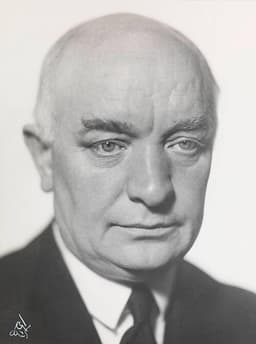
Per Albin Hansson
Politician · Modern
59.3Total
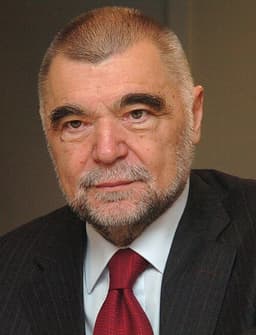
Stjepan Mesic
Politician · Modern
54.3Total
Basic Information
Born
1885
1934
Died
1946
—
Era
Modern
Modern
Nationality
Sweden
Croatia
Occupation
Politician
Politician
Civilization
Western
Western
Score Comparison
Military (10%)
50.0
50.0
Political (20%)
72.0
68.0
Influence (20%)
62.0
53.3
Legacy (20%)
52.0
43.3
Leadership (15%)
72.0
72.0
Strategy (15%)
42.2
41.2
TOTAL
59.3
54.3
Per Albin Hansson — Complete Timeline
1932 AD
Became Prime Minister of SwedenPolitical Action
Hansson became Prime Minister on September 24, 1932, leading a Social Democratic government. He initiated the 'Folkhemmet' (People's Home) welfare state program, which expanded social security, public housing, and labor rights, shaping modern Sweden.
FolkhemmetWelfare StateSocial Democracy
Impact: nationalconstructive
1939 AD
Declared Swedish Neutrality in World War IIPolitical Action◆ Major
At the outbreak of World War II in September 1939, Hansson declared Sweden's neutrality. This policy kept Sweden out of the war, though it involved controversial concessions to Nazi Germany, including iron ore exports and troop transit rights.
World War IINeutralityForeign Policy
Impact: global
Formed a National Unity GovernmentPolitical Action◆ Major
After the Soviet invasion of Finland in November 1939, Hansson formed a broad coalition government including all major parties except the Communists. This unity government managed Sweden's wartime policies and maintained domestic stability.
World War IICoalitionNational Unity
Impact: nationalconstructive
1940 AD
Negotiated the 'Permittenttrafik' AgreementPolitical Action◆ Major
In July 1940, Hansson's government agreed to allow German troops to transit through Sweden to Norway. This concession violated Sweden's neutrality and was heavily criticized, but it was seen as necessary to avoid German invasion.
World War IINeutralityConcession
Impact: regional
1946 AD
Expanded the Folkhemmet Welfare StateReform◆ Major
In his final years, Hansson oversaw the expansion of the Folkhemmet with the introduction of universal child allowances and improved pensions. These reforms solidified Sweden's social democratic model and were implemented shortly before his death.
FolkhemmetWelfareSocial Reform
Impact: nationalconstructive
Stjepan Mesic — Complete Timeline
2000 AD
Election as President of CroatiaPolitical Action◆ Major
Mesić was elected President of Croatia after the death of Franjo Tuđman. He succeeded Tuđman and led the country through a period of democratic consolidation and European integration.
PresidencyCroatia
Impact: nationalconstructive
Cooperation with ICTYPolitical Action◆ Major
Mesić cooperated with the International Criminal Tribunal for the former Yugoslavia (ICTY), extraditing Croatian war crimes suspects. This improved Croatia's relations with the EU and NATO.
War CrimesEuropean Integration
Impact: regionalconstructive
2010 AD
End of PresidencyPolitical Action
Mesić completed his second term as president and stepped down. He was succeeded by Ivo Josipović.
PresidencyTransition
Impact: national
Expert Analysis
Origins
Per Albin Hansson was born on October 28, 1885, in Fosie, Sweden, into a working-class family. His father was a mason. Hansson left school early and became active in the Social Democratic youth movement, joining the Swedish Social Democratic Party (SAP) in 1903. He rose through the ranks as a journalist and party organizer, becoming editor of the newspaper *Social-Demokraten* in 1909.
Stjepan Mesic was born on December 24, 1934, in Orahovica, Croatia, then part of Yugoslavia. His father was a teacher. Mesic studied law at the University of Zagreb, graduating in 1961. He entered politics early, serving as mayor of his hometown and later as a judge. He was active in the Croatian Spring movement in 1971, which sought greater autonomy for Croatia, leading to his arrest and a brief imprisonment.
Rise to Power
Hansson became a member of the Riksdag in 1918 and served as Minister of Defence from 1920 to 1926. After the SAP's electoral victory in 1932, he became Prime Minister on September 24, 1932, leading a minority government. He consolidated power by forming coalitions and expanding social reforms.
Mesic rose to prominence in the 1990s as a member of the Croatian Democratic Union (HDZ) and served as the last President of the Presidency of Yugoslavia in 1990-1991, overseeing Croatia's independence. After Franjo Tuđman's death, Mesic left the HDZ and formed a new party, winning the presidential election in February 2000 with 56% of the vote. He succeeded Tuđman and led Croatia through democratic consolidation.
Leadership & Governance
Hansson's leadership was defined by his concept of *Folkhemmet* (the People's Home), a welfare state that aimed to provide social security for all citizens. He implemented policies such as universal child allowances, improved pensions, and public housing. During World War II, he declared Sweden's neutrality in September 1939 and formed a national unity government after the Soviet invasion of Finland. However, his government made concessions to Germany, such as the Permittenttrafik agreement in July 1940, allowing German troops to transit through Sweden. This violated neutrality but aimed to avoid invasion.
Mesic's presidency focused on democratic consolidation, cooperation with the International Criminal Tribunal for the former Yugoslavia (ICTY), and integration into Euro-Atlantic institutions. He extradited Croatian war crimes suspects, which improved relations with the West but was controversial domestically. He also worked to reduce the power of the executive, strengthening parliamentary democracy. His political score of 68.0 reflects his role in stabilizing Croatia after Tuđman's authoritarian rule.
Triumph & Tragedy
Hansson's greatest success was the establishment of the Folkhemmet welfare state, which created a model of social democracy that endured for decades. His neutrality policy kept Sweden out of World War II, but the concessions to Germany (e.g., troop transit) tarnished Sweden's moral standing. His failure to prevent the Holocaust is also criticized, as Sweden accepted few Jewish refugees.
Mesic's triumph was overseeing a peaceful transition of power and improving Croatia's international standing. His cooperation with the ICTY led to the extradition of war criminals, but it also caused domestic backlash and accusations of betrayal. His influence score of 53.3 and legacy score of 43.3 indicate a more limited long-term impact compared to Hansson.
Character & Destiny
Hansson was pragmatic and consensus-oriented, earning the nickname "Per Albin" as a symbol of stability. His leadership style of compromise allowed him to maintain power for 14 years, but his decisions during WWII were criticized as opportunistic. He died in office on October 6, 1946, leaving a mixed legacy.
Mesic was a charismatic reformer who broke with the HDZ to champion democratic values. His willingness to cooperate with the ICTY showed moral courage, but his political influence waned after leaving office. He scored 72.0 in leadership, matching Hansson, but his strategy score of 41.2 was lower, reflecting less long-term planning.
Legacy
Hansson's legacy is the Swedish welfare state, which remains a cornerstone of Swedish society. His Folkhemmet concept influenced social democratic policies globally. He is remembered as a founding father of modern Sweden, with a legacy score of 52.0.
Mesic's legacy is more modest: he is credited with consolidating Croatian democracy and steering the country towards EU membership (achieved in 2013). However, his impact is overshadowed by Tuđman's role in independence and later controversies. His total score of 54.3 reflects a solid but less transformative career.
Conclusion
Per Albin Hansson had a greater historical impact than Stjepan Mesic. His total score of 59.3 versus Mesic's 54.3 reflects his longer tenure and creation of a lasting welfare state model. While Mesic played a crucial role in Croatia's democratic transition, Hansson's policies shaped Swedish society for generations and influenced social democracy worldwide. Hansson's political score of 72.0 and influence of 62.0 outpace Mesic's 68.0 and 53.3, respectively, underscoring his broader impact.
Rankings
🥇
Per Albin HanssonLeader
Mil: 50.0Pol: 72.0Inf: 62.0
59.3
🥈
Stjepan Mesic
Mil: 50.0Pol: 68.0Inf: 53.3
54.3
+5.0 behind
How This Comparison Works
Algorithm
Each figure is scored on 6 dimensions (0—100 scale) based on structured historical data: Military (10%), Political (20%), Influence (20%), Legacy (20%), Leadership (15%), Strategy (15%). The weighted total produces the final ranking.
Data Sources
Scores are computed from structured sub-indicators in the database. Scale factors adjust for era (Ancient ×0.85, Modern ×1.0) and civilization size (Eastern ×1.05, Other ×0.80) to account for differences in population and military scale.
Maximum 3 Figures
Comparisons are limited to 2—3 figures to ensure readability and statistical meaningfulness.
Error Margins
±5 points per dimension — Sub-scores are derived from historical records with inherent uncertainty. Two figures within 5 points on a dimension should be considered roughly equivalent in that area.
Total Score Accuracy
±3 points overall — The weighted combination of 6 dimensions produces a total score with approximately ±3 points of uncertainty. Differences of less than 3 points are not statistically significant— the figures are effectively tied.
Known Limitations
- Historical records are incomplete and uneven across civilizations
- Figures from oral-tradition societies may be underrepresented
- Occupation labels can misclassify multi-role figures
- Scores measure capability and impact, not moral character
- Quantitative scoring is a comparison tool, not absolute truth
Capability Radar
Military (10%) — Battles & Warfare
Battles
27
27
Win Rate
31
32
Expansion
34
36
Political (20%) — Governance & Reform
Reform
75
55
Diplomacy
80
60
Economy
70
50
Influence (20%) — Cultural & Global Reach
Cultural
55
30
Global
55
30
Legacy (20%) — Historical Impact
Historical
60
35
Longevity
50
25
Leadership (15%) — Power & Stability
Tenure
65
65
Stability
85
45
Strategy (15%) — Tactics & Innovation
Strategy
39
36
Tactics
41
41
Reform
42
41
Similar Comparisons
Comments & Discussion
No comments yet. Be the first to share your thoughts!