Loading...
Alexander De Croo vs Per Albin Hansson
Per Albin Hansson leads by 11.0 pts · 2 figures compared
…

Alexander De Croo
Politician · Modern
48.3Total
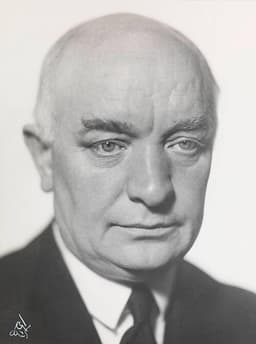
Per Albin Hansson
Politician · Modern
59.3Total
Basic Information
Born
1975
1885
Died
—
1946
Era
Modern
Modern
Nationality
Belgium
Sweden
Occupation
Politician
Politician
Civilization
Western
Western
Score Comparison
Military (10%)
14.0
50.0
Political (20%)
68.0
72.0
Influence (20%)
51.0
62.0
Legacy (20%)
37.5
52.0
Leadership (15%)
74.0
72.0
Strategy (15%)
34.7
42.2
TOTAL
48.3
59.3
Alexander De Croo — Complete Timeline
2012 AD
Appointed Deputy Prime Minister of BelgiumPolitical Action
Alexander De Croo became Deputy Prime Minister and Minister of Pensions in the Di Rupo government. He later served as Minister of Development Cooperation and Minister of Finance, gaining experience in coalition governance.
Belgian PoliticsCoalitionGovernment
Impact: nationalconstructive
2020 AD
Became Prime Minister of BelgiumPolitical Action◆ Major
De Croo became Prime Minister of Belgium, leading a seven-party coalition government. His appointment ended a 16-month political deadlock after the 2019 elections, with a focus on COVID-19 recovery and economic reforms.
Belgian PoliticsPrime MinisterCoalition
Impact: nationalconstructive
Led Belgium's COVID-19 ResponsePolitical Action◆ Major
De Croo's government managed the COVID-19 pandemic, including lockdowns, vaccination rollout, and economic support. Belgium faced high infection rates and criticism over hospital capacity, but the vaccination campaign eventually reached high coverage.
COVID-19Belgian PoliticsPublic Health
Impact: national
2021 AD
Hosted NATO Summit in BrusselsPolitical Action
De Croo hosted the NATO summit in Brussels, where leaders discussed defense spending, Afghanistan withdrawal, and relations with Russia. The summit reaffirmed NATO's collective defense commitments.
NATOSummitDefense
Impact: globalconstructive
2022 AD
Navigated Energy Crisis and InflationPolitical Action◆ Major
De Croo's government responded to the energy crisis caused by the Russia-Ukraine war, implementing price caps and subsidies for households. Belgium also faced high inflation, leading to social unrest and strikes.
Energy CrisisInflationBelgian Politics
Impact: national
Per Albin Hansson — Complete Timeline
1932 AD
Became Prime Minister of SwedenPolitical Action
Hansson became Prime Minister on September 24, 1932, leading a Social Democratic government. He initiated the 'Folkhemmet' (People's Home) welfare state program, which expanded social security, public housing, and labor rights, shaping modern Sweden.
FolkhemmetWelfare StateSocial Democracy
Impact: nationalconstructive
1939 AD
Declared Swedish Neutrality in World War IIPolitical Action◆ Major
At the outbreak of World War II in September 1939, Hansson declared Sweden's neutrality. This policy kept Sweden out of the war, though it involved controversial concessions to Nazi Germany, including iron ore exports and troop transit rights.
World War IINeutralityForeign Policy
Impact: global
Formed a National Unity GovernmentPolitical Action◆ Major
After the Soviet invasion of Finland in November 1939, Hansson formed a broad coalition government including all major parties except the Communists. This unity government managed Sweden's wartime policies and maintained domestic stability.
World War IICoalitionNational Unity
Impact: nationalconstructive
1940 AD
Negotiated the 'Permittenttrafik' AgreementPolitical Action◆ Major
In July 1940, Hansson's government agreed to allow German troops to transit through Sweden to Norway. This concession violated Sweden's neutrality and was heavily criticized, but it was seen as necessary to avoid German invasion.
World War IINeutralityConcession
Impact: regional
1946 AD
Expanded the Folkhemmet Welfare StateReform◆ Major
In his final years, Hansson oversaw the expansion of the Folkhemmet with the introduction of universal child allowances and improved pensions. These reforms solidified Sweden's social democratic model and were implemented shortly before his death.
FolkhemmetWelfareSocial Reform
Impact: nationalconstructive
Expert Analysis
Origins
Alexander De Croo was born on November 3, 1975, in Vilvoorde, Belgium, into a political family; his father, Herman De Croo, served as President of the Chamber of Representatives. He studied business engineering at the Vrije Universiteit Brussel and later earned an MBA from Northwestern University. His early career was in business, working for the Boston Consulting Group and co-founding a consulting firm.
Per Albin Hansson was born on October 28, 1885, in Fosie, Sweden, to a working-class family. He left school at age 12 to work as a grocery clerk. He became active in the Social Democratic youth movement and rose through the party ranks, becoming editor of the newspaper *Social-Demokraten* in 1909. His formative experiences were shaped by class struggle and labor organizing.
Rise to Power
De Croo entered politics in 2009 as a member of the Chamber of Representatives for the Open Flemish Liberals and Democrats. He quickly rose to prominence, becoming Deputy Prime Minister and Minister of Pensions in 2012. In 2020, after a 16-month political deadlock, he became Prime Minister of Belgium, leading a seven-party coalition government.
Hansson became Prime Minister of Sweden on September 24, 1932, after the Social Democrats won a major electoral victory. He had previously served as Minister of Defense from 1920 to 1926. His rise was built on his vision of "Folkhemmet" (the People's Home), which resonated during the Great Depression.
Leadership & Governance
De Croo's leadership style is pragmatic and consensus-driven, necessary for Belgium's complex coalition politics. He managed the COVID-19 pandemic with lockdowns and a vaccination rollout, though Belgium faced high infection rates. During the 2022 energy crisis, his government implemented price caps and subsidies. His political score of 68.0 reflects his ability to navigate crises, but his strategy score of 34.7 indicates reactive rather than visionary planning.
Hansson's leadership was transformative and strategic. He built the Swedish welfare state, introducing universal child allowances and improved pensions. His governance approach was inclusive, forming a national unity government during World War II. He scored 72.0 in political skills and 72.0 in leadership, with a strategy score of 42.2, higher than De Croo's.
Triumph & Tragedy
De Croo's triumphs include ending a prolonged political deadlock and leading Belgium through the pandemic and energy crisis. However, his tenure was marred by the country's high COVID-19 death rate and ongoing political fragmentation. His legacy score of 37.5 is modest.
Hansson's triumphs are monumental: he established the Swedish welfare state and maintained neutrality during World War II. Yet, his neutrality involved concessions, such as allowing German troop transit (the "Permittenttrafik" agreement), which has been criticized as morally questionable. His legacy score of 52.0 reflects enduring impact.
Character & Destiny
De Croo is seen as a competent technocrat but lacking charisma. His ability to form coalitions kept him in power, but his reactive style limited transformative change. His total score of 48.3 is low.
Hansson was a determined, visionary leader who shaped Sweden's identity. His character combined pragmatism with idealism, enabling him to build a welfare state while navigating war. His total score of 59.3 is higher.
Legacy
De Croo's legacy is tied to crisis management and coalition governance. His policies on COVID-19 and energy will be studied, but his long-term impact is uncertain. He scored 37.5 in legacy.
Hansson's legacy is profound: the Folkhemmet model influenced Nordic social democracy globally. Sweden's neutrality during WWII set a precedent. His legacy score of 52.0 reflects lasting influence.
Conclusion
While De Croo managed immediate crises effectively, Hansson's creation of the Swedish welfare state and navigation of WWII have had a far greater and more enduring impact. Hansson's score of 59.3 versus De Croo's 48.3 reflects this. Per Albin Hansson had significantly greater impact.
Rankings
🥇
Per Albin HanssonLeader
Mil: 50.0Pol: 72.0Inf: 62.0
59.3
🥈
Alexander De Croo
Mil: 14.0Pol: 68.0Inf: 51.0
48.3
+11.0 behind
How This Comparison Works
Algorithm
Each figure is scored on 6 dimensions (0—100 scale) based on structured historical data: Military (10%), Political (20%), Influence (20%), Legacy (20%), Leadership (15%), Strategy (15%). The weighted total produces the final ranking.
Data Sources
Scores are computed from structured sub-indicators in the database. Scale factors adjust for era (Ancient ×0.85, Modern ×1.0) and civilization size (Eastern ×1.05, Other ×0.80) to account for differences in population and military scale.
Maximum 3 Figures
Comparisons are limited to 2—3 figures to ensure readability and statistical meaningfulness.
Error Margins
±5 points per dimension — Sub-scores are derived from historical records with inherent uncertainty. Two figures within 5 points on a dimension should be considered roughly equivalent in that area.
Total Score Accuracy
±3 points overall — The weighted combination of 6 dimensions produces a total score with approximately ±3 points of uncertainty. Differences of less than 3 points are not statistically significant— the figures are effectively tied.
Known Limitations
- Historical records are incomplete and uneven across civilizations
- Figures from oral-tradition societies may be underrepresented
- Occupation labels can misclassify multi-role figures
- Scores measure capability and impact, not moral character
- Quantitative scoring is a comparison tool, not absolute truth
Capability Radar
Military (10%) — Battles & Warfare
Battles
20
27
Win Rate
24
31
Expansion
27
34
Political (20%) — Governance & Reform
Reform
45
75
Diplomacy
55
80
Economy
50
70
Influence (20%) — Cultural & Global Reach
Cultural
20
55
Global
25
55
Legacy (20%) — Historical Impact
Historical
20
60
Longevity
15
50
Leadership (15%) — Power & Stability
Tenure
40
65
Stability
45
85
Strategy (15%) — Tactics & Innovation
Strategy
34
39
Tactics
36
41
Reform
35
42
Similar Comparisons
Comments & Discussion
No comments yet. Be the first to share your thoughts!