Loading...
Mohamed Boudiaf vs Stjepan Mesic
Stjepan Mesic leads by 12.3 pts · 2 figures compared
…
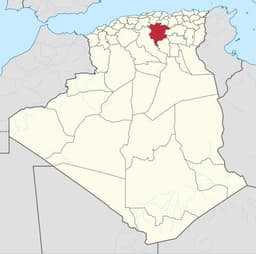
Mohamed Boudiaf
Politician · Modern
42.0Total
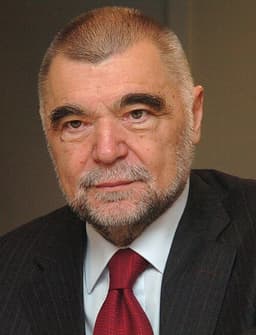
Stjepan Mesic
Politician · Modern
54.3Total
Basic Information
Born
1919
1934
Died
1992
—
Era
Modern
Modern
Nationality
Algeria
Croatia
Occupation
Politician
Politician
Civilization
Middle Eastern
Western
Score Comparison
Military (10%)
26.9
50.0
Political (20%)
37.9
68.0
Influence (20%)
52.5
53.3
Legacy (20%)
45.8
43.3
Leadership (15%)
31.2
72.0
Strategy (15%)
43.4
41.2
TOTAL
42.0
54.3
Mohamed Boudiaf — Complete Timeline
1954 AD
Co-founded the National Liberation Front (FLN)Political Action
Mohamed Boudiaf was a founding member of the National Liberation Front (FLN) in November 1954, the revolutionary organization that launched the Algerian War of Independence against French colonial rule. He helped organize the armed struggle and served as a key political leader.
Algerian WarIndependenceFLN
Impact: nationalconstructive
1956 AD
Arrested and imprisoned by French authoritiesPolitical Action◆ Major
Boudiaf was arrested by French authorities in 1956 along with other FLN leaders, including Ahmed Ben Bella. He was imprisoned in France for the duration of the war, spending nearly six years in detention until the Evian Accords in 1962.
ImprisonmentAlgerian WarFrench Colonialism
Impact: nationaltragic
1963 AD
Exiled and founded the Socialist Forces Front (FFS)Political Action◆ Major
After independence, Boudiaf opposed the authoritarian turn of the FLN under Ahmed Ben Bella. He went into exile in Morocco and founded the Socialist Forces Front (FFS) in 1963, a leftist opposition party that advocated for democratic socialism and multi-party politics.
OppositionExilePolitical Party
Impact: nationalconstructive
1992 AD
Returned from exile and became President of AlgeriaPolitical Action
Boudiaf returned from 27 years of exile in Morocco on January 16, 1992, to become President of the High State Council (HCE), Algeria's collective presidency. He was appointed after the military canceled the 1991 legislative elections to prevent an Islamist victory, tasked with restoring stability.
PresidencyAlgerian Civil WarHCE
Impact: national
Assassinated during a public speechPolitical Action
Boudiaf was assassinated on June 29, 1992, in Annaba while giving a speech at a cultural center. He was shot by a bodyguard, Lieutenant Larbi Belkheir, who was allegedly linked to Islamist extremists. His death deepened Algeria's civil war and removed a key moderate figure.
AssassinationAlgerian Civil WarPolitical Violence
Impact: nationaltragic
Stjepan Mesic — Complete Timeline
2000 AD
Election as President of CroatiaPolitical Action◆ Major
Mesić was elected President of Croatia after the death of Franjo Tuđman. He succeeded Tuđman and led the country through a period of democratic consolidation and European integration.
PresidencyCroatia
Impact: nationalconstructive
Cooperation with ICTYPolitical Action◆ Major
Mesić cooperated with the International Criminal Tribunal for the former Yugoslavia (ICTY), extraditing Croatian war crimes suspects. This improved Croatia's relations with the EU and NATO.
War CrimesEuropean Integration
Impact: regionalconstructive
2010 AD
End of PresidencyPolitical Action
Mesić completed his second term as president and stepped down. He was succeeded by Ivo Josipović.
PresidencyTransition
Impact: national
Expert Analysis
Origins
**Mohamed Boudiaf** was born on June 23, 1919, in Ouled Madhi, Algeria, into a modest family. He received a French primary education but left school early to work. His political awakening came through exposure to nationalist ideas, and he joined the Algerian People's Party (PPA) in the 1940s. Boudiaf's formative experiences included serving in the French army during World War II, which deepened his anti-colonial resolve.
**Stjepan Mesić** was born on December 24, 1934, in Orahovica, Croatia, then part of Yugoslavia. He came from a relatively well-off family; his father was a lawyer. Mesić studied law at the University of Zagreb, graduating in 1961. His early political involvement began in the 1960s within the League of Communists of Croatia, where he advocated for Croatian autonomy within Yugoslavia.
Rise to Power
Boudiaf co-founded the National Liberation Front (FLN) in November 1954, launching the Algerian War of Independence. He was arrested by French authorities in 1956 and imprisoned until 1962. After independence, he opposed the authoritarian turn under Ahmed Ben Bella and went into exile in Morocco in 1963, founding the Socialist Forces Front (FFS). For 27 years, he remained in opposition, returning only on January 16, 1992, to become President of the High State Council (HCE) during Algeria's civil war.
Mesić rose through the ranks of the Croatian communist establishment. In 1990, he joined the Croatian Democratic Union (HDZ) under Franjo Tuđman and became Prime Minister of Croatia. He later served as the last President of the Presidency of Yugoslavia (1991), where he attempted to preserve the federation. After Tuđman's death in 1999, Mesić was elected President of Croatia in February 2000, defeating the HDZ candidate.
Leadership & Governance
Boudiaf's leadership was cut short after 163 days. His governance focused on ending the civil war and reforming the FLN's one-party system. He proposed dissolving the FLN's political monopoly and initiating a dialogue with Islamists. His political score of 37.9 reflects limited time but principled stances. Boudiaf's strategy score of 43.4 indicates a moderate approach, but his military score of 26.9 shows no direct military command.
Mesić, with a leadership score of 72.0 and political score of 68.0, consolidated Croatian democracy. He reduced presidential powers, strengthened parliament, and improved relations with the West. Crucially, he cooperated with the International Criminal Tribunal for the former Yugoslavia (ICTY), extraditing Croatian war crimes suspects, which boosted Croatia's international standing. His military score of 50.0 reflects his role as commander-in-chief during peacetime.
Triumph & Tragedy
Boudiaf's triumph was his role in founding the FLN, which led to Algerian independence. His tragic assassination on June 29, 1992, by a bodyguard, likely orchestrated by hardliners, cut short his reformist agenda. His legacy score of 45.8 is tarnished by unfulfilled promises.
Mesić's triumph was steering Croatia toward NATO and EU membership, with accession to NATO in 2009. His cooperation with the ICTY, while controversial domestically, earned international respect. However, his presidency saw economic stagnation and corruption scandals. He scored 43.3 in legacy, reflecting mixed long-term impact.
Character & Destiny
Boudiaf was principled and idealistic, willing to oppose his former comrades. His decision to return from exile showed courage but also naivety about the dangers. He was assassinated because he threatened entrenched interests.
Mesić was pragmatic and adaptable, shifting from communist to nationalist to democrat. His character favored consensus and international integration, but critics saw him as opportunistic. He completed two terms and left office peacefully, a contrast to Boudiaf's violent end.
Legacy
Boudiaf is remembered as a martyr for democracy in Algeria. His FFS party remains a minor opposition force. His assassination deepened the civil war. His influence score of 52.5 reflects symbolic importance.
Mesić's legacy is more tangible: Croatia's democratic consolidation and Euro-Atlantic integration. He is seen as a transitional figure who moved the country beyond Tuđman's authoritarianism. His total score of 54.3 surpasses Boudiaf's 42.0 across all dimensions.
Conclusion
Stjepan Mesić had greater impact. His political and leadership scores (68.0 and 72.0) far exceed Boudiaf's (37.9 and 31.2). While Boudiaf's role in Algeria's independence was foundational, his time in power was too brief to effect lasting change. Mesić, with a total score of 54.3, successfully transitioned Croatia from authoritarianism to democracy, aligning it with the West. His policies shaped Croatia's trajectory for decades, whereas Boudiaf's assassination left Algeria in turmoil. The data supports Mesić as the more effective leader.
Rankings
🥇
Stjepan MesicLeader
Mil: 50.0Pol: 68.0Inf: 53.3
54.3
🥈
Mohamed Boudiaf
Mil: 26.9Pol: 37.9Inf: 52.5
42.0
+12.3 behind
How This Comparison Works
Algorithm
Each figure is scored on 6 dimensions (0—100 scale) based on structured historical data: Military (10%), Political (20%), Influence (20%), Legacy (20%), Leadership (15%), Strategy (15%). The weighted total produces the final ranking.
Data Sources
Scores are computed from structured sub-indicators in the database. Scale factors adjust for era (Ancient ×0.85, Modern ×1.0) and civilization size (Eastern ×1.05, Other ×0.80) to account for differences in population and military scale.
Maximum 3 Figures
Comparisons are limited to 2—3 figures to ensure readability and statistical meaningfulness.
Error Margins
±5 points per dimension — Sub-scores are derived from historical records with inherent uncertainty. Two figures within 5 points on a dimension should be considered roughly equivalent in that area.
Total Score Accuracy
±3 points overall — The weighted combination of 6 dimensions produces a total score with approximately ±3 points of uncertainty. Differences of less than 3 points are not statistically significant— the figures are effectively tied.
Known Limitations
- Historical records are incomplete and uneven across civilizations
- Figures from oral-tradition societies may be underrepresented
- Occupation labels can misclassify multi-role figures
- Scores measure capability and impact, not moral character
- Quantitative scoring is a comparison tool, not absolute truth
Capability Radar
Military (10%) — Battles & Warfare
Battles
20
27
Win Rate
22
32
Expansion
28
36
Political (20%) — Governance & Reform
Reform
40
55
Diplomacy
35
60
Economy
10
50
Influence (20%) — Cultural & Global Reach
Cultural
30
30
Global
25
30
Legacy (20%) — Historical Impact
Historical
45
35
Longevity
30
25
Leadership (15%) — Power & Stability
Tenure
10
65
Stability
5
45
Strategy (15%) — Tactics & Innovation
Strategy
33
36
Tactics
31
41
Reform
36
41
Similar Comparisons
Comments & Discussion
No comments yet. Be the first to share your thoughts!