Loading...
John Stuart of Bute vs Stjepan Mesic
Stjepan Mesic leads by 13.8 pts · 2 figures compared
…

John Stuart of Bute
Politician · Modern
40.5Total
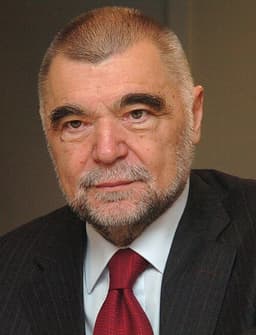
Stjepan Mesic
Politician · Modern
54.3Total
Basic Information
Born
1713
1934
Died
1792
—
Era
Modern
Modern
Nationality
Great Britain
Croatia
Occupation
Politician
Politician
Civilization
Western
Western
Score Comparison
Military (10%)
50.0
50.0
Political (20%)
32.2
68.0
Influence (20%)
47.1
53.3
Legacy (20%)
35.8
43.3
Leadership (15%)
38.1
72.0
Strategy (15%)
42.6
41.2
TOTAL
40.5
54.3
John Stuart of Bute — Complete Timeline
1762 AD
Appointment as Prime MinisterPolitical Action◆ Major
Bute was appointed Prime Minister by George III, becoming the first Scottish-born holder of the office. His close relationship with the King and his Scottish background made him deeply unpopular with the English public and political elite.
AppointmentPrime MinisterUnpopular
Impact: national
1763 AD
Imposition of the Cider TaxReform
Bute's government introduced a tax on cider production to raise revenue. The tax provoked widespread protests in cider-producing regions, especially the West Country, and contributed to Bute's unpopularity and eventual resignation.
TaxationProtestUnpopular
Impact: nationaldestructive
Negotiation of the Treaty of Paris (1763)Political Action◆ Major
Bute's government negotiated the Treaty of Paris, ending the Seven Years' War. Britain gained Canada, Florida, and territories in India, but Bute was criticized for returning some conquests to France and Spain, fueling accusations of weakness.
TreatyDiplomacyWar
Impact: globalconstructive
Resignation as Prime MinisterPolitical Action◆ Major
Facing intense public hostility, parliamentary opposition, and mob violence, Bute resigned as Prime Minister after only 11 months. He remained influential as a behind-the-scenes advisor to George III, but never held high office again.
ResignationPolitical FailureMob
Impact: nationaltragic
Stjepan Mesic — Complete Timeline
2000 AD
Election as President of CroatiaPolitical Action◆ Major
Mesić was elected President of Croatia after the death of Franjo Tuđman. He succeeded Tuđman and led the country through a period of democratic consolidation and European integration.
PresidencyCroatia
Impact: nationalconstructive
Cooperation with ICTYPolitical Action◆ Major
Mesić cooperated with the International Criminal Tribunal for the former Yugoslavia (ICTY), extraditing Croatian war crimes suspects. This improved Croatia's relations with the EU and NATO.
War CrimesEuropean Integration
Impact: regionalconstructive
2010 AD
End of PresidencyPolitical Action
Mesić completed his second term as president and stepped down. He was succeeded by Ivo Josipović.
PresidencyTransition
Impact: national
Expert Analysis
Origins
John Stuart, 3rd Earl of Bute (1713–1792), was born into Scottish aristocracy. His father died when he was young, and he was raised by his mother. He studied at Eton and Leiden, developing interests in botany and architecture. His marriage to Mary Wortley Montagu brought him into the orbit of Frederick, Prince of Wales, whose wife he tutored. This connection would later prove crucial.
Stjepan Mesic (born 1934) was born in Orahovica, Croatia, then part of Yugoslavia. His father was a teacher. Mesic studied law at the University of Zagreb, graduating in 1961. He began his political career in the Communist Party, serving as a mayor and later in the Croatian parliament. His early career was marked by a moderate nationalist stance within the Yugoslav framework.
Rise to Power
Bute's rise was tied to his relationship with the royal family. After Frederick's death, he became a confidant of the future George III. When George III ascended the throne in 1760, he appointed Bute as Secretary of State, and in 1762, Bute became Prime Minister. His rapid ascent was resented by the established Whig aristocracy, who saw him as a royal favorite.
Mesic rose to prominence during Croatia's independence movement. In 1990, he became the last President of the Presidency of Yugoslavia, serving a one-year term. During this time, he worked to manage the dissolution of Yugoslavia. After Croatia's independence, he was a member of parliament and later a judge on the Constitutional Court. He was elected President in 2000 after the death of Franjo Tuđman, winning with a broad coalition.
Leadership & Governance
Bute's leadership was marked by his close alignment with George III. He attempted to end the patronage system and reduce government spending, but his reforms were unpopular. He imposed the Cider Tax in 1763 to raise revenue, which sparked widespread protests. His governance style was secretive and relied on royal favor, lacking a parliamentary base. He scored 38.1 in leadership, reflecting his inability to manage opposition.
Mesic's leadership focused on democratic consolidation and European integration. He cooperated with the International Criminal Tribunal for the former Yugoslavia (ICTY), extraditing war crimes suspects, which improved Croatia's international standing. He also worked to reduce presidential powers and strengthen parliament. His leadership score of 72.0 reflects his effectiveness in guiding Croatia through transition. He pursued a pro-Western foreign policy, seeking NATO and EU membership.
Triumph & Tragedy
Bute's greatest triumph was negotiating the Treaty of Paris (1763), which ended the Seven Years' War and expanded British territories. However, the treaty was criticized as too lenient on France. His tragedy was his short tenure (11 months) and intense public hatred. He was accused of being a royal puppet and faced mob violence, leading to his resignation. His political score of 32.2 reflects his failure to sustain power.
Mesic's triumph was steering Croatia away from the authoritarianism of Tuđman and toward democracy. He oversaw constitutional reforms and improved relations with neighboring countries. His tragedy was that his presidency coincided with economic stagnation and high unemployment. He also faced criticism for not doing enough to combat corruption. His legacy score of 43.3 is moderate, as his impact was limited by institutional constraints.
Character & Destiny
Bute was intelligent and cultured but politically inept. He lacked the charisma and cunning needed for 18th-century British politics. His close relationship with the king made him vulnerable to accusations of undue influence. His character—aloof, principled, and stubborn—contributed to his downfall. He scored 42.6 in strategy, indicating a failure to navigate political realities.
Mesic was pragmatic and conciliatory. He sought to heal divisions after the Tuđman era. His character was that of a consensus-builder, which suited Croatia's post-war context. However, his cautious approach sometimes lacked boldness. His strategy score of 41.2 reflects his measured but sometimes indecisive style. His destiny was to be a transitional figure, consolidating democracy but not driving radical change.
Legacy
Bute's legacy is largely negative. He is remembered as an unpopular prime minister who favored royal power. However, his botanical work and patronage of the arts had some lasting impact. His tenure highlighted the tensions between monarchy and parliament. His total score of 40.5 places him among lesser British PMs.
Mesic's legacy is more positive. He is credited with stabilizing Croatia's democracy and advancing Euro-Atlantic integration. His cooperation with the ICTY set a precedent for accountability. However, his long-term impact is limited by the persistence of corruption and nationalist politics. His total score of 54.3 reflects a moderate but meaningful contribution.
Conclusion
Stjepan Mesic had greater impact than John Stuart of Bute. Mesic's presidency helped consolidate Croatian democracy after a period of authoritarian rule, while Bute's brief tenure was marked by failure and unpopularity. Mesic's political score (68.0) far exceeds Bute's (32.2), and his leadership (72.0 vs 38.1) shows a clear advantage. While Bute's Treaty of Paris was historically significant, his overall influence was fleeting. Mesic's role in stabilizing a new nation and integrating it into Western institutions gives him a more enduring legacy. The data supports the conclusion that Mesic's impact was greater.
Rankings
🥇
Stjepan MesicLeader
Mil: 50.0Pol: 68.0Inf: 53.3
54.3
🥈
John Stuart of Bute
Mil: 50.0Pol: 32.2Inf: 47.1
40.5
+13.8 behind
How This Comparison Works
Algorithm
Each figure is scored on 6 dimensions (0—100 scale) based on structured historical data: Military (10%), Political (20%), Influence (20%), Legacy (20%), Leadership (15%), Strategy (15%). The weighted total produces the final ranking.
Data Sources
Scores are computed from structured sub-indicators in the database. Scale factors adjust for era (Ancient ×0.85, Modern ×1.0) and civilization size (Eastern ×1.05, Other ×0.80) to account for differences in population and military scale.
Maximum 3 Figures
Comparisons are limited to 2—3 figures to ensure readability and statistical meaningfulness.
Error Margins
±5 points per dimension — Sub-scores are derived from historical records with inherent uncertainty. Two figures within 5 points on a dimension should be considered roughly equivalent in that area.
Total Score Accuracy
±3 points overall — The weighted combination of 6 dimensions produces a total score with approximately ±3 points of uncertainty. Differences of less than 3 points are not statistically significant— the figures are effectively tied.
Known Limitations
- Historical records are incomplete and uneven across civilizations
- Figures from oral-tradition societies may be underrepresented
- Occupation labels can misclassify multi-role figures
- Scores measure capability and impact, not moral character
- Quantitative scoring is a comparison tool, not absolute truth
Capability Radar
Military (10%) — Battles & Warfare
Battles
30
27
Win Rate
29
32
Expansion
35
36
Political (20%) — Governance & Reform
Reform
20
55
Diplomacy
25
60
Economy
20
50
Influence (20%) — Cultural & Global Reach
Cultural
10
30
Global
10
30
Legacy (20%) — Historical Impact
Historical
15
35
Longevity
10
25
Leadership (15%) — Power & Stability
Tenure
15
65
Stability
10
45
Strategy (15%) — Tactics & Innovation
Strategy
38
36
Tactics
43
41
Reform
43
41
Similar Comparisons
Comments & Discussion
No comments yet. Be the first to share your thoughts!