Loading...
This comparison has not been analyzed yet.
One-time AI generation (~1 minute). Scores and timeline are already available below.
Paul Reynaud vs Sokollu Mehmed Pasha
Sokollu Mehmed Pasha leads by 10.5 pts · 2 figures compared
…

Paul Reynaud
Politician · Modern
50.0Total
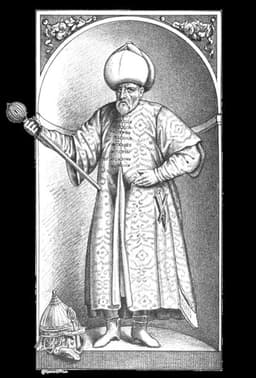
Sokollu Mehmed Pasha
Politician · Modern
60.5Total
Basic Information
Born
1878
1506
Died
1966
1579
Era
Modern
Modern
Nationality
France
Ottoman Empire
Occupation
Politician
Politician
Civilization
Western
Middle Eastern
Score Comparison
Military (10%)
49.1
52.5
Political (20%)
46.6
75.0
Influence (20%)
54.9
55.0
Legacy (20%)
49.2
55.0
Leadership (15%)
51.9
75.0
Strategy (15%)
43.3
52.5
TOTAL
50.0
60.5
Paul Reynaud — Complete Timeline
1940 AD
Appointment as Prime Minister during the Fall of FrancePolitical Action
Reynaud became Prime Minister of France on March 21, 1940, during the German invasion. He attempted to rally resistance, appointing Charles de Gaulle as Under-Secretary of State for War, but faced military collapse and political opposition, leading to France's armistice with Germany in June 1940.
World War IIFall of FranceGovernment
Impact: globaltragic
Proposal for Franco-British UnionPolitical Action◆ Major
As the German army advanced, Reynaud proposed a union between France and Britain to continue the war. The plan, supported by Churchill, was rejected by the French cabinet, leading to Reynaud's resignation and the formation of P
World War IIDiplomacyFranco-British Union
Impact: global
Arrest and Imprisonment by Vichy RegimePolitical Action◆ Major
After resigning, Reynaud was arrested by the Vichy regime in September 1940. He was tried and sentenced to life imprisonment in 1942, held in various prisons and later deported to Germany. He was liberated in 1945, having refused to collaborate with the Nazis.
Vichy FranceImprisonmentWorld War II
Impact: nationaltragic
1948 AD
Return to Politics and Ministerial RolesPolitical Action
After the war, Reynaud returned to politics, serving as Minister of Finance and Economic Affairs in 1948. He advocated for European integration and economic liberalization, but his influence waned as the Fourth Republic stabilized, and he retired from active politics in the 1950s.
Fourth RepublicPost-WarEconomic Policy
Impact: nationalconstructive
Sokollu Mehmed Pasha — Complete Timeline
1565 AD
Siege of MaltaWar◆ Major
As Grand Vizier, Sokollu Mehmed Pasha oversaw the Ottoman siege of Malta. The campaign failed to capture the island from the Knights Hospitaller, marking a significant Ottoman defeat in the Mediterranean and halting their westward expansion.
Ottoman-Habsburg WarsMediterraneanDefeat
Impact: regional
Appointment as Grand VizierPolitical Action◆ Major
Sokollu Mehmed Pasha was appointed Grand Vizier of the Ottoman Empire by Sultan Suleiman. He served under three sultans (Suleiman, Selim II, and Murad III), maintaining stability and overseeing the empire's administration during a period of expansion and consolidation.
Ottoman AdministrationGrand VizierStability
Impact: globalconstructive
1571 AD
Conquest of CyprusWar◆ Major
Under Sokollu Mehmed Pasha's administration, the Ottoman Empire conquered Cyprus from the Republic of Venice. The island became an Ottoman province, though the victory was followed by the naval defeat at Lepanto later that year.
Ottoman ExpansionCyprusVenice
Impact: regional
1579 AD
AssassinationPolitical Action◆ Major
Sokollu Mehmed Pasha was assassinated in the Divan chamber of the Topkapi Palace by a disgruntled soldier. His death ended the longest uninterrupted tenure as Grand Vizier in Ottoman history and marked the beginning of a period of political instability.
AssassinationOttoman PoliticsEnd of Era
Impact: nationaltragic
This comparison has not been analyzed yet.
One-time AI generation (~1 minute). Scores and timeline are already available below.
Rankings
🥇
Sokollu Mehmed PashaLeader
Mil: 52.5Pol: 75.0Inf: 55.0
60.5
🥈
Paul Reynaud
Mil: 49.1Pol: 46.6Inf: 54.9
50.0
+10.5 behind
How This Comparison Works
Algorithm
Each figure is scored on 6 dimensions (0—100 scale) based on structured historical data: Military (10%), Political (20%), Influence (20%), Legacy (20%), Leadership (15%), Strategy (15%). The weighted total produces the final ranking.
Data Sources
Scores are computed from structured sub-indicators in the database. Scale factors adjust for era (Ancient ×0.85, Modern ×1.0) and civilization size (Eastern ×1.05, Other ×0.80) to account for differences in population and military scale.
Maximum 3 Figures
Comparisons are limited to 2—3 figures to ensure readability and statistical meaningfulness.
Error Margins
±5 points per dimension — Sub-scores are derived from historical records with inherent uncertainty. Two figures within 5 points on a dimension should be considered roughly equivalent in that area.
Total Score Accuracy
±3 points overall — The weighted combination of 6 dimensions produces a total score with approximately ±3 points of uncertainty. Differences of less than 3 points are not statistically significant— the figures are effectively tied.
Known Limitations
- Historical records are incomplete and uneven across civilizations
- Figures from oral-tradition societies may be underrepresented
- Occupation labels can misclassify multi-role figures
- Scores measure capability and impact, not moral character
- Quantitative scoring is a comparison tool, not absolute truth
Capability Radar
Military (10%) — Battles & Warfare
Battles
31
60
Win Rate
33
65
Expansion
33
70
Political (20%) — Governance & Reform
Reform
40
80
Diplomacy
45
90
Economy
30
85
Influence (20%) — Cultural & Global Reach
Cultural
20
60
Global
40
70
Legacy (20%) — Historical Impact
Historical
55
75
Longevity
30
65
Leadership (15%) — Power & Stability
Tenure
30
85
Stability
15
80
Strategy (15%) — Tactics & Innovation
Strategy
39
75
Tactics
42
70
Reform
44
55
Similar Comparisons
Comments & Discussion
No comments yet. Be the first to share your thoughts!