Loading...
Misael Pastrana vs Sokollu Mehmed Pasha
Sokollu Mehmed Pasha leads by 12.0 pts · 2 figures compared
…

Misael Pastrana
Politician · Modern
48.5Total
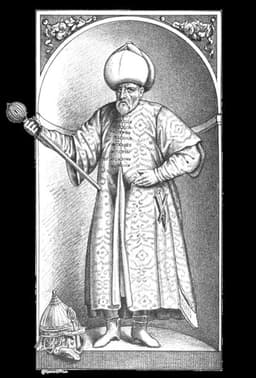
Sokollu Mehmed Pasha
Politician · Modern
60.5Total
Basic Information
Born
1923
1506
Died
—
1579
Era
Modern
Modern
Nationality
Colombia
Ottoman Empire
Occupation
Politician
Politician
Civilization
Western
Middle Eastern
Score Comparison
Military (10%)
50.0
52.5
Political (20%)
48.0
75.0
Influence (20%)
49.4
55.0
Legacy (20%)
40.0
55.0
Leadership (15%)
65.0
75.0
Strategy (15%)
42.5
52.5
TOTAL
48.5
60.5
Misael Pastrana — Complete Timeline
1970 AD
Presidency of ColombiaPolitical Action◆ Major
Misael Pastrana became President of Colombia in 1970 as the last president under the National Front agreement. His election was marred by allegations of fraud against Gustavo Rojas Pinilla, leading to the formation of the M-19 guerrilla group.
PresidencyNational FrontElection Controversy
Impact: national
1971 AD
Economic Policies and Industrial PromotionReform
Pastrana's government implemented policies to promote industrial development and import substitution. His administration focused on infrastructure projects and supported the growth of domestic manufacturing sectors.
Industrial PolicyEconomic DevelopmentInfrastructure
Impact: nationalconstructive
1974 AD
End of the National FrontPolitical Action◆ Major
Pastrana oversaw the end of the National Front power-sharing agreement in 1974, returning Colombia to competitive elections. His administration managed the transition while maintaining the bipartisan coalition's institutional legacy.
National FrontTransitionDemocracy
Impact: national
Sokollu Mehmed Pasha — Complete Timeline
1565 AD
Siege of MaltaWar◆ Major
As Grand Vizier, Sokollu Mehmed Pasha oversaw the Ottoman siege of Malta. The campaign failed to capture the island from the Knights Hospitaller, marking a significant Ottoman defeat in the Mediterranean and halting their westward expansion.
Ottoman-Habsburg WarsMediterraneanDefeat
Impact: regional
Appointment as Grand VizierPolitical Action◆ Major
Sokollu Mehmed Pasha was appointed Grand Vizier of the Ottoman Empire by Sultan Suleiman. He served under three sultans (Suleiman, Selim II, and Murad III), maintaining stability and overseeing the empire's administration during a period of expansion and consolidation.
Ottoman AdministrationGrand VizierStability
Impact: globalconstructive
1571 AD
Conquest of CyprusWar◆ Major
Under Sokollu Mehmed Pasha's administration, the Ottoman Empire conquered Cyprus from the Republic of Venice. The island became an Ottoman province, though the victory was followed by the naval defeat at Lepanto later that year.
Ottoman ExpansionCyprusVenice
Impact: regional
1579 AD
AssassinationPolitical Action◆ Major
Sokollu Mehmed Pasha was assassinated in the Divan chamber of the Topkapi Palace by a disgruntled soldier. His death ended the longest uninterrupted tenure as Grand Vizier in Ottoman history and marked the beginning of a period of political instability.
AssassinationOttoman PoliticsEnd of Era
Impact: nationaltragic
Expert Analysis
Origins
Misael Pastrana was born in 1923 in Neiva, Colombia, into a politically active family. He studied law at the Pontifical Xavierian University and later entered diplomacy, serving as ambassador to the United States and the United Nations. His early career was marked by his involvement in the National Front coalition, a power-sharing agreement between Colombia's Liberal and Conservative parties designed to end decades of violence.
Sokollu Mehmed Pasha was born around 1506 in Sokolovići, a village in Bosnia (then part of the Ottoman Empire), to an Orthodox Christian family. He was taken as a child through the devşirme system, converted to Islam, and educated in the Ottoman military and administrative elite. He rose through the ranks, becoming a trusted official under Sultan Suleiman the Magnificent.
Rise to Power
Pastrana's rise was tied to the National Front. He served as Minister of Development under President Carlos Lleras Restrepo and later as ambassador. In 1970, he ran for president as the Conservative candidate of the National Front against former dictator Gustavo Rojas Pinilla. The election was extremely close and marred by allegations of fraud, with Pastrana declared winner. His presidency began amid protests and accusations of illegitimacy.
Sokollu Mehmed Pasha rose through military and administrative posts. He became governor of the Danube region, then beylerbey of Rumelia. His military successes, including campaigns in Hungary and Transylvania, earned him the position of Grand Vizier in 1565 under Suleiman. He served under three sultans: Suleiman, Selim II, and Murad III, maintaining power for 14 years.
Leadership & Governance
Pastrana's governance focused on continuing the National Front's agenda: economic development, infrastructure, and industrial promotion. He pursued import substitution policies and expanded public works. However, his administration was seen as a caretaker, presiding over the end of the National Front in 1974. His leadership score is 65.0, reflecting steady but uninspired management. He lacked the political skill to address the fraud allegations or reform the system.
Sokollu Mehmed Pasha was a master administrator and diplomat. He maintained the Ottoman state's stability through three sultanic transitions, often acting as the real power behind the throne. He oversaw major projects like the construction of the Sokollu Mehmed Pasha Mosque and the restoration of the Hejaz railway. His political score of 75.0 reflects his ability to navigate palace intrigue. He attempted to build a canal between the Don and Volga rivers, a visionary but failed project.
Triumph & Tragedy
Pastrana's greatest success was overseeing a peaceful transition to competitive elections in 1974, ending the 16-year National Front. However, his presidency was tainted by the 1970 election fraud allegations, which weakened his legitimacy. His economic policies had limited impact, as Colombia faced rising inflation and inequality. His legacy score of 40.0 reflects his minor historical footprint.
Sokollu Mehmed Pasha's triumphs include the conquest of Cyprus in 1570-71, adding a key island to the empire. He also secured peace with the Habsburgs and expanded Ottoman influence in the Indian Ocean. His tragedy was the failed Siege of Malta in 1565, which cost thousands of lives and ended in retreat. His assassination in 1579, stabbed in the Divan chamber, cut short his influence. His military score of 52.5 reflects mixed results.
Character & Destiny
Pastrana was cautious, legalistic, and loyal to the National Front framework. His character led him to prioritize stability over reform, but the fraud allegations haunted his legacy. He lacked the charisma to inspire or the ruthlessness to consolidate power. His destiny was to be a transitional figure, remembered more for the system he ended than for his own actions.
Sokollu Mehmed Pasha was pragmatic, patient, and strategic. He understood the limits of Ottoman power and sought to consolidate rather than expand recklessly. His ability to serve under three sultans shows his political acumen. However, his assassination by a disgruntled soldier highlights the dangers of court life. His leadership score of 75.0 reflects his effective governance.
Legacy
Pastrana's legacy is minimal. He is remembered as the last president of the National Front, a footnote in Colombian history. His policies had little long-term impact, and the fraud allegations overshadow his tenure. He scored 48.5 overall, reflecting a modest historical role.
Sokollu Mehmed Pasha left a deeper mark. He stabilized the Ottoman Empire during a turbulent period, maintained the devşirme system, and expanded the empire's territory. His administrative reforms influenced Ottoman governance for generations. He scored 60.5 overall, with higher political and leadership scores. His legacy is that of a capable grand vizier who kept the empire strong despite weak sultans.
Conclusion
Sokollu Mehmed Pasha had a greater impact than Misael Pastrana. His political score of 75.0 versus Pastrana's 48.0, and leadership score of 75.0 versus 65.0, show his superior skill. Pastrana was a caretaker in a declining system, while Sokollu was a power broker who shaped an empire. Sokollu's reforms and conquests had lasting consequences, while Pastrana's tenure was a brief transition. The data supports Sokollu as the more influential figure.
Rankings
🥇
Sokollu Mehmed PashaLeader
Mil: 52.5Pol: 75.0Inf: 55.0
60.5
🥈
Misael Pastrana
Mil: 50.0Pol: 48.0Inf: 49.4
48.5
+12.0 behind
How This Comparison Works
Algorithm
Each figure is scored on 6 dimensions (0—100 scale) based on structured historical data: Military (10%), Political (20%), Influence (20%), Legacy (20%), Leadership (15%), Strategy (15%). The weighted total produces the final ranking.
Data Sources
Scores are computed from structured sub-indicators in the database. Scale factors adjust for era (Ancient ×0.85, Modern ×1.0) and civilization size (Eastern ×1.05, Other ×0.80) to account for differences in population and military scale.
Maximum 3 Figures
Comparisons are limited to 2—3 figures to ensure readability and statistical meaningfulness.
Error Margins
±5 points per dimension — Sub-scores are derived from historical records with inherent uncertainty. Two figures within 5 points on a dimension should be considered roughly equivalent in that area.
Total Score Accuracy
±3 points overall — The weighted combination of 6 dimensions produces a total score with approximately ±3 points of uncertainty. Differences of less than 3 points are not statistically significant— the figures are effectively tied.
Known Limitations
- Historical records are incomplete and uneven across civilizations
- Figures from oral-tradition societies may be underrepresented
- Occupation labels can misclassify multi-role figures
- Scores measure capability and impact, not moral character
- Quantitative scoring is a comparison tool, not absolute truth
Capability Radar
Military (10%) — Battles & Warfare
Battles
28
60
Win Rate
30
65
Expansion
36
70
Political (20%) — Governance & Reform
Reform
40
80
Diplomacy
45
90
Economy
35
85
Influence (20%) — Cultural & Global Reach
Cultural
20
60
Global
15
70
Legacy (20%) — Historical Impact
Historical
25
75
Longevity
15
65
Leadership (15%) — Power & Stability
Tenure
50
85
Stability
30
80
Strategy (15%) — Tactics & Innovation
Strategy
36
75
Tactics
43
70
Reform
43
55
Similar Comparisons
Comments & Discussion
No comments yet. Be the first to share your thoughts!