Loading...
K. Kamaraj vs Sokollu Mehmed Pasha
K. Kamaraj leads by 0.7 pts · 2 figures compared
…
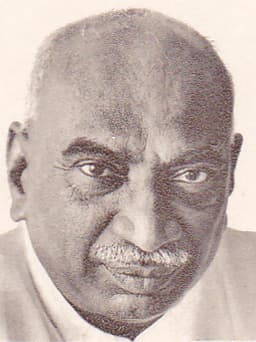
K. Kamaraj
Politician · Modern
61.2Total
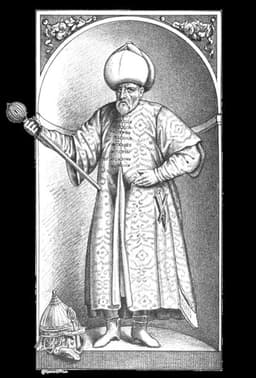
Sokollu Mehmed Pasha
Politician · Modern
60.5Total
Basic Information
Born
1903
1506
Died
1975
1579
Era
Modern
Modern
Nationality
India
Ottoman Empire
Occupation
Politician
Politician
Civilization
Indian
Middle Eastern
Score Comparison
Military (10%)
29.5
52.5
Political (20%)
72.0
75.0
Influence (20%)
61.0
55.0
Legacy (20%)
58.0
55.0
Leadership (15%)
78.0
75.0
Strategy (15%)
60.0
52.5
TOTAL
61.2
60.5
K. Kamaraj — Complete Timeline
1954 AD
Served as Chief Minister of Madras StatePolitical Action◆ Major
Kamaraj became Chief Minister of Madras State, serving from 1954 to 1963. His tenure focused on education expansion, including the introduction of free and compulsory education, and the construction of major irrigation projects.
Chief MinisterEducationDevelopment
Impact: regionalconstructive
1963 AD
Elected as Congress PresidentPolitical Action◆ Major
Kamaraj was elected President of the Indian National Congress, a position he held until 1967. He used his influence to shape party strategy and leadership, earning the title 'Kingmaker' for his role in selecting prime ministers.
Congress PresidentKingmakerLeadership
Impact: nationalconstructive
1964 AD
Orchestrated the Selection of Lal Bahadur Shastri as Prime MinisterPolitical Action◆ Major
After Nehru's death, Kamaraj played a pivotal role in securing the selection of Lal Bahadur Shastri as Prime Minister, bypassing more senior leaders. This demonstrated his influence as a key power broker within the Congress party.
Prime Minister SelectionKingmakerCongress
Impact: nationalconstructive
1966 AD
Facilitated Indira Gandhi's Rise to Prime MinisterPolitical Action◆ Major
Following Shastri's sudden death, Kamaraj again used his influence to support Indira Gandhi's candidacy for Prime Minister, helping her defeat Morarji Desai. This decision shaped Indian politics for decades.
Prime Minister SelectionIndira GandhiKingmaker
Impact: nationalconstructive
1967 AD
Resigned as Congress President after the 1967 ElectionsPolitical Action
After the Congress party's poor performance in the 1967 general elections, Kamaraj resigned as Congress President, taking responsibility for the setback. This marked the decline of the 'Syndicate' faction's dominance.
Resignation1967 ElectionsCongress
Impact: national
Sokollu Mehmed Pasha — Complete Timeline
1565 AD
Siege of MaltaWar◆ Major
As Grand Vizier, Sokollu Mehmed Pasha oversaw the Ottoman siege of Malta. The campaign failed to capture the island from the Knights Hospitaller, marking a significant Ottoman defeat in the Mediterranean and halting their westward expansion.
Ottoman-Habsburg WarsMediterraneanDefeat
Impact: regional
Appointment as Grand VizierPolitical Action◆ Major
Sokollu Mehmed Pasha was appointed Grand Vizier of the Ottoman Empire by Sultan Suleiman. He served under three sultans (Suleiman, Selim II, and Murad III), maintaining stability and overseeing the empire's administration during a period of expansion and consolidation.
Ottoman AdministrationGrand VizierStability
Impact: globalconstructive
1571 AD
Conquest of CyprusWar◆ Major
Under Sokollu Mehmed Pasha's administration, the Ottoman Empire conquered Cyprus from the Republic of Venice. The island became an Ottoman province, though the victory was followed by the naval defeat at Lepanto later that year.
Ottoman ExpansionCyprusVenice
Impact: regional
1579 AD
AssassinationPolitical Action◆ Major
Sokollu Mehmed Pasha was assassinated in the Divan chamber of the Topkapi Palace by a disgruntled soldier. His death ended the longest uninterrupted tenure as Grand Vizier in Ottoman history and marked the beginning of a period of political instability.
AssassinationOttoman PoliticsEnd of Era
Impact: nationaltragic
Expert Analysis
Origins
K. Kamaraj was born on July 15, 1903, in Virudhunagar, Tamil Nadu, into a modest Hindu family. He had limited formal education, leaving school at age 12 to work in his uncle's shop. His early involvement in the Indian independence movement, joining the Congress party in 1920, shaped his political trajectory. Kamaraj's grassroots activism and organizational skills earned him respect within the party.
Sokollu Mehmed Pasha was born around 1505 in Sokolovići, Bosnia, into a Serbian Orthodox family. He was taken as a child through the devşirme system, converted to Islam, and trained in the Ottoman imperial service. His education in the palace school prepared him for high administrative and military roles. He rose through the ranks, serving as a naval commander and provincial governor before becoming grand vizier.
Rise to Power
Kamaraj's rise was gradual and rooted in local politics. He became a member of the Madras Legislative Assembly in 1937 and later served as the Chief Minister of Madras State from 1954 to 1963. His tenure focused on education expansion, including the introduction of free primary education and the midday meal scheme, which significantly increased enrollment. His political acumen and ability to build consensus within the Congress party led to his election as Congress President in 1964. In this role, he became a kingmaker, orchestrating the selection of Lal Bahadur Shastri as Prime Minister after Nehru's death in 1964 and later facilitating Indira Gandhi's rise in 1966.
Sokollu Mehmed Pasha's rise was through meritocratic Ottoman institutions. He served as a naval commander, then governor of the Sanjak of Tirhala, and later as beylerbey of Rumelia. His military successes, including the capture of the fortress of Szigetvár in 1566, brought him to prominence. He was appointed Grand Vizier in 1565 by Sultan Suleiman, a position he held for 14 years under three sultans: Suleiman, Selim II, and Murad III. His tenure marked the longest uninterrupted service as grand vizier in Ottoman history.
Leadership & Governance
Kamaraj's leadership style was democratic and consensus-driven. He focused on party organization and grassroots mobilization. As Chief Minister, he implemented educational reforms: free primary education and the midday meal scheme, which increased school attendance from 0.5 million to 1.5 million in Madras. He also promoted industrialization, establishing the Neyveli Lignite Corporation and the Madras Refineries. His 'Kamaraj Plan' in 1963 asked senior Congress leaders to resign from government posts to work for party revitalization, which strengthened the party but also centralized power.
Sokollu Mehmed Pasha governed with administrative efficiency and strategic vision. He oversaw the conquest of Cyprus in 1570–1571, adding a key Mediterranean island to the empire. He also attempted to build a canal between the Don and Volga rivers to connect the Black Sea and the Caspian, but the project was abandoned. His governance focused on maintaining stability and continuity, but he faced challenges from factionalism. He scored 75.0 in Political and 75.0 in Leadership, reflecting his administrative skill.
Triumph & Tragedy
Kamaraj's greatest success was his role as kingmaker, shaping Indian politics by elevating Shastri and Indira Gandhi. His education reforms in Madras had lasting impact: literacy rates in Tamil Nadu increased from 19% in 1951 to 37% in 1961. However, his failure was his inability to adapt to the changing political landscape after 1967. The Congress party's poor performance in the 1967 elections led to his resignation as party president, and he lost influence as Indira Gandhi consolidated power. He was marginalized and died in 1975, largely forgotten at the national level.
Sokollu Mehmed Pasha's greatest triumph was the conquest of Cyprus, which secured Ottoman dominance in the eastern Mediterranean. He also maintained stability during the transition between three sultans. His tragedy was the failed Siege of Malta in 1565, which ended in a costly defeat. His assassination in 1579 by a disgruntled soldier ended his long tenure, and the empire soon faced internal decay. His military score of 52.5 reflects mixed results.
Character & Destiny
Kamaraj was known for his simplicity, integrity, and humility. He lived frugally, often wearing simple khadi clothes, and was deeply committed to democratic processes. His character made him a respected party figure but also limited his ambition; he never sought high office himself. This selflessness enabled his kingmaker role but also left him vulnerable when power shifted. Historians note his political score of 72.0 reflects his strategic use of influence.
Sokollu Mehmed Pasha was pragmatic and patient, able to navigate the treacherous Ottoman court. He maintained power through loyalty to the sultans and by balancing factions. However, his long tenure bred enemies, leading to his assassination. His character of caution and diplomacy served him well but could not prevent the empire's slow decline after his death. He scored 75.0 in Political and 75.0 in Leadership.
Legacy
Kamaraj's legacy is primarily as a kingmaker and education reformer. His educational initiatives in Tamil Nadu laid the foundation for the state's high literacy rates, which reached 80% by 2011. However, his national political influence faded after 1967. He is remembered in Tamil Nadu as a respected leader but not as a transformative national figure. His overall score of 61.2 reflects his limited impact beyond his state and era.
Sokollu Mehmed Pasha is remembered as one of the most capable grand viziers of the Ottoman Empire. His administrative reforms and conquests strengthened the empire temporarily, but his assassination marked the end of a stable period. The Ottoman Empire continued for another three centuries, but internal decay accelerated after his death. His legacy is mixed: he maintained the empire but could not reverse its long-term decline. He scored 60.5 overall.
Conclusion
K. Kamaraj had a greater impact than Sokollu Mehmed Pasha, despite only a 0.7 point score difference. Kamaraj's role in shaping the leadership of India, the world's largest democracy, at a critical juncture had profound long-term effects. His education reforms transformed an entire state. Sokollu Mehmed Pasha, while an able administrator, served a declining empire and his achievements were temporary. Kamaraj's influence on Indian politics and education endures, while the Ottoman Empire collapsed. Thus, Kamaraj's impact is more lasting and significant.
Rankings
🥇
K. KamarajLeader
Mil: 29.5Pol: 72.0Inf: 61.0
61.2
🥈
Sokollu Mehmed Pasha
Mil: 52.5Pol: 75.0Inf: 55.0
60.5
+0.7 behind
How This Comparison Works
Algorithm
Each figure is scored on 6 dimensions (0—100 scale) based on structured historical data: Military (10%), Political (20%), Influence (20%), Legacy (20%), Leadership (15%), Strategy (15%). The weighted total produces the final ranking.
Data Sources
Scores are computed from structured sub-indicators in the database. Scale factors adjust for era (Ancient ×0.85, Modern ×1.0) and civilization size (Eastern ×1.05, Other ×0.80) to account for differences in population and military scale.
Maximum 3 Figures
Comparisons are limited to 2—3 figures to ensure readability and statistical meaningfulness.
Error Margins
±5 points per dimension — Sub-scores are derived from historical records with inherent uncertainty. Two figures within 5 points on a dimension should be considered roughly equivalent in that area.
Total Score Accuracy
±3 points overall — The weighted combination of 6 dimensions produces a total score with approximately ±3 points of uncertainty. Differences of less than 3 points are not statistically significant— the figures are effectively tied.
Known Limitations
- Historical records are incomplete and uneven across civilizations
- Figures from oral-tradition societies may be underrepresented
- Occupation labels can misclassify multi-role figures
- Scores measure capability and impact, not moral character
- Quantitative scoring is a comparison tool, not absolute truth
Capability Radar
Military (10%) — Battles & Warfare
Battles
43
60
Win Rate
49
65
Expansion
51
70
Political (20%) — Governance & Reform
Reform
75
80
Diplomacy
80
90
Economy
70
85
Influence (20%) — Cultural & Global Reach
Cultural
50
60
Global
45
70
Legacy (20%) — Historical Impact
Historical
60
75
Longevity
55
65
Leadership (15%) — Power & Stability
Tenure
70
85
Stability
75
80
Strategy (15%) — Tactics & Innovation
Strategy
50
75
Tactics
55
70
Reform
58
55
Similar Comparisons
Comments & Discussion
No comments yet. Be the first to share your thoughts!