Loading...
Nikol Pashinyan vs Sokollu Mehmed Pasha
Sokollu Mehmed Pasha leads by 4.7 pts · 2 figures compared
…
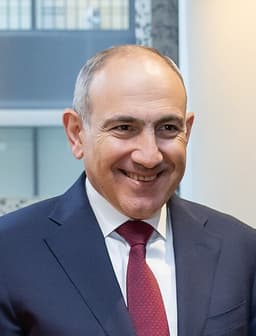
Nikol Pashinyan
Politician · Modern
55.8Total
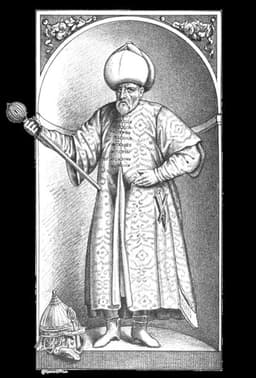
Sokollu Mehmed Pasha
Politician · Modern
60.5Total
Basic Information
Born
1975
1506
Died
—
1579
Era
Modern
Modern
Nationality
Armenia
Ottoman Empire
Occupation
Politician
Politician
Civilization
Western
Middle Eastern
Score Comparison
Military (10%)
49.3
52.5
Political (20%)
68.0
75.0
Influence (20%)
56.4
55.0
Legacy (20%)
45.0
55.0
Leadership (15%)
74.0
75.0
Strategy (15%)
42.0
52.5
TOTAL
55.8
60.5
Nikol Pashinyan — Complete Timeline
2018 AD
Velvet RevolutionPolitical Action
Pashinyan led a series of peaceful protests against the long-serving Prime Minister Serzh Sargsyan, who was accused of clinging to power. The protests, known as the Velvet Revolution, forced Sargsyan to resign, and Pashinyan was elected Prime Minister by parliament.
RevolutionArmeniaDemocracy
Impact: nationalconstructive
Elected Prime MinisterPolitical Action◆ Major
Following the Velvet Revolution, Pashinyan was elected Prime Minister of Armenia by a parliamentary vote. His election marked a shift towards a more democratic and reformist government, with promises to tackle corruption and strengthen the rule of law.
ElectionArmeniaLeadership
Impact: nationalconstructive
2020 AD
Nagorno-Karabakh WarWar
Pashinyan's government faced a full-scale war with Azerbaijan over the disputed Nagorno-Karabakh region. The 44-day war ended with a Russian-brokered ceasefire that saw Armenia cede significant territories it had controlled since the 1990s. The defeat triggered a political crisis in Armenia.
WarNagorno-KarabakhArmeniaAzerbaijan
Impact: regionaltragic
2021 AD
Survived Coup AttemptPolitical Action◆ Major
Following the Nagorno-Karabakh war, the Armenian military issued a statement demanding Pashinyan's resignation, which he denounced as a coup attempt. He dismissed the chief of the general staff and mobilized supporters, ultimately retaining power amid mass protests.
Coup AttemptArmeniaPolitical Crisis
Impact: national
Sokollu Mehmed Pasha — Complete Timeline
1565 AD
Siege of MaltaWar◆ Major
As Grand Vizier, Sokollu Mehmed Pasha oversaw the Ottoman siege of Malta. The campaign failed to capture the island from the Knights Hospitaller, marking a significant Ottoman defeat in the Mediterranean and halting their westward expansion.
Ottoman-Habsburg WarsMediterraneanDefeat
Impact: regional
Appointment as Grand VizierPolitical Action◆ Major
Sokollu Mehmed Pasha was appointed Grand Vizier of the Ottoman Empire by Sultan Suleiman. He served under three sultans (Suleiman, Selim II, and Murad III), maintaining stability and overseeing the empire's administration during a period of expansion and consolidation.
Ottoman AdministrationGrand VizierStability
Impact: globalconstructive
1571 AD
Conquest of CyprusWar◆ Major
Under Sokollu Mehmed Pasha's administration, the Ottoman Empire conquered Cyprus from the Republic of Venice. The island became an Ottoman province, though the victory was followed by the naval defeat at Lepanto later that year.
Ottoman ExpansionCyprusVenice
Impact: regional
1579 AD
AssassinationPolitical Action◆ Major
Sokollu Mehmed Pasha was assassinated in the Divan chamber of the Topkapi Palace by a disgruntled soldier. His death ended the longest uninterrupted tenure as Grand Vizier in Ottoman history and marked the beginning of a period of political instability.
AssassinationOttoman PoliticsEnd of Era
Impact: nationaltragic
Expert Analysis
Origins
Nikol Pashinyan was born on June 1, 1975, in Ijevan, Armenia, then part of the Soviet Union. His father was a physical education teacher, and his mother a nurse. He studied journalism at Yerevan State University but was expelled in 1995 for political activism. He later worked as a journalist, founding the daily newspaper 'Haykakan Zhamanak' (Armenian Times), which became a platform for his opposition views.
Sokollu Mehmed Pasha was born around 1506 in Sokolovići, a village in Bosnia (then part of the Kingdom of Hungary). He was of Serbian origin and was taken from his family as a child through the devshirme system, a levy of Christian boys to serve the Ottoman state. He converted to Islam and was educated in the palace school in Edirne, rising through the ranks of the imperial administration.
Rise to Power
Pashinyan's rise began in the early 2000s as a vocal critic of the Armenian government. He was arrested in 2008 for his role in post-election protests and sentenced to seven years in prison, but was released in 2011 under a general amnesty. His defining moment came in 2018 when he led the 'Velvet Revolution'—a series of peaceful protests against Serzh Sargsyan, who was accused of clinging to power after serving as president for a decade and then attempting to become prime minister. The protests forced Sargsyan to resign on April 23, 2018. On May 8, 2018, Pashinyan was elected Prime Minister by a 59–42 vote in the National Assembly.
Sokollu Mehmed Pasha's rise was within the Ottoman bureaucratic and military hierarchy. He served as a page in the palace, then as a janissary commander, and later as governor of several provinces. He distinguished himself in the Siege of Szigetvár (1566), where Sultan Suleiman died. Under Suleiman's successor, Selim II, Sokollu was appointed Grand Vizier in 1565, becoming the de facto ruler of the empire for the next 14 years. He served under three sultans: Suleiman, Selim II, and Murad III.
Leadership & Governance
Pashinyan's leadership style is populist and confrontational. He came to power on a wave of anti-corruption sentiment, promising to end the dominance of oligarchs and strengthen democratic institutions. As prime minister, he implemented reforms in the judiciary and electoral systems, but his governance was challenged by the Nagorno-Karabakh conflict. His leadership score of 74.0 reflects his ability to mobilize mass support, but his strategic score of 42.0 reveals a weakness in military and diplomatic planning.
Sokollu Mehmed Pasha was a master administrator and diplomat. He maintained stability across a vast empire, managing relations with European powers, the Safavids, and the Mughals. He oversaw the construction of infrastructure, including bridges and mosques, and maintained the Ottoman legal code. His governance was characterized by continuity and pragmatism, earning him a leadership score of 75.0 and a political score of 75.0. However, his military score of 52.5 reflects mixed results in campaigns.
Triumph & Tragedy
Pashinyan's greatest triumph was the Velvet Revolution, which peacefully toppled a corrupt regime and ushered in a period of democratic reform. However, his greatest tragedy was the Nagorno-Karabakh War in 2020. The 44-day war resulted in a decisive defeat for Armenia, with Azerbaijan reclaiming territories and a Russian-brokered ceasefire that left Armenia in a weaker position. The war led to a political crisis, with opposition parties and the military calling for his resignation. Pashinyan survived a coup attempt in February 2021 but saw his popularity plummet.
Sokollu Mehmed Pasha's triumphs include the conquest of Cyprus in 1570–1571, which added a valuable island to the Ottoman Empire and secured eastern Mediterranean trade. He also negotiated a favorable treaty with the Habsburgs in 1568. However, his tragedy was the failure at the Siege of Malta in 1565, where the Ottoman navy and army were repulsed by the Knights Hospitaller. The defeat damaged Ottoman prestige and marked the limit of their naval expansion in the Mediterranean. His assassination in 1579 by a disgruntled soldier ended his effective governance.
Character & Destiny
Pashinyan is impulsive and charismatic, often making bold decisions without fully calculating risks. His decision to rely on diplomacy with Russia and Turkey backfired during the Nagorno-Karabakh war. His character—optimistic and confrontational—led him to underestimate the military challenge. Historical assessments note his effective communication skills but criticize his strategic naivety.
Sokollu Mehmed Pasha was cautious and diplomatic, preferring to use negotiation and bribery over war. He maintained stability by balancing the interests of different factions within the empire. His long tenure (14 years as Grand Vizier) was unprecedented, and his ability to serve three sultans shows his political acumen. However, his assassination revealed the constant threat of violence within the Ottoman court.
Legacy
Pashinyan's legacy is mixed: he is celebrated for democratizing Armenia but blamed for the loss of Nagorno-Karabakh. His influence score of 56.4 reflects his impact on Armenian politics, but his legacy score of 45.0 is low due to the war defeat. He remains a polarizing figure, and his reforms may be reversed by successors.
Sokollu Mehmed Pasha's legacy is more lasting: he is remembered as one of the most capable Grand Viziers, who maintained Ottoman power during a period of transition. His legacy score of 55.0 is modest for an Ottoman statesman, but his influence on the empire's administrative and legal systems endured for centuries. He is also noted for his patronage of architecture, including the Sokollu Mehmed Pasha Mosque in Istanbul.
Conclusion
Sokollu Mehmed Pasha had a greater overall impact than Nikol Pashinyan. With a total score of 60.5 compared to Pashinyan's 55.8, the difference is 4.7 points. Sokollu's achievements—conquest of Cyprus, long-term governance, and administrative reforms—had a broader and more lasting influence on a major empire. Pashinyan's democratic reforms were significant but overshadowed by the catastrophic war defeat. While Pashinyan's revolution inspired hope, Sokollu's steady hand managed a complex empire for over a decade. The data supports that Sokollu Mehmed Pasha's leadership and political skills (75.0 each) outweighed Pashinyan's (74.0 and 68.0 respectively), and his strategic score (52.5) was higher than Pashinyan's (42.0). Thus, Sokollu Mehmed Pasha emerges as the more impactful figure.
Rankings
🥇
Sokollu Mehmed PashaLeader
Mil: 52.5Pol: 75.0Inf: 55.0
60.5
🥈
Nikol Pashinyan
Mil: 49.3Pol: 68.0Inf: 56.4
55.8
+4.7 behind
How This Comparison Works
Algorithm
Each figure is scored on 6 dimensions (0—100 scale) based on structured historical data: Military (10%), Political (20%), Influence (20%), Legacy (20%), Leadership (15%), Strategy (15%). The weighted total produces the final ranking.
Data Sources
Scores are computed from structured sub-indicators in the database. Scale factors adjust for era (Ancient ×0.85, Modern ×1.0) and civilization size (Eastern ×1.05, Other ×0.80) to account for differences in population and military scale.
Maximum 3 Figures
Comparisons are limited to 2—3 figures to ensure readability and statistical meaningfulness.
Error Margins
±5 points per dimension — Sub-scores are derived from historical records with inherent uncertainty. Two figures within 5 points on a dimension should be considered roughly equivalent in that area.
Total Score Accuracy
±3 points overall — The weighted combination of 6 dimensions produces a total score with approximately ±3 points of uncertainty. Differences of less than 3 points are not statistically significant— the figures are effectively tied.
Known Limitations
- Historical records are incomplete and uneven across civilizations
- Figures from oral-tradition societies may be underrepresented
- Occupation labels can misclassify multi-role figures
- Scores measure capability and impact, not moral character
- Quantitative scoring is a comparison tool, not absolute truth
Capability Radar
Military (10%) — Battles & Warfare
Battles
27
60
Win Rate
33
65
Expansion
36
70
Political (20%) — Governance & Reform
Reform
60
80
Diplomacy
50
90
Economy
40
85
Influence (20%) — Cultural & Global Reach
Cultural
45
60
Global
35
70
Legacy (20%) — Historical Impact
Historical
40
75
Longevity
30
65
Leadership (15%) — Power & Stability
Tenure
55
85
Stability
35
80
Strategy (15%) — Tactics & Innovation
Strategy
36
75
Tactics
44
70
Reform
42
55
Similar Comparisons
Comments & Discussion
No comments yet. Be the first to share your thoughts!