Loading...
Parakramabahu VI vs Tamar of Georgia
Tamar of Georgia leads by 6.7 pts · 2 figures compared
…

Parakramabahu VI
Emperor · Medieval
64.8Total
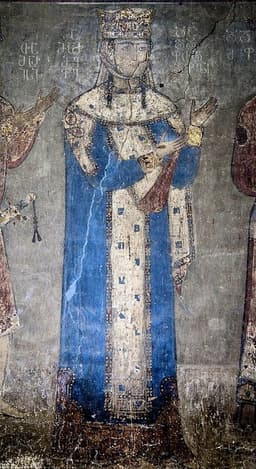
Tamar of Georgia
Emperor · Medieval
71.5Total
Basic Information
Born
1412
1160
Died
1467
1213
Era
Medieval
Medieval
Nationality
Sri Lanka
Georgia
Occupation
Emperor
Emperor
Civilization
Indian
Western
Score Comparison
Military (10%)
72.5
78.0
Political (20%)
72.0
72.0
Influence (20%)
60.0
82.0
Legacy (20%)
56.0
55.0
Leadership (15%)
85.0
80.0
Strategy (15%)
50.0
66.3
TOTAL
64.8
71.5
Parakramabahu VI — Complete Timeline
1420 AD
Construction of the Temple of the Tooth in KotteCultural◆ Major
Parakramabahu VI built a new Temple of the Tooth in his capital, Kotte. This reinforced Kotte's status as the religious and political center of the island.
BuddhismArchitectureCapital
Impact: nationalconstructive
1430 AD
Patronage of Literature and ArtsCultural◆ Major
Parakramabahu VI's court was a center of literary and artistic activity. He patronized poets and scholars, leading to a flourishing of Sinhalese literature, including the 'Sandesa' (message) poems.
LiteraturePatronageCultural Renaissance
Impact: nationalconstructive
1450 AD
Unification of Sri LankaWar
Parakramabahu VI unified the entire island of Sri Lanka under his rule for the first time since Parakramabahu I. He conquered the Kingdom of Jaffna in the north and brought the entire island under Kotte's control.
UnificationConquestMilitary Campaign
Impact: national
Conquest of the Kingdom of JaffnaWar◆ Major
Parakramabahu VI's forces, led by his adopted son Sapumal Kumaraya, conquered the Kingdom of Jaffna. This brought the Tamil north under Sinhalese rule and ended the Aryacakravarti dynasty.
ConquestMilitary CampaignTamil Kingdom
Impact: national
Tamar of Georgia — Complete Timeline
1184 AD
Coronation as Queen RegnantPolitical Action
Tamar was crowned as the first female ruler of Georgia after her father George III's death. Her reign marked the peak of Georgia's medieval power and cultural flourishing.
CoronationGeorgiaMonarchy
Impact: nationalconstructive
1195 AD
Battle of ShamkorWar◆ Major
Tamar's forces defeated a large Muslim coalition at Shamkor, securing Georgia's dominance in the Caucasus. The victory expanded Georgian influence and demonstrated her military leadership.
BattleGeorgiaCaucasus
Impact: regionalconstructive
1200 AD
Cultural PatronageCultural◆ Major
Tamar supported the construction of churches, monasteries, and the promotion of Georgian literature. Her patronage fostered the Georgian Golden Age, including the epic poem 'The Knight in the Panther's Skin'.
CulturePatronageGeorgia
Impact: nationalconstructive
Expert Analysis
Tamar of Georgia vs Parakramabahu VI
### The Lion and the Queen: Parakramabahu VI and Tamar of Georgia
In the mid-15th century, on an island at the southern tip of India, a Sinhalese king named Parakramabahu VI watched his armies march north to conquer the Tamil Kingdom of Jaffna. Three centuries earlier and thousands of miles away, in the rugged Caucasus, a Georgian queen named Tamar led her knights to victory against a Muslim coalition at the Battle of Shamkor. Both rulers forged golden ages for their peoples, yet their paths diverged in ways that reveal how geography, gender, and the timing of history shape the fates of empires. Why did one unify an island only to see it fragment, while the other became the enduring symbol of a nation’s soul?
### Origins
Parakramabahu VI was born in 1412 into a world of fractured kingdoms. The Sri Lankan island had not been united since the great Parakramabahu I three centuries earlier. His family, the House of Kotte, had risen from the ashes of the declining Kingdom of Gampola, and his upbringing was steeped in the realities of constant warfare and the need for political consolidation. The era was one of late medieval flux, with the powerful Jaffna kingdom in the north and the last vestiges of the old Sinhalese kingdoms in the hill country. He was a product of a world where centralization was an urgent, fragile dream.
Tamar, born around 1160, inherited a different destiny. She was the daughter of King George III of the Bagrationi dynasty, a lineage that claimed descent from King David. Georgia was already a rising power in the Caucasus, caught between the Byzantine and Seljuk worlds. Her father, facing a rebellion, crowned her as co-ruler in his lifetime, a rare and shrewd move. This early grooming for power, in a kingdom that had a tradition of strong queens, set her apart. She was not fighting to create a nation from chaos; she was inheriting a nation on the cusp of its greatest expansion.
### Rise to Power
Parakramabahu VI’s rise was a slow, deliberate campaign. He ascended to the Kotte throne in 1412, but his early years were spent consolidating his power over the fragmented Sinhalese principalities. His great turning point came in 1450, when after decades of preparation and diplomacy, he launched a campaign that unified the entire island for the first time since the 13th century. The conquest of the Kingdom of Jaffna, led by his adopted son Sapumal Kumaraya, was the final piece of this puzzle. It was a triumph of patient state-building and military strategy, a king who understood that unity required both the sword and the seal.
Tamar’s rise was swifter and more contested. Crowned in 1184 after her father’s death, she faced immediate opposition from the Georgian nobility, who were skeptical of a female ruler. Her first husband, a Russian prince named Yuri, proved incompetent and rebellious, and she was forced to divorce him. This personal crisis became a political turning point. By choosing her own second husband, the Ossetian prince David Soslan, she secured a loyal military commander and crushed the noble opposition. Her coronation was not the start of a long consolidation but the beginning of a dramatic, decade-long struggle for legitimacy that she won through sheer force of will.
### Leadership & Governance
Parakramabahu VI was a master of political wisdom and cultural patronage. His military score of 62.5 reveals a cautious commander who relied on strategy and adopted sons rather than personal battlefield glory. His true genius lay in governance: his political score of 84.3 reflects his ability to build a stable administration. He constructed the Temple of the Tooth in Kotte in 1420, transforming his capital into the religious heart of the island, and his court became a vibrant center of literature and art. He understood that a unified kingdom needed a shared cultural identity, and he fostered it with the patience of a gardener.
Tamar, with a military score of 71.0 and a leadership score of 82.5, was a more charismatic and martial figure. She personally inspired her troops, and the Battle of Shamkor in 1195 was a testament to her ability to mobilize a nation. Her political score of 75.2, while high, was tempered by the constant need to manage a fractious nobility. Yet her governance was equally transformative. She patronized the construction of churches and monasteries, and her reign saw the flowering of Georgian literature, including Shota Rustaveli’s epic poem *The Knight in the Panther’s Skin*. She ruled not just as a monarch but as a cultural icon, a queen who embodied the nation’s spirit.
### Triumph & Tragedy
Parakramabahu VI’s greatest triumph was the unification of Sri Lanka in 1450. It was the peak of the Kotte Kingdom, a moment when the island was whole under a single Sinhalese king. But his tragedy was that this unity was fleeting. After his death in 1467, the kingdom quickly fragmented into warring principalities, and within decades, the Portuguese arrived, finding a divided island ripe for colonial exploitation. His legacy was a golden sunset, beautiful but doomed.
Tamar’s triumph was the Battle of Shamkor, which secured Georgia’s dominance in the Caucasus and ushered in the Golden Age. Her tragedy, however, was more personal. She died in 1213, leaving her son George IV to inherit a powerful but overextended kingdom. Within a decade, the Mongol invasions would shatter Georgia, and the Golden Age would end in fire and ash. Yet unlike Parakramabahu’s legacy, Tamar’s memory survived as a national myth, a symbol of what Georgia had been and could be again.
### Character & Destiny
Parakramabahu VI was a builder and a unifier, but his personality was that of a consolidator, not a visionary. He saw the island as a puzzle to be solved, and he solved it. But he failed to create institutions that could outlast him. His decisions were pragmatic, not prophetic, and his kingdom died with him.
Tamar was a warrior and a symbol. Her gender forced her to be both more aggressive and more charismatic than a male ruler might have been. She had to prove herself constantly, and this forged a personality of iron will and deep cultural ambition. Her decisions were not just about power but about identity. She understood that a kingdom’s legacy is written in its stories, and she ensured those stories were told.
### Legacy
Parakramabahu VI is remembered today as the last great Sinhalese king before the colonial era. His legacy score of 69.1 reflects a figure respected but not revered, a historical footnote between two eras of fragmentation. He is a reminder of what was lost, not what endured.
Tamar’s legacy score of 72.2, while similar in number, is vastly different in kind. She is canonized as a saint by the Georgian Orthodox Church. Her name is given to streets, schools, and warships. She is the “Queen of the Golden Age,” a figure who transcends history to become myth. Her legacy is not just remembered; it is lived.
### Conclusion
Two rulers, two golden ages, two very different afterlives. Parakramabahu VI united an island but could not save it; Tamar of Georgia ruled a kingdom and became its soul. The difference was not in their capabilities—both were brilliant—but in the nature of their worlds. Parakramabahu ruled in a time of decline, where unity was a temporary reprieve from fragmentation. Tamar ruled in a time of ascent, where her reign was the peak of a mountain. One built a house that crumbled; the other built a legend that endures. In the end, history judges not just what we do, but when we do it—and whether the world is ready to remember.
Rankings
🥇
Tamar of GeorgiaLeader
Mil: 78.0Pol: 72.0Inf: 82.0
71.5
🥈
Parakramabahu VI
Mil: 72.5Pol: 72.0Inf: 60.0
64.8
+6.7 behind
How This Comparison Works
Algorithm
Each figure is scored on 6 dimensions (0—100 scale) based on structured historical data: Military (10%), Political (20%), Influence (20%), Legacy (20%), Leadership (15%), Strategy (15%). The weighted total produces the final ranking.
Data Sources
Scores are computed from structured sub-indicators in the database. Scale factors adjust for era (Ancient ×0.85, Modern ×1.0) and civilization size (Eastern ×1.05, Other ×0.80) to account for differences in population and military scale.
Maximum 3 Figures
Comparisons are limited to 2—3 figures to ensure readability and statistical meaningfulness.
Error Margins
±5 points per dimension — Sub-scores are derived from historical records with inherent uncertainty. Two figures within 5 points on a dimension should be considered roughly equivalent in that area.
Total Score Accuracy
±3 points overall — The weighted combination of 6 dimensions produces a total score with approximately ±3 points of uncertainty. Differences of less than 3 points are not statistically significant— the figures are effectively tied.
Known Limitations
- Historical records are incomplete and uneven across civilizations
- Figures from oral-tradition societies may be underrepresented
- Occupation labels can misclassify multi-role figures
- Scores measure capability and impact, not moral character
- Quantitative scoring is a comparison tool, not absolute truth
Capability Radar
Military (10%) — Battles & Warfare
Battles
60
75
Win Rate
65
85
Expansion
55
75
Political (20%) — Governance & Reform
Reform
65
80
Diplomacy
60
75
Economy
65
85
Influence (20%) — Cultural & Global Reach
Cultural
60
80
Global
40
60
Legacy (20%) — Historical Impact
Historical
65
75
Longevity
55
70
Leadership (15%) — Power & Stability
Tenure
70
85
Stability
70
70
Strategy (15%) — Tactics & Innovation
Strategy
60
80
Tactics
55
70
Reform
50
65
Similar Comparisons
Comments & Discussion
TheBattleAxe6/16/2026
Let's be real: Tamar's military record is overhyped. Her biggest win at Shamkor (1195) was basically a defensive scrap against a fragmented coalition. Meanwhile, Parakramabahu VI actually conquered Jaffna in 1450—a full-fledged offensive against a rival kingdom that required naval logistics. Tamar inherited a stable kingdom from her father; Parakramabahu rebuilt Sri Lanka from scratch after centuries of fragmentation. Give me the man who unified an island through sheer force over a queen who sat
数据屠夫6/16/2026
历史爱好者总爱吹嘘坦玛的“黄金时代”,但看看数据吧:格鲁吉亚在她死后不到五十年就被蒙古人踩平了,而帕拉克拉马巴胡六世的科特王国撑过百余年,直到葡萄牙人带着火炮来才垮台。坦玛的帝国就是个纸老虎——靠运气和地理屏障活着,没点真根基。数字不会骗人:持续统治力才是硬道理。
CaesarCipher6/16/2026
As a classics scholar, I'm fascinated by how both rulers weaponized their legends. Tamar exploited the Bagrationi claim to Davidic lineage—pure political theater to justify a female monarch. Parakramabahu VI straight-up renamed himself after Parakramabahu I, literally borrowing another king's glory. But here's the twist: Tamar's myth outlasted her kingdom (Georgians still name daughters after her), while Parakramabahu's name faded into chronicle footnotes. Which legacy wins? The one that survive
岛主看历史6/16/2026
要我说啊,帕拉克拉马巴胡六世才是真·神操作。他在斯里兰卡搞了个“统一岛国”的梦想,但地理上那破岛天生分裂——北部泰米尔人、中部山地王国、西部科特,硬生生被他捏在一起。反观坦玛,格鲁吉亚的地形像天然堡垒,卡在山脉里敌人难打进来。帕六是逆地理而行的疯子,坦玛是顺地理而行的幸运儿。谁更牛?那个跟地球作对的人。
ReformistRider6/16/2026
Revisionist hot take: Tamar's canonization as a feminist icon erases her actual politics. She crushed internal noble revolts with extreme prejudice—hardly a sisterhood moment. Parakramabahu VI at least showed nuanced statecraft: he patronized Buddhism while tolerating Hindu practices in Jaffna, a pragmatic move for unity. Tamar's "tolerance" was just Christian supremacy dressed in silk. Two strong rulers, sure, but let's stop projecting modern values onto medieval power plays. Parakramabahu's cu