Loading...
Parakramabahu VI vs Taejo of Joseon
Taejo of Joseon leads by 5.6 pts · 2 figures compared
…

Parakramabahu VI
Emperor · Medieval
64.8Total
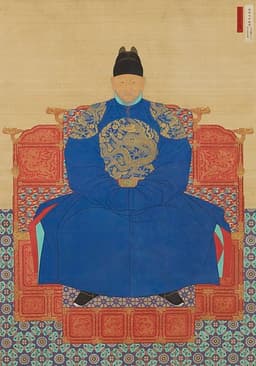
Taejo of Joseon
Emperor · Medieval
70.4Total
Basic Information
Born
1412
1335
Died
1467
1408
Era
Medieval
Medieval
Nationality
Sri Lanka
Korea
Occupation
Emperor
Emperor
Civilization
Indian
Eastern
Score Comparison
Military (10%)
72.5
74.7
Political (20%)
72.0
65.0
Influence (20%)
60.0
65.0
Legacy (20%)
56.0
80.0
Leadership (15%)
85.0
72.0
Strategy (15%)
50.0
61.2
TOTAL
64.8
70.4
Parakramabahu VI — Complete Timeline
1420 AD
Construction of the Temple of the Tooth in KotteCultural◆ Major
Parakramabahu VI built a new Temple of the Tooth in his capital, Kotte. This reinforced Kotte's status as the religious and political center of the island.
BuddhismArchitectureCapital
Impact: nationalconstructive
1430 AD
Patronage of Literature and ArtsCultural◆ Major
Parakramabahu VI's court was a center of literary and artistic activity. He patronized poets and scholars, leading to a flourishing of Sinhalese literature, including the 'Sandesa' (message) poems.
LiteraturePatronageCultural Renaissance
Impact: nationalconstructive
1450 AD
Unification of Sri LankaWar
Parakramabahu VI unified the entire island of Sri Lanka under his rule for the first time since Parakramabahu I. He conquered the Kingdom of Jaffna in the north and brought the entire island under Kotte's control.
UnificationConquestMilitary Campaign
Impact: national
Conquest of the Kingdom of JaffnaWar◆ Major
Parakramabahu VI's forces, led by his adopted son Sapumal Kumaraya, conquered the Kingdom of Jaffna. This brought the Tamil north under Sinhalese rule and ended the Aryacakravarti dynasty.
ConquestMilitary CampaignTamil Kingdom
Impact: national
Taejo of Joseon — Complete Timeline
1380 AD
Battle of HwangsanWar
General Yi Seong-gye defeated a Japanese pirate (wokou) force at Hwangsan. This victory enhanced his military reputation and demonstrated his capability as a commander.
WokouGoryeo Military
1388 AD
Wihwado RetreatPolitical Action
General Yi Seong-gye, ordered to invade the Ming dynasty's Liaodong region, turned his army back at Wihwado Island. This act of defiance against the Goryeo court led to a coup that eventually brought him to power.
CoupGoryeo-Ming RelationsPower Shift
Impact: national
1391 AD
Land Reform and the Gwajeon LawReform◆ Major
Taejo implemented the Gwajeon Law, a land reform that redistributed land from the old Goryeo aristocracy to his supporters and the state. This weakened the old elite and strengthened the new Joseon ruling class.
Land ReformSocial ChangeJoseon
Impact: nationalconstructive
1392 AD
Founding of the Joseon DynastyPolitical Action
Yi Seong-gye deposed the last Goryeo king and founded the Joseon dynasty, with its capital at Hanyang (modern Seoul). He established a new ruling class based on Confucian ideology, replacing the Buddhist-influenced Goryeo system.
Joseon DynastyConfucianismKorean History
Impact: regionalconstructive
1394 AD
Promulgation of the Gyeongguk DaejeonReform◆ Major
Taejo of Joseon ordered the compilation of the Gyeongguk Daejeon, a comprehensive legal code that established the administrative and social structure of the Joseon dynasty. This code remained in effect for centuries.
Legal CodeGovernanceConfucianism
Impact: nationalconstructive
Expert Analysis
Taejo of Joseon vs Parakramabahu VI
# The Founder and the Unifier
On a summer morning in 1388, a Korean general stood on an island in the Yalu River and made a decision that would reshape East Asian history. Yi Seong-gye had been ordered to invade Ming China, but he knew the campaign was suicidal. He turned his army around. Half a century later and a thousand miles southwest, a Sinhalese prince named Parakramabahu looked out from his capital at Kotte and dreamed of something no king had achieved in centuries: the unification of an entire island. Both men would found dynasties, but their paths diverged in ways that reveal the deep currents of their respective worlds.
Origins
Yi Seong-gye was born in 1335 into a military family serving the declining Goryeo dynasty. The Korean peninsula was a pressure cooker: Mongol influence lingered, Japanese pirates ravaged the coasts, and the court in Gaegyeong was paralyzed by factionalism. Yi grew up in this chaos, learning to fight and command. His father was a minor official, but Yi's military talent marked him early. By contrast, Parakramabahu VI, born in 1412, inherited a different world. The Kotte kingdom in southwestern Sri Lanka was stable, prosperous, and Buddhist. His family had ruled for generations, and his upbringing was one of courtly refinement rather than battlefield survival. Where Yi learned to read men through war, Parakramabahu learned to read them through poetry and politics.
Rise to Power
Yi's ascent was forged in blood. In 1380, at the Battle of Hwangsan, he annihilated a force of Japanese pirates, earning a reputation as the kingdom's most reliable general. But it was the Wihwado Retreat in 1388 that changed everything. Ordered to invade Ming territory, Yi calculated that the expedition would destroy his army and his country. He marched back to the capital, purged his rivals, and within four years deposed the last Goryeo king. In 1392, he founded the Joseon dynasty. Parakramabahu's rise was more gradual. He inherited the throne around 1412, but his power was initially limited. He consolidated authority through marriage alliances, patronage of the Buddhist sangha, and careful suppression of rebellious nobles. His turning point came not through a dramatic retreat but through a slow accumulation of loyalty and legitimacy.
Leadership & Governance
Taejo of Joseon governed like a man building from scratch. His Gwajeon Law of 1391 redistributed land from the old Goryeo aristocracy to his supporters, creating a new ruling class loyal to the throne. He moved the capital to Hanyang (modern Seoul), constructing a city designed around Confucian principles. The Gyeongguk Daejeon, a legal code he commissioned, established the administrative framework that would govern Korea for five centuries. His style was direct, pragmatic, and revolutionary. Parakramabahu VI governed as a restorer. He built the Temple of the Tooth in Kotte around 1420, cementing his capital as the religious heart of the island. His court became a center of literary flourishing in the 1430s, patronizing poets and scholars who produced works in Sinhala and Pali. He was a unifier, not a revolutionary—his aim was to revive ancient glories, not create new institutions.
Triumph & Tragedy
Taejo's greatest triumph was founding a dynasty that would last 518 years. But his tragedy was personal. He abdicated in 1398 after a bloody succession struggle between his sons, and spent his final years watching his children tear each other apart. He died in 1408, a founder who outlived his peace. Parakramabahu's triumph came in 1450, when his forces, led by his adopted son Sapumal Kumaraya, conquered the Kingdom of Jaffna in the north. For the first time since the great Parakramabahu I, the entire island of Sri Lanka was united under one ruler. But his tragedy was that this unity would not last. After his death in 1467, the kingdom fragmented, and within decades, Portuguese colonizers began arriving. His unification was a beautiful sunset before a long colonial night.
Character & Destiny
Taejo was a man of action, decisive and ruthless. He could turn an army on a riverbank and overthrow a dynasty. But he lacked the patience for court intrigue, and his abdication was a confession of political exhaustion. His destiny was to be a founder—a man who tears down to build anew. Parakramabahu was a man of synthesis, patient and cultured. He unified through marriage, patronage, and strategic warfare. His destiny was to be a restorer—a man who gathers what has been scattered. Both were shaped by their eras: Korea's chaos demanded a revolutionary, while Sri Lanka's decay demanded a healer.
Legacy
Taejo's legacy is monumental. The Joseon dynasty he founded shaped Korean identity for half a millennium, from its Confucian bureaucracy to its alphabet. His military score of 67.1 and political score of 76.1 reflect a general who became a statesman, but his legacy score of 85.0 speaks to the dynasty's endurance. Parakramabahu's legacy is more bittersweet. His political score of 84.3 and leadership score of 83.9 show a masterful ruler, but his legacy of 69.1 reflects the fragility of his achievement. He is remembered as the last great Sinhalese king before colonialism, a poet-king who unified an island only to see it broken again.
Conclusion
Standing at the edge of history, Taejo and Parakramabahu embody two kinds of greatness. One built a new world from the ashes of the old; the other restored a lost world before it vanished forever. Both succeeded, and both failed. Their stories remind us that leadership is never abstract—it is always a response to the specific wounds and possibilities of a time and place. Taejo gave Korea a dynasty. Parakramabahu gave Sri Lanka a memory. In the end, perhaps that is all any ruler can do: leave something that outlasts the chaos.
Rankings
🥇
Taejo of JoseonLeader
Mil: 74.7Pol: 65.0Inf: 65.0
70.4
🥈
Parakramabahu VI
Mil: 72.5Pol: 72.0Inf: 60.0
64.8
+5.6 behind
How This Comparison Works
Algorithm
Each figure is scored on 6 dimensions (0—100 scale) based on structured historical data: Military (10%), Political (20%), Influence (20%), Legacy (20%), Leadership (15%), Strategy (15%). The weighted total produces the final ranking.
Data Sources
Scores are computed from structured sub-indicators in the database. Scale factors adjust for era (Ancient ×0.85, Modern ×1.0) and civilization size (Eastern ×1.05, Other ×0.80) to account for differences in population and military scale.
Maximum 3 Figures
Comparisons are limited to 2—3 figures to ensure readability and statistical meaningfulness.
Error Margins
±5 points per dimension — Sub-scores are derived from historical records with inherent uncertainty. Two figures within 5 points on a dimension should be considered roughly equivalent in that area.
Total Score Accuracy
±3 points overall — The weighted combination of 6 dimensions produces a total score with approximately ±3 points of uncertainty. Differences of less than 3 points are not statistically significant— the figures are effectively tied.
Known Limitations
- Historical records are incomplete and uneven across civilizations
- Figures from oral-tradition societies may be underrepresented
- Occupation labels can misclassify multi-role figures
- Scores measure capability and impact, not moral character
- Quantitative scoring is a comparison tool, not absolute truth
Capability Radar
Military (10%) — Battles & Warfare
Battles
60
75
Win Rate
65
80
Expansion
55
65
Political (20%) — Governance & Reform
Reform
65
85
Diplomacy
60
70
Economy
65
65
Influence (20%) — Cultural & Global Reach
Cultural
60
80
Global
40
60
Legacy (20%) — Historical Impact
Historical
65
85
Longevity
55
80
Leadership (15%) — Power & Stability
Tenure
70
70
Stability
70
75
Strategy (15%) — Tactics & Innovation
Strategy
60
75
Tactics
55
70
Reform
50
60
Similar Comparisons
Comments & Discussion
No comments yet. Be the first to share your thoughts!