Loading...
Parakramabahu I vs Wenceslaus II of Bohemia
Parakramabahu I leads by 11.1 pts · 2 figures compared
…
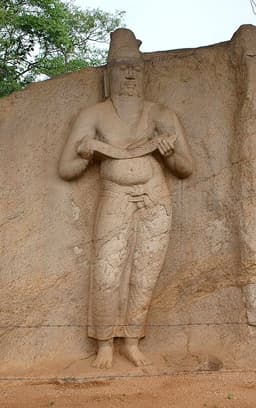
Parakramabahu I
Emperor · Medieval
66.1Total
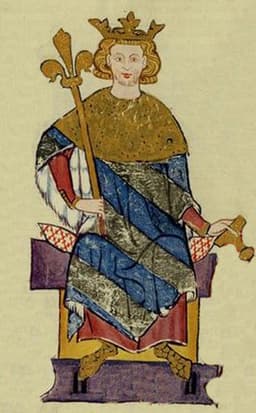
Wenceslaus II of Bohemia
Emperor · Medieval
55.0Total
Basic Information
Born
1123
1271
Died
1186
1305
Era
Medieval
Medieval
Nationality
Sri Lanka
Bohemia
Occupation
Emperor
Emperor
Civilization
Indian
Western
Score Comparison
Military (10%)
82.0
55.0
Political (20%)
72.0
53.8
Influence (20%)
61.0
56.4
Legacy (20%)
52.0
48.3
Leadership (15%)
82.0
74.0
Strategy (15%)
65.4
41.7
TOTAL
66.1
55.0
Parakramabahu I — Complete Timeline
1153 AD
Unification of Sri LankaWar
Parakramabahu I unified the entire island of Sri Lanka under his rule after a series of military campaigns. He defeated the rulers of Ruhuna and other regional kingdoms, ending a period of fragmentation.
Impact: national
1160 AD
Construction of Parakrama SamudraOther◆ Major
Parakramabahu I constructed the Parakrama Samudra, a massive man-made sea of interconnected tanks and canals near Polonnaruwa. This irrigation system, covering over 5,000 acres, was a major engineering achievement.
Impact: regionalconstructive
1165 AD
Invasion of BurmaWar◆ Major
Parakramabahu I launched a naval invasion of Burma (Pagan Kingdom) in retaliation for a trade dispute. The Sinhalese fleet captured the port of Kusumiya and sacked the city, demonstrating Sri Lanka's naval power.
Impact: regional
Reform of the Buddhist SanghaReform◆ Major
Parakramabahu I convened a council to purify the Buddhist Sangha. He expelled corrupt monks and re-established discipline, strengthening Theravada Buddhism in Sri Lanka.
Impact: nationalconstructive
1170 AD
Construction of Polonnaruwa VatadageCultural◆ Major
Parakramabahu I built the Polonnaruwa Vatadage, a circular relic house for the Tooth Relic of the Buddha. This structure is considered a masterpiece of Sinhalese architecture.
Impact: nationalconstructive
Wenceslaus II of Bohemia — Complete Timeline
1300 AD
Minting of the Prague GroschenReform◆ Major
Wenceslaus II introduced the Prague groschen, a silver coin that became the standard currency in Central Europe for centuries. This monetary reform stabilized the Bohemian economy and facilitated trade across the region.
Currency ReformEconomic PolicyTrade
Impact: regionalconstructive
Coronation as King of PolandPolitical Action◆ Major
Wenceslaus II was crowned King of Poland in Gniezno, uniting Bohemia and Poland under his rule. This coronation was part of his efforts to expand his influence in Central Europe, but it was contested by Polish nobles.
CoronationPersonal UnionPoland
Impact: regional
1305 AD
Death of Wenceslaus IIOther◆ Major
Wenceslaus II died suddenly at the age of 34, likely from tuberculosis. His death left the Bohemian-Polish union fragile, and his son Wenceslaus III was unable to maintain control, leading to the collapse of the P
DeathDynastic CrisisSuccession
Impact: regionaltragic
Expert Analysis
Origins
Parakramabahu I was born in 1123 in Sri Lanka, the grandson of King Vijayabahu I. He was raised in the royal court of Polonnaruwa, receiving education in statecraft and military arts. His early years were marked by internal strife as the island was divided into rival principalities. In contrast, Wenceslaus II was born in 1271 in Prague, Bohemia, to King Ottokar II and Kunigunda of Slavonia. His childhood was disrupted by his father's death in battle in 1278, leaving him a minor under the regency of his mother and later Otto IV of Brandenburg. Wenceslaus was educated in German and Latin, exposed to the intricacies of Central European politics.
Rise to Power
Parakramabahu I's rise began with his appointment as sub-king of the western provinces by his uncle, King Gajabahu II. Dissatisfied with limited authority, he launched a rebellion in 1153, defeating Gajabahu and seizing the capital Polonnaruwa. Over the next decade, he subdued the southern principality of Ruhuna (1165) and the Jaffna kingdom, unifying the entire island by 1165. His military campaigns were marked by strategic use of elephants and naval forces. Wenceslaus II's ascent was more gradual. After securing his inheritance in Bohemia in 1283, he focused on consolidating power through diplomacy and economic reforms. In 1300, he was crowned King of Poland, uniting Bohemia and Poland under his rule. This was achieved through marriage to Elizabeth Richeza of Poland and negotiations with the Polish nobility, rather than conquest.
Leadership & Governance
Parakramabahu I ruled as an absolute monarch, centralizing administration and launching massive public works. He constructed the Parakrama Samudra, a 2,500-hectare reservoir that irrigated 93 square kilometers of rice paddies. His governance score of 72.0 reflects his efficiency in mobilizing resources for infrastructure and military campaigns. He also reformed the Buddhist Sangha, expelling corrupt monks and restoring discipline. Wenceslaus II's leadership was more focused on economic and administrative innovation. He introduced the Prague groschen in 1300, a silver coin that standardized trade across Central Europe. He also implemented mining reforms in Kutná Hora, boosting silver production. His political score of 53.8 indicates his reliance on alliances and economic leverage rather than military force. While Parakramabahu built physical structures, Wenceslaus built financial systems.
Triumph & Tragedy
Parakramabahu I's greatest triumph was the unification of Sri Lanka, ending centuries of fragmentation. His invasion of Burma in 1164, though controversial, demonstrated his naval prowess and secured trade routes. However, his military aggression strained resources, and his conquests did not outlast his reign. The Parakrama Samudra remains a lasting engineering marvel. Wenceslaus II's triumph was the minting of the Prague groschen, which became the dominant currency in Central Europe for 300 years. His union of Bohemia and Poland was a diplomatic achievement, but it proved fragile. His tragedy was his early death at age 34, likely from tuberculosis, which left his son Wenceslaus III unable to maintain the union. Within a decade, the Polish crown was lost.
Character & Destiny
Parakramabahu I was ambitious and ruthless, willing to go to war over trade disputes. His decision to invade Burma was driven by a desire for prestige and economic control. His character shaped his destiny: he achieved unification through force but left no sustainable succession plan. Wenceslaus II was pragmatic and patient, preferring negotiation over war. His monetary reforms reflect a forward-thinking mindset. However, his cautious approach limited his territorial expansion. His early death cut short his potential, leaving his legacy incomplete.
Legacy
Parakramabahu I's legacy is tied to the physical remnants of his reign: the Parakrama Samudra and the Polonnaruwa Vatadage are UNESCO World Heritage sites. His unification of Sri Lanka is celebrated in Sinhalese chronicles, but his empire collapsed soon after his death. His legacy score of 52.0 reflects this fragility. Wenceslaus II's Prague groschen influenced Central European economics for centuries, and his mining reforms laid the groundwork for Bohemian prosperity. However, his political union faded. His legacy score of 48.3 is lower, partly because his achievements were more abstract.
Conclusion
Parakramabahu I had greater immediate impact, with a total score of 66.1 compared to Wenceslaus II's 55.0. His military and leadership scores (82.0 and 82.0) far surpass Wenceslaus's (55.0 and 74.0). While Wenceslaus's economic reforms were significant, they lacked the transformative scale of Parakramabahu's unification and infrastructure. Parakramabahu's tangible contributions to Sri Lanka's history and culture outweigh Wenceslaus's financial innovations. The score gap of 11.1 points confirms this assessment.
Rankings
🥇
Parakramabahu ILeader
Mil: 82.0Pol: 72.0Inf: 61.0
66.1
🥈
Wenceslaus II of Bohemia
Mil: 55.0Pol: 53.8Inf: 56.4
55.0
+11.1 behind
How This Comparison Works
Algorithm
Each figure is scored on 6 dimensions (0—100 scale) based on structured historical data: Military (10%), Political (20%), Influence (20%), Legacy (20%), Leadership (15%), Strategy (15%). The weighted total produces the final ranking.
Data Sources
Scores are computed from structured sub-indicators in the database. Scale factors adjust for era (Ancient ×0.85, Modern ×1.0) and civilization size (Eastern ×1.05, Other ×0.80) to account for differences in population and military scale.
Maximum 3 Figures
Comparisons are limited to 2—3 figures to ensure readability and statistical meaningfulness.
Error Margins
±5 points per dimension — Sub-scores are derived from historical records with inherent uncertainty. Two figures within 5 points on a dimension should be considered roughly equivalent in that area.
Total Score Accuracy
±3 points overall — The weighted combination of 6 dimensions produces a total score with approximately ±3 points of uncertainty. Differences of less than 3 points are not statistically significant— the figures are effectively tied.
Known Limitations
- Historical records are incomplete and uneven across civilizations
- Figures from oral-tradition societies may be underrepresented
- Occupation labels can misclassify multi-role figures
- Scores measure capability and impact, not moral character
- Quantitative scoring is a comparison tool, not absolute truth
Capability Radar
Military (10%) — Battles & Warfare
Battles
75
30
Win Rate
80
35
Expansion
70
40
Political (20%) — Governance & Reform
Reform
80
55
Diplomacy
70
65
Economy
75
70
Influence (20%) — Cultural & Global Reach
Cultural
65
45
Global
40
35
Legacy (20%) — Historical Impact
Historical
70
50
Longevity
60
40
Leadership (15%) — Power & Stability
Tenure
85
60
Stability
80
50
Strategy (15%) — Tactics & Innovation
Strategy
75
30
Tactics
70
25
Reform
65
20
Similar Comparisons
Comments & Discussion
No comments yet. Be the first to share your thoughts!