Loading...
Kublai Khan vs Parakramabahu I
Kublai Khan leads by 8.2 pts · 2 figures compared
…
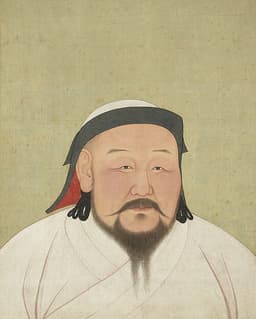
Kublai Khan
Emperor · Medieval
74.3Total
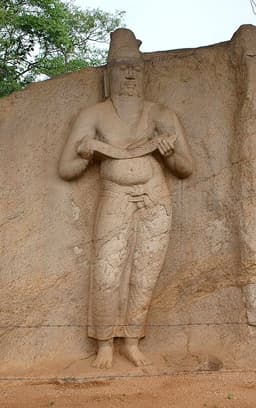
Parakramabahu I
Emperor · Medieval
66.1Total
Basic Information
Born
1215
1123
Died
1294
1186
Era
Medieval
Medieval
Nationality
Mongolia
Sri Lanka
Occupation
Emperor
Emperor
Civilization
Eastern
Indian
Score Comparison
Military (10%)
77.5
82.0
Political (20%)
79.2
72.0
Influence (20%)
75.0
61.0
Legacy (20%)
70.0
52.0
Leadership (15%)
72.0
82.0
Strategy (15%)
76.0
65.4
TOTAL
74.3
66.1
Kublai Khan — Complete Timeline
1260 AD
Adoption of Tibetan Buddhism as State ReligionCultural◆ Major
Kublai Khan appointed the Tibetan lama Drog
Tibetan BuddhismReligionMongol-Tibet Relations
Impact: regional
1271 AD
Proclamation of the Yuan DynastyPolitical Action◆ Major
Kublai Khan officially proclaimed the Yuan dynasty, adopting a Chinese-style dynastic name. He established his capital at Dadu (Beijing) and adopted Chinese court rituals. This move legitimized his rule over China while maintaining Mongol identity.
Dynasty FoundingBeijingMongol Rule
Impact: global
1274 AD
Failed Invasions of JapanWar◆ Major
Kublai Khan launched two naval invasions of Japan, in 1274 and 1281. Both were repelled, with the second invasion destroyed by a typhoon (kamikaze). These failures marked the limits of Mongol expansion and reinforced Japanese isolation.
Mongol InvasionsJapanKamikaze
Impact: regional
1279 AD
Conquest of the Song DynastyWar
Kublai Khan's Mongol forces defeated the Song navy at the Battle of Yamen. The last Song emperor drowned, ending the Song dynasty. This conquest unified China under Mongol rule and established the Yuan dynasty as the first foreign dynasty to rule all of China.
Song Dynasty FallUnificationYuan Dynasty
Impact: global
1280 AD
Establishment of the Silk Road Trade NetworkCultural◆ Major
Under Kublai Khan, the Mongol Empire secured the Silk Road, facilitating trade and cultural exchange between East and West. Marco Polo visited his court. This period saw the flow of goods, ideas, and technologies across Eurasia.
Silk RoadTradeCultural Exchange
Impact: globalconstructive
Parakramabahu I — Complete Timeline
1153 AD
Unification of Sri LankaWar
Parakramabahu I unified the entire island of Sri Lanka under his rule after a series of military campaigns. He defeated the rulers of Ruhuna and other regional kingdoms, ending a period of fragmentation.
Impact: national
1160 AD
Construction of Parakrama SamudraOther◆ Major
Parakramabahu I constructed the Parakrama Samudra, a massive man-made sea of interconnected tanks and canals near Polonnaruwa. This irrigation system, covering over 5,000 acres, was a major engineering achievement.
Impact: regionalconstructive
1165 AD
Invasion of BurmaWar◆ Major
Parakramabahu I launched a naval invasion of Burma (Pagan Kingdom) in retaliation for a trade dispute. The Sinhalese fleet captured the port of Kusumiya and sacked the city, demonstrating Sri Lanka's naval power.
Impact: regional
Reform of the Buddhist SanghaReform◆ Major
Parakramabahu I convened a council to purify the Buddhist Sangha. He expelled corrupt monks and re-established discipline, strengthening Theravada Buddhism in Sri Lanka.
Impact: nationalconstructive
1170 AD
Construction of Polonnaruwa VatadageCultural◆ Major
Parakramabahu I built the Polonnaruwa Vatadage, a circular relic house for the Tooth Relic of the Buddha. This structure is considered a masterpiece of Sinhalese architecture.
Impact: nationalconstructive
Expert Analysis
Kublai Khan vs Parakramabahu I
# The Emperor and the Conqueror: Kublai Khan and Parakramabahu I
On a windswept morning in 1274, thousands of Mongol ships appeared on the horizon off the coast of Japan. Kublai Khan, the grandson of Genghis, had set his sights on an island kingdom that dared to defy him. Half a world away and a century earlier, another king stood on the shores of Sri Lanka, watching his own fleet depart for Burma. Parakramabahu I had declared that his reign would see the waters of no sea untouched by Sinhalese ships. Both men commanded vast ambitions. But only one would build an empire that reshaped the world.
Origins
Kublai Khan was born into the saddle of conquest. His grandfather had united the Mongol tribes and launched the greatest land empire in history. But Kublai was not the eldest son, nor the obvious heir. He grew up in the shadow of his grandfather's legend and his father's early death. The Mongol world was a harsh one, where loyalty was earned through strength and power was taken, not inherited. Kublai learned to read men before he learned to read books, and he learned Chinese before he learned to trust Chinese officials.
Parakramabahu I emerged from a different crucible. Born in 1123, he was a prince of the Sinhalese kingdom of Polonnaruwa, a land of rice paddies and Buddhist monasteries. Sri Lanka had been unified before, under great kings like Dutugemunu, but by Parakramabahu’s time the island had fractured into warring principalities. His father was a minor ruler, and his early years were spent in the shadow of civil war. While Kublai inherited a tradition of conquest, Parakramabahu inherited a tradition of fragmentation—and a burning desire to overcome it.
Rise to Power
Kublai Khan’s path to power was a masterclass in patience and calculation. In 1260, his brother Möngke Khan died while campaigning in China. Kublai, then leading his own forces in the south, rushed back to the Mongol heartland. He convened a kurultai—a council of nobles—and had himself declared Great Khan. But his younger brother Ariq Böke also claimed the throne, and a bloody civil war followed. Kublai won, but the empire was never the same. He had become the ruler of a divided house.
Parakramabahu’s rise was no less dramatic. In 1153, after years of maneuvering and warfare, he defeated his rivals and seized the throne of Polonnaruwa. But unlike Kublai, who inherited an empire and fought to keep it, Parakramabahu had to build his kingdom from the ground up. He spent his first years as king not in grand campaigns, but in consolidating power, crushing rebellions, and winning the loyalty of local chieftains. Where Kublai’s authority came from the sword of his ancestors, Parakramabahu’s came from the sweat of his own brow.
Leadership & Governance
Kublai Khan ruled the largest contiguous empire in history, but he ruled it as an outsider. He adopted Chinese customs, built a Chinese-style capital at Dadu (modern Beijing), and proclaimed the Yuan Dynasty in 1271. Yet he never fully trusted his Chinese subjects. He staffed his government with Mongols, Central Asians, and foreigners like Marco Polo. His political genius lay in adaptation: he used Chinese bureaucracy to tax, Mongol cavalry to conquer, and Tibetan Buddhism—adopted as the state religion in 1260—to legitimize his rule. But his military strategy was often overreach. The failed invasions of Japan in 1274 and 1281, the latter destroyed by a typhoon the Japanese called *kamikaze*, revealed a ruler who could not always measure his ambitions.
Parakramabahu I governed with a different philosophy. He was a builder, not a conqueror. His greatest achievement was the Parakrama Samudra, a massive man-made sea of interconnected irrigation tanks completed around 1160. This engineering marvel transformed Sri Lanka’s dry zone into a breadbasket, feeding a population that would not be matched for centuries. He reformed the Buddhist Sangha in 1165, purging corrupt monks and restoring discipline. His military campaigns—the unification of Sri Lanka and the naval invasion of Burma in 1165—were decisive but limited. He understood that a small island kingdom could not afford endless war. His strategy was efficiency, not expansion.
Triumph & Tragedy
Kublai Khan’s greatest triumph came in 1279, when his fleet annihilated the Song navy at the Battle of Yamen. The last Song emperor, a child of seven, drowned with his loyal officials. China was united under Mongol rule for the first time. It was a victory of staggering scale—and staggering cost. Millions had died in the conquest. The tragedy of Kublai’s reign was that his ambition outstripped his resources. The Japanese invasions, the failed campaigns in Vietnam and Java, drained the treasury and broke the army. By his death in 1294, the Yuan Dynasty was already weakening.
Parakramabahu’s triumph was more modest but more lasting. He unified Sri Lanka under a single crown, built the Polonnaruwa Vatadage in 1170 to house the sacred Tooth Relic, and left his kingdom at peace. His tragedy was that his successors could not sustain his achievements. Within a generation after his death in 1186, the kingdom fractured again. The irrigation systems he built would fall into disrepair. His legacy was a memory of what had been possible.
Character & Destiny
Kublai Khan was a pragmatist who believed in power. He was curious about the world—he welcomed Marco Polo, tolerated multiple religions, and encouraged trade along the Silk Road, which reached its peak under his rule around 1280. But he was also ruthless. When his own son rebelled, he had him executed. His character was shaped by the Mongol tradition of absolute authority and the Chinese tradition of imperial grandeur. Destiny gave him an empire, and he chose to rule it as a conqueror who learned to govern.
Parakramabahu I was a visionary who believed in order. He was a devout Buddhist who saw kingship as a sacred duty. His character was shaped by the Sinhalese tradition of righteous rule—the king as protector of the faith and the land. Destiny gave him a fractured kingdom, and he chose to rebuild it as a craftsman, stone by stone. Where Kublai conquered, Parakramabahu constructed.
Legacy
Kublai Khan is remembered as a titan of world history. The Yuan Dynasty, though short-lived, connected East and West as never before. The Silk Road trade network he secured brought gunpowder, paper, and ideas across continents. Marco Polo’s tales of his court shaped European imaginations for centuries. But his legacy is also one of destruction—the Mongol conquests killed millions, and his dynasty collapsed within a century of his death.
Parakramabahu I is remembered as the greatest king of medieval Sri Lanka. His irrigation systems, his Buddhist reforms, and his architectural works remain symbols of a golden age. But his legacy is localized. Few outside Sri Lanka know his name. He built for his people, not for history.
Conclusion
Two kings, separated by oceans and centuries, driven by the same ambition: to leave their mark on the world. Kublai Khan reached for the horizon and grasped an empire that stretched from Korea to Hungary. Parakramabahu I dug into the earth and built a sea that still waters the fields of Sri Lanka. One conquered the world; the other conquered his own land. In the end, perhaps the question is not who was greater, but what greatness means. Kublai Khan changed the course of history. Parakramabahu I changed the course of a river. Both, in their own way, made the world different than they found it.
Rankings
🥇
Kublai KhanLeader
Mil: 77.5Pol: 79.2Inf: 75.0
74.3
🥈
Parakramabahu I
Mil: 82.0Pol: 72.0Inf: 61.0
66.1
+8.2 behind
How This Comparison Works
Algorithm
Each figure is scored on 6 dimensions (0—100 scale) based on structured historical data: Military (10%), Political (20%), Influence (20%), Legacy (20%), Leadership (15%), Strategy (15%). The weighted total produces the final ranking.
Data Sources
Scores are computed from structured sub-indicators in the database. Scale factors adjust for era (Ancient ×0.85, Modern ×1.0) and civilization size (Eastern ×1.05, Other ×0.80) to account for differences in population and military scale.
Maximum 3 Figures
Comparisons are limited to 2—3 figures to ensure readability and statistical meaningfulness.
Error Margins
±5 points per dimension — Sub-scores are derived from historical records with inherent uncertainty. Two figures within 5 points on a dimension should be considered roughly equivalent in that area.
Total Score Accuracy
±3 points overall — The weighted combination of 6 dimensions produces a total score with approximately ±3 points of uncertainty. Differences of less than 3 points are not statistically significant— the figures are effectively tied.
Known Limitations
- Historical records are incomplete and uneven across civilizations
- Figures from oral-tradition societies may be underrepresented
- Occupation labels can misclassify multi-role figures
- Scores measure capability and impact, not moral character
- Quantitative scoring is a comparison tool, not absolute truth
Capability Radar
Military (10%) — Battles & Warfare
Battles
95
75
Win Rate
90
80
Expansion
95
70
Political (20%) — Governance & Reform
Reform
88
80
Diplomacy
85
70
Economy
90
75
Influence (20%) — Cultural & Global Reach
Cultural
85
65
Global
85
40
Legacy (20%) — Historical Impact
Historical
90
70
Longevity
80
60
Leadership (15%) — Power & Stability
Tenure
90
85
Stability
80
80
Strategy (15%) — Tactics & Innovation
Strategy
92
75
Tactics
85
70
Reform
88
65
Similar Comparisons
Comments & Discussion
MongolTide6/16/2026
Kublai's fleets failed against Japan's storms, but his empire reshaped Eurasia via the Silk Road. Parakramabahu's naval bravado barely dented Burma. A Khan who connected worlds vs a king who couldn't secure his own backyard. Give me the emperor who launched 4,000 ships, not the one who only talked about it.
战舰狂徒6/16/2026
忽必烈那支1274年远征日本的舰队,规模够震撼,但两次都被台风击溃,战略上简直是灾难。Parakramabahu至少真派船打服了缅甸,还修了1200公里的灌溉系统。吹得响不如下地快——中国的农业产量才是帝国根基,不是海上的空话。
SkepticalScroll6/16/2026
The so-called "waters untouched" quote is a 13th-century poetic flourish, not a naval doctrine. Parakramabahu's campaign in Burma achieved negligible territorial gains. Meanwhile, Kublai's census data from 1290 shows he directly ruled 60 million people—real metric of power. Numbers don't lie, bardic boasts do.
莲花铁腕6/16/2026
Parakramabahu不是空谈王。他1153年上台后,三年就粉碎波隆纳鲁沃的地方割据,还改革僧团整顿佛教界。这不是扩张狂,这是治国能臣。忽必烈打日本、越南、缅甸全栽了跟头,胜仗全靠北方骑兵。比稳固?Parakramabahu的统一持续了两百年。
RevisionistEdge6/16/2026
Let's stop romanticizing Mongol logistics. Kublai's Yuan dynasty bankrupted itself with three failed invasions of Japan and a disastrous campaign in Java. Parakramabahu at least successfully annexed the Jaffna kingdom and left lasting infrastructure. Empire isn't just size—it's sustainability. A Chinese peasant under Kublai paid heavier taxes than any Sinhalese farmer.