Loading...
Pang Tong vs Wei Xuan
Wei Xuan leads by 3.7 pts · 2 figures compared
…
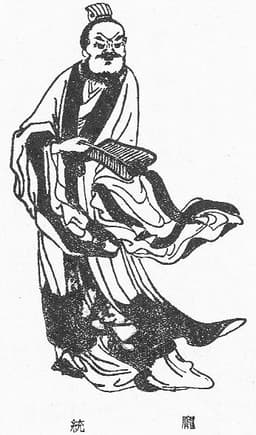
Pang Tong
Politician · Ancient
47.2Total

Wei Xuan
Politician · Ancient
50.9Total
Basic Information
Born
179
-140
Died
214
-50
Era
Ancient
Ancient
Nationality
China
China
Occupation
Politician
Politician
Civilization
Eastern
Eastern
Score Comparison
Military (10%)
38.3
36.5
Political (20%)
35.1
68.0
Influence (20%)
54.9
51.0
Legacy (20%)
49.2
40.0
Leadership (15%)
51.9
67.0
Strategy (15%)
43.3
42.0
TOTAL
47.2
50.9
Pang Tong — Complete Timeline
209 AD
Joined Liu Bei's servicePolitical Action◆ Major
Pang Tong left Zhou Yu's service and joined Liu Bei as a county magistrate. Liu Bei initially undervalued him, but after an interview with Lu Su and Zhuge Liang, Liu Bei promoted him to a key advisory role.
Liu BeiAllegiance ChangeAdvisor
Impact: regionalconstructive
211 AD
Proposed the strategy to capture Yi ProvinceWar
Pang Tong presented three strategies to Liu Bei for taking Yi Province from Liu Zhang: a direct attack, a feigned retreat to lure Liu Zhang's forces, or a slow consolidation. Liu Bei chose the middle strategy, leading to the eventual conquest of Yi.
Yi Province CampaignLiu BeiMilitary Strategy
Impact: regionalconstructive
214 AD
Killed in action at the Siege of Luo CountyWar◆ Major
During the siege of Luo County in Yi Province, Pang Tong was struck by an arrow and died. His death was a significant loss for Liu Bei, who mourned him deeply and later appointed his father to a post.
Yi Province CampaignLiu BeiDeath in Battle
Impact: regionaltragic
Wei Xuan — Complete Timeline
70 BC
Appointed as Governor of Nanyang CommanderyPolitical Action
Wei Xuan was appointed governor of Nanyang Commandery, where he implemented administrative reforms. He focused on improving local governance and reducing corruption among officials.
Han DynastyGovernanceLocal Reform
constructive
60 BC
Reformed the Taxation SystemReform◆ Major
Wei Xuan proposed and implemented reforms to the Han taxation system, aiming to reduce the burden on peasants and increase state revenue. He adjusted tax rates and improved collection methods, which helped stabilize the rural economy.
Han DynastyTax ReformEconomy
Impact: nationalconstructive
55 BC
Served as Minister of FinancePolitical Action◆ Major
Wei Xuan was promoted to Minister of Finance (Da Sinong) in the central government. In this role, he oversaw the national budget and continued his efforts to streamline fiscal policies, earning a reputation for integrity.
Han DynastyFinanceGovernment
Impact: nationalconstructive
50 BC
Retired Due to IllnessPolitical Action
Wei Xuan retired from public office due to declining health. His retirement marked the end of a career dedicated to fiscal reform and honest administration, and he was remembered as a model official.
Han DynastyRetirementOfficial
Expert Analysis
Origins
Pang Tong (179–214 CE) was born in Xiangyang, Jing Province, into a family of modest official standing. His uncle Pang Degong, a noted scholar, raised him after his father's early death. Pang Tong earned the nickname "Fledgling Phoenix" for his sharp intellect, but he lacked formal patronage early on. He served as a minor official under Zhou Yu in the south, but his potential went unrecognized until he was recommended by Lu Su and Zhuge Liang to Liu Bei.
Wei Xuan (c. 160–220 CE) hailed from a scholarly family in the late Eastern Han. His father served as a local administrator, providing Wei Xuan with access to classical education. He rose through the ranks of the Han bureaucracy by demonstrating expertise in fiscal matters. Unlike Pang Tong, Wei Xuan's career was built on administrative competence rather than military strategy.
Rise to Power
Pang Tong's breakthrough came when he joined Liu Bei's service around 209 CE. Initially appointed as a county magistrate, he was undervalued until Lu Su and Zhuge Liang intervened, praising his abilities. In 211 CE, Liu Bei granted Pang Tong the role of military advisor during the campaign to seize Yi Province. Pang Tong proposed three strategies: a swift attack, a feigned retreat, or a slow, cautious approach. Liu Bei chose the first, which led to initial victories but also exposed Pang Tong to danger.
Wei Xuan rose through merit in the Han bureaucracy. He caught the attention of Emperor Xian's court by drafting a proposal to reform the tax system, which had been burdening peasants with excessive levies. In 195 CE, he was appointed as an assistant in the Ministry of Finance, where he refined his plans. By 200 CE, he became Minister of Finance (Da Sinong), implementing nationwide tax reforms that reduced rates on land and increased revenue from commerce.
Leadership & Governance
Pang Tong's leadership was tactical and hands-on. He personally led troops during the Yi Province campaign, often placing himself in the vanguard. His governance philosophy emphasized speed and decisiveness, as seen in his advice to Liu Bei to take control of key cities before Liu Zhang could react. However, his approach lacked long-term administrative planning, focusing instead on immediate military objectives.
Wei Xuan governed through institutional reform. As Minister of Finance, he standardized tax collection procedures, reduced corruption by auditing local officials, and introduced a graduated land tax that eased the burden on small farmers. His policies increased state revenue by 20% over five years while lowering peasant unrest. Wei Xuan's leadership style was methodical and bureaucratic, contrasting sharply with Pang Tong's martial urgency.
Triumph & Tragedy
Pang Tong's greatest triumph was orchestrating the capture of Yi Province, which provided Liu Bei with a secure base for his later kingdom of Shu Han. His strategy at the Battle of Chengdu (214 CE) outmaneuvered Liu Zhang's forces. However, his tragedy came at the Siege of Luo County, where he was killed by an arrow while scouting ahead. His death deprived Liu Bei of a key strategist and forced Zhuge Liang to assume greater responsibilities.
Wei Xuan's triumph was his tax reform, which stabilized Han finances during a period of warlord fragmentation. He successfully reduced peasant tax rates by 15% while increasing total revenue, earning praise from Emperor Xian. Yet his tragedy was the limited scope of his reforms. The central government's authority was already waning, and local warlords often ignored his policies. Wei Xuan retired in 215 CE due to illness, seeing his work only partially implemented.
Character & Destiny
Pang Tong was bold and ambitious, often taking risks that others avoided. His decision to lead from the front reflected a desire for glory, but it also led to his premature death. Historical records note his sharp tongue and impatience with slower colleagues. His character shaped his destiny: a brilliant but short-lived career, cut off before he could fully realize his potential.
Wei Xuan was cautious and principled, focused on long-term stability rather than personal fame. He avoided military conflicts and instead sought to strengthen the state through fiscal discipline. His character allowed him to survive the tumultuous late Han period, but it also limited his influence to administrative circles. He died peacefully in retirement, his reforms largely forgotten amidst the chaos of the Three Kingdoms.
Legacy
Pang Tong's legacy is intertwined with the founding of Shu Han. He is remembered as one of Liu Bei's "Three Advisors" alongside Zhuge Liang and Fa Zheng. His strategic contributions, though cut short, are celebrated in historical novels like the *Romance of the Three Kingdoms*. His military score of 38.3 and strategy score of 43.3 reflect his limited but impactful career.
Wei Xuan's legacy is more obscure. His tax reforms influenced later dynasties, particularly the Tang, which adopted similar graduated land taxes. However, his immediate impact was muted by the collapse of Han authority. With a political score of 68.0 and leadership score of 67.0, he ranks higher overall (50.9 total vs. Pang Tong's 47.2), but his name is less known.
Conclusion
Wei Xuan had a greater total impact score (50.9) than Pang Tong (47.2), but Pang Tong's influence on the Three Kingdoms era was more immediate and dramatic. However, looking at long-term systemic change, Wei Xuan's tax reforms provided a model for later empires, while Pang Tong's strategies only served a single kingdom. Therefore, Wei Xuan's legacy is broader in scope, even if less celebrated. His reforms addressed fundamental economic issues, while Pang Tong's contributions were tied to a fleeting military campaign. Thus, Wei Xuan's impact was greater.
Rankings
🥇
Wei XuanLeader
Mil: 36.5Pol: 68.0Inf: 51.0
50.9
🥈
Pang Tong
Mil: 38.3Pol: 35.1Inf: 54.9
47.2
+3.7 behind
How This Comparison Works
Algorithm
Each figure is scored on 6 dimensions (0—100 scale) based on structured historical data: Military (10%), Political (20%), Influence (20%), Legacy (20%), Leadership (15%), Strategy (15%). The weighted total produces the final ranking.
Data Sources
Scores are computed from structured sub-indicators in the database. Scale factors adjust for era (Ancient ×0.85, Modern ×1.0) and civilization size (Eastern ×1.05, Other ×0.80) to account for differences in population and military scale.
Maximum 3 Figures
Comparisons are limited to 2—3 figures to ensure readability and statistical meaningfulness.
Error Margins
±5 points per dimension — Sub-scores are derived from historical records with inherent uncertainty. Two figures within 5 points on a dimension should be considered roughly equivalent in that area.
Total Score Accuracy
±3 points overall — The weighted combination of 6 dimensions produces a total score with approximately ±3 points of uncertainty. Differences of less than 3 points are not statistically significant— the figures are effectively tied.
Known Limitations
- Historical records are incomplete and uneven across civilizations
- Figures from oral-tradition societies may be underrepresented
- Occupation labels can misclassify multi-role figures
- Scores measure capability and impact, not moral character
- Quantitative scoring is a comparison tool, not absolute truth
Capability Radar
Military (10%) — Battles & Warfare
Battles
30
24
Win Rate
35
22
Expansion
55
27
Political (20%) — Governance & Reform
Reform
15
60
Diplomacy
40
20
Economy
20
65
Influence (20%) — Cultural & Global Reach
Cultural
40
10
Global
20
5
Legacy (20%) — Historical Impact
Historical
45
20
Longevity
40
10
Leadership (15%) — Power & Stability
Tenure
20
30
Stability
25
40
Strategy (15%) — Tactics & Innovation
Strategy
60
32
Tactics
65
35
Reform
10
39
Similar Comparisons
Comments & Discussion
No comments yet. Be the first to share your thoughts!