Loading...
Aristides vs Pang Tong
Aristides leads by 10.4 pts · 2 figures compared
…

Aristides
Politician · Ancient
57.6Total
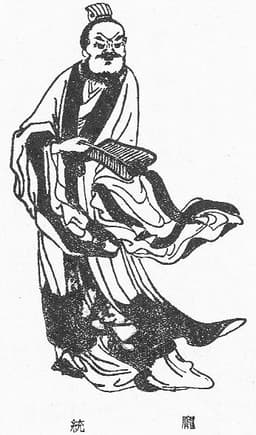
Pang Tong
Politician · Ancient
47.2Total
Basic Information
Born
-530
179
Died
-468
214
Era
Ancient
Ancient
Nationality
Greece
China
Occupation
Politician
Politician
Civilization
Western
Eastern
Score Comparison
Military (10%)
50.0
38.3
Political (20%)
68.0
35.1
Influence (20%)
59.0
54.9
Legacy (20%)
54.0
49.2
Leadership (15%)
74.0
51.9
Strategy (15%)
30.3
43.3
TOTAL
57.6
47.2
Aristides — Complete Timeline
479 BC
Battle of PlataeaWar
Aristides commanded the Athenian contingent at the Battle of Plataea, the final land battle of the second Persian invasion of Greece. The Greek victory decisively ended Persian ambitions in Greece and secured Greek independence.
Greco-Persian WarsGreek VictoryPlataea
Impact: global
478 BC
Founding of the Delian LeaguePolitical Action◆ Major
Aristides was instrumental in founding the Delian League, an alliance of Greek city-states against Persia. He was appointed to assess the initial contributions (tribute) from member states, earning a reputation for fairness and justice.
Delian LeagueAthenian AllianceTribute Assessment
Impact: globalconstructive
477 BC
Reforms under the Delian LeagueReform
Aristides helped establish the administrative and financial structure of the Delian League. He set the initial tribute quotas for member states, which were considered fair and equitable, contributing to the league's early stability and growth.
Delian LeagueFinancial ReformTribute
Impact: regionalconstructive
471 BC
Ostracism of ThemistoclesPolitical Action
Aristides supported the ostracism of Themistocles, his political rival. Themistocles was exiled from Athens for ten years, reducing the influence of the populist faction and strengthening the aristocratic faction led by Aristides and Cimon.
OstracismAthenian PoliticsThemistocles
Impact: national
Pang Tong — Complete Timeline
209 AD
Joined Liu Bei's servicePolitical Action◆ Major
Pang Tong left Zhou Yu's service and joined Liu Bei as a county magistrate. Liu Bei initially undervalued him, but after an interview with Lu Su and Zhuge Liang, Liu Bei promoted him to a key advisory role.
Liu BeiAllegiance ChangeAdvisor
Impact: regionalconstructive
211 AD
Proposed the strategy to capture Yi ProvinceWar
Pang Tong presented three strategies to Liu Bei for taking Yi Province from Liu Zhang: a direct attack, a feigned retreat to lure Liu Zhang's forces, or a slow consolidation. Liu Bei chose the middle strategy, leading to the eventual conquest of Yi.
Yi Province CampaignLiu BeiMilitary Strategy
Impact: regionalconstructive
214 AD
Killed in action at the Siege of Luo CountyWar◆ Major
During the siege of Luo County in Yi Province, Pang Tong was struck by an arrow and died. His death was a significant loss for Liu Bei, who mourned him deeply and later appointed his father to a post.
Yi Province CampaignLiu BeiDeath in Battle
Impact: regionaltragic
Expert Analysis
Origins
Aristides was born around 530 BCE in Athens, into a moderately wealthy family. Little is known of his early life, but he became a follower of the reformer Cleisthenes, which shaped his democratic leanings. He was known for his integrity and sense of justice, earning him the epithet "the Just."
Pang Tong (179-214 CE) was born in Xiangyang, in the late Eastern Han dynasty. He came from a scholarly family and was known for his unconventional appearance and sharp intellect. He was a recluse who studied strategy and was recommended by Sima Hui as one of the "Fledgling Phoenix" talents.
Rise to Power
Aristides rose to prominence as a military commander during the Persian Wars. He fought at the Battle of Marathon in 490 BCE and later served as archon in 489 BCE. However, his rivalry with Themistocles led to his ostracism in 482 BCE. He was recalled during the second Persian invasion and commanded the Athenian contingent at the Battle of Plataea in 479 BCE, a decisive Greek victory. After the war, he helped found the Delian League in 477 BCE, setting its tribute system, which solidified his political influence.
Pang Tong began his career as a county magistrate under Zhou Yu. He left after Zhou Yu's death and joined Liu Bei's service. Initially undervalued, he was recommended by Lu Su and Zhuge Liang, eventually becoming a key advisor. His turning point came when he proposed the strategy to capture Yi Province from Liu Zhang in 211-214 CE, offering three plans: direct attack, feigned retreat, or a cautious advance. Liu Bei chose the middle path, leading to the conquest of Yi.
Leadership & Governance
Aristides was a statesman of fairness and moderation. As a leader, he was known for his impartiality and was trusted to set the Delian League's tribute quotas, which he did with equity. He supported democratic reforms and opposed the radical policies of Themistocles. His governance style was collaborative, seeking consensus among allies. He scored 74.0 in leadership, reflecting his ability to unite the Greek city-states.
Pang Tong was a strategic thinker who excelled in planning but had limited administrative experience. He advised Liu Bei on military campaigns, offering bold and cunning strategies. His leadership score of 51.9 indicates he was effective in an advisory role but not as a primary ruler. Unlike Aristides, Pang Tong did not hold high office or implement long-term policies.
Triumph & Tragedy
Aristides' greatest triumph was his role in the Greek victory at Plataea and the founding of the Delian League, which established Athens as a maritime power. His tribute system provided stable funding for the league. However, his tragedy was his ostracism, a political failure that temporarily sidelined him. He also failed to prevent the rise of Athenian imperialism, which later led to the Peloponnesian War.
Pang Tong's triumph was devising the strategy that allowed Liu Bei to conquer Yi Province, a crucial step in establishing the Shu Han kingdom. His tragedy was his early death at the Siege of Luo County in 214 CE, struck by an arrow. His death deprived Liu Bei of a key advisor and contributed to later strategic difficulties. He scored 43.3 in strategy, indicating competent but not exceptional planning.
Character & Destiny
Aristides was known for his honesty and fairness, earning him widespread respect. His character was his greatest asset, but it also made him vulnerable to political machinations. His willingness to cooperate with rivals, like Themistocles, showed pragmatism. His destiny was shaped by his reputation; he was often called upon to mediate disputes. He lived into old age, dying around 467 BCE, leaving a legacy of integrity.
Pang Tong was eccentric and proud, which initially hindered his rise. He was determined to prove his worth, leading him to take risks. His death in battle was a direct result of his active participation in the siege, perhaps due to a desire for glory. His character—bold and ambitious—led to both his success and his downfall.
Legacy
Aristides' legacy endures as a symbol of justice and fair governance. The Delian League evolved into the Athenian Empire, but his initial structure was based on voluntary cooperation. He is remembered as a founding figure of Athenian democracy and a model of civic virtue. His influence on political thought is lasting.
Pang Tong's legacy is more limited, mainly within the context of the Three Kingdoms period. He is celebrated as a brilliant strategist in Chinese literature, especially in the Romance of the Three Kingdoms. However, his historical impact is overshadowed by Zhuge Liang. He scored 49.2 in legacy, reflecting his niche but significant role.
Conclusion
Comparing Aristides and Pang Tong, Aristides had a greater impact on history. His political score of 68.0 and leadership score of 74.0 far exceed Pang Tong's 35.1 and 51.9. Aristides helped shape the classical Greek world, influencing the development of democracy and international alliances. Pang Tong, while important to Shu Han's founding, operated on a smaller stage and his contributions were less enduring. The score gap of 10.4 points reflects this: Aristides' total of 57.6 against Pang Tong's 47.2. Therefore, Aristides is the more significant historical figure.
Rankings
🥇
AristidesLeader
Mil: 50.0Pol: 68.0Inf: 59.0
57.6
🥈
Pang Tong
Mil: 38.3Pol: 35.1Inf: 54.9
47.2
+10.4 behind
How This Comparison Works
Algorithm
Each figure is scored on 6 dimensions (0—100 scale) based on structured historical data: Military (10%), Political (20%), Influence (20%), Legacy (20%), Leadership (15%), Strategy (15%). The weighted total produces the final ranking.
Data Sources
Scores are computed from structured sub-indicators in the database. Scale factors adjust for era (Ancient ×0.85, Modern ×1.0) and civilization size (Eastern ×1.05, Other ×0.80) to account for differences in population and military scale.
Maximum 3 Figures
Comparisons are limited to 2—3 figures to ensure readability and statistical meaningfulness.
Error Margins
±5 points per dimension — Sub-scores are derived from historical records with inherent uncertainty. Two figures within 5 points on a dimension should be considered roughly equivalent in that area.
Total Score Accuracy
±3 points overall — The weighted combination of 6 dimensions produces a total score with approximately ±3 points of uncertainty. Differences of less than 3 points are not statistically significant— the figures are effectively tied.
Known Limitations
- Historical records are incomplete and uneven across civilizations
- Figures from oral-tradition societies may be underrepresented
- Occupation labels can misclassify multi-role figures
- Scores measure capability and impact, not moral character
- Quantitative scoring is a comparison tool, not absolute truth
Capability Radar
Military (10%) — Battles & Warfare
Battles
20
30
Win Rate
30
35
Expansion
20
55
Political (20%) — Governance & Reform
Reform
45
15
Diplomacy
60
40
Economy
35
20
Influence (20%) — Cultural & Global Reach
Cultural
45
40
Global
40
20
Legacy (20%) — Historical Impact
Historical
55
45
Longevity
50
40
Leadership (15%) — Power & Stability
Tenure
40
20
Stability
50
25
Strategy (15%) — Tactics & Innovation
Strategy
35
60
Tactics
25
65
Reform
10
10
Similar Comparisons
Comments & Discussion
No comments yet. Be the first to share your thoughts!