Loading...
Cao Shen vs Pang Tong
Cao Shen leads by 3.6 pts · 2 figures compared
…

Cao Shen
Politician · Ancient
50.8Total
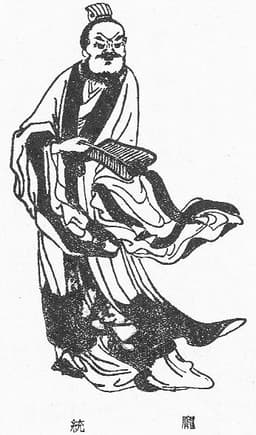
Pang Tong
Politician · Ancient
47.2Total
Basic Information
Born
-250
179
Died
-190
214
Era
Ancient
Ancient
Nationality
China
China
Occupation
Politician
Politician
Civilization
Eastern
Eastern
Score Comparison
Military (10%)
10.2
38.3
Political (20%)
68.0
35.1
Influence (20%)
53.3
54.9
Legacy (20%)
45.0
49.2
Leadership (15%)
72.0
51.9
Strategy (15%)
42.3
43.3
TOTAL
50.8
47.2
Cao Shen — Complete Timeline
193 BC
Succession as Chancellor of HanPolitical Action◆ Major
After Xiao He's death, Cao Shen succeeded him as chancellor of the Han dynasty. He continued Xiao He's policies without alteration, following the principle of 'non-action' (wu wei) in governance.
Han DynastyChancellorshipSuccession
Impact: nationalconstructive
Implementation of Wu Wei PolicyPolitical Action◆ Major
Cao Shen maintained the legal and administrative framework established by Xiao He, avoiding new initiatives. He selected officials who were simple and honest, and dismissed those who were overly ambitious. This policy of non-interference allowed the Han economy to recover from war.
GovernanceWu WeiHan Dynasty
Impact: nationalconstructive
Drinking and GovernanceCultural
Cao Shen was known for his daily drinking and apparent lack of activity as chancellor. When criticized, he argued that he was simply following the superior precedents set by Xiao He, and that any changes would be harmful. This approach became a famous example of Daoist-inspired governance.
AnecdoteGovernance StyleDaoist Influence
Impact: national
Pang Tong — Complete Timeline
209 AD
Joined Liu Bei's servicePolitical Action◆ Major
Pang Tong left Zhou Yu's service and joined Liu Bei as a county magistrate. Liu Bei initially undervalued him, but after an interview with Lu Su and Zhuge Liang, Liu Bei promoted him to a key advisory role.
Liu BeiAllegiance ChangeAdvisor
Impact: regionalconstructive
211 AD
Proposed the strategy to capture Yi ProvinceWar
Pang Tong presented three strategies to Liu Bei for taking Yi Province from Liu Zhang: a direct attack, a feigned retreat to lure Liu Zhang's forces, or a slow consolidation. Liu Bei chose the middle strategy, leading to the eventual conquest of Yi.
Yi Province CampaignLiu BeiMilitary Strategy
Impact: regionalconstructive
214 AD
Killed in action at the Siege of Luo CountyWar◆ Major
During the siege of Luo County in Yi Province, Pang Tong was struck by an arrow and died. His death was a significant loss for Liu Bei, who mourned him deeply and later appointed his father to a post.
Yi Province CampaignLiu BeiDeath in Battle
Impact: regionaltragic
Expert Analysis
Origins
Cao Shen (died 190 BCE) was born in Pei County, part of the Qin dynasty. He served as a prison warden before joining Liu Bang's rebellion against Qin. His early career focused on military administration, though his later fame rests on governance. He was a close associate of Xiao He, the first Han chancellor.
Pang Tong (179-214 CE) hailed from Xiangyang in Jing Province. He was a nephew of the scholar Pang Degong and known as the 'Fledgling Phoenix' (Fengchu). Despite a plain appearance, he impressed Sima Hui and was recommended to Liu Bei. He initially served under Zhou Yu of Wu before transferring to Liu Bei.
Rise to Power
Cao Shen rose through military merit during the Chu-Han Contention, but his pivotal moment came in 193 BCE when Xiao He died. Emperor Hui appointed Cao Shen as chancellor, a role he held for three years until his death. He deliberately avoided innovation, stating 'I am not as good as Xiao He.'
Pang Tong's rise began when he joined Liu Bei as a county magistrate, but was initially undervalued. After interviews with Lu Su and Zhuge Liang, Liu Bei promoted him to advisor. In 211 CE, Liu Bei was invited into Yi Province by Liu Zhang, and Pang Tong became a key strategist, proposing the plan to seize the province.
Leadership & Governance
Cao Shen's leadership style was passive continuity. He implemented 'wu wei' (non-action) governance, maintaining Xiao He's laws exactly. He appointed older, simple bureaucrats and dismissed younger, ambitious ones. He spent days drinking wine, and when criticized, replied that the people were already well-governed. His political score of 68.0 reflects this hands-off approach.
Pang Tong's leadership was active and strategic. He was a charismatic advisor who favored decisive action. He proposed three strategies to take Yi Province: direct attack, feigned retreat, or return to Jing. Liu Bei chose the middle path. Pang Tong's military score of 38.3 is higher than Cao Shen's 10.2, but his political score of 35.1 is lower.
Triumph & Tragedy
Cao Shen's triumph was stabilizing the early Han dynasty by ensuring continuity after Xiao He. His policy of non-intervention allowed the empire to recover from war. However, his failure was a lack of innovation; he left no personal reforms, and his legacy is entirely derivative. His total score of 50.8 is modest.
Pang Tong's triumph was devising the strategy that gave Liu Bei control of Yi Province, a crucial base for Shu-Han. His tragedy was his death at 36 during the Siege of Luo County in 214 CE, struck by an arrow. Liu Bei mourned him deeply, and his loss weakened Shu's strategic planning. His total score of 47.2 reflects his potential unfulfilled.
Character & Destiny
Cao Shen was pragmatic and self-aware, knowing his limits. His decision to follow Xiao He's precedents showed humility. But his passivity also suggests a lack of ambition. He died naturally in office, leaving a stable but unremarkable legacy.
Pang Tong was ambitious and bold, but his pride may have contributed to his downfall. He led from the front at Luo County, a risk that proved fatal. His character combined strategic brilliance with personal recklessness. His destiny was cut short, but his ideas shaped Shu-Han's foundation.
Legacy
Cao Shen's legacy is the 'Cao Shen followed Xiao He' idiom, symbolizing adherence to precedent. His governance model influenced later Han chancellors, but his individual impact is minimal. He is remembered as a competent placeholder, scoring 45.0 in legacy.
Pang Tong's legacy is more romanticized. He is celebrated as a brilliant strategist who died young, akin to Guo Jia. His role in conquering Yi Province is crucial to Shu-Han's history. He scores 49.2 in legacy, higher than Cao Shen's 45.0, despite a lower total score.
Conclusion
While Cao Shen scores higher overall (50.8 vs 47.2), his impact is largely reactive and dependent on Xiao He. Pang Tong, though lower in total, had a more direct and transformative effect on the Three Kingdoms era. His strategies enabled Liu Bei's rise, whereas Cao Shen merely sustained existing systems. Therefore, Pang Tong had greater historical impact despite a lower score.
Rankings
🥇
Cao ShenLeader
Mil: 10.2Pol: 68.0Inf: 53.3
50.8
🥈
Pang Tong
Mil: 38.3Pol: 35.1Inf: 54.9
47.2
+3.6 behind
How This Comparison Works
Algorithm
Each figure is scored on 6 dimensions (0—100 scale) based on structured historical data: Military (10%), Political (20%), Influence (20%), Legacy (20%), Leadership (15%), Strategy (15%). The weighted total produces the final ranking.
Data Sources
Scores are computed from structured sub-indicators in the database. Scale factors adjust for era (Ancient ×0.85, Modern ×1.0) and civilization size (Eastern ×1.05, Other ×0.80) to account for differences in population and military scale.
Maximum 3 Figures
Comparisons are limited to 2—3 figures to ensure readability and statistical meaningfulness.
Error Margins
±5 points per dimension — Sub-scores are derived from historical records with inherent uncertainty. Two figures within 5 points on a dimension should be considered roughly equivalent in that area.
Total Score Accuracy
±3 points overall — The weighted combination of 6 dimensions produces a total score with approximately ±3 points of uncertainty. Differences of less than 3 points are not statistically significant— the figures are effectively tied.
Known Limitations
- Historical records are incomplete and uneven across civilizations
- Figures from oral-tradition societies may be underrepresented
- Occupation labels can misclassify multi-role figures
- Scores measure capability and impact, not moral character
- Quantitative scoring is a comparison tool, not absolute truth
Capability Radar
Military (10%) — Battles & Warfare
Battles
20
30
Win Rate
25
35
Expansion
10
55
Political (20%) — Governance & Reform
Reform
55
15
Diplomacy
50
40
Economy
55
20
Influence (20%) — Cultural & Global Reach
Cultural
30
40
Global
20
20
Legacy (20%) — Historical Impact
Historical
40
45
Longevity
30
40
Leadership (15%) — Power & Stability
Tenure
60
20
Stability
65
25
Strategy (15%) — Tactics & Innovation
Strategy
20
60
Tactics
20
65
Reform
10
10
Similar Comparisons
Comments & Discussion
No comments yet. Be the first to share your thoughts!