Loading...
Pang Tong vs Sima Fu
Pang Tong leads by 0.6 pts · 2 figures compared
…
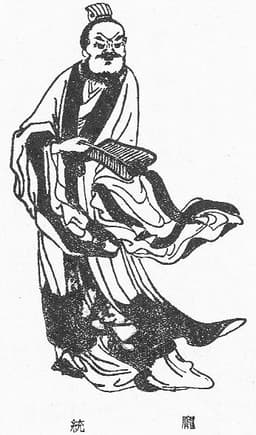
Pang Tong
Politician · Ancient
47.2Total

Sima Fu
Politician · Ancient
46.6Total
Basic Information
Born
179
180
Died
214
272
Era
Ancient
Ancient
Nationality
China
China
Occupation
Politician
Politician
Civilization
Eastern
Eastern
Score Comparison
Military (10%)
38.3
39.9
Political (20%)
35.1
33.6
Influence (20%)
54.9
49.4
Legacy (20%)
49.2
39.2
Leadership (15%)
51.9
67.0
Strategy (15%)
43.3
54.1
TOTAL
47.2
46.6
Pang Tong — Complete Timeline
209 AD
Joined Liu Bei's servicePolitical Action◆ Major
Pang Tong left Zhou Yu's service and joined Liu Bei as a county magistrate. Liu Bei initially undervalued him, but after an interview with Lu Su and Zhuge Liang, Liu Bei promoted him to a key advisory role.
Liu BeiAllegiance ChangeAdvisor
Impact: regionalconstructive
211 AD
Proposed the strategy to capture Yi ProvinceWar
Pang Tong presented three strategies to Liu Bei for taking Yi Province from Liu Zhang: a direct attack, a feigned retreat to lure Liu Zhang's forces, or a slow consolidation. Liu Bei chose the middle strategy, leading to the eventual conquest of Yi.
Yi Province CampaignLiu BeiMilitary Strategy
Impact: regionalconstructive
214 AD
Killed in action at the Siege of Luo CountyWar◆ Major
During the siege of Luo County in Yi Province, Pang Tong was struck by an arrow and died. His death was a significant loss for Liu Bei, who mourned him deeply and later appointed his father to a post.
Yi Province CampaignLiu BeiDeath in Battle
Impact: regionaltragic
Sima Fu — Complete Timeline
249 AD
Refused to Join Sima Yi's CoupPolitical Action◆ Major
When Sima Yi launched a coup against Cao Shuang, Sima Fu refused to participate, remaining loyal to the Wei emperor. This stance earned him respect but limited his influence.
LoyaltyCoupWei Dynasty
Impact: nationalconstructive
250 AD
Served as Minister Under WeiPolitical Action
Sima Fu held various ministerial posts under Wei, including Minister of Works. He maintained a reputation for integrity and avoided involvement in Sima clan power struggles.
Ministerial CareerWei DynastyIntegrity
Impact: nationalconstructive
272 AD
Died as Wei LoyalistOther
Sima Fu died at age 92, having never served the Jin dynasty. His death marked the end of an era of Wei loyalists.
DeathLoyaltyWei Dynasty
Impact: national
Expert Analysis
Origins
Pang Tong (179-214 AD) was born into a prominent family in Xiangyang, part of the Jing Province elite. His uncle, Pang Degong, was a renowned scholar who recognized the young Pang Tong's talents early, bestowing the nickname "Fledgling Phoenix." Pang Tong received a classical education and became known for his sharp intellect, but his humble appearance and slow speech often caused others to underestimate him. His early career saw him serve as a county magistrate under Zhou Yu, where his administrative skills were noted but not fully utilized.
Sima Fu (180-272 AD) was born into the powerful Sima clan of Henei. His father, Sima Fang, was a high-ranking official under the Han dynasty. Sima Fu, the younger brother of Sima Yi, grew up in a politically active household and was groomed for bureaucratic service. He was known for his upright character and studious nature, contrasting with his brother's more ambitious and calculating demeanor. Sima Fu's early career involved minor posts, but his family connections and reputation for integrity paved the way for steady advancement.
Rise to Power
Pang Tong's rise began when he left Zhou Yu's service and joined Liu Bei. Initially undervalued as a county magistrate, he was championed by Lu Su and Zhuge Liang, who insisted that Liu Bei give him a more significant role. Liu Bei eventually appointed him as a key advisor. Pang Tong's defining moment came in 211 AD when he proposed the three strategies for capturing Yi Province: a direct assault, a feigned retreat to lure Liu Zhang's forces, or a cautious advance. Liu Bei chose the middle strategy, leading to a successful campaign. Pang Tong's strategic acumen elevated him to the inner circle of Liu Bei's command.
Sima Fu's rise was more gradual and institutional. He served under successive Wei emperors, holding positions such as Minister of Works and Grand Commandant. His reputation for loyalty and competence kept him in favor even as his brother Sima Yi consolidated power. Unlike his brother, Sima Fu avoided factional politics and maintained a low profile. His peak came during the reign of Cao Fang, when he was one of the few officials trusted by both the imperial court and the Sima family. However, his refusal to join Sima Yi's coup in 249 AD marked a turning point, cementing his role as a loyalist but limiting his political influence.
Leadership & Governance
Pang Tong's leadership style was analytical and decisive. He scored 51.9 in leadership, reflecting his ability to command respect through strategic insight rather than personal charisma. His governance approach was pragmatic: during the Yi Province campaign, he advocated for swift action and minimal bloodshed. For example, he advised Liu Bei to bypass fortified positions and strike at the capital, Chengdu, directly. However, his lack of experience in large-scale administration meant his political impact was limited, with a political score of 35.1.
Sima Fu, with a leadership score of 67.0, was a more traditional administrator. He governed through adherence to Confucian principles, emphasizing loyalty, filial piety, and bureaucratic order. His tenure as Minister of Works involved overseeing public works and maintaining infrastructure, but his influence on policy was minimal due to his deliberate avoidance of power struggles. His political score of 33.6 reflects his passive role in governance.
Triumph & Tragedy
Pang Tong's greatest triumph was his role in Liu Bei's conquest of Yi Province. His three-strategy proposal was instrumental in securing a key territory that later formed the foundation of Shu Han. His tragedy came during the Siege of Luo County in 214 AD, where he was struck by an arrow and killed at age 35. His death was a severe blow to Liu Bei, who mourned him deeply and lost a strategic mind that could have balanced Zhuge Liang's cautiousness.
Sima Fu's triumph was his unwavering loyalty to Wei. He lived to age 92, outlasting the fall of the Han and the rise of the Jin dynasty. His refusal to participate in his brother's coup earned him historical respect as a principled official. His tragedy was his irrelevance: by staying loyal to a dying regime, he had no lasting impact on policy or governance. His legacy score of 39.2 reflects this marginal influence.
Character & Destiny
Pang Tong's character was defined by strategic brilliance and impatience. His decision to lead from the front at Luo County, despite his value as a planner, suggests a desire for personal glory that proved fatal. Historians note that his early death prevented him from reaching his full potential, with his influence score of 54.9 indicating that he was on the cusp of greater recognition. Sima Fu's character was marked by rigid adherence to duty. His refusal to adapt to changing circumstances ensured his survival but limited his historical footprint. His strategy score of 54.1 indicates competence without brilliance.
Legacy
Pang Tong is remembered as one of the great strategists of the Three Kingdoms period, immortalized in the novel "Romance of the Three Kingdoms" as a brilliant but short-lived advisor. His military score of 38.3 and strategy score of 43.3 are modest, but his potential is often emphasized by historians. Sima Fu's legacy is more obscure: he is a footnote in the Sima family history, remembered primarily for his loyalty. His military score of 39.9 and strategy score of 54.1 show that he was a capable administrator but not a transformative figure.
Conclusion
While Sima Fu's longevity and loyalty are commendable, Pang Tong's strategic impact on the formation of Shu Han gives him a greater historical importance. Pang Tong's total score of 47.2 edges out Sima Fu's 46.6, but the gap is narrow. However, Pang Tong's ideas shaped a kingdom, whereas Sima Fu's principled stance changed nothing. Therefore, Pang Tong had a greater impact on the course of Chinese history.
Rankings
🥇
Pang TongLeader
Mil: 38.3Pol: 35.1Inf: 54.9
47.2
🥈
Sima Fu
Mil: 39.9Pol: 33.6Inf: 49.4
46.6
+0.6 behind
How This Comparison Works
Algorithm
Each figure is scored on 6 dimensions (0—100 scale) based on structured historical data: Military (10%), Political (20%), Influence (20%), Legacy (20%), Leadership (15%), Strategy (15%). The weighted total produces the final ranking.
Data Sources
Scores are computed from structured sub-indicators in the database. Scale factors adjust for era (Ancient ×0.85, Modern ×1.0) and civilization size (Eastern ×1.05, Other ×0.80) to account for differences in population and military scale.
Maximum 3 Figures
Comparisons are limited to 2—3 figures to ensure readability and statistical meaningfulness.
Error Margins
±5 points per dimension — Sub-scores are derived from historical records with inherent uncertainty. Two figures within 5 points on a dimension should be considered roughly equivalent in that area.
Total Score Accuracy
±3 points overall — The weighted combination of 6 dimensions produces a total score with approximately ±3 points of uncertainty. Differences of less than 3 points are not statistically significant— the figures are effectively tied.
Known Limitations
- Historical records are incomplete and uneven across civilizations
- Figures from oral-tradition societies may be underrepresented
- Occupation labels can misclassify multi-role figures
- Scores measure capability and impact, not moral character
- Quantitative scoring is a comparison tool, not absolute truth
Capability Radar
Military (10%) — Battles & Warfare
Battles
30
10
Win Rate
35
10
Expansion
55
5
Political (20%) — Governance & Reform
Reform
15
20
Diplomacy
40
30
Economy
20
20
Influence (20%) — Cultural & Global Reach
Cultural
40
15
Global
20
10
Legacy (20%) — Historical Impact
Historical
45
20
Longevity
40
15
Leadership (15%) — Power & Stability
Tenure
20
40
Stability
25
30
Strategy (15%) — Tactics & Innovation
Strategy
60
10
Tactics
65
10
Reform
10
5
Similar Comparisons
Comments & Discussion
No comments yet. Be the first to share your thoughts!