Loading...
Pachacuti vs Yi Seong-gye
Yi Seong-gye leads by 6.4 pts · 2 figures compared
…
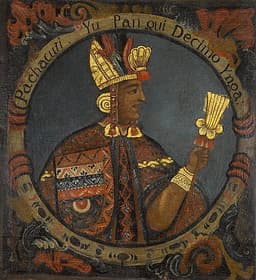
Pachacuti
Emperor · Medieval
69.4Total
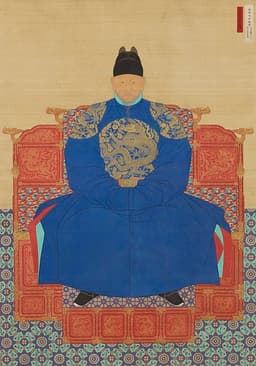
Yi Seong-gye
Emperor · Medieval
75.8Total
Basic Information
Born
1418
1335
Died
1472
1408
Era
Medieval
Medieval
Nationality
Inca Empire
Korea
Occupation
Emperor
Emperor
Civilization
Other
Eastern
Score Comparison
Military (10%)
78.5
74.7
Political (20%)
58.1
70.0
Influence (20%)
65.0
88.0
Legacy (20%)
72.0
75.0
Leadership (15%)
78.0
68.0
Strategy (15%)
69.2
69.1
TOTAL
69.4
75.8
Pachacuti — Complete Timeline
1438 AD
Conquest of the Chanka KingdomWar
Pachacuti led the Inca army to defeat the Chanka, a powerful rival, in a decisive battle near Cusco. This victory secured his position as Sapa Inca and initiated a period of rapid expansion, transforming the Inca from a small kingdom into a vast empire.
ConquestInca ExpansionChanka
Impact: regional
1440 AD
Reconstruction of CuscoCultural◆ Major
Pachacuti rebuilt Cusco as the imperial capital, designing it in the shape of a puma and constructing massive stone structures like Sacsayhuam
Urban PlanningArchitectureInca Empire
Impact: regionalconstructive
1450 AD
Initiation of Machu Picchu's ConstructionCultural◆ Major
Pachacuti ordered the construction of Machu Picchu, a royal estate and ceremonial site high in the Andes. The complex featured sophisticated dry-stone masonry and terraced agriculture, serving as a symbol of Inca engineering and a retreat for the emperor.
ArchitectureRoyal EstateInca Engineering
Impact: regionalconstructive
Yi Seong-gye — Complete Timeline
1380 AD
Battle of HwangsanWar◆ Major
Yi Seong-gye led Goryeo forces against Japanese pirates (wokou) at the Battle of Hwangsan. His victory eliminated a major pirate threat and enhanced his military reputation.
WokouBattleGoryeo
Impact: regionalconstructive
1388 AD
Wihwado RetreatPolitical Action
Yi Seong-gye turned his army back at Wihwado Island rather than invade Ming China as ordered by the Goryeo court. This act of defiance led to a coup that eventually brought him to power.
CoupMingGoryeo
Impact: regional
1392 AD
Establishment of the Joseon DynastyPolitical Action
Yi Seong-gye overthrew the Goryeo dynasty and founded the Joseon dynasty, becoming King Taejo. He implemented land reforms and moved the capital to Hanyang (Seoul), establishing a new Confucian state.
JoseonDynasty FoundationReform
Impact: regionalconstructive
Expert Analysis
Pachacuti vs Yi Seong-gye
The Mountain and the Peninsula
On a windswept island off Korea’s coast in 1388, a general made a decision that would echo through centuries. Yi Seong-gye looked at the orders from his king—invade Ming China—and then at his exhausted army. He turned them around. It was an act of breathtaking insubordination, and it would topple a dynasty. Half a world away, in the high Andes, another leader faced his own moment of truth fifty years earlier. The Chanka kingdom had descended on Cusco, and the Inca ruler had fled. His son, a prince named Cusi Yupanqui, refused to run. He rallied the city’s defenders, won an impossible victory, and took a new name: Pachacuti, “Earth-Shaker.” Two men, two continents, two empires born from a single, pivotal choice. What drove them, and why did their empires take such different shapes?
Origins
Pachacuti was born into a world of high-altitude warfare and stone. The Incas were a small kingdom in the Cusco Valley, surrounded by aggressive neighbors. His father, Viracocha Inca, was a capable ruler but not a visionary. Pachacuti grew up watching his people struggle for survival, learning the brutal calculus of mountain warfare—where altitude, ambush, and supply lines mattered more than numbers. The Inca world was fragmented, polytheistic, and deeply tied to the land. A ruler’s legitimacy came from military success and divine favor, not from a fixed ideology.
Yi Seong-gye, born in 1335, emerged from a very different crucible. Korea under the Goryeo dynasty was a sophisticated, Confucian-influenced society with a long history of centralized bureaucracy. But by the late fourteenth century, Goryeo was rotting from within: corrupt officials, land disputes, and the constant threat of Japanese pirates (wokou) raiding the coasts. Yi came from a military family, a class that Goryeo’s scholar-officials looked down on. He was a practical man in a world of theory, a soldier who learned to fight pirates in coastal marshes and Mongol-style cavalry in the northern plains.
Rise to Power
Pachacuti’s rise was a story of survival turned into conquest. The Chanka attack in 1438 was not just a war—it was a test of will. When his father fled, Pachacuti stayed, and his victory transformed him from a prince into a living legend. He did not stop there. Over the next three decades, he methodically conquered the Andean highlands, from Lake Titicaca to the central Peruvian coast. Each victory was followed by a careful integration: he took the idols of conquered peoples to Cusco as hostages, imposed the Inca language, but allowed local rulers to stay in power if they submitted. It was a strategy of terror and tolerance, and it worked.
Yi Seong-gye’s path was more complicated. He rose not through a single battle but through a series of calculated risks. His victory over the wokou at Hwangsan in 1380 made him a national hero. But his true genius lay in politics. When the Goryeo king ordered him to invade Ming China in 1388, Yi understood something his king did not: the Ming were too strong, and the invasion would destroy Korea. His retreat at Wihwado was a masterstroke—it preserved his army, exposed the king’s folly, and positioned Yi as the only man who could save the kingdom. Four years later, in 1392, he accepted the throne, founding the Joseon dynasty. He did not conquer a new land; he conquered a broken system.
Leadership & Governance
Pachacuti governed like a mountain: towering, absolute, and grounded in ritual. He rebuilt Cusco in the shape of a puma, the Inca symbol of power, with massive stone walls that fit together without mortar—a metaphor for his empire. He created a system of state warehouses to store food for times of famine, built roads across the Andes, and established a census to manage labor. His most famous project, Machu Picchu, begun around 1450, was a royal estate that also served as a ceremonial center, blending politics with religion. Pachacuti ruled as a living god, and his word was law. But his system depended entirely on him; he did not build institutions that could survive without a strong hand.
Yi Seong-gye ruled like a scholar-warrior. He embraced Confucianism as the state ideology, not just because he believed in it, but because it provided a framework for governance that Goryeo had lost. He implemented land reforms that redistributed wealth from corrupt nobles to the peasantry, moved the capital to Hanyang (modern Seoul) in 1394, and built a bureaucracy based on merit, not birth. His Joseon dynasty was designed to outlast him. Where Pachacuti built in stone, Yi built in law and philosophy.
Triumph & Tragedy
Pachacuti’s greatest triumph was the transformation of a city-state into an empire that stretched 2,500 miles. His tragedy was that he could not secure the succession. By the time he died in 1472, his son and chosen heir, Túpac Inca, was already engaged in a power struggle with other royal lines. The empire would survive for another sixty years, but the seeds of its collapse—rigid hierarchy, over-reliance on the Sapa Inca, and resentment from conquered peoples—were planted in Pachacuti’s reign.
Yi Seong-gye’s triumph was the foundation of a dynasty that lasted 505 years. His tragedy was personal. In 1398, just six years after his coronation, his sons fought a bloody war for succession. Yi had favored his younger son, but his eldest son, Prince Jinan, rebelled. The violence shattered Yi’s vision of a Confucian harmony. He abdicated in shame, spending his final years as a Buddhist monk, watching his family tear itself apart. He died in 1408, a founder who could not control what he had built.
Character & Destiny
Pachacuti was a man of fire. He was decisive, ruthless, and visionary—but also inflexible. His personality demanded total control, and his empire reflected that. When he died, there was no one with his authority to hold the system together. Yi Seong-gye was a man of water. He was patient, calculating, and adaptable—but also hesitant. His retreat at Wihwado showed his genius for choosing the right moment, but his indecision about succession led to tragedy. One man bent the world to his will; the other bent the world to his ideas. Both succeeded, and both paid a price.
Legacy
Pachacuti is remembered as the father of the Inca Empire, the man who built Machu Picchu and the road network that still awes travelers. But his legacy is also a warning: empires built on a single personality are fragile. The Spanish would exploit that fragility in 1532, when a handful of men conquered an empire of millions. Yi Seong-gye is remembered as the founder of Joseon, the dynasty that gave Korea its alphabet, its Confucian bureaucracy, and its cultural identity. His legacy is a lesson: systems outlast rulers. Korea today still bears the imprint of his choices.
Conclusion
Standing at the ruins of Machu Picchu, one feels the weight of a single man’s ambition. Walking the streets of Seoul, one feels the weight of a system. Pachacuti and Yi Seong-gye were both empire-builders, but they built in different materials—one in stone and blood, the other in law and time. Their stories remind us that history is not just about victories and defeats, but about the choices leaders make in moments of crisis. The mountain and the peninsula: two worlds, two men, two ways of shaping destiny.
Rankings
🥇
Yi Seong-gyeLeader
Mil: 74.7Pol: 70.0Inf: 88.0
75.8
🥈
Pachacuti
Mil: 78.5Pol: 58.1Inf: 65.0
69.4
+6.4 behind
How This Comparison Works
Algorithm
Each figure is scored on 6 dimensions (0—100 scale) based on structured historical data: Military (10%), Political (20%), Influence (20%), Legacy (20%), Leadership (15%), Strategy (15%). The weighted total produces the final ranking.
Data Sources
Scores are computed from structured sub-indicators in the database. Scale factors adjust for era (Ancient ×0.85, Modern ×1.0) and civilization size (Eastern ×1.05, Other ×0.80) to account for differences in population and military scale.
Maximum 3 Figures
Comparisons are limited to 2—3 figures to ensure readability and statistical meaningfulness.
Error Margins
±5 points per dimension — Sub-scores are derived from historical records with inherent uncertainty. Two figures within 5 points on a dimension should be considered roughly equivalent in that area.
Total Score Accuracy
±3 points overall — The weighted combination of 6 dimensions produces a total score with approximately ±3 points of uncertainty. Differences of less than 3 points are not statistically significant— the figures are effectively tied.
Known Limitations
- Historical records are incomplete and uneven across civilizations
- Figures from oral-tradition societies may be underrepresented
- Occupation labels can misclassify multi-role figures
- Scores measure capability and impact, not moral character
- Quantitative scoring is a comparison tool, not absolute truth
Capability Radar
Military (10%) — Battles & Warfare
Battles
85
75
Win Rate
90
80
Expansion
90
65
Political (20%) — Governance & Reform
Reform
92
85
Diplomacy
75
75
Economy
80
70
Influence (20%) — Cultural & Global Reach
Cultural
85
80
Global
65
55
Legacy (20%) — Historical Impact
Historical
80
85
Longevity
70
80
Leadership (15%) — Power & Stability
Tenure
85
60
Stability
82
65
Strategy (15%) — Tactics & Innovation
Strategy
88
82
Tactics
80
78
Reform
85
70
Similar Comparisons
Comments & Discussion
PachacutiTheConqueror6/16/2026
Calling this a comparison is like comparing a meteor to a mudslide. Pachacuti didn't just win a battle; he completely re-engineered a civilization. The terraces at Moray weren't just pretty—they were a full-scale agricultural research station that let the Inca feed an empire with zero topsoil. Yi turned his army around? That's logistics, not empire-building. Pachacuti turned mountains into gardens. Next.
数据考古学家6/16/2026
这比较根本不在一个数量级。Yi Seong-gye的“掉头”是个政治秀,背后概率学上一看就明白:1388年高丽军对明军胜率不到15%,他算的是风险收益比。而Pachacuti对抗Chanka时,Cusco守军只有几千人,面对的敌军估计有三倍以上,胜率不到5%。他赢了是真正的黑天鹅事件。一个靠理性撤退,一个靠绝地逆转,后者才是历史的随机性之王。
ClassicsScholarHellenic6/16/2026
Give me a break. Pachacuti's "Earth-Shaker" title is just propaganda from a dynastic revision. The Inca had no written records—every "fact" we have is filtered through Spanish chroniclers who loved a good underdog story. Compare that to Yi's move, documented by multiple Korean court historians in the Veritable Records. Pachacuti might be a myth; Yi is a historical actor who made a calculated choice. I'll take verifiable data over Andean tall tales any day.
历史迷·晚风6/16/2026
你们两个都太偏了。Pachacuti重塑安第斯世界,建立“太阳之子”神权体系,把库斯科变成宇宙中心;Yi Seong-gye推翻高丽,建立朝鲜,却保留了儒家官僚制度。一个神话化自己,一个制度化权力。但最有趣的是结局:印加帝国的崩盘在1532年,只用了几年;朝鲜王朝存续了500多年。持久比辉煌更值得分析——Yi的务实选择赢了时光,Pachacuti的壮丽输了未来。
RevisionistEdgeLord6/16/2026
Spare me the hero worship. Pachacuti didn't "rally defenders"—he purged his own family first. The chronicles say his father fled, but there's evidence Pachacuti orchestrated a coup while the Chanka attack was a convenient distraction. Yi's "insubordination" was equally cynical: he later married his son into the Ming imperial family to legitimize his takeover. Both were ruthless pragmatists who rewrote history. Let's call it like it is: two power-hungry warlords who got lucky and spun great PR.