Loading...
Kublai Khan vs Winston Churchill
Kublai Khan leads by 2.5 pts · 2 figures compared
…
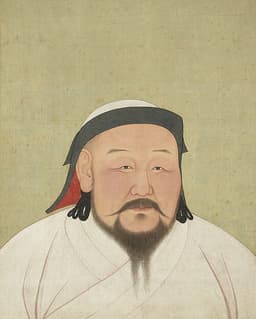
Kublai Khan
Emperor · Medieval
74.3Total
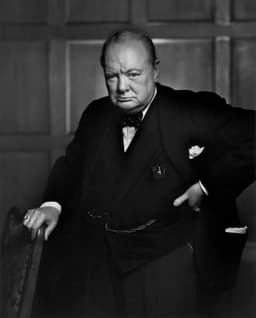
Winston Churchill
Politician · Modern
71.8Total
Basic Information
Born
1215
1874
Died
1294
1965
Era
Medieval
Modern
Nationality
Mongolia
United Kingdom
Occupation
Emperor
Politician
Civilization
Eastern
Western
Score Comparison
Military (10%)
77.5
55.0
Political (20%)
79.2
78.0
Influence (20%)
75.0
75.0
Legacy (20%)
70.0
68.0
Leadership (15%)
72.0
82.0
Strategy (15%)
76.0
65.0
TOTAL
74.3
71.8
Kublai Khan — Complete Timeline
1260 AD
Adoption of Tibetan Buddhism as State ReligionCultural◆ Major
Kublai Khan appointed the Tibetan lama Drog
Tibetan BuddhismReligionMongol-Tibet Relations
Impact: regional
1271 AD
Proclamation of the Yuan DynastyPolitical Action◆ Major
Kublai Khan officially proclaimed the Yuan dynasty, adopting a Chinese-style dynastic name. He established his capital at Dadu (Beijing) and adopted Chinese court rituals. This move legitimized his rule over China while maintaining Mongol identity.
Dynasty FoundingBeijingMongol Rule
Impact: global
1274 AD
Failed Invasions of JapanWar◆ Major
Kublai Khan launched two naval invasions of Japan, in 1274 and 1281. Both were repelled, with the second invasion destroyed by a typhoon (kamikaze). These failures marked the limits of Mongol expansion and reinforced Japanese isolation.
Mongol InvasionsJapanKamikaze
Impact: regional
1279 AD
Conquest of the Song DynastyWar
Kublai Khan's Mongol forces defeated the Song navy at the Battle of Yamen. The last Song emperor drowned, ending the Song dynasty. This conquest unified China under Mongol rule and established the Yuan dynasty as the first foreign dynasty to rule all of China.
Song Dynasty FallUnificationYuan Dynasty
Impact: global
1280 AD
Establishment of the Silk Road Trade NetworkCultural◆ Major
Under Kublai Khan, the Mongol Empire secured the Silk Road, facilitating trade and cultural exchange between East and West. Marco Polo visited his court. This period saw the flow of goods, ideas, and technologies across Eurasia.
Silk RoadTradeCultural Exchange
Impact: globalconstructive
Winston Churchill — Complete Timeline
1940 AD
Appointed Prime Minister of the United KingdomPolitical Action◆ Major
On May 10, 1940, Winston Churchill became Prime Minister of the United Kingdom, replacing Neville Chamberlain. His appointment came as Nazi Germany invaded France and the Low Countries, and Churchill formed a coalition government to lead Britain through World War II.
World War IILeadershipCoalition Government
Impact: globalconstructive
Delivered the 'We Shall Fight on the Beaches' SpeechOther◆ Major
On June 4, 1940, Churchill delivered a speech to the House of Commons following the evacuation of British forces from Dunkirk. He declared that Britain would fight on the beaches, landing grounds, fields, streets, and hills, and never surrender, rallying British morale during the darkest days of World War II.
World War IIOratoryMorale
Impact: nationalconstructive
1941 AD
Signed the Atlantic CharterOther◆ Major
On August 14, 1941, Churchill and U.S. President Franklin D. Roosevelt signed the Atlantic Charter aboard HMS Prince of Wales. This joint declaration outlined post-war goals including self-determination, disarmament, and free trade, and became a foundational document for the Allied war aims and the United Nations.
World War IIAllied CooperationPost-war Planning
Impact: globalconstructive
1945 AD
Attended the Yalta ConferenceOther◆ Major
In February 1945, Churchill attended the Yalta Conference with Roosevelt and Stalin to discuss the post-war reorganization of Europe. The conference agreed on the division of Germany, the establishment of the United Nations, and the fate of Eastern Europe, though Churchill later expressed regret over concessions to Stalin.
World War IIPost-war SettlementBig Three
Impact: global
1946 AD
Delivered the 'Iron Curtain' SpeechOther◆ Major
On March 5, 1946, Churchill delivered a speech at Westminster College in Fulton, Missouri, where he stated that an 'iron curtain' had descended across Europe from Stettin to Trieste. This speech is widely regarded as marking the beginning of the Cold War, as it highlighted the division between Soviet-controlled Eastern Europe and the West.
Cold WarSoviet UnionDivision of Europe
Impact: globaldestructive
1953 AD
Awarded the Nobel Prize in LiteratureOther◆ Major
In 1953, Churchill was awarded the Nobel Prize in Literature for his historical writings, particularly 'The Second World War' and 'A History of the English-Speaking Peoples'. The Nobel committee cited his mastery of historical and biographical description as well as his brilliant oratory in defending human values.
LiteratureNobel PrizeHistorical Writing
Impact: nationalconstructive
Expert Analysis
Kublai Khan vs Winston Churchill
### The Lion and the Khan: Churchill and Kublai, Rulers of Worlds Apart
In the winter of 1941, as German bombs fell on London, Winston Churchill huddled in a bunker, his voice crackling over the radio with defiant resolve. Seven centuries earlier, Kublai Khan sat in his marble palace at Shangdu, the summer capital of a Mongol empire that stretched from Korea to Hungary, contemplating the submission of all China. One man rallied a small, besieged island nation; the other commanded a continent-spanning horde. How did two figures, both rated among history’s great leaders, come from such different worlds—and what drove their radically different fates?
### Origins
Churchill was born into the British aristocracy in 1874, a child of Blenheim Palace and Victorian confidence. His father, Lord Randolph Churchill, was a turbulent politician; his mother, Jennie Jerome, an American heiress. The young Winston was restless, rebellious, and mediocre at school, but he devoured history and dreamed of glory. He grew up in an era of imperial sunset, where Britain ruled the waves but faced rising rivals. His world was one of parliamentary debate, naval power, and a fragile balance of power.
Kublai Khan, born in 1215 on the Mongolian steppe, was the grandson of Genghis Khan, the conqueror who had united the nomadic tribes and unleashed a whirlwind across Eurasia. Kublai grew up in a world of horses, yurts, and constant warfare, where loyalty was to the clan and the sky god Tengri. But he also absorbed Chinese culture through his mother, a Nestorian Christian princess, and learned to read and write. His era was one of raw expansion, where the Mongol Empire was the largest contiguous land empire ever known. While Churchill’s world was defined by law and tradition, Kublai’s was defined by conquest and adaptation.
### Rise to Power
Churchill’s path was a long, winding staircase. He entered politics in 1900 as a Conservative MP, but his restless ambition led him to switch parties twice. He held cabinet posts—Home Secretary, First Lord of the Admiralty—but his career was marked by disasters: the disastrous Gallipoli campaign in World War I nearly ended him. He spent the 1930s in the “wilderness,” warning against Nazi Germany while being mocked as a warmonger. His rise to Prime Minister in 1940 came not from a smooth ascent but from a national crisis, when his predecessor Neville Chamberlain fell after failing to stop Hitler.
Kublai Khan’s rise was more direct, but no less contested. In 1251, his brother Möngke became Great Khan, and Kublai was given control of China’s northern territories. He governed with Chinese advisors, built irrigation systems, and won the loyalty of Confucian scholars—a sharp contrast to Mongol brutality. When Möngke died in 1259, Kublai fought a civil war against his younger brother Ariq Böke. In 1264, he emerged victorious, becoming the Great Khan. Unlike Churchill, who won power through democratic crisis, Kublai seized it through blood and strategy.
### Leadership & Governance
Churchill’s leadership was a furnace of oratory and stubbornness. In 1940, when Britain stood alone against Hitler, his speeches—“We shall fight on the beaches”—stiffened spines. He micromanaged the war, often clashing with generals, but his strategic sense was uneven. He backed the disastrous 1941 Greek campaign and the costly 1943 Italian invasion. Yet he understood the grand alliance, courting Franklin Roosevelt and Joseph Stalin. His political wisdom lay in his ability to inspire a nation to endure. After the war, he was voted out, a brutal reminder that democracies reward wartime heroes with peacetime oblivion.
Kublai ruled as a Mongol emperor who became a Chinese emperor. He proclaimed the Yuan Dynasty in 1271, adopting a Chinese-style name and building a new capital at Dadu (modern Beijing). He reformed taxation, built roads, and patronized Buddhism, Daoism, and Confucianism. His military genius was undeniable: in 1279, at the Battle of Yamen, his fleet crushed the Song navy, ending the Song Dynasty and uniting China for the first time under non-Han rule. But his strategy had limits. In 1274 and 1281, he launched two massive invasions of Japan, both destroyed by typhoons—the *kamikaze* or “divine wind.” His empire was vast, but overstretched.
### Triumph & Tragedy
Churchill’s greatest triumph was the survival of Britain and the defeat of Nazism. His finest hour was 1940-41, when he stood alone and refused surrender. His tragedy was that he won the war but lost the peace: the British Empire crumbled, and he was rejected by voters in 1945. He returned as Prime Minister in 1951, but his second term was a pale shadow, marked by economic struggles and colonial retreat.
Kublai’s triumph was the conquest of the Song, a feat that required a navy, siege engines, and decades of patience. His tragedy was the failure of his overseas campaigns—Japan, Vietnam, Burma—which drained his treasury and killed tens of thousands. His later years were marked by grief: his favorite wife Chabi died, his heir Zhenjin died young, and he turned to drink and food, growing obese and isolated.
### Character & Destiny
Churchill’s character was a storm of contradictions: brilliant and impulsive, generous and cruel, visionary and blind. He was a romantic who loved history, a pragmatist who could be reckless. His destiny was shaped by the collision of his ego with the crisis of his time. He once said, “History will be kind to me, for I intend to write it.” And he did—his six-volume *The Second World War* won him the Nobel Prize in Literature.
Kublai’s character was more enigmatic: a Mongol who loved Chinese culture, a conqueror who sought peace, a nomad who built cities. He was tolerant of religions, but ruthless to enemies. His destiny was to be a bridge between worlds, but also a symbol of the costs of empire. He once told Marco Polo, “I have heard that your people call me the Great Khan. But I am only a man, and I will die like one.”
### Legacy
Churchill is remembered as the bulldog of democracy, his statue in Parliament Square, his name on streets and cigars. But his legacy is contested: his racism, his support for imperialism, his role in the Bengal famine of 1943. He is a hero to some, a villain to others.
Kublai is remembered as the builder of the Yuan Dynasty, the patron of the Silk Road, the emperor who welcomed Marco Polo. His legacy is the unification of China under a foreign dynasty, a paradox that still echoes. The Silk Road trade network he established in 1280 connected Europe and Asia, fostering exchange that would shape the Renaissance.
### Conclusion
Churchill and Kublai Khan were both leaders of vast ambition, but their worlds were as different as the Atlantic and the Gobi Desert. Churchill’s power came from words and a small, determined nation; Kublai’s from horses and a continent-spanning army. One fought to preserve a fading empire, the other to create a new one. Both succeeded and failed in equal measure. Their stories remind us that leadership is not a formula but a response to circumstance—and that the greatest leaders are often the most flawed.
Rankings
🥇
Kublai KhanLeader
Mil: 77.5Pol: 79.2Inf: 75.0
74.3
🥈
Winston Churchill
Mil: 55.0Pol: 78.0Inf: 75.0
71.8
+2.5 behind
How This Comparison Works
Algorithm
Each figure is scored on 6 dimensions (0—100 scale) based on structured historical data: Military (10%), Political (20%), Influence (20%), Legacy (20%), Leadership (15%), Strategy (15%). The weighted total produces the final ranking.
Data Sources
Scores are computed from structured sub-indicators in the database. Scale factors adjust for era (Ancient ×0.85, Modern ×1.0) and civilization size (Eastern ×1.05, Other ×0.80) to account for differences in population and military scale.
Maximum 3 Figures
Comparisons are limited to 2—3 figures to ensure readability and statistical meaningfulness.
Error Margins
±5 points per dimension — Sub-scores are derived from historical records with inherent uncertainty. Two figures within 5 points on a dimension should be considered roughly equivalent in that area.
Total Score Accuracy
±3 points overall — The weighted combination of 6 dimensions produces a total score with approximately ±3 points of uncertainty. Differences of less than 3 points are not statistically significant— the figures are effectively tied.
Known Limitations
- Historical records are incomplete and uneven across civilizations
- Figures from oral-tradition societies may be underrepresented
- Occupation labels can misclassify multi-role figures
- Scores measure capability and impact, not moral character
- Quantitative scoring is a comparison tool, not absolute truth
Capability Radar
Military (10%) — Battles & Warfare
Battles
95
55
Win Rate
90
60
Expansion
95
40
Political (20%) — Governance & Reform
Reform
88
70
Diplomacy
85
85
Economy
90
60
Influence (20%) — Cultural & Global Reach
Cultural
85
85
Global
85
85
Legacy (20%) — Historical Impact
Historical
90
90
Longevity
80
80
Leadership (15%) — Power & Stability
Tenure
90
75
Stability
80
70
Strategy (15%) — Tactics & Innovation
Strategy
92
85
Tactics
85
65
Reform
88
70
Similar Comparisons
Comments & Discussion
BIZARREBOWMAN6/16/2026
As a military historian, I gotta say Churchill gets romanticized but Kublai was the real logistical genius. The Khan coordinated supply lines that stretched from the Danube to the Pacific, feeding armies of 100,000+ across deserts and mountains using relay stations and fermented mare's milk. Churchill could barely keep Lend-Lease ships from being sunk by U-boats across the Atlantic. Kublai built an empire of speed; Churchill presided over a slow-motion collapse.
PAGODA PUNDIT6/16/2026
作为经典学者,我只能翻白眼。比较库比莱与丘吉尔就像拿蒙古包比唐宁街。库比莱汗是成吉思汗血统的草原狼,1259年他19万大军包围襄阳时,丘吉尔的祖先还在英国庄园里打猎消遣呢。不是同个物种,别硬凑。文化的根脉不同,统治的逻辑自然天差地别,吹什么历史地位,都是虚空打靶。
DATAHERETIC6/16/2026
The analysis is poetic, but let's look at the numbers. Churchill's England in 1941 had a GDP per capita of about $8,000 (adjusted), while Kublai's Yuan China was maybe $600. Churchill managed a 3.5% population mobilization rate for military service; Kublai had to conscript often unwilling Chinese peasants who revolted multiple times—like the 1289 revolt in Jiangxi that killed 10,000 Mongols. Churchill's "finest hour" was survival with a technological edge; Kublai conquered new lands. Apples vs.