Loading...
Pachacuti vs Wedem Arad
Pachacuti leads by 20.9 pts · 2 figures compared
…
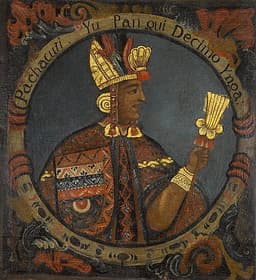
Pachacuti
Emperor · Medieval
69.4Total
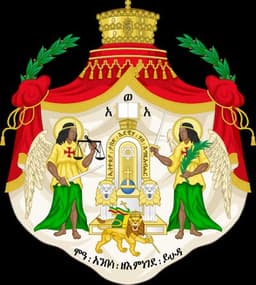
Wedem Arad
Emperor · Medieval
48.5Total
Basic Information
Born
1418
1270
Died
1472
1314
Era
Medieval
Medieval
Nationality
Inca Empire
Ethiopia
Occupation
Emperor
Emperor
Civilization
Other
Other
Score Comparison
Military (10%)
78.5
50.0
Political (20%)
58.1
35.1
Influence (20%)
65.0
58.0
Legacy (20%)
72.0
45.8
Leadership (15%)
78.0
55.3
Strategy (15%)
69.2
39.6
TOTAL
69.4
48.5
Pachacuti — Complete Timeline
1438 AD
Conquest of the Chanka KingdomWar
Pachacuti led the Inca army to defeat the Chanka, a powerful rival, in a decisive battle near Cusco. This victory secured his position as Sapa Inca and initiated a period of rapid expansion, transforming the Inca from a small kingdom into a vast empire.
ConquestInca ExpansionChanka
Impact: regional
1440 AD
Reconstruction of CuscoCultural◆ Major
Pachacuti rebuilt Cusco as the imperial capital, designing it in the shape of a puma and constructing massive stone structures like Sacsayhuam
Urban PlanningArchitectureInca Empire
Impact: regionalconstructive
1450 AD
Initiation of Machu Picchu's ConstructionCultural◆ Major
Pachacuti ordered the construction of Machu Picchu, a royal estate and ceremonial site high in the Andes. The complex featured sophisticated dry-stone masonry and terraced agriculture, serving as a symbol of Inca engineering and a retreat for the emperor.
ArchitectureRoyal EstateInca Engineering
Impact: regionalconstructive
Wedem Arad — Complete Timeline
1306 AD
First Contact with EuropePolitical Action◆ Major
Wedem Arad sent an embassy to Europe, likely to the court of Pope Clement V in Avignon. This was the first recorded diplomatic contact between Ethiopia and a European power since antiquity, establishing a precedent for future Ethiopian-European relations.
Impact: regional
Expert Analysis
Pachacuti vs Wedem Arad
# The Mountain and the Messenger
In the high Andes, a warrior-king reshaped the earth itself, carving a citadel from living rock and bending an entire civilization to his will. In the highlands of Ethiopia, another emperor sent a handful of emissaries across unknown seas, bearing letters that would echo through centuries. Both ruled in the medieval world, both wore crowns of ancient lineage, yet their trajectories could hardly have been more different. One built an empire that still awes us; the other opened a door that would not be fully opened for another two hundred years. What explains the gulf between them?
Origins
Pachacuti Inca Yupanqui was born in 1418 into a world of competing Andean kingdoms. The Inca were then a modest power centered on Cusco, surrounded by formidable rivals like the Chanka. His father, Viracocha Inca, was a capable ruler, but the empire remained small. Pachacuti grew up in a society that revered the sun god Inti and measured wealth in llamas, terraced fields, and woven cloth. His name, meaning “earth-shaker,” was earned, not given at birth.
Wedem Arad, born in 1270, inherited a far older and more complex state. The Solomonic dynasty of Ethiopia claimed descent from King Solomon and the Queen of Sheba, and its Christian kings had ruled for centuries, surrounded by Muslim sultanates and pagan kingdoms. Ethiopia was a literate, cosmopolitan civilization with a written language, a powerful church, and a tradition of diplomatic engagement with the wider world. Where Pachacuti’s world was isolated by geography, Wedem Arad’s was connected—however tenuously—to the Mediterranean and the Middle East.
Rise to Power
Pachacuti’s rise came through blood and desperation. In 1438, the Chanka kingdom launched a massive assault on Cusco. His father fled the city, deeming resistance hopeless. But Pachacuti, then a prince, refused to abandon his people. He rallied the remaining warriors and, in a climactic battle near Cusco, crushed the Chanka army. The victory was total: he personally captured the Chanka commander and paraded him through the streets. This single battle transformed him from a prince into a living legend. He deposed his father, claimed the throne, and immediately began expanding.
Wedem Arad’s path was quieter. He ascended to power through normal succession, inheriting a stable but fragmented kingdom. His great challenge was not military survival but diplomatic isolation. Ethiopia was a Christian island in a Muslim sea, cut off from Europe by the Mamluk sultanate of Egypt. Wedem Arad understood that his kingdom needed allies—or at least recognition—to survive. So he took an unprecedented step.
Leadership & Governance
Pachacuti governed like a force of nature. He reorganized the entire Inca state, dividing it into four provinces (suyus) radiating from Cusco, each governed by a trusted noble. He imposed a system of labor taxation called *mita*, requiring every subject to work for the state for a set period. He built a network of roads and storehouses that stretched thousands of miles. He rebuilt Cusco in the shape of a puma, with massive stone walls fitted so precisely that a knife blade could not slip between them. And in 1450, he ordered the construction of Machu Picchu, a royal estate perched on a mountain ridge, its terraces and temples carved from the living rock.
Wedem Arad’s governance was more conventional for his time. He maintained the feudal system of Ethiopia, with regional governors (ras) wielding considerable power. He supported the Ethiopian Orthodox Church, which served as both a spiritual anchor and a unifying institution. But his most notable act was diplomatic. In 1306, he sent an embassy to Europe, likely to the court of Pope Clement V in Avignon. The ambassadors carried letters describing Ethiopia’s Christian kingdom and requesting contact. It was the first recorded diplomatic exchange between Ethiopia and Europe. The mission achieved little in practical terms—the Pope was distracted by the Avignon Papacy and the Crusades had collapsed—but it planted a seed.
Triumph & Tragedy
Pachacuti’s triumphs were monumental. He conquered the Chanka, the Lupaca, the Colla, and dozens of other kingdoms, expanding Inca territory from a small valley to an empire spanning 2,500 miles. He created an administrative system that fed millions and kept records on knotted cords (khipus). His tragedy was more subtle: he conquered so quickly that his empire became brittle. After his death in 1472, his son Túpac Inca Yupanqui faced constant rebellions. The Inca state, for all its power, could not assimilate its subjects fast enough to prevent internal rot.
Wedem Arad’s triumph was his embassy. It proved that Ethiopia existed to European consciousness and opened a channel of communication. His tragedy was that the channel closed behind him. No further embassies were recorded for decades. The letters he sent were lost, and the memory of his initiative faded. He died in 1314, having changed nothing in his own time but having set a precedent that would later bear fruit when Portuguese explorers reached Ethiopia in the 1520s.
Character & Destiny
Pachacuti was a man of immense will, capable of both ruthless conquest and visionary statecraft. He saw the world as raw material to be shaped. His decisions were driven by a conviction that he was destined to rule, a belief reinforced by his victory over the Chanka. This self-assurance allowed him to build but also blinded him to the limits of force. He could conquer a people, but he could not make them love him.
Wedem Arad was a man of patience and foresight. He understood that Ethiopia’s survival depended on breaking its isolation, even if the benefits would not come in his lifetime. He gambled on diplomacy in an age of war. His decisions were driven by realism, not ambition. He did not seek to conquer; he sought to be known. That modesty was both his strength and his limitation.
Legacy
Pachacuti’s legacy is carved into the Andes. Machu Picchu, Cusco, the Inca road system, and the very concept of Tawantinsuyu (the Four Provinces) all bear his stamp. He is remembered as the father of the Inca Empire, a figure of almost mythical power. His name is synonymous with transformation.
Wedem Arad’s legacy is more fragile but no less real. He is remembered as the first Ethiopian emperor to reach out to Europe, a pioneer of diplomacy in an age of swords. His embassy paved the way for later contacts that would shape Ethiopian history for centuries. He did not build stone cities, but he built bridges across time.
Conclusion
Standing before the walls of Machu Picchu, one feels the weight of stone and ambition. Standing before the record of Wedem Arad’s embassy, one feels the weight of a letter that never arrived. Both men faced the same fundamental question: how does a ruler secure his people’s future? Pachacuti answered with armies and architecture, with sweat and blood. Wedem Arad answered with words and patience, with hope and humility. One reshaped the earth; the other reached across the sea. In the end, both understood that true power is not merely the ability to conquer, but the wisdom to choose what kind of legacy to leave behind.
Rankings
🥇
PachacutiLeader
Mil: 78.5Pol: 58.1Inf: 65.0
69.4
🥈
Wedem Arad
Mil: 50.0Pol: 35.1Inf: 58.0
48.5
+20.9 behind
How This Comparison Works
Algorithm
Each figure is scored on 6 dimensions (0—100 scale) based on structured historical data: Military (10%), Political (20%), Influence (20%), Legacy (20%), Leadership (15%), Strategy (15%). The weighted total produces the final ranking.
Data Sources
Scores are computed from structured sub-indicators in the database. Scale factors adjust for era (Ancient ×0.85, Modern ×1.0) and civilization size (Eastern ×1.05, Other ×0.80) to account for differences in population and military scale.
Maximum 3 Figures
Comparisons are limited to 2—3 figures to ensure readability and statistical meaningfulness.
Error Margins
±5 points per dimension — Sub-scores are derived from historical records with inherent uncertainty. Two figures within 5 points on a dimension should be considered roughly equivalent in that area.
Total Score Accuracy
±3 points overall — The weighted combination of 6 dimensions produces a total score with approximately ±3 points of uncertainty. Differences of less than 3 points are not statistically significant— the figures are effectively tied.
Known Limitations
- Historical records are incomplete and uneven across civilizations
- Figures from oral-tradition societies may be underrepresented
- Occupation labels can misclassify multi-role figures
- Scores measure capability and impact, not moral character
- Quantitative scoring is a comparison tool, not absolute truth
Capability Radar
Military (10%) — Battles & Warfare
Battles
85
15
Win Rate
90
20
Expansion
90
10
Political (20%) — Governance & Reform
Reform
92
20
Diplomacy
75
55
Economy
80
15
Influence (20%) — Cultural & Global Reach
Cultural
85
20
Global
65
40
Legacy (20%) — Historical Impact
Historical
80
35
Longevity
70
30
Leadership (15%) — Power & Stability
Tenure
85
40
Stability
82
30
Strategy (15%) — Tactics & Innovation
Strategy
88
10
Tactics
80
10
Reform
85
5
Similar Comparisons
Comments & Discussion
MACHU PICCHU POLITICIAN6/16/2026
Pachacuti's 1438 Chanka victory wasn't just a battle—it was statecraft. He literally reshaped the Sacred Valley with terraces and irrigation, feeding an empire without a currency or wheel. Meanwhile, what did Wedem Arad actually build? A vague letter to Europe that got ignored for 200 years. Pachacuti moved mountains; Wedem Arad just wrote one.
安德斯密使6/16/2026
说Wedem Arad只是送信?太天真了。1280年代的埃塞俄比亚面临马穆鲁克和也门穆斯林的双重压力,他的外交使节去欧洲不仅是打招呼,更是想组建反伊斯兰联盟。Pachacuti的帝国再大,也没逃过西班牙人;而Wedem Arad的索罗门王朝至今还在,这才是真王炸。
WARRIOR'S SCROLL6/16/2026
Let's be honest: Pachacuti conquered, built, and died. Standard warlord stuff. But Wedem Arad sent envoys to a world that barely knew Africa existed outside myth. His letters were the first real African diplomatic document in Europe—not a trade receipt, but a statement of sovereignty. That's harder than building a stone city.
石刻与羊皮6/16/2026
你们吹Pachacuti的梯田和神庙,但别忘了:印加没有文字,靠结绳记事;埃塞俄比亚在1330年就有宫廷编年史了。Wedem Arad的使节带回的不只是欧洲礼物,还有盖兹语译本和宗教辩论记录。一个文明写在石头上,另一个写在羊皮上,后者更接近现代人的选择。
MOUNTAIN DEBATER6/16/2026
Pachacuti's terraces are impressive, but they're the product of absolute control over conscripted labor—not genius. Wedem Arad, facing Sabaic and Arabic inscriptions in his own capital, chose to reach out rather than suppress diversity. That's a more nuanced, harder path. I'd take a diplomat over a dictator any day.