Loading...
Pachacuti vs Theodore I Laskaris
Pachacuti leads by 7.6 pts · 2 figures compared
…
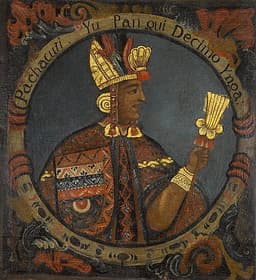
Pachacuti
Emperor · Medieval
69.4Total
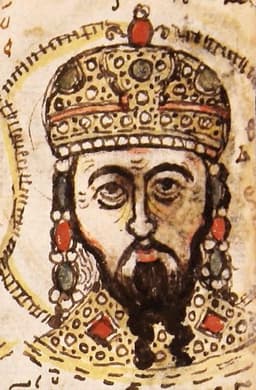
Theodore I Laskaris
Emperor · Medieval
61.8Total
Basic Information
Born
1418
1174
Died
1472
1222
Era
Medieval
Medieval
Nationality
Inca Empire
Nicaean Empire
Occupation
Emperor
Emperor
Civilization
Other
Western
Score Comparison
Military (10%)
78.5
65.0
Political (20%)
58.1
60.0
Influence (20%)
65.0
61.0
Legacy (20%)
72.0
56.0
Leadership (15%)
78.0
77.2
Strategy (15%)
69.2
55.0
TOTAL
69.4
61.8
Pachacuti — Complete Timeline
1438 AD
Conquest of the Chanka KingdomWar
Pachacuti led the Inca army to defeat the Chanka, a powerful rival, in a decisive battle near Cusco. This victory secured his position as Sapa Inca and initiated a period of rapid expansion, transforming the Inca from a small kingdom into a vast empire.
ConquestInca ExpansionChanka
Impact: regional
1440 AD
Reconstruction of CuscoCultural◆ Major
Pachacuti rebuilt Cusco as the imperial capital, designing it in the shape of a puma and constructing massive stone structures like Sacsayhuam
Urban PlanningArchitectureInca Empire
Impact: regionalconstructive
1450 AD
Initiation of Machu Picchu's ConstructionCultural◆ Major
Pachacuti ordered the construction of Machu Picchu, a royal estate and ceremonial site high in the Andes. The complex featured sophisticated dry-stone masonry and terraced agriculture, serving as a symbol of Inca engineering and a retreat for the emperor.
ArchitectureRoyal EstateInca Engineering
Impact: regionalconstructive
Theodore I Laskaris — Complete Timeline
1204 AD
Foundation of the Empire of NicaeaPolitical Action
After the Fourth Crusade captured Constantinople, Theodore I Laskaris fled to Nicaea in Asia Minor and established a Byzantine government-in-exile. He organized resistance against the Latin Empire and the Seljuk Turks, laying the foundation for the Nicaean Empire as the primary successor state of Byzantium.
Fourth CrusadeSuccessor StateExile Government
Impact: regionalconstructive
1208 AD
Coronation as emperor by the Patriarch of ConstantinoplePolitical Action◆ Major
Theodore I Laskaris was formally crowned as emperor by the newly elected Patriarch of Constantinople-in-exile, Michael IV Autoreianos. This coronation legitimized the Nicaean Empire as the rightful continuation of the Byzantine Empire, with full ecclesiastical authority.
CoronationLegitimacyPatriarchate
Impact: regionalconstructive
1211 AD
Battle of Antioch on the MeanderWar◆ Major
Theodore I Laskaris defeated the Seljuk Sultanate of Rum at the Battle of Antioch on the Meander. The victory secured Nicaean control over western Anatolia and prevented Seljuk expansion into Byzantine territories, establishing Theodore as a major regional power.
Byzantine-Seljuk WarsMilitary VictoryAnatolian Campaign
Impact: regional
Defeat of the Latin Empire at the Battle of RhyndacusWar
Theodore I Laskaris led Nicaean forces to a victory over the Latin Empire at the Battle of Rhyndacus. The battle halted Latin expansion into Asia Minor and secured Nicaean control over the region, strengthening the Byzantine resistance against the crusader states.
Latin EmpireMilitary VictoryAsia Minor
Impact: regional
Expert Analysis
Pachacuti vs Theodore I Laskaris
# The Founders of Empires: Pachacuti and Theodore Laskaris
In the high Andes, a prince who had never been meant to rule stood before a panicking army. The Chanka warriors, fierce and numerous, had descended upon Cusco like a storm, and his father, the Sapa Inca, had fled. The prince did not flee. He rallied the remnants, donned the royal insignia, and led a desperate counterattack that would change the course of history. Half a world away and three centuries earlier, another prince fled through the night, clutching the remnants of a shattered empire. Constantinople had fallen to the Latin Crusaders, and Theodore Laskaris carried with him not a crown, but a hope—that Byzantium might rise again from the ashes of its capital. Both men would succeed beyond all expectation. Yet their paths, their methods, and their legacies could not have been more different.
Origins
Pachacuti was born in 1418 into a world of mountain kingdoms and ceaseless warfare. The Incas were then merely one power among many in the Andes, their domain little more than the valley of Cusco. His father, Viracocha Inca, had expanded the realm somewhat, but the Inca state remained fragile, surrounded by enemies. Pachacuti was not the designated heir—that was his brother Urco, a man of questionable competence. The prince grew up in the shadow of expectation, trained in arms but not groomed for supreme command. This marginality may have sharpened his ambition.
Theodore I Laskaris was born in 1174 into the twilight of the Byzantine Empire. His family was aristocratic, connected to the ruling Angelos dynasty, but the empire itself was rotting from within—corrupt, faction-ridden, and militarily exhausted. Theodore was a product of Constantinople's sophisticated court culture, fluent in Greek theology and Roman law, yet he had witnessed the empire's humiliations firsthand. When the Fourth Crusade turned on Constantinople in 1204, sacking the greatest Christian city in the world, Theodore was thirty years old. He saw not just a disaster, but an opportunity.
Rise to Power
Pachacuti's rise came through blood and crisis. In 1438, the Chanka Kingdom launched a massive assault on Cusco. Viracocha Inca and his chosen heir Urco abandoned the city, fleeing to a nearby fortress. Pachacuti refused to go. He gathered the remaining warriors, made a desperate vow to the gods, and led a charge that shattered the Chanka army. The victory was total—the Chanka never recovered. When his father returned, Pachacuti did not simply hand back the crown. He forced Viracocha into retirement and exiled Urco, who was later killed in a skirmish. Pachacuti had seized power by proving himself indispensable.
Theodore's path was more patient. After the fall of Constantinople, he fled to Nicaea in western Anatolia, a provincial city with strong fortifications. There, he began the delicate work of reconstruction. He did not declare himself emperor immediately; instead, he gathered Byzantine refugees, secured the loyalty of local aristocrats, and slowly built a government-in-exile. In 1208, four years after the disaster, he was formally crowned by the newly elected Patriarch of Constantinople, Michael IV Autoreianos. The coronation was a masterstroke—it gave Theodore religious legitimacy that no Latin emperor could claim. He was not just a warlord; he was the true heir of Rome.
Leadership & Governance
Pachacuti ruled as a revolutionary. His name means "earth-shaker," and he lived up to it. After securing his throne, he began a total transformation of Inca society. He rebuilt Cusco in the shape of a puma, with massive stone walls that still stand today. He imposed a centralized administrative system, dividing the empire into four provinces (suyus) radiating from Cusco. He established the mit'a system of rotational labor, requiring each community to contribute workers for state projects. He created a network of roads and storehouses that could support armies anywhere in the empire. His military genius lay in organization—he conquered not just through force, but through logistics, diplomacy, and the strategic resettlement of conquered peoples.
Theodore's leadership was necessarily more defensive. The Empire of Nicaea was a small state surrounded by enemies: the Latin Empire to the west, the Seljuk Sultanate of Rum to the east, and the rival Byzantine successor state of Epirus to the north. Theodore fought on all fronts. In 1211, he defeated the Seljuks at the Battle of Antioch on the Meander, a victory that secured Nicaea's eastern border and earned him grudging respect from the Muslim powers. Later that same year, he turned westward and halted a Latin invasion at the Battle of Rhyndacus. Yet Theodore never sought to expand recklessly. He understood that Nicaea's survival depended on patience—on waiting for the Latin Empire to weaken, on building alliances, on preserving Byzantine institutions until the day Constantinople could be reclaimed.
Triumph & Tragedy
Pachacuti's greatest triumph was the transformation of a minor kingdom into an empire that stretched from modern Ecuador to Chile. He conquered the Colla, the Lupaca, the Huanca, and the Chimú—each victory adding new peoples, new resources, and new challenges to his system. He ordered the construction of Machu Picchu around 1450, a royal estate high in the Andes that would become his lasting monument. But his greatest achievement was also his greatest burden. The empire he built was held together by his personal authority and the constant movement of armies. When Pachacuti grew old, succession became a crisis. He chose his son Túpac Inca Yupanqui as heir, but the transition was violent, and the empire never again found a ruler of Pachacuti's caliber.
Theodore's triumph was quieter but no less significant. He kept the Byzantine flame alive. When he died in 1222, Nicaea was stable, prosperous, and respected. He had not reclaimed Constantinople—that would fall to his successors—but he had made it possible. His tragedy was that he never saw the dream fulfilled. He died knowing that the greatest city in Christendom remained in Latin hands, and that his life's work was a foundation, not a finished building.
Character & Destiny
Pachacuti was a man of immense will and vision. He believed that the Inca were destined to rule the world, and he shaped his empire to reflect that conviction. His reforms were sweeping, his ambitions boundless. Yet there was a hardness to him—a willingness to destroy as well as build. He razed cities that resisted, resettled whole populations, and rewrote history to glorify his reign. His personality was the engine of his empire, but it was also its limitation. He could not delegate, could not trust, could not imagine a world without himself at its center.
Theodore was more pragmatic, more patient, more aware of limits. He had seen an empire fall and knew how fragile power was. He built not for glory but for survival. His decisions were cautious, his ambitions tempered by experience. He was a diplomat as much as a warrior, a bureaucrat as much as a king. Where Pachacuti expanded, Theodore consolidated. Where Pachacuti imposed, Theodore negotiated. Their characters reflected their circumstances: one born to a rising power, the other to a falling one.
Legacy
Pachacuti's legacy is the Inca Empire itself—the largest pre-Columbian state in the Americas. His administrative innovations, his roads, his terraces, his architecture, all outlived him and shaped Andean civilization for generations. Even after the Spanish conquest, the memory of Pachacuti endured as a golden age, a standard against which all later rulers were measured. His name became synonymous with transformation and power.
Theodore's legacy is more subtle but equally profound. He preserved Byzantine civilization during its darkest hour. The Empire of Nicaea, which he founded, would reclaim Constantinople in 1261 and restore the Byzantine Empire for another two centuries. Without Theodore, there would have been no Paleologan Renaissance, no preservation of Greek learning, no last flowering of Roman law. He was the bridge between the fallen Constantinople of 1204 and the restored Constantinople of 1261.
Conclusion
Pachacuti and Theodore Laskaris faced the same fundamental question: how to build something lasting from the materials at hand. One inherited a kingdom and turned it into an empire; the other inherited an empire's corpse and turned it into a kingdom. One expanded outward in a blaze of conquest; the other held firm in a storm of enemies. Both succeeded beyond what their contemporaries thought possible. Yet their stories remind us that greatness takes many forms. Pachacuti built a world; Theodore saved one. Which is more valuable? The question lingers, like the ruins of Machu Picchu or the walls of Nicaea, waiting for each generation to answer anew.
Rankings
🥇
PachacutiLeader
Mil: 78.5Pol: 58.1Inf: 65.0
69.4
🥈
Theodore I Laskaris
Mil: 65.0Pol: 60.0Inf: 61.0
61.8
+7.6 behind
How This Comparison Works
Algorithm
Each figure is scored on 6 dimensions (0—100 scale) based on structured historical data: Military (10%), Political (20%), Influence (20%), Legacy (20%), Leadership (15%), Strategy (15%). The weighted total produces the final ranking.
Data Sources
Scores are computed from structured sub-indicators in the database. Scale factors adjust for era (Ancient ×0.85, Modern ×1.0) and civilization size (Eastern ×1.05, Other ×0.80) to account for differences in population and military scale.
Maximum 3 Figures
Comparisons are limited to 2—3 figures to ensure readability and statistical meaningfulness.
Error Margins
±5 points per dimension — Sub-scores are derived from historical records with inherent uncertainty. Two figures within 5 points on a dimension should be considered roughly equivalent in that area.
Total Score Accuracy
±3 points overall — The weighted combination of 6 dimensions produces a total score with approximately ±3 points of uncertainty. Differences of less than 3 points are not statistically significant— the figures are effectively tied.
Known Limitations
- Historical records are incomplete and uneven across civilizations
- Figures from oral-tradition societies may be underrepresented
- Occupation labels can misclassify multi-role figures
- Scores measure capability and impact, not moral character
- Quantitative scoring is a comparison tool, not absolute truth
Capability Radar
Military (10%) — Battles & Warfare
Battles
85
65
Win Rate
90
70
Expansion
90
60
Political (20%) — Governance & Reform
Reform
92
65
Diplomacy
75
70
Economy
80
60
Influence (20%) — Cultural & Global Reach
Cultural
85
50
Global
65
45
Legacy (20%) — Historical Impact
Historical
80
65
Longevity
70
55
Leadership (15%) — Power & Stability
Tenure
85
70
Stability
82
65
Strategy (15%) — Tactics & Innovation
Strategy
88
75
Tactics
80
60
Reform
85
55
Similar Comparisons
Comments & Discussion
MountainButcher6/16/2026
Pachacuti didn't just win a battle—he invented total war in the Andes. After routing the Chanka, he didn't just defend Cusco; he rolled out terraced agriculture, state granaries, and forced resettlement on a scale Rome never attempted. Laskaris? He was running a desert principality in Nicaea, begging for church support. Give me a guy who built an empire from scratch over a guy who just played Tetris with Byzantium's leftovers.
攻城锤6/16/2026
如果我是帕查库提的军事顾问,我会告诉他:别信刘卡里斯那套“复兴”话术。尼西亚帝国靠的是拉丁人内讧,而不是什么天才战略。帕查库提的库斯科保卫战,面对的是数量压倒性的昌卡人,他的战术核心是山地伏击和士气动员。结果呢?他开创了印加帝国。刘卡里斯呢?他恢复了拜占庭,但那是缩水版,永远失去安纳托利亚。军事史上,赢家靠的是原创,不是翻新。
数据拆解员6/16/2026
比较两人,别被“帝国奠基”这种标签迷惑。刘卡里斯控制的地盘在1204年后最多15万平方公里,年税收约10万银币。帕查库提在位期间,印加领土从不到5万平方公里扩展到约200万平方公里,帝国人口超千万。经济基础完全不同:印加靠的是征税和强制劳动(米塔制),拜占庭靠的是贸易和土地税。刘卡里斯的“复兴”只是个小规模复苏,而帕查库提创造了新的文明层级。
ClassicsCurator6/16/2026
Theodore Laskaris is more compelling because he wrestled with legacy, not just territory. He commissioned Niketas Choniates' history, sponsored Aristotelian debates at Nicaea, and minted coins claiming the "Empire of the Romans"—all while chased by Crusaders. Pachacuti built roads and warehouses, yes, but Laskaris rebuilt an idea: that Romanitas could survive without Rome. That's harder than conquering mountains.
历史迷6/16/2026
我佩服帕查库提的胆略,但刘卡里斯面对的是更致命的困境。昌卡人是敌人,但拉丁十字军是文化毁灭者,他们烧了君士坦丁堡的图书馆、熔了圣索菲亚大教堂的铜门。刘卡里斯带着帝印、圣骨和希腊火配方逃到尼西亚,每一步都是跟历史对赌。帕查库提可以靠本地神祇巩固统治;刘卡里斯必须在流亡中重构东正教正统。危机深度不同,成就维度也各异。
RevisionistCritic6/16/2026
Calling Pachacuti a "founder" is Western myth-making. The Incas had cyclical history; he was