Loading...
Pachacuti vs Rurik
Pachacuti leads by 9.8 pts · 2 figures compared
…
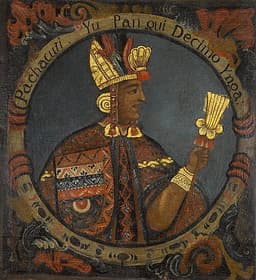
Pachacuti
Emperor · Medieval
69.4Total
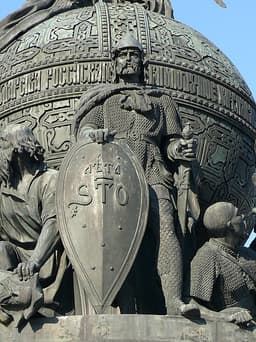
Rurik
Emperor · Medieval
59.6Total
Basic Information
Born
1418
830
Died
1472
879
Era
Medieval
Medieval
Nationality
Inca Empire
Kievan Rus
Occupation
Emperor
Emperor
Civilization
Other
Western
Score Comparison
Military (10%)
78.5
50.0
Political (20%)
58.1
35.1
Influence (20%)
65.0
82.0
Legacy (20%)
72.0
68.0
Leadership (15%)
78.0
55.3
Strategy (15%)
69.2
35.7
TOTAL
69.4
59.6
Pachacuti — Complete Timeline
1438 AD
Conquest of the Chanka KingdomWar
Pachacuti led the Inca army to defeat the Chanka, a powerful rival, in a decisive battle near Cusco. This victory secured his position as Sapa Inca and initiated a period of rapid expansion, transforming the Inca from a small kingdom into a vast empire.
ConquestInca ExpansionChanka
Impact: regional
1440 AD
Reconstruction of CuscoCultural◆ Major
Pachacuti rebuilt Cusco as the imperial capital, designing it in the shape of a puma and constructing massive stone structures like Sacsayhuam
Urban PlanningArchitectureInca Empire
Impact: regionalconstructive
1450 AD
Initiation of Machu Picchu's ConstructionCultural◆ Major
Pachacuti ordered the construction of Machu Picchu, a royal estate and ceremonial site high in the Andes. The complex featured sophisticated dry-stone masonry and terraced agriculture, serving as a symbol of Inca engineering and a retreat for the emperor.
ArchitectureRoyal EstateInca Engineering
Impact: regionalconstructive
Rurik — Complete Timeline
860 AD
Sent Askold and Dir to ConstantinopleWar
According to tradition, Rurik sent his lieutenants Askold and Dir to raid Constantinople. While the historicity is uncertain, this event is associated with the first Rus' attack on the Byzantine Empire, highlighting early Rus' expansion.
RaidByzantine EmpireExpansion
Impact: regional
862 AD
Founded the Rurik dynastyPolitical Action
According to the Primary Chronicle, Rurik, a Varangian chieftain, was invited by Slavic and Finnic tribes to rule over them. He established his capital at Novgorod, founding the Rurik dynasty that would rule Kievan Rus' and later the Tsardom of Russia until 1598.
FoundationVarangianKievan Rus'
Impact: global
864 AD
Consolidated control over NovgorodPolitical Action◆ Major
Rurik consolidated his rule over Novgorod and the surrounding territories, suppressing a rebellion led by Vadim the Bold. He established a centralized authority that became the basis for the early Russian state.
ConsolidationNovgorodRebellion
Impact: regional
Expert Analysis
Pachacuti vs Rurik
### The Stone and the Seed: How Pachacuti and Rurik Built Two Worlds
History has a peculiar way of handing power to men who want it least—or want it most. In the high Andes of the 15th century, a prince who was not meant to inherit the throne seized a desperate moment and reshaped an entire civilization from mountain stone. On the misty plains of Eastern Europe in the 9th century, a Varangian chieftain, perhaps more legend than man, accepted an invitation to rule and planted a seed that would grow into the largest country on Earth. Pachacuti and Rurik—one a builder of empires, the other a founder of dynasties—stand as mirror images of how power takes root: one through conquest and architecture, the other through invitation and legacy.
### Origins: The Child of Crisis and the Stranger from the North
Pachacuti was born in 1418 into the Inca royal family, the ninth son of Sapa Inca Viracocha. In the Inca world, succession was not primogeniture; the ruler chose his most capable son. Pachacuti was not the chosen one. He grew up in the shadow of Cusco, a modest city-state surrounded by hostile neighbors, most notably the powerful Chanka kingdom. His name, meaning "cataclysm" or "earth-shaker," was a prophecy he would fulfill—but only after being thrust into a crisis that demanded a leader.
Rurik’s origins are shrouded in the fog of the 9th century. He was a Varangian, a Norse warrior and trader from the region of present-day Sweden, part of the Viking diaspora that raided and traded along the rivers of Eastern Europe. According to the *Primary Chronicle*, the Slavic and Finnic tribes of the region, weary of internecine conflict, sent a famous message in 862: "Our land is great and abundant, but there is no order in it. Come and rule over us." Rurik accepted. Whether the story is true or a foundation myth matters less than what it reveals: Rurik came not as a conqueror, but as an invited arbiter.
Pachacuti rose through crisis; Rurik rose through invitation. One was forged in the crucible of war, the other in the vacuum of chaos.
### Rise to Power: The Battle That Changed a World
In 1438, the Chanka kingdom attacked Cusco with overwhelming force. Viracocha Inca fled the capital with his chosen heir, leaving the city to fall. But Pachacuti, the overlooked prince, refused to retreat. He rallied the remaining Inca warriors, armed the common people, and met the Chanka in a desperate battle outside Cusco. Against all odds, he won. The victory was absolute: the Chanka were crushed, their king captured, and their kingdom dissolved into the Inca state. Pachacuti, now the hero, forced his father to abdicate and took the throne as Sapa Inca.
Rurik’s rise was quieter, but no less decisive. After arriving in 862, he established his base at Ladoga, then moved to Novgorod, consolidating control over the surrounding territories. In 864, he faced a rebellion led by a local chieftain named Vadim the Bold. Rurik suppressed it ruthlessly, executing the rebels and tightening his grip. But unlike Pachacuti, Rurik did not expand through conquest in his own lifetime. Instead, he sent his lieutenants, Askold and Dir, southward to raid Constantinople in 860. This was not a campaign of empire-building, but of reconnaissance and resource-gathering.
Pachacuti’s rise was a single, world-altering battle. Rurik’s was a slow consolidation, a founding act that would take generations to bear fruit.
### Leadership & Governance: The Architect and the Seed Planter
Pachacuti was a builder in the most literal sense. After his victory, he turned Cusco into the imperial capital, redesigning it in the shape of a puma—a sacred animal. He ordered the construction of massive stone structures, fitted together without mortar, that still stand today. In 1450, he initiated the construction of Machu Picchu, a royal estate and ceremonial center perched on a mountain ridge. But his genius was not only architectural. He reorganized the Inca state into a system of provinces linked by roads, storehouses, and a labor tax called *mit'a*. He standardized language, religion, and administration across hundreds of conquered tribes. His military campaigns extended the empire from modern-day Ecuador to Chile.
Rurik’s governance was far simpler. He established a dynasty, not an empire. He ruled Novgorod and its environs, but his main achievement was creating a lineage that would expand for centuries. His successors—Oleg, Igor, Sviatoslav, and Vladimir—would conquer Kiev, convert to Christianity, and forge the Kievan Rus' state. Rurik himself did not build roads or palaces; he built a family tree. His leadership was about legitimacy and continuity, not transformation.
Pachacuti reshaped the world around him. Rurik planted a seed that would grow over a millennium.
### Triumph & Tragedy: The Peak and the Question Mark
Pachacuti’s greatest triumph was the transformation of a small Andean kingdom into the largest empire in pre-Columbian America. His greatest tragedy was that his empire would not survive his successors. The Spanish arrived in 1532, and within a generation, the Inca state was destroyed. Pachacuti’s monumental works—Machu Picchu, Sacsayhuamán, the road system—became ruins, symbols of a lost world.
Rurik’s triumph was his dynasty. The Rurikids ruled Russia until 1598, and their legacy shaped Eastern Europe for a thousand years. His tragedy is that we cannot be sure he existed. The *Primary Chronicle* is the only source, and its account is laced with legend. Rurik may be a composite figure, a myth invented to give the ruling dynasty a noble origin. His triumph is certain; his reality is not.
### Character & Destiny: The Visionary and the Shadow
Pachacuti was a man of immense will and vision. He saw what the Inca could become and drove them toward it with relentless energy. His name—"earth-shaker"—fits a man who literally moved mountains to build his capital. He was ruthless when needed, but also a reformer who integrated conquered peoples through diplomacy and infrastructure. His personality was that of a builder who could imagine a future and force it into existence.
Rurik remains a shadow. If the chronicle is accurate, he was a pragmatic leader who accepted power when offered and defended it when challenged. He was not a conqueror but a founder. His destiny was not to build an empire, but to start a line of rulers who would. His character is less a portrait than an outline, filled in by the deeds of his descendants.
One was a force of nature. The other was a catalyst.
### Legacy: The Ruin and the River
Pachacuti is remembered as the greatest Inca emperor, the man who made the empire possible. Machu Picchu, now a global icon, stands as his monument. But his empire crumbled, and his name is known only to students of history. His legacy is physical—stone, roads, terraces—but frozen in time.
Rurik’s legacy is a river that flows to the present. The Rurik dynasty gave rise to the Tsardom of Russia, the Russian Empire, and the modern Russian state. His name is still invoked in Russian nationalism. Even if he is legend, the legend itself is a form of power. He is the origin story of a nation.
### Conclusion: The Builder and the Seed
Pachacuti and Rurik were both founders, but they founded different things. Pachacuti built an empire of stone and blood, a world that reached its peak in his own lifetime and then vanished. Rurik built a dynasty of blood and time, a lineage that outlasted his own era and shaped a continent. One created a masterpiece; the other created a tradition. In the end, the question is not which was greater, but which kind of legacy lasts longer: the mountain that is seen, or the seed that grows unseen for a thousand years?
Rankings
🥇
PachacutiLeader
Mil: 78.5Pol: 58.1Inf: 65.0
69.4
🥈
Rurik
Mil: 50.0Pol: 35.1Inf: 82.0
59.6
+9.8 behind
How This Comparison Works
Algorithm
Each figure is scored on 6 dimensions (0—100 scale) based on structured historical data: Military (10%), Political (20%), Influence (20%), Legacy (20%), Leadership (15%), Strategy (15%). The weighted total produces the final ranking.
Data Sources
Scores are computed from structured sub-indicators in the database. Scale factors adjust for era (Ancient ×0.85, Modern ×1.0) and civilization size (Eastern ×1.05, Other ×0.80) to account for differences in population and military scale.
Maximum 3 Figures
Comparisons are limited to 2—3 figures to ensure readability and statistical meaningfulness.
Error Margins
±5 points per dimension — Sub-scores are derived from historical records with inherent uncertainty. Two figures within 5 points on a dimension should be considered roughly equivalent in that area.
Total Score Accuracy
±3 points overall — The weighted combination of 6 dimensions produces a total score with approximately ±3 points of uncertainty. Differences of less than 3 points are not statistically significant— the figures are effectively tied.
Known Limitations
- Historical records are incomplete and uneven across civilizations
- Figures from oral-tradition societies may be underrepresented
- Occupation labels can misclassify multi-role figures
- Scores measure capability and impact, not moral character
- Quantitative scoring is a comparison tool, not absolute truth
Capability Radar
Military (10%) — Battles & Warfare
Battles
85
15
Win Rate
90
20
Expansion
90
30
Political (20%) — Governance & Reform
Reform
92
30
Diplomacy
75
35
Economy
80
25
Influence (20%) — Cultural & Global Reach
Cultural
85
50
Global
65
60
Legacy (20%) — Historical Impact
Historical
80
70
Longevity
70
80
Leadership (15%) — Power & Stability
Tenure
85
40
Stability
82
30
Strategy (15%) — Tactics & Innovation
Strategy
88
20
Tactics
80
15
Reform
85
10
Similar Comparisons
Comments & Discussion
MountainBreaker6/16/2026
As a military historian, Pachacuti wins hands down. His transformation of the Inca from a minor Cusco city-state into a continent-spanning empire in just 30 years is unmatched tactical brilliance. Rurik? He accepted an invitation to rule a crumbling tribal confederation—hardly a conquest. Pachacuti personally led campaigns against the Chanka with nothing but stones and guts, then built Sacsayhuamán with stones weighing 300 tons. That’s not founding a dynasty; that’s forging an empire from bedroc
数据捕手6/16/2026
说Rurik是俄罗斯之父?考古证据显示,拉多加和诺夫哥罗德的斯堪的纳维亚定居点早在840年代就存在了,比传说中862年邀请他还早二十年。这整个"受邀统治"的故事更像是《往年纪事》的文学粉饰,用来合法化外来统治。Pachacuti至少有印加结绳文字和遗址佐证他的改革,而Rurik只是北欧冒险家被后人神化的典型。别跟我谈传奇,我要见碳十四测年。
PantheonWrangler6/16/2026
As a classics scholar, I see both as myth-making par excellence. But Pachacuti’s narrative is far more cohesive: he’s a living god who reorders geography—the four suyus, the terraced mountains, the royal roads. Rurik’s origin story is a garbled Viking saga with no contemporary records until the 12th century. Compare Pachacuti’s systematic state religion reform with Rurik’s vague "invitation to rule"—one built a cosmology, the other just a bloodline. The Inca emperor offers a causal myth; Rurik o
家谱侦探6/16/2026
作为一个热衷家族史的人,我站Rurik。Pachacuti的帝国在他死后二十年就因内战崩塌了,而Rurik的留里克王朝统治了俄国整整736年!从862年到1598年,费奥多尔一世去世,这才是真正的传承力。Pachacuti也许建了马丘比丘,但Rurik的血脉塑造了莫斯科公国、沙皇制度,甚至影响了罗曼诺夫王朝的合法性。建筑会风化,王朝却定义文明。
IronYapper6/16/2026
History buff here, and I call BS on both being "founders." Pachacuti wasn’t some visionary—he was a usurper who rewrote history to justify his coup after the Chanka crisis. Rurik? Probably didn’t even exist as one person; he’s a composite of Norse leaders. The real founders are the anonymous Incan architects and the Slavic village elders who kept things running. Give me the masons who split those mountain stones and the farmers who survived Nordic raids. Those are the builders, not the legends.