Loading...
Omar Razzaz vs Syngman Rhee
Syngman Rhee leads by 6.3 pts · 2 figures compared
…

Omar Razzaz
Politician · Modern
47.1Total
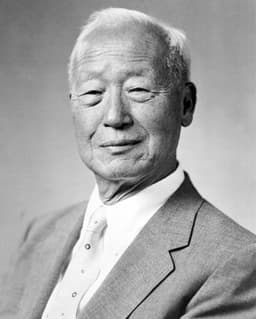
Syngman Rhee
Politician · Modern
53.4Total
Basic Information
Born
1960
1875
Died
—
1965
Era
Modern
Modern
Nationality
Jordan
Korea
Occupation
Politician
Politician
Civilization
Middle Eastern
Eastern
Score Comparison
Military (10%)
24.9
38.2
Political (20%)
68.0
68.0
Influence (20%)
49.4
60.0
Legacy (20%)
38.3
50.0
Leadership (15%)
55.3
40.0
Strategy (15%)
41.6
58.4
TOTAL
47.1
53.4
Omar Razzaz — Complete Timeline
2018 AD
Appointed Prime Minister of JordanPolitical Action◆ Major
Omar Razzaz, a former World Bank economist, was appointed Prime Minister in June 2018 following the resignation of Hani al-Mulki. His appointment aimed to restore public trust and address the economic crisis.
Jordanian PoliticsPrime MinisterEconomist
Impact: nationalconstructive
Withdrew controversial tax lawPolitical Action◆ Major
Razzaz withdrew the proposed income tax law that had sparked protests, and initiated a national dialogue on tax reform. This move temporarily calmed public anger and allowed his government to regain legitimacy.
Tax ReformProtestsDialogue
Impact: nationalconstructive
2019 AD
Implemented IMF-backed economic reformsReform◆ Major
Razzaz's government implemented a revised IMF program, including tax increases, subsidy cuts, and public sector wage freezes. These measures aimed to reduce Jordan's debt but faced continued public opposition.
Economic ReformIMFAusterity
Impact: nationalconstructive
2020 AD
Resigned as Prime MinisterPolitical Action◆ Major
Razzaz resigned in October 2020 after two years in office. His resignation followed the COVID-19 pandemic's economic impact and criticism of his government's handling of the crisis, including lockdown measures.
Jordanian PoliticsResignationCOVID-19
Impact: national
Syngman Rhee — Complete Timeline
1948 AD
Establishment of the Republic of KoreaPolitical Action
Syngman Rhee became the first president of the Republic of Korea (South Korea) after U.S.-supervised elections. His government was recognized by the UN as the legitimate government of Korea, while the North established a separate communist regime, formalizing the division.
FoundingDivisionSouth Korea
Impact: globalconstructive
1950 AD
Korean War OutbreakWar
North Korean forces invaded South Korea, triggering the Korean War. Syngman Rhee's government fled to Busan as UN forces intervened. The war lasted three years, resulted in millions of casualties, and ended in an armistice, leaving Korea divided along the 38th parallel.
Korean WarInvasionCold War
Impact: globaltragic
1953 AD
Signing of the Mutual Defense Treaty with the USPolitical Action◆ Major
Syngman Rhee signed the Mutual Defense Treaty with the United States, establishing a military alliance. The treaty committed the US to defend South Korea in case of attack and allowed US troops to remain stationed in the country, shaping security dynamics for decades.
US AllianceSecurityCold War
Impact: globalconstructive
1960 AD
April Revolution and ResignationPolitical Action◆ Major
Massive student-led protests erupted against Syngman Rhee's authoritarian rule and election rigging. The April Revolution forced Rhee to resign and flee to Hawaii, ending his 12-year presidency and leading to a brief democratic interlude before Park Chung-hee's coup.
RevolutionDemocracySouth Korea
Impact: nationalprogressive
Expert Analysis
Origins
Omar Razzaz was born in 1960 in Jordan, the son of a former minister. He earned a PhD in economics from Harvard University and worked at the World Bank for over two decades, focusing on education and public sector reform. His technocratic background shaped his approach to governance—data-driven and cautious.
Syngman Rhee was born in 1875 in Hwanghae Province, Korea (now North Korea). He was educated in Confucian classics and later in Western schools, including George Washington University and Harvard. Rhee was a nationalist activist early on, imprisoned by Japanese authorities. His formative experiences were defined by resistance to colonial rule and a desire for Korean independence.
Rise to Power
Razzaz rose to prominence as a technocrat. In 2017, he became Minister of Education, implementing reforms that improved school quality. In June 2018, amid protests against a proposed tax law, King Abdullah II appointed him Prime Minister. Razzaz's reputation as a reformer and his World Bank credentials made him a compromise candidate to calm public anger. He immediately withdrew the controversial tax bill and launched a national dialogue.
Rhee's rise was political and revolutionary. After decades in exile, he returned to Korea in 1945 and campaigned for a separate southern government. In 1948, with U.S. support, he became the first President of the Republic of Korea. His nationalist rhetoric and anti-communist stance appealed to many, but his authoritarian tendencies soon emerged.
Leadership & Governance
Razzaz governed as a consensus-seeking technocrat. He prioritized economic stability, implementing an IMF-backed program that included tax increases, subsidy cuts, and public sector wage freezes. While these measures aimed to reduce debt, they hurt the middle class. He also pushed for anti-corruption measures and digital government. His leadership style was inclusive but slow, often criticized for lacking decisive action.
Rhee governed in a top-down, authoritarian manner. He suppressed political dissent, jailed opponents, and rigged elections to maintain power. Economically, he pursued import substitution and land reform, but his focus was on anti-communism and military strength. He signed the Mutual Defense Treaty with the U.S. in 1953, ensuring American protection. Rhee's governance scored 40.0 in leadership, reflecting his dictatorial tendencies, while Razzaz scored 55.3.
Triumph & Tragedy
Razzaz's greatest success was navigating the COVID-19 pandemic with relatively low infection rates and maintaining economic stability despite global shocks. He also withdrew the unpopular tax law, defusing protests. His greatest failure was the inability to push through structural reforms due to political opposition and public discontent. The economic pain from IMF policies eroded his support. He resigned in 2020, his legacy incomplete.
Rhee's triumph was founding the Republic of Korea and securing U.S. military protection, which allowed South Korea to survive the Korean War. However, his authoritarian rule and election rigging led to the April Revolution in 1960, forcing him to resign and flee to Hawaii. His failure was his inability to build democratic institutions, leaving a legacy of repression.
Character & Destiny
Razzaz was a methodical, analytical leader. His World Bank training made him favor data and dialogue over confrontation. This character suited a crisis manager but not a transformative figure. His destiny was to be a caretaker in a turbulent time, unable to enact lasting change.
Rhee was stubborn, nationalistic, and power-hungry. His single-minded focus on anti-communism and independence drove him to authoritarianism. His character brought him to power but also led to his downfall. Historians note his role in establishing South Korea but condemn his dictatorship.
Legacy
Razzaz's legacy is modest: he is remembered as a reformer who tried to fix Jordan's economy but failed to overcome structural obstacles. His digital government initiatives had some lasting impact, but his policies were largely reversed after his resignation. He scored 38.3 in legacy.
Rhee's legacy is mixed but substantial. He is the founding father of South Korea, and the U.S. alliance he forged remains central to Korean security. However, his authoritarianism taints his reputation. In South Korea, he is often criticized for corruption and repression. His legacy score is 50.0.
Conclusion
Syngman Rhee had a greater impact than Omar Razzaz. Rhee's total score of 53.4 versus Razzaz's 47.1 reflects his foundational role in creating a nation and securing its survival. While Razzaz's technocratic reforms were sound, they lacked the historical weight of Rhee's state-building. Rhee's influence (60.0) and political score (68.0) surpass Razzaz's, despite Razzaz's higher leadership score (55.3 vs 40.0). Rhee's actions shaped the Korean Peninsula for decades, while Razzaz's tenure was a brief, forgettable chapter in Jordan's history. The data supports Rhee as the more consequential figure.
Rankings
🥇
Syngman RheeLeader
Mil: 38.2Pol: 68.0Inf: 60.0
53.4
🥈
Omar Razzaz
Mil: 24.9Pol: 68.0Inf: 49.4
47.1
+6.3 behind
How This Comparison Works
Algorithm
Each figure is scored on 6 dimensions (0—100 scale) based on structured historical data: Military (10%), Political (20%), Influence (20%), Legacy (20%), Leadership (15%), Strategy (15%). The weighted total produces the final ranking.
Data Sources
Scores are computed from structured sub-indicators in the database. Scale factors adjust for era (Ancient ×0.85, Modern ×1.0) and civilization size (Eastern ×1.05, Other ×0.80) to account for differences in population and military scale.
Maximum 3 Figures
Comparisons are limited to 2—3 figures to ensure readability and statistical meaningfulness.
Error Margins
±5 points per dimension — Sub-scores are derived from historical records with inherent uncertainty. Two figures within 5 points on a dimension should be considered roughly equivalent in that area.
Total Score Accuracy
±3 points overall — The weighted combination of 6 dimensions produces a total score with approximately ±3 points of uncertainty. Differences of less than 3 points are not statistically significant— the figures are effectively tied.
Known Limitations
- Historical records are incomplete and uneven across civilizations
- Figures from oral-tradition societies may be underrepresented
- Occupation labels can misclassify multi-role figures
- Scores measure capability and impact, not moral character
- Quantitative scoring is a comparison tool, not absolute truth
Capability Radar
Military (10%) — Battles & Warfare
Battles
23
49
Win Rate
22
56
Expansion
25
56
Political (20%) — Governance & Reform
Reform
45
55
Diplomacy
50
65
Economy
55
40
Influence (20%) — Cultural & Global Reach
Cultural
15
40
Global
20
50
Legacy (20%) — Historical Impact
Historical
20
55
Longevity
10
50
Leadership (15%) — Power & Stability
Tenure
20
60
Stability
30
35
Strategy (15%) — Tactics & Innovation
Strategy
33
61
Tactics
31
61
Reform
39
66
Similar Comparisons
Comments & Discussion
No comments yet. Be the first to share your thoughts!