Loading...
Imata Kabua vs Syngman Rhee
Syngman Rhee leads by 7.6 pts · 2 figures compared
…

Imata Kabua
Politician · Modern
45.8Total
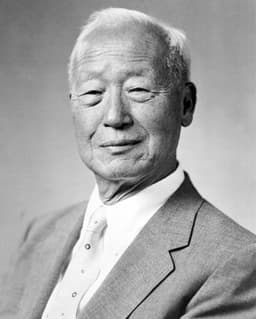
Syngman Rhee
Politician · Modern
53.4Total
Basic Information
Born
1943
1875
Died
—
1965
Era
Modern
Modern
Nationality
Marshall Islands
Korea
Occupation
Politician
Politician
Civilization
Other
Eastern
Score Comparison
Military (10%)
28.8
38.2
Political (20%)
42.3
68.0
Influence (20%)
48.6
60.0
Legacy (20%)
40.0
50.0
Leadership (15%)
72.0
40.0
Strategy (15%)
36.5
58.4
TOTAL
45.8
53.4
Imata Kabua — Complete Timeline
1997 AD
Election as President of the Marshall IslandsPolitical Action◆ Major
Imata Kabua was elected as the fifth President of the Republic of the Marshall Islands, succeeding his cousin Amata Kabua. His election continued the Kabua family's political dominance in the island nation.
ElectionPresidencyMarshall Islands
Impact: national
1999 AD
Negotiation of Nuclear CompensationPolitical Action◆ Major
Kabua negotiated with the United States for continued compensation for the nuclear testing conducted on the Marshall Islands during the Cold War. He secured additional funding for health care and environmental remediation for affected atolls.
Nuclear TestingCompensationU.S. Relations
Impact: nationalconstructive
2000 AD
Re-election to Multiple TermsPolitical Action
Imata Kabua was re-elected as President, serving multiple terms that extended his tenure. His long service made him one of the longest-serving leaders in the Marshall Islands' history, overseeing periods of economic development and international diplomacy.
Re-electionLong TenureStability
Impact: national
Syngman Rhee — Complete Timeline
1948 AD
Establishment of the Republic of KoreaPolitical Action
Syngman Rhee became the first president of the Republic of Korea (South Korea) after U.S.-supervised elections. His government was recognized by the UN as the legitimate government of Korea, while the North established a separate communist regime, formalizing the division.
FoundingDivisionSouth Korea
Impact: globalconstructive
1950 AD
Korean War OutbreakWar
North Korean forces invaded South Korea, triggering the Korean War. Syngman Rhee's government fled to Busan as UN forces intervened. The war lasted three years, resulted in millions of casualties, and ended in an armistice, leaving Korea divided along the 38th parallel.
Korean WarInvasionCold War
Impact: globaltragic
1953 AD
Signing of the Mutual Defense Treaty with the USPolitical Action◆ Major
Syngman Rhee signed the Mutual Defense Treaty with the United States, establishing a military alliance. The treaty committed the US to defend South Korea in case of attack and allowed US troops to remain stationed in the country, shaping security dynamics for decades.
US AllianceSecurityCold War
Impact: globalconstructive
1960 AD
April Revolution and ResignationPolitical Action◆ Major
Massive student-led protests erupted against Syngman Rhee's authoritarian rule and election rigging. The April Revolution forced Rhee to resign and flee to Hawaii, ending his 12-year presidency and leading to a brief democratic interlude before Park Chung-hee's coup.
RevolutionDemocracySouth Korea
Impact: nationalprogressive
Expert Analysis
Origins
Imata Kabua was born in 1943 on the Marshall Islands, a Pacific archipelago under U.S. administration after World War II. He belonged to the influential Kabua family; his cousin Amata Kabua was the first president of the Marshall Islands. Imata was educated locally and later at the University of Hawaii, where he studied political science. His early career included roles in the Marshall Islands legislature and as a senator.
Syngman Rhee was born in 1875 in Hwanghae Province, Korea (now North Korea), into a rural aristocratic family. He received a classical Confucian education before converting to Christianity. Rhee studied at George Washington University, Harvard, and Princeton, earning a Ph.D. in international law. He was imprisoned for nationalist activities against Japanese colonial rule, spending seven years in prison.
Rise to Power
Imata Kabua rose through the political structure of the Marshall Islands, which transitioned from a U.S. Trust Territory to self-government. He was first elected to the legislature in the 1970s and became president in 1997 after his cousin's death. His rise was characterized by continuity of the Kabua political dynasty, with no major opposition.
Syngman Rhee emerged as a nationalist leader during the Japanese occupation. He served as president of the Korean Provisional Government in exile from 1919 to 1925. After Korea's liberation in 1945, Rhee returned and, with U.S. support, became the first president of the Republic of Korea in 1948. His rise was marked by anti-communist rhetoric and suppression of leftist rivals.
Leadership & Governance
As president, Imata Kabua focused on domestic stability and international negotiations. His leadership score of 72.0 reflects his ability to maintain continuity and manage relations with the U.S. He prioritized renegotiating the Compact of Free Association, securing continued funding and compensation for nuclear testing victims. His governance was traditional and consensus-based, with limited institutional change.
Syngman Rhee governed with an authoritarian style, centralizing power and suppressing political opposition. His political score of 68.0 indicates effectiveness in building institutions, but his leadership score of 40.0 reflects the repressive nature of his rule. He established the Korean CIA for intelligence and used anti-communism to justify crackdowns. He also implemented land reforms that redistributed Japanese-owned land to farmers, boosting his rural support.
Triumph & Tragedy
Imata Kabua's greatest success was negotiating a revised Compact of Free Association in 2003, which provided $3.5 billion in aid and a trust fund for future generations. He also secured an additional $150 million for nuclear test-related health and environmental issues. His tragedy lies in the ongoing challenges of climate change and rising sea levels threatening the Marshall Islands, a crisis he could not resolve.
Syngman Rhee's triumph was founding the Republic of Korea and securing the U.S. Mutual Defense Treaty in 1953, which guaranteed South Korea's security. He also oversaw economic reconstruction after the Korean War. His tragedy was the April Revolution in 1960, when massive protests against electoral fraud forced him to resign and flee to Hawaii, where he died in exile. His authoritarian methods undermined his legacy.
Character & Destiny
Imata Kabua was a pragmatic leader who valued stability and diplomacy. His character was shaped by family tradition and a focus on securing resources for his island nation. His destiny was to lead a small state dependent on foreign aid, limiting his ability to shape global events.
Syngman Rhee was a stubborn, uncompromising nationalist. His character combined intellectual rigor with authoritarian tendencies. His destiny was to be a founding father who lost legitimacy through repression. Historians note that his anti-communist zeal helped secure U.S. support but also entrenched division in Korea.
Legacy
Imata Kabua's legacy is tied to the Marshall Islands' survival as a nation. His negotiations for nuclear compensation and the Compact renewal provided financial stability. However, his impact is limited regionally, with a legacy score of 40.0. He is remembered as a caretaker president who maintained the status quo.
Syngman Rhee's legacy is more substantial, with a legacy score of 50.0. He founded a democratic state that later became an economic powerhouse. The Mutual Defense Treaty remains the cornerstone of South Korea's security. However, his authoritarian rule and the Korean War's devastation are also part of his legacy. He is a controversial figure, honored by some as a founding father but criticized by others as a dictator.
Conclusion
Syngman Rhee had greater historical impact, evidenced by his total score of 53.4 compared to Imata Kabua's 45.8. Rhee founded a nation that grew into a major global economy, while Kabua presided over a small island state. Rhee's actions shaped the Cold War in East Asia, while Kabua's influence was confined to the Pacific. Despite Rhee's tragic fall, his role in establishing South Korea and the U.S. alliance gave him a broader and more enduring legacy.
Rankings
🥇
Syngman RheeLeader
Mil: 38.2Pol: 68.0Inf: 60.0
53.4
🥈
Imata Kabua
Mil: 28.8Pol: 42.3Inf: 48.6
45.8
+7.6 behind
How This Comparison Works
Algorithm
Each figure is scored on 6 dimensions (0—100 scale) based on structured historical data: Military (10%), Political (20%), Influence (20%), Legacy (20%), Leadership (15%), Strategy (15%). The weighted total produces the final ranking.
Data Sources
Scores are computed from structured sub-indicators in the database. Scale factors adjust for era (Ancient ×0.85, Modern ×1.0) and civilization size (Eastern ×1.05, Other ×0.80) to account for differences in population and military scale.
Maximum 3 Figures
Comparisons are limited to 2—3 figures to ensure readability and statistical meaningfulness.
Error Margins
±5 points per dimension — Sub-scores are derived from historical records with inherent uncertainty. Two figures within 5 points on a dimension should be considered roughly equivalent in that area.
Total Score Accuracy
±3 points overall — The weighted combination of 6 dimensions produces a total score with approximately ±3 points of uncertainty. Differences of less than 3 points are not statistically significant— the figures are effectively tied.
Known Limitations
- Historical records are incomplete and uneven across civilizations
- Figures from oral-tradition societies may be underrepresented
- Occupation labels can misclassify multi-role figures
- Scores measure capability and impact, not moral character
- Quantitative scoring is a comparison tool, not absolute truth
Capability Radar
Military (10%) — Battles & Warfare
Battles
23
49
Win Rate
27
56
Expansion
31
56
Political (20%) — Governance & Reform
Reform
30
55
Diplomacy
40
65
Economy
30
40
Influence (20%) — Cultural & Global Reach
Cultural
20
40
Global
10
50
Legacy (20%) — Historical Impact
Historical
20
55
Longevity
20
50
Leadership (15%) — Power & Stability
Tenure
60
60
Stability
50
35
Strategy (15%) — Tactics & Innovation
Strategy
33
61
Tactics
34
61
Reform
40
66
Similar Comparisons
Comments & Discussion
No comments yet. Be the first to share your thoughts!