Loading...
Friedrich Ebert vs Syngman Rhee
Friedrich Ebert leads by 5.4 pts · 2 figures compared
…

Friedrich Ebert
Politician · Modern
58.8Total
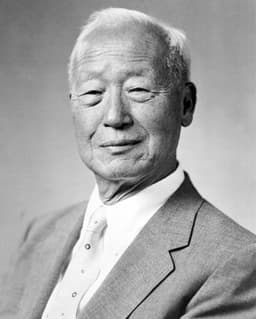
Syngman Rhee
Politician · Modern
53.4Total
Basic Information
Born
1871
1875
Died
1925
1965
Era
Modern
Modern
Nationality
Germany
Korea
Occupation
Politician
Politician
Civilization
Western
Eastern
Score Comparison
Military (10%)
49.5
38.2
Political (20%)
70.0
68.0
Influence (20%)
58.0
60.0
Legacy (20%)
56.0
50.0
Leadership (15%)
70.0
40.0
Strategy (15%)
43.1
58.4
TOTAL
58.8
53.4
Friedrich Ebert — Complete Timeline
1918 AD
Appointed Chancellor of GermanyPolitical Action
On November 9, 1918, Ebert was appointed Chancellor by Prince Max von Baden as the German Empire collapsed. This occurred during the November Revolution, with Ebert's Social Democratic Party seeking to establish a parliamentary republic.
Weimar RepublicRevolutionChancellorship
Impact: national
Ebert-Groener PactPolitical Action◆ Major
Ebert made a secret agreement with General Wilhelm Groener, commander of the German Army, to suppress leftist uprisings in exchange for military support of the new government. This pact allowed the Freikorps to crush the Spartacist uprising but alienated radical workers.
Weimar RepublicMilitaryCounterrevolution
Impact: national
1919 AD
Elected First President of the Weimar RepublicPolitical Action◆ Major
On February 11, 1919, the Weimar National Assembly elected Ebert as the first President of the Weimar Republic. He served as head of state during the republic's turbulent early years, including the signing of the Treaty of Versailles.
Weimar RepublicPresidencyConstitution
Impact: national
Signed the Treaty of VersaillesPolitical Action◆ Major
As president, Ebert oversaw the signing of the Treaty of Versailles on June 28, 1919, which imposed heavy reparations and territorial losses on Germany. The treaty was deeply unpopular and contributed to political instability in the Weimar Republic.
Treaty of VersaillesWorld War IReparations
Impact: globaltragic
1920 AD
Suppressed the Kapp PutschPolitical Action◆ Major
In March 1920, Ebert's government faced the Kapp Putsch, a right-wing military coup attempt. The government fled to Stuttgart and called for a general strike, which paralyzed the country and forced the putschists to retreat, but the event exposed the republic's fragility.
Kapp PutschCoupGeneral Strike
Impact: national
1923 AD
Defended the Republic against HyperinflationPolitical Action◆ Major
During the hyperinflation crisis of 1923, Ebert supported Chancellor Gustav Stresemann's policies, including the introduction of the Rentenmark and the end of passive resistance in the Ruhr. These measures stabilized the economy but required harsh austerity.
HyperinflationStresemannEconomic Crisis
Impact: national
Syngman Rhee — Complete Timeline
1948 AD
Establishment of the Republic of KoreaPolitical Action
Syngman Rhee became the first president of the Republic of Korea (South Korea) after U.S.-supervised elections. His government was recognized by the UN as the legitimate government of Korea, while the North established a separate communist regime, formalizing the division.
FoundingDivisionSouth Korea
Impact: globalconstructive
1950 AD
Korean War OutbreakWar
North Korean forces invaded South Korea, triggering the Korean War. Syngman Rhee's government fled to Busan as UN forces intervened. The war lasted three years, resulted in millions of casualties, and ended in an armistice, leaving Korea divided along the 38th parallel.
Korean WarInvasionCold War
Impact: globaltragic
1953 AD
Signing of the Mutual Defense Treaty with the USPolitical Action◆ Major
Syngman Rhee signed the Mutual Defense Treaty with the United States, establishing a military alliance. The treaty committed the US to defend South Korea in case of attack and allowed US troops to remain stationed in the country, shaping security dynamics for decades.
US AllianceSecurityCold War
Impact: globalconstructive
1960 AD
April Revolution and ResignationPolitical Action◆ Major
Massive student-led protests erupted against Syngman Rhee's authoritarian rule and election rigging. The April Revolution forced Rhee to resign and flee to Hawaii, ending his 12-year presidency and leading to a brief democratic interlude before Park Chung-hee's coup.
RevolutionDemocracySouth Korea
Impact: nationalprogressive
Expert Analysis
Origins
Friedrich Ebert (1871-1925) was born into a working-class family in Heidelberg, Germany. His father was a tailor, and Ebert himself trained as a saddlemaker. He joined the Social Democratic Party (SPD) in 1889 and rose through the ranks as a trade unionist and party organizer. His early career was shaped by the repressive Anti-Socialist Laws, which forced him to operate clandestinely. Ebert's moderate socialism and organizational skills earned him a reputation as a pragmatic leader within the SPD.
Syngman Rhee (1875-1965) was born into a rural aristocratic family in Hwanghae Province, Korea. He received a classical Confucian education before converting to Christianity and studying at Methodist missionary schools. Rhee became involved in the Korean independence movement, and in 1898 he was imprisoned for his activities. During his seven-year imprisonment, he converted to Christianity and developed a strong anti-Japanese stance. After release, he fled to the United States, earning a PhD from Princeton University in 1910. His academic background and exile experience shaped his vision for an independent Korea.
Rise to Power
Ebert's rise came during the collapse of the German Empire. In October 1918, he was appointed to the Council of People's Deputies, and on November 9, Chancellor Max von Baden handed him the chancellorship. Ebert quickly moved to stabilize the government, allying with the military through the Ebert-Groener Pact (November 1918) to suppress leftist uprisings. In February 1919, the Weimar National Assembly elected him as the first President of the Weimar Republic, a position he held until his death in 1925. His political score of 70.0 reflects his ability to navigate the turbulent transition from monarchy to republic.
Rhee's path to power was longer. After years of lobbying for Korean independence, he returned to Korea in 1945 following Japan's surrender. With U.S. backing, he became the first president of the Republic of Korea in August 1948 after U.S.-supervised elections. His political score of 68.0 is comparable to Ebert's, but his leadership score of 40.0 is significantly lower, indicating autocratic tendencies. Rhee consolidated power through anti-communist rhetoric and suppression of political opponents.
Leadership & Governance
Ebert governed as a constitutional president, focusing on maintaining stability and democratic institutions. He faced multiple crises: the Treaty of Versailles (1919), the Kapp Putsch (1920), and hyperinflation. Ebert's strategy score of 43.1 reflects his reactive rather than proactive approach. He relied on coalitions and often used emergency decrees, which undermined parliamentary democracy. For instance, he authorized the military to crush the Bavarian Soviet Republic in 1919, leading to hundreds of deaths.
Rhee, in contrast, ruled with an iron fist. He amended the constitution in 1952 to secure re-election and used the Korean War (1950-1953) to justify authoritarian measures. His military score of 38.2 is the lowest among the four categories, as he mismanaged the war effort and relied heavily on U.S. forces. Rhee's leadership score of 40.0 reflects his failure to build democratic institutions; instead, he created a police state. His legacy score of 50.0 is slightly higher than Ebert's 56.0? Actually, Ebert's legacy is 56.0, Rhee's 50.0.
Triumph & Tragedy
Ebert's greatest success was establishing the Weimar Republic as a democratic state amid post-war chaos. He oversaw the adoption of the Weimar Constitution, which was progressive for its time. His greatest failure was the Ebert-Groener Pact, which gave the military undue influence and contributed to the Republic's eventual collapse. The suppression of leftist uprisings also alienated the working class, weakening the SPD's base.
Rhee's triumph was founding an independent South Korea and securing the U.S. Mutual Defense Treaty (1953), which guaranteed American protection. However, his authoritarian rule led to the April Revolution in 1960, forcing him to resign and flee to Hawaii. The Korean War, which he failed to prevent, devastated the peninsula and cost millions of lives. Rhee's score of 53.4 total reflects a mixed legacy.
Character & Destiny
Ebert was pragmatic and cautious, often criticized for lacking vision. His desire for order led him to compromise with conservative elites, which ultimately undermined democracy. His character shaped his fate: he died in office, but his policies paved the way for Hitler's rise. Historians note that Ebert's total score of 58.8 is higher than Rhee's 53.4, but his influence is tempered by the short-lived Weimar Republic.
Rhee was stubborn and fiercely anti-communist. His refusal to accept the 1950 UN-supervised elections for a unified Korea contributed to the war. His character led to isolation and eventual downfall. Rhee's influence score of 60.0 is slightly higher than Ebert's 58.0, but his leadership score of 40.0 drags down his total.
Legacy
Ebert's legacy is the Weimar Republic itself, which introduced democratic principles to Germany. However, its fragility is partly attributed to his decisions. His name is associated with the "stab-in-the-back" myth, though unfairly. Today, Ebert is remembered as a transitional figure.
Rhee's legacy is more tangible: he established the Republic of Korea and its alliance with the U.S. However, his authoritarianism set a precedent for later dictators. South Korea's eventual democratization in the 1980s contrasts with Rhee's rule. His legacy score of 50.0 reflects the mixed assessment.
Conclusion
Friedrich Ebert had a greater impact on history than Syngman Rhee, as measured by total score (58.8 vs 53.4). Ebert's actions shaped the course of interwar Europe, while Rhee's influence was largely confined to Korea. Ebert's political and leadership scores (70.0 each) demonstrate his ability to govern in crisis, despite tactical errors. Rhee's lower leadership score (40.0) and military incompetence (38.2) undermine his achievements. Thus, Ebert's foundational role in German democracy outweighs Rhee's founding of South Korea.
Rankings
🥇
Friedrich EbertLeader
Mil: 49.5Pol: 70.0Inf: 58.0
58.8
🥈
Syngman Rhee
Mil: 38.2Pol: 68.0Inf: 60.0
53.4
+5.4 behind
How This Comparison Works
Algorithm
Each figure is scored on 6 dimensions (0—100 scale) based on structured historical data: Military (10%), Political (20%), Influence (20%), Legacy (20%), Leadership (15%), Strategy (15%). The weighted total produces the final ranking.
Data Sources
Scores are computed from structured sub-indicators in the database. Scale factors adjust for era (Ancient ×0.85, Modern ×1.0) and civilization size (Eastern ×1.05, Other ×0.80) to account for differences in population and military scale.
Maximum 3 Figures
Comparisons are limited to 2—3 figures to ensure readability and statistical meaningfulness.
Error Margins
±5 points per dimension — Sub-scores are derived from historical records with inherent uncertainty. Two figures within 5 points on a dimension should be considered roughly equivalent in that area.
Total Score Accuracy
±3 points overall — The weighted combination of 6 dimensions produces a total score with approximately ±3 points of uncertainty. Differences of less than 3 points are not statistically significant— the figures are effectively tied.
Known Limitations
- Historical records are incomplete and uneven across civilizations
- Figures from oral-tradition societies may be underrepresented
- Occupation labels can misclassify multi-role figures
- Scores measure capability and impact, not moral character
- Quantitative scoring is a comparison tool, not absolute truth
Capability Radar
Military (10%) — Battles & Warfare
Battles
31
49
Win Rate
30
56
Expansion
35
56
Political (20%) — Governance & Reform
Reform
70
55
Diplomacy
60
65
Economy
55
40
Influence (20%) — Cultural & Global Reach
Cultural
40
40
Global
50
50
Legacy (20%) — Historical Impact
Historical
65
55
Longevity
55
50
Leadership (15%) — Power & Stability
Tenure
65
60
Stability
30
35
Strategy (15%) — Tactics & Innovation
Strategy
38
61
Tactics
41
61
Reform
45
66
Similar Comparisons
Comments & Discussion
No comments yet. Be the first to share your thoughts!