Loading...
Olaf Scholz vs Oliver Tambo
Oliver Tambo leads by 11.5 pts · 2 figures compared
…

Olaf Scholz
Politician · Modern
49.4Total
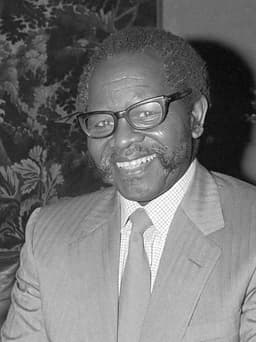
Oliver Tambo
Politician · Modern
60.9Total
Basic Information
Born
1958
1917
Died
—
1993
Era
Modern
Modern
Nationality
Germany
South Africa
Occupation
Politician
Politician
Civilization
Western
Other
Score Comparison
Military (10%)
10.3
37.0
Political (20%)
68.0
70.0
Influence (20%)
54.9
82.0
Legacy (20%)
40.8
40.0
Leadership (15%)
68.0
79.8
Strategy (15%)
40.3
42.2
TOTAL
49.4
60.9
Olaf Scholz — Complete Timeline
1998 AD
Appointment as Minister of Labor and Social AffairsPolitical Action◆ Major
Olaf Scholz was appointed Federal Minister of Labor and Social Affairs in the first Schr
MinisterLabor ReformsSchröder Government
Impact: nationalconstructive
2011 AD
Election as First Mayor of HamburgPolitical Action◆ Major
Scholz was elected First Mayor of Hamburg, leading a SPD government. His tenure focused on urban development, education, and digitalization, and he gained a reputation as a pragmatic administrator.
MayorHamburgRegional Government
Impact: regionalconstructive
2018 AD
Appointment as Vice Chancellor and Minister of FinancePolitical Action◆ Major
Scholz was appointed Vice Chancellor and Federal Minister of Finance in the fourth Merkel government. He oversaw Germany's fiscal response to the COVID-19 pandemic, including massive stimulus packages and debt suspension.
Vice ChancellorFinance MinisterCOVID-19
Impact: nationalconstructive
2021 AD
Election as Chancellor of GermanyPolitical Action
Olaf Scholz was elected Chancellor of Germany, leading a 'traffic light' coalition of SPD, Greens, and FDP. His government focused on climate action, digitalization, and social justice, succeeding Angela Merkel.
ChancellorCoalition GovernmentPost-Merkel
Impact: globalconstructive
2022 AD
Response to the Russian Invasion of UkrainePolitical Action
Scholz announced a 'Zeitenwende' (turning point) in German foreign policy, pledging a
Ukraine WarDefense PolicyZeitenwende
Impact: globalconstructive
Oliver Tambo — Complete Timeline
1960 AD
Co-founded the Anti-Apartheid MovementPolitical Action◆ Major
Tambo helped establish the international Anti-Apartheid Movement, which lobbied governments and organizations to impose sanctions on South Africa. This campaign was crucial in isolating the apartheid regime.
SanctionsInternationalAnti-Apartheid
Impact: globalconstructive
1967 AD
Elected ANC President in ExilePolitical Action◆ Major
Tambo was elected President of the ANC after the death of Chief Albert Luthuli. He led the organization from exile in Zambia and London, building international support and coordinating the anti-apartheid struggle.
ANCExileLeadership
Impact: globalconstructive
1990 AD
Returned to South AfricaPolitical Action◆ Major
Tambo returned to South Africa after 30 years in exile, following the unbanning of the ANC. He was greeted as a hero and continued to lead the ANC until his health declined, handing over to Nelson Mandela.
ReturnTransitionANC
Impact: nationalconstructive
Expert Analysis
Origins
Olaf Scholz was born on June 14, 1958, in Osnabrück, West Germany, into a middle-class family. His father worked in the textile industry. Scholz joined the Social Democratic Party (SPD) in 1975, studied law at the University of Hamburg, and became a lawyer specializing in labor law. His early political involvement was shaped by the SPD's left-wing youth wing, the Young Socialists.
Oliver Tambo was born on October 27, 1917, in Nkantolo, Eastern Cape, South Africa, into a rural family. His father was a farmer. Tambo excelled in school and attended the University of Fort Hare, where he earned a science degree. He later studied law and became a lawyer. In 1944, he co-founded the ANC Youth League with Nelson Mandela and Walter Sisulu, aiming to revitalize the African National Congress.
Rise to Power
Scholz's rise was gradual. He served as a member of the Bundestag from 1998 and became Federal Minister of Labor and Social Affairs in 2002 under Chancellor Gerhard Schröder, implementing the Hartz labor market reforms. In 2007, he became the SPD's General Secretary. He was elected First Mayor of Hamburg in 2011, governing until 2018. His tenure focused on digitalization and urban development. In 2018, he became Vice Chancellor and Finance Minister under Angela Merkel, managing Germany's fiscal response to the COVID-19 pandemic. Scholz was elected Chancellor in 2021, leading a coalition of SPD, Greens, and FDP.
Tambo's rise was tied to the anti-apartheid struggle. He became a prominent lawyer alongside Mandela. After the Sharpeville massacre in 1960, the ANC was banned, and Tambo went into exile. He was elected ANC President in 1967 after the death of Chief Albert Luthuli. From exile in Zambia and London, he built international support, co-founding the Anti-Apartheid Movement in 1960. He lobbied governments for sanctions and isolation of South Africa, becoming the face of the ANC abroad.
Leadership & Governance
Scholz's leadership style is pragmatic and cautious. As Chancellor, he announced a 'Zeitenwende' (turning point) after Russia's 2022 invasion of Ukraine, pledging a €100 billion fund to modernize the Bundeswehr and supporting sanctions against Russia. His governance focuses on climate action, digitalization, and social welfare. However, his coalition has faced internal conflicts over budget and energy policy. His political score is 68.0, reflecting steady management but limited transformative vision.
Tambo's leadership was diplomatic and strategic. He built a global network, including support from the Soviet Union and Western anti-apartheid movements. He maintained unity within the ANC despite ideological divides. His political score is 70.0, and his leadership score is 79.8, indicating strong organizational and diplomatic skills. He prioritized international isolation of South Africa, which contributed to the eventual end of apartheid.
Triumph & Tragedy
Scholz's triumph includes becoming Chancellor and navigating Germany through the Ukraine crisis, securing energy supplies and strengthening NATO. His failure includes the slow response to the COVID-19 pandemic as Finance Minister, with bureaucratic hurdles. He has also struggled to manage coalition infighting.
Tambo's triumph was leading the ANC to international prominence and seeing the unbanning of the ANC and his return to South Africa in 1990. He was instrumental in negotiations that ended apartheid. His tragedy includes not living to see the full fruits of liberation—he died in 1993, a year before the first democratic elections. He also faced criticism for the ANC's alliance with the South African Communist Party.
Character & Destiny
Scholz is known for his unemotional, technocratic demeanor. He is a details-oriented administrator rather than a charismatic orator. His cautious approach has been criticized as indecisive, but it has also allowed him to navigate complex coalitions. His strategic score is 40.3, reflecting a focus on incremental progress.
Tambo was a patient, unifying figure. He excelled in diplomacy, building bridges between different factions. His strategic score is 42.2, but his influence score is 82.0, showing his ability to shape global opinion. His character as a steady, principled leader kept the ANC cohesive during exile.
Legacy
Scholz's legacy is still forming. He will be remembered for the Zeitenwende, which shifted German defense policy, and for managing the energy transition. His influence score is 54.9, moderate for a German chancellor. His long-term impact may be limited by the constraints of coalition politics.
Tambo's legacy is monumental. He is revered as a key architect of the anti-apartheid movement and a mentor to Nelson Mandela. His work in building international solidarity was crucial to South Africa's transition. His influence score of 82.0 reflects his global impact. He is remembered as a selfless leader who put the struggle above personal ambition.
Conclusion
Oliver Tambo had greater impact. His total score of 60.9 surpasses Scholz's 49.4. While Scholz's political score is similar (68.0 vs 70.0), Tambo's influence (82.0) and leadership (79.8) are significantly higher. Tambo's role in ending apartheid and shaping modern South Africa is a historic achievement that transcends national boundaries. Scholz's actions are important but remain within the framework of German politics. Tambo's legacy is global and enduring.
Rankings
🥇
Oliver TamboLeader
Mil: 37.0Pol: 70.0Inf: 82.0
60.9
🥈
Olaf Scholz
Mil: 10.3Pol: 68.0Inf: 54.9
49.4
+11.5 behind
How This Comparison Works
Algorithm
Each figure is scored on 6 dimensions (0—100 scale) based on structured historical data: Military (10%), Political (20%), Influence (20%), Legacy (20%), Leadership (15%), Strategy (15%). The weighted total produces the final ranking.
Data Sources
Scores are computed from structured sub-indicators in the database. Scale factors adjust for era (Ancient ×0.85, Modern ×1.0) and civilization size (Eastern ×1.05, Other ×0.80) to account for differences in population and military scale.
Maximum 3 Figures
Comparisons are limited to 2—3 figures to ensure readability and statistical meaningfulness.
Error Margins
±5 points per dimension — Sub-scores are derived from historical records with inherent uncertainty. Two figures within 5 points on a dimension should be considered roughly equivalent in that area.
Total Score Accuracy
±3 points overall — The weighted combination of 6 dimensions produces a total score with approximately ±3 points of uncertainty. Differences of less than 3 points are not statistically significant— the figures are effectively tied.
Known Limitations
- Historical records are incomplete and uneven across civilizations
- Figures from oral-tradition societies may be underrepresented
- Occupation labels can misclassify multi-role figures
- Scores measure capability and impact, not moral character
- Quantitative scoring is a comparison tool, not absolute truth
Capability Radar
Military (10%) — Battles & Warfare
Battles
21
22
Win Rate
28
23
Expansion
26
27
Political (20%) — Governance & Reform
Reform
45
85
Diplomacy
60
90
Economy
50
40
Influence (20%) — Cultural & Global Reach
Cultural
20
65
Global
40
75
Legacy (20%) — Historical Impact
Historical
25
80
Longevity
20
75
Leadership (15%) — Power & Stability
Tenure
55
60
Stability
50
70
Strategy (15%) — Tactics & Innovation
Strategy
33
30
Tactics
32
34
Reform
38
37
Similar Comparisons
Comments & Discussion
No comments yet. Be the first to share your thoughts!