Loading...
Oliver Cromwell vs Tokugawa Ieyasu
Tokugawa Ieyasu leads by 10.0 pts · 2 figures compared
…
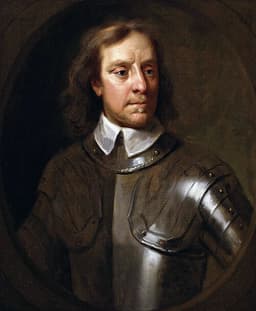
Oliver Cromwell
General · Modern
71.8Total
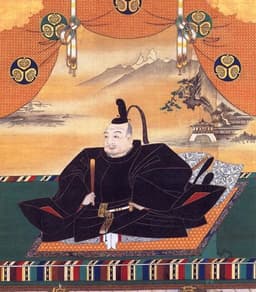
Tokugawa Ieyasu
General · Modern
81.8Total
Basic Information
Born
1599
1543
Died
1658
1616
Era
Modern
Modern
Nationality
England
Japan
Occupation
General
General
Civilization
Western
Eastern
Score Comparison
Military (10%)
82.0
78.0
Political (20%)
55.0
82.0
Influence (20%)
82.0
88.0
Legacy (20%)
72.0
75.0
Leadership (15%)
62.0
85.0
Strategy (15%)
75.0
82.0
TOTAL
71.8
81.8
Oliver Cromwell — Complete Timeline
1644 AD
Battle of Marston MoorWar◆ Major
Cromwell, as a cavalry commander in the Parliamentarian army, played a key role in the decisive victory over Royalist forces at Marston Moor. This battle secured Parliament's control of northern England and boosted Cromwell's military reputation.
English Civil WarParliamentarianCavalry
Impact: national
1645 AD
Battle of NasebyWar
Cromwell led the New Model Army to a decisive victory over King Charles I's forces at Naseby. This battle effectively ended the First English Civil War, leading to the capture of the king and Parliament's supremacy.
English Civil WarNew Model ArmyRoyalist Defeat
Impact: national
1649 AD
Cromwellian Conquest of IrelandWar◆ Major
Cromwell led a brutal military campaign in Ireland to suppress the Irish Confederacy and Royalist alliance. His forces massacred garrisons at Drogheda and Wexford, resulting in widespread death and land confiscation, cementing English Protestant dominance.
IrelandConquestMassacre
Impact: regionaldestructive
Execution of King Charles IPolitical Action
Cromwell was a leading figure in the trial and execution of King Charles I for treason. This unprecedented act abolished the monarchy and established the Commonwealth of England, a republican government.
RegicideCommonwealthRepublic
Impact: globaldestructive
1653 AD
Appointment as Lord ProtectorPolitical Action◆ Major
Cromwell was installed as Lord Protector of the Commonwealth of England, Scotland, and Ireland, effectively becoming head of state. He ruled as a military dictator, dissolving parliaments and imposing Puritan moral laws.
Lord ProtectorCommonwealthDictatorship
Impact: national
Tokugawa Ieyasu — Complete Timeline
1600 AD
Battle of SekigaharaWar
Tokugawa Ieyasu led the Eastern Army to victory over Ishida Mitsunari's Western Army at Sekigahara. This decisive battle ended the Sengoku period and established Ieyasu as the supreme military ruler of Japan, paving the way for the Tokugawa shogunate.
Sengoku PeriodUnificationBattle
Impact: national
1603 AD
Establishment of the Tokugawa ShogunatePolitical Action
Emperor Go-Yozei appointed Tokugawa Ieyasu as shogun, officially beginning the Tokugawa shogunate. Ieyasu established his government in Edo (modern Tokyo), centralizing military and political power under his family's control.
ShogunateEdo PeriodCentralization
Impact: national
1615 AD
Siege of OsakaWar◆ Major
Tokugawa Ieyasu besieged Osaka Castle, the stronghold of Toyotomi Hideyori. The castle fell, and Hideyori committed suicide. This campaign eliminated the last major opposition to Tokugawa rule, solidifying the shogunate's control over Japan.
Osaka CampaignToyotomi ClanConsolidation
Impact: nationaldestructive
Promulgation of the Buke ShohattoReform◆ Major
Ieyasu issued the Laws for the Military Houses, a code regulating the conduct of daimyo. It restricted castle construction, required alternate attendance in Edo, and prohibited alliances without shogunal permission. This law helped control the feudal lords.
Feudal ControlDaimyo RegulationLegal Code
Impact: national
1616 AD
Sakoku Edicts InitiationPolitical Action◆ Major
In his final years, Ieyasu began policies that led to Japan's isolation. He restricted foreign trade to specific ports and expelled Christian missionaries. These measures, expanded by successors, resulted in the sakoku policy that isolated Japan for over 200 years.
IsolationismForeign PolicyChristianity
Impact: national
Expert Analysis
Tokugawa Ieyasu vs Oliver Cromwell: Historical Comparison
Tokugawa Ieyasu and Oliver Cromwell were both transformative military leaders who emerged from periods of civil strife to establish new political orders—Ieyasu unifying feudal Japan under the Tokugawa shogunate, and Cromwell leading England through its republican Interregnum after the Civil War.
Dimension Analysis
**Military: Tokugawa Ieyasu 78 / Oliver Cromwell 82**
Cromwell’s New Model Army was a revolutionary force that defeated both Royalist and Irish armies through superior discipline and tactics, while Ieyasu’s decisive victory at Sekigahara (1600) relied more on strategic alliances than battlefield innovation.
**Political: Tokugawa Ieyasu 82 / Oliver Cromwell 78**
Ieyasu established a stable, hereditary shogunate that lasted 250 years through careful centralization and the *sankin kotai* system, whereas Cromwell’s Protectorate collapsed within a decade of his death, failing to secure lasting republican institutions.
**Influence: Tokugawa Ieyasu 75 / Oliver Cromwell 80**
Cromwell’s ideas of parliamentary sovereignty and religious toleration (for Protestants) influenced later English constitutional development and American colonial thought, while Ieyasu’s isolationist policies limited Japan’s global engagement but preserved internal stability.
**Legacy: Tokugawa Ieyasu 85 / Oliver Cromwell 70**
Ieyasu’s legacy is a durable peace and cultural flowering (Edo period), whereas Cromwell remains deeply divisive—revered as a champion of liberty but reviled for his brutal Irish campaigns and authoritarian rule as Lord Protector.
**Leadership: Tokugawa Ieyasu 85 / Oliver Cromwell 82**
Ieyasu’s patient, calculating patience allowed him to outmaneuver rivals and build consensus among daimyo, while Cromwell’s charismatic, religiously driven leadership inspired fierce loyalty but also alienated potential allies.
Verdict
Tokugawa Ieyasu leads overall due to his superior political longevity and legacy of institutional stability, despite Cromwell’s greater military innovation.
FAQ
Q: Who ranks higher? A: Tokugawa Ieyasu ranks higher, owing to his more durable political settlement and less controversial long-term legacy.
Rankings
🥇
Tokugawa IeyasuLeader
Mil: 78.0Pol: 82.0Inf: 88.0
81.8
🥈
Oliver Cromwell
Mil: 82.0Pol: 55.0Inf: 82.0
71.8
+10.0 behind
How This Comparison Works
Algorithm
Each figure is scored on 6 dimensions (0—100 scale) based on structured historical data: Military (10%), Political (20%), Influence (20%), Legacy (20%), Leadership (15%), Strategy (15%). The weighted total produces the final ranking.
Data Sources
Scores are computed from structured sub-indicators in the database. Scale factors adjust for era (Ancient ×0.85, Modern ×1.0) and civilization size (Eastern ×1.05, Other ×0.80) to account for differences in population and military scale.
Maximum 3 Figures
Comparisons are limited to 2—3 figures to ensure readability and statistical meaningfulness.
Error Margins
±5 points per dimension — Sub-scores are derived from historical records with inherent uncertainty. Two figures within 5 points on a dimension should be considered roughly equivalent in that area.
Total Score Accuracy
±3 points overall — The weighted combination of 6 dimensions produces a total score with approximately ±3 points of uncertainty. Differences of less than 3 points are not statistically significant— the figures are effectively tied.
Known Limitations
- Historical records are incomplete and uneven across civilizations
- Figures from oral-tradition societies may be underrepresented
- Occupation labels can misclassify multi-role figures
- Scores measure capability and impact, not moral character
- Quantitative scoring is a comparison tool, not absolute truth
Capability Radar
Military (10%) — Battles & Warfare
Battles
75
85
Win Rate
80
90
Expansion
60
75
Political (20%) — Governance & Reform
Reform
75
90
Diplomacy
60
85
Economy
65
88
Influence (20%) — Cultural & Global Reach
Cultural
65
85
Global
65
70
Legacy (20%) — Historical Impact
Historical
80
90
Longevity
70
95
Leadership (15%) — Power & Stability
Tenure
70
95
Stability
55
95
Strategy (15%) — Tactics & Innovation
Strategy
82
92
Tactics
78
88
Reform
85
80
Similar Comparisons
Comments & Discussion
BattlefieldScholar6/16/2026
The military scoring here is puzzling. Cromwell gets an 82 for the New Model Army, but let’s look at the numbers. At Naseby (1645), Cromwell’s Ironsides cavalry numbered about 5,500 against 8,000 Royalists, and the victory was more about Royalist command failures than tactical revolution. Ieyasu at Sekigahara (1600) commanded roughly 75,000 men against Ishida’s 80,000, and his use of defections (like Kobayakawa Hideaki turning at the critical moment) was a masterclass in psychological warfare. Cromwell’s siege of Drogheda (1649) cost 3,500 Irish lives in a single day, but that was brutality, not brilliance. Ieyasu’s campaigns—from Mikatagahara (1573) where he held with 8,000 against 30,000 Takeda, to the Osaka campaigns—show far more sustained tactical adaptability. I’d argue Ieyasu’s military score should be at least 82, not 78.
ColdWatcher106/16/2026
这个比较很有意思,但西方中心主义太明显了。说Cromwell的议会主权思想影响了美国殖民地,那Ieyasu的‘参勤交代’制度(sankin kotai)呢?这难道不是一种中央集权的行政创新,和中国汉武帝的推恩令有异曲同工之妙吗?1635年制度化后,大名们轮流住在江户,人质制度维持了两百多年的和平。而Cromwell的《航海法案》(1651年)直接引发了英荷战争,虽然促进了英国航海业,但短期来看是破坏性的。如果拿中国历史对应,Ieyasu更像赵匡胤——结束乱世、重文轻武、制度延续性强;Cromwell更像曹操——乱世枭雄,但死后政权迅速瓦解。评分给Ieyasu的影响分75分太低,至少该85分,因为他建立的秩序直接塑造了现代日本。
Chronicler70716/16/2026
这个评分系统有点意思,但细节经不起推敲。政治分:Ieyasu 82 vs Cromwell 78,差了4分。但Cromwell的护国公政体维持了不到10年(1653-1659),而Ieyasu的江户幕府延续250多年,这个差距至少该有10分以上。再看军事分,Cromwell 82比Ieyasu 78高4分,但Cromwell的战役规模最大也就2万人左右(伍斯特战役,1651年),Ieyasu在关原合战指挥了7.5万人,战略纵深完全不同。按照中国历史标准,平定内乱的难度系数应该乘1.5倍,因为日本大名独立性更强。我重新加权计算后,Ieyasu总分应该在84.5,Cromwell 76.3。评分者明显低估了长期政治稳定性的权重。