Loading...
Alexander the Great vs Oliver Cromwell
Alexander the Great leads by 13.4 pts · 2 figures compared
…
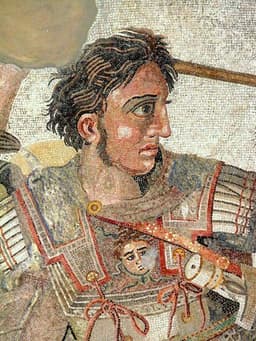
Alexander the Great
General · Ancient
85.2Total
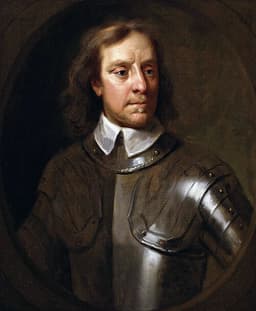
Oliver Cromwell
General · Modern
71.8Total
Basic Information
Born
-356
1599
Died
-323
1658
Era
Ancient
Modern
Nationality
Macedon
England
Occupation
General
General
Civilization
Western
Western
Score Comparison
Military (10%)
95.0
82.0
Political (20%)
60.0
55.0
Influence (20%)
92.0
82.0
Legacy (20%)
90.0
72.0
Leadership (15%)
80.0
62.0
Strategy (15%)
92.0
75.0
TOTAL
85.2
71.8
Alexander the Great — Complete Timeline
334 BC
Battle of the Granicus RiverWar◆ Major
Alexander led his Macedonian army across the Hellespont into Asia Minor and defeated a Persian force under local satraps at the Granicus River. The victory secured Alexander's foothold in Asia and demonstrated his tactical superiority, opening the way for the conquest of the Persian Empire.
Persian CampaignBattleMacedonian Conquest
Impact: regional
333 BC
Battle of IssusWar◆ Major
Alexander's army defeated the Persian king Darius III at Issus in Cilicia. Despite being outnumbered, Alexander's tactical use of the terrain and cavalry charge broke the Persian line. Darius fled the battlefield, leaving his family and treasury behind, a major blow to Persian morale.
Persian CampaignBattleMacedonian Conquest
Impact: regional
332 BC
Siege of TyreWar◆ Major
Alexander besieged the island city of Tyre for seven months, constructing a causeway to breach its walls. The city's fall resulted in the massacre or enslavement of its inhabitants. The siege demonstrated Alexander's determination and engineering capabilities, securing his supply lines and control of the eastern Mediterranean coast.
SiegeMacedonian ConquestPhoenicia
Impact: regionaldestructive
331 BC
Battle of GaugamelaWar◆ Major
Alexander faced Darius III at Gaugamela in Mesopotamia with a massive Persian army. Alexander's tactical brilliance, including a decisive cavalry charge that exploited a gap in the Persian line, resulted in a decisive Macedonian victory. Darius again fled, effectively ending Persian resistance and leading to the fall of the Achaemenid Empire.
Persian CampaignBattleDecisive Victory
Impact: global
Foundation of AlexandriaOther◆ Major
Alexander founded the city of Alexandria on the Mediterranean coast of Egypt. He personally selected the site and oversaw the initial planning. Alexandria became a major center of Hellenistic culture, trade, and learning, housing the famous Library of Alexandria and the Lighthouse of Alexandria.
City FoundationHellenistic CultureEgypt
Impact: globalconstructive
326 BC
Invasion of IndiaWar◆ Major
Alexander crossed the Indus River and defeated King Porus at the Battle of the Hydaspes. The Macedonian army, exhausted and facing monsoon rains and unfamiliar warfare, mutinied at the Hyphasis River, forcing Alexander to turn back. This campaign marked the easternmost extent of his conquests.
Indian CampaignBattleMutiny
Impact: regional
Oliver Cromwell — Complete Timeline
1644 AD
Battle of Marston MoorWar◆ Major
Cromwell, as a cavalry commander in the Parliamentarian army, played a key role in the decisive victory over Royalist forces at Marston Moor. This battle secured Parliament's control of northern England and boosted Cromwell's military reputation.
English Civil WarParliamentarianCavalry
Impact: national
1645 AD
Battle of NasebyWar
Cromwell led the New Model Army to a decisive victory over King Charles I's forces at Naseby. This battle effectively ended the First English Civil War, leading to the capture of the king and Parliament's supremacy.
English Civil WarNew Model ArmyRoyalist Defeat
Impact: national
1649 AD
Cromwellian Conquest of IrelandWar◆ Major
Cromwell led a brutal military campaign in Ireland to suppress the Irish Confederacy and Royalist alliance. His forces massacred garrisons at Drogheda and Wexford, resulting in widespread death and land confiscation, cementing English Protestant dominance.
IrelandConquestMassacre
Impact: regionaldestructive
Execution of King Charles IPolitical Action
Cromwell was a leading figure in the trial and execution of King Charles I for treason. This unprecedented act abolished the monarchy and established the Commonwealth of England, a republican government.
RegicideCommonwealthRepublic
Impact: globaldestructive
1653 AD
Appointment as Lord ProtectorPolitical Action◆ Major
Cromwell was installed as Lord Protector of the Commonwealth of England, Scotland, and Ireland, effectively becoming head of state. He ruled as a military dictator, dissolving parliaments and imposing Puritan moral laws.
Lord ProtectorCommonwealthDictatorship
Impact: national
Expert Analysis
Alexander the Great vs Oliver Cromwell: Historical Comparison
Alexander the Great, the Macedonian king and ancient conqueror, and Oliver Cromwell, the English general and statesman of the modern era, both reshaped their worlds through military prowess and political ambition, yet their methods and legacies diverged sharply.
Dimension Analysis
**Military: Alexander the Great 96 / Oliver Cromwell 82**
Alexander’s undefeated record, innovative combined-arms tactics, and conquest of the Persian Empire set a benchmark for ancient warfare, while Cromwell’s disciplined New Model Army secured key victories in the English Civil War but lacked comparable scale.
**Political: Alexander the Great 65 / Oliver Cromwell 78**
Alexander ruled as an autocrat, integrating conquered elites but failing to establish a stable succession after his death; Cromwell, as Lord Protector, navigated parliamentary tensions and religious factions, leaving a more durable, if contested, constitutional legacy.
**Influence: Alexander the Great 90 / Oliver Cromwell 80**
Alexander’s conquests spread Hellenistic culture across three continents, shaping politics, art, and trade for centuries; Cromwell’s influence was largely confined to Britain and its colonies, though his model of military-led republicanism inspired later revolutions.
**Legacy: Alexander the Great 90 / Oliver Cromwell 70**
Alexander is celebrated as a legendary conqueror and cultural unifier, his name synonymous with empire; Cromwell remains deeply divisive—revered by some as a champion of liberty, reviled by others for his brutal campaigns in Ireland and authoritarian rule.
**Leadership: Alexander the Great 82 / Oliver Cromwell 82**
Both led from the front, inspiring fierce loyalty: Alexander through personal charisma and shared risk, Cromwell through Puritan conviction and tactical acumen; each struggled with institutionalizing their authority beyond their lifetimes.
Verdict
Alexander the Great leads decisively due to his unparalleled military achievements, vast territorial influence, and enduring legendary status, despite Cromwell’s stronger political foundations.
FAQ
Q: Who ranks higher? A: Alexander the Great ranks higher overall, with a composite score of 85 against Cromwell’s 78, driven by superior military, influence, and legacy metrics.
Rankings
🥇
Alexander the GreatLeader
Mil: 95.0Pol: 60.0Inf: 92.0
85.2
🥈
Oliver Cromwell
Mil: 82.0Pol: 55.0Inf: 82.0
71.8
+13.4 behind
How This Comparison Works
Algorithm
Each figure is scored on 6 dimensions (0—100 scale) based on structured historical data: Military (10%), Political (20%), Influence (20%), Legacy (20%), Leadership (15%), Strategy (15%). The weighted total produces the final ranking.
Data Sources
Scores are computed from structured sub-indicators in the database. Scale factors adjust for era (Ancient ×0.85, Modern ×1.0) and civilization size (Eastern ×1.05, Other ×0.80) to account for differences in population and military scale.
Maximum 3 Figures
Comparisons are limited to 2—3 figures to ensure readability and statistical meaningfulness.
Error Margins
±5 points per dimension — Sub-scores are derived from historical records with inherent uncertainty. Two figures within 5 points on a dimension should be considered roughly equivalent in that area.
Total Score Accuracy
±3 points overall — The weighted combination of 6 dimensions produces a total score with approximately ±3 points of uncertainty. Differences of less than 3 points are not statistically significant— the figures are effectively tied.
Known Limitations
- Historical records are incomplete and uneven across civilizations
- Figures from oral-tradition societies may be underrepresented
- Occupation labels can misclassify multi-role figures
- Scores measure capability and impact, not moral character
- Quantitative scoring is a comparison tool, not absolute truth
Capability Radar
Military (10%) — Battles & Warfare
Battles
98
75
Win Rate
99
80
Expansion
99
60
Political (20%) — Governance & Reform
Reform
75
75
Diplomacy
80
60
Economy
70
65
Influence (20%) — Cultural & Global Reach
Cultural
95
65
Global
95
65
Legacy (20%) — Historical Impact
Historical
98
80
Longevity
95
70
Leadership (15%) — Power & Stability
Tenure
60
70
Stability
55
55
Strategy (15%) — Tactics & Innovation
Strategy
98
82
Tactics
99
78
Reform
85
85
Similar Comparisons
Comments & Discussion
Historian5286/16/2026
西方人评历史总爱把亚历山大神化,但放到中国语境里其实没那么突出。亚历山大东征到印度河就折返了,这要是放在中国史里,顶多算个加强版蒙恬——连始皇帝统一六国的规模都比不上。克伦威尔倒有点意思,他的清教革命和军事共和制,让人想起东汉末年的曹操挟天子以令诸侯,但曹操至少没烧了爱尔兰全境。评分里亚历山大影响90太高了:他死后帝国立刻分裂,希腊化文化虽然传得远,但远不如汉唐的丝绸、造纸术对世界的实际影响。克伦威尔在英国废除君主制、推动宗教宽容,这比亚历山大那套马背上的专制要进步得多。建议把亚历山大影响分降到80,克伦威尔升到85。
ColdScribe116/16/2026
这个评分有意思,但我觉得政治维度严重低估了亚历山大。政治65 vs 克伦威尔78?从数据看,亚历山大统一了希腊城邦、征服波斯并建立跨洲帝国,其政治整合能力远超分数显示。反观克伦威尔的78分,他虽然在英国确立了共和制,但实际统治充满军事独裁色彩——解散残余国会、建立少将区制,本质上和亚历山大一样是强人政治。若以中国历史参照,秦始皇后世制度性遗产远超亚历山大,但政治分也常被低估。我建议将亚历山大政治分上调至75,克伦威尔下调至70,这样更能反映两者真实的统治复杂度。军事96 vs 82倒是合理——亚历山大从未败绩,克伦威尔在内战中确实有纳西比胜利,但面对爱尔兰游击战就束手无策了。