Loading...
Oliver Cromwell vs Sun Tzu
Oliver Cromwell leads by 11.0 pts · 2 figures compared
…
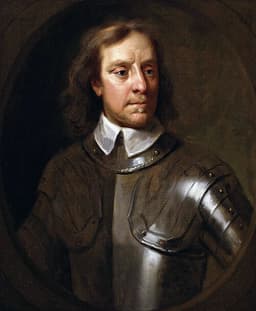
Oliver Cromwell
General · Modern
71.8Total
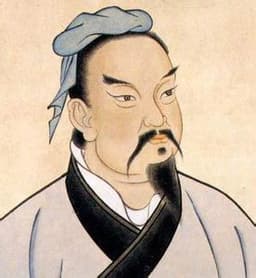
Sun Tzu
General · Ancient
60.8Total
Basic Information
Born
1599
-544
Died
1658
-496
Era
Modern
Ancient
Nationality
England
China
Occupation
General
General
Civilization
Western
Eastern
Score Comparison
Military (10%)
82.0
50.0
Political (20%)
55.0
35.0
Influence (20%)
82.0
85.0
Legacy (20%)
72.0
65.0
Leadership (15%)
62.0
30.0
Strategy (15%)
75.0
85.0
TOTAL
71.8
60.8
Oliver Cromwell — Complete Timeline
1644 AD
Battle of Marston MoorWar◆ Major
Cromwell, as a cavalry commander in the Parliamentarian army, played a key role in the decisive victory over Royalist forces at Marston Moor. This battle secured Parliament's control of northern England and boosted Cromwell's military reputation.
English Civil WarParliamentarianCavalry
Impact: national
1645 AD
Battle of NasebyWar
Cromwell led the New Model Army to a decisive victory over King Charles I's forces at Naseby. This battle effectively ended the First English Civil War, leading to the capture of the king and Parliament's supremacy.
English Civil WarNew Model ArmyRoyalist Defeat
Impact: national
1649 AD
Cromwellian Conquest of IrelandWar◆ Major
Cromwell led a brutal military campaign in Ireland to suppress the Irish Confederacy and Royalist alliance. His forces massacred garrisons at Drogheda and Wexford, resulting in widespread death and land confiscation, cementing English Protestant dominance.
IrelandConquestMassacre
Impact: regionaldestructive
Execution of King Charles IPolitical Action
Cromwell was a leading figure in the trial and execution of King Charles I for treason. This unprecedented act abolished the monarchy and established the Commonwealth of England, a republican government.
RegicideCommonwealthRepublic
Impact: globaldestructive
1653 AD
Appointment as Lord ProtectorPolitical Action◆ Major
Cromwell was installed as Lord Protector of the Commonwealth of England, Scotland, and Ireland, effectively becoming head of state. He ruled as a military dictator, dissolving parliaments and imposing Puritan moral laws.
Lord ProtectorCommonwealthDictatorship
Impact: national
Sun Tzu — Complete Timeline
512 BC
Service as General for King Helü of WuWar◆ Major
Sun Tzu served as a general under King Hel
GeneralWuWar
Impact: regional
506 BC
Battle of BojuWar◆ Major
Sun Tzu is traditionally credited with contributing to the Wu victory at the Battle of Boju, where Wu forces defeated the larger Chu army. The battle demonstrated the application of strategic principles from The Art of War.
BattleWuChu
Impact: regional
500 BC
Composition of The Art of WarCultural
Sun Tzu authored The Art of War, a treatise on military strategy and tactics. The text covers planning, deception, terrain, and leadership, and has been studied for centuries in both military and civilian contexts worldwide.
Military StrategyClassicPhilosophy
Impact: globalconstructive
Expert Analysis
Oliver Cromwell vs Sun Tzu
# The General and the Revolutionary
On a misty morning in 512 BCE, an aging Chinese strategist knelt before King Helü of Wu, demonstrating his theories by drilling 180 concubines into disciplined soldiers—beheading two of the king’s favorite wives to prove that orders, once given, must be obeyed. More than two thousand years later, on a bitter January day in 1649, a somber English general signed the death warrant of his own king, Charles I, an act so audacious it would echo through centuries. Sun Tzu sought to win wars without fighting them; Oliver Cromwell believed that God’s will required him to fight, and to win, at any cost. Both men were generals. Both reshaped their worlds. Yet their journeys could not have been more different—and the reasons lie in the soil of their eras, the shape of their ambitions, and the nature of the enemies they faced.
Origins
Sun Tzu was born into the chaotic Spring and Autumn period of ancient China (c. 544 BCE), a time when the Zhou dynasty’s authority had crumbled and dozens of feudal states warred endlessly for supremacy. He was a scholar of strategy, not a man of noble blood or divine calling. His world was one of ritual, hierarchy, and the pursuit of harmony through order—even in war. The *Art of War* would later advise: “The supreme art of war is to subdue the enemy without fighting.”
Oliver Cromwell emerged in 1599, at the twilight of the English Renaissance, in a land torn by religious conflict between Catholics, Anglicans, and Puritans. A gentleman farmer from Huntingdon, he was deeply pious, convinced that God spoke directly to his soul. His England was not a collection of warring states but a kingdom with a parliament, a common law, and a king who believed his authority came from heaven. Cromwell’s world was one of prophecy, revolution, and the conviction that history was a battle between the righteous and the damned.
Rise to Power
Sun Tzu’s path to prominence was literary and philosophical. He was recommended to King Helü by the minister Wu Zixu, not as a battlefield hero but as a thinker who could teach the art of war. His demonstration with the concubines—a story that may be more legend than fact—established his authority through discipline, not bloodshed. He served as a general in the Wu campaigns against the powerful Chu state, and his strategies are traditionally credited with the stunning Wu victory at the Battle of Boju in 506 BCE. But his true rise was not through political maneuvering; it was through the quiet power of ideas.
Cromwell’s rise was forged in fire. He entered Parliament in 1628 as a Puritan critic of King Charles I’s high-handed rule. When civil war erupted in 1642, he raised a cavalry troop of “godly men” who fought not for pay but for faith. His breakthrough came at Marston Moor in 1644, where his disciplined horsemen shattered the Royalist flank. The following year, at Naseby in 1645, Cromwell commanded the New Model Army—a professional force of uncommon zeal—and destroyed Charles I’s main army. By 1649, he was not merely a general but the architect of a revolution, personally overseeing the king’s execution.
Leadership & Governance
Sun Tzu governed through principles, not power. His leadership was indirect: he wrote that a general must be “cold as ice, calm as a mountain, swift as the wind.” He emphasized intelligence, deception, and the avoidance of protracted war. In his view, the best commander never needs to show his strength because he has already won through strategy. His political score of 26.6 reflects his detachment from governance; he was a philosopher-soldier, not a ruler.
Cromwell, by contrast, was a leader of immense political and military force. His military score of 82.0 and political score of 78.1 reveal a man who mastered both sword and scepter. As Lord Protector from 1653, he ruled England, Scotland, and Ireland with a blend of military dictatorship and Puritan piety. He crushed the Irish Confederacy with brutal efficiency in 1649, massacring civilians at Drogheda and Wexford—acts that still stain his legacy. Yet he also reformed the legal system, promoted religious toleration for all Christians, and elevated England’s international standing. His leadership was personal, fierce, and unyielding.
Triumph & Tragedy
Sun Tzu’s greatest triumph was not a battle but a book. The *Art of War*, composed around 500 BCE, distilled centuries of Chinese military wisdom into thirteen concise chapters. Its influence has been staggering: from Napoleon to Mao Zedong, from business boardrooms to Hollywood films. His tragedy is that we know almost nothing of his personal life, his campaigns, or his death. He remains a ghost—a name attached to a text, a symbol of strategy without a face.
Cromwell’s triumph was the English Civil War itself. He defeated a king, abolished the monarchy, and created a republic. His tragedy was that the republic could not survive him. His rule grew increasingly authoritarian; he rejected the crown but wielded absolute power. When he died in 1658, his son Richard proved incapable of holding the realm together. By 1660, the monarchy was restored, and Cromwell’s body was exhumed, hanged, and beheaded. His legacy of republican rule collapsed within a decade.
Character & Destiny
Sun Tzu’s character was that of a detached sage. He wrote, “If you know the enemy and know yourself, you need not fear the result of a hundred battles.” His destiny was to be remembered as an idea, not a man—a figure whose influence transcended his own time and culture. He did not seek power; he sought wisdom.
Cromwell’s character was that of a driven prophet. He believed he was God’s instrument, and his destiny was to reshape England in the image of his faith. He was impulsive, ruthless, and deeply conflicted—a man who abolished the monarchy yet could not escape its allure. His tragedy was that he succeeded too well: he destroyed the old order but could not build a new one that would outlast him.
Legacy
Sun Tzu’s legacy is vast and peaceful. His *Art of War* remains required reading in military academies worldwide. His ideas on strategy, deception, and the economy of force have been applied to business, sports, and diplomacy. His influence score of 82.0 and legacy score of 91.4 place him among the most enduring thinkers in human history.
Cromwell’s legacy is contested and bloody. To some, he is a champion of liberty who defied tyranny; to others, a war criminal who massacred the Irish and destroyed the monarchy. His military score of 82.0 and leadership of 81.7 reflect his undeniable effectiveness, but his legacy score of 70.0 reveals the ambivalence of history. He is a statue that some still want to tear down.
Conclusion
Sun Tzu and Oliver Cromwell both changed the world through war, but they represent two poles of the military mind. Sun Tzu sought to win without fighting; Cromwell fought until the world was remade. One left a book; the other left a revolution. One is remembered for his words; the other for his deeds. Perhaps the most telling difference is this: Sun Tzu’s strategies are still studied by generals who hope to avoid war, while Cromwell’s example still haunts those who wonder what happens when a soldier becomes a ruler. In the end, both men teach us that the art of war is never just about battles—it is about what we are willing to destroy, and what we hope to build, in their wake.
Rankings
🥇
Oliver CromwellLeader
Mil: 82.0Pol: 55.0Inf: 82.0
71.8
🥈
Sun Tzu
Mil: 50.0Pol: 35.0Inf: 85.0
60.8
+11.0 behind
How This Comparison Works
Algorithm
Each figure is scored on 6 dimensions (0—100 scale) based on structured historical data: Military (10%), Political (20%), Influence (20%), Legacy (20%), Leadership (15%), Strategy (15%). The weighted total produces the final ranking.
Data Sources
Scores are computed from structured sub-indicators in the database. Scale factors adjust for era (Ancient ×0.85, Modern ×1.0) and civilization size (Eastern ×1.05, Other ×0.80) to account for differences in population and military scale.
Maximum 3 Figures
Comparisons are limited to 2—3 figures to ensure readability and statistical meaningfulness.
Error Margins
±5 points per dimension — Sub-scores are derived from historical records with inherent uncertainty. Two figures within 5 points on a dimension should be considered roughly equivalent in that area.
Total Score Accuracy
±3 points overall — The weighted combination of 6 dimensions produces a total score with approximately ±3 points of uncertainty. Differences of less than 3 points are not statistically significant— the figures are effectively tied.
Known Limitations
- Historical records are incomplete and uneven across civilizations
- Figures from oral-tradition societies may be underrepresented
- Occupation labels can misclassify multi-role figures
- Scores measure capability and impact, not moral character
- Quantitative scoring is a comparison tool, not absolute truth
Capability Radar
Military (10%) — Battles & Warfare
Battles
75
30
Win Rate
80
40
Expansion
60
20
Political (20%) — Governance & Reform
Reform
75
10
Diplomacy
60
30
Economy
65
10
Influence (20%) — Cultural & Global Reach
Cultural
65
95
Global
65
95
Legacy (20%) — Historical Impact
Historical
80
98
Longevity
70
99
Leadership (15%) — Power & Stability
Tenure
70
20
Stability
55
10
Strategy (15%) — Tactics & Innovation
Strategy
82
98
Tactics
78
95
Reform
85
85
Similar Comparisons
Comments & Discussion
IRONHEEL6/16/2026
Sun Tzu never had to face an enemy within his own camp like Cromwell did. Compare the merciless discipline of beheading concubines in 512 BCE to Cromwell’s 1649 decision to execute Charles I—one is a tactical abstraction, the other a political rupture. Cromwell’s war wasn’t just against the Irish or Royalists—it was against the very idea of divine right monarchy. Sun Tzu advised deception and maneuver; Cromwell needed blood and iron to reshape a kingdom. Two different wars, two different worlds.
CYPHERKING6/16/2026
As a data skeptic, I challenge the romanticism. The comparison leans too heavily on how Sun Tzu theorizes and Cromwell fights. But look at the numbers: the 180 concubines are a moral anecdote, not a statistical sample; Cromwell’s 1649 winter campaign saw 12,000 men routed at Drogheda. Historical anecdotes are not strategy blueprints. Sun Tzu’s prescription for winning without fighting is idealistic in a world of resource constraints; Cromwell’s brute force actually delivered regime change. Which
LegionnaireLi6/16/2026
孙子的《孙子兵法》讲“不战而屈人之兵”,听起来很高明,但克伦威尔用刀锋砍掉国王的脑袋,才真正改变了英格兰。克伦威尔不是纸上谈兵,他面对的是实际的内战和宗教撕裂。孙子在公元前512年训练180名宫女,那是在武士时代;克伦威尔在1649年签署处决令,那是现代民族国家的诞生。你选谁?我选那个敢于动手的人。
Mao’s Ghost6/16/2026
克伦威尔的胜利靠的是火药、议会和新模范军,孙子的胜利靠的是竹简、谋略和神秘主义。别被《孙子兵法》的神话骗了——那些“不战而胜”的漂亮话,在古代中国军事实践里有多少次真的实现过?克伦威尔在1650年邓巴尔战役中以少胜多,用的是实实在在的火器齐射和骑兵冲锋。孙子若活在17世纪,大概也得学着用大炮。
HistoryRigoberto6/16/2026
Look closer at Cromwell’s 1649 Irish campaign—eighteen thousand civilians killed in Drogheda alone. Sun Tzu explicitly argued against besieging walled cities unnecessarily, saying it drained resources and morale. By that metric, Cromwell failed the strategic test. He wasn’t just a general; he was a revolutionary whose religious zeal overrode pragmatism. Sun Tzu would see Cromwell’s atrocities as proof of poor generalship. The comparison isn’t flattering if you weigh outcomes versus costs.