Loading...
Oliver Cromwell vs Soeharto
Oliver Cromwell leads by 9.8 pts · 2 figures compared
…
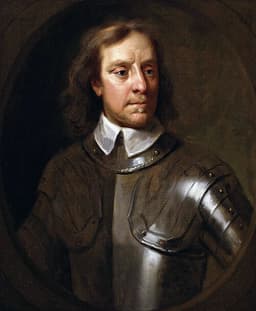
Oliver Cromwell
General · Modern
71.8Total
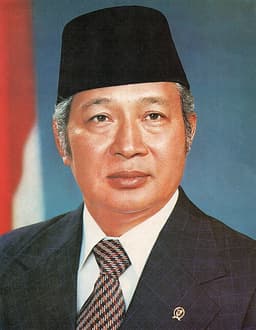
Soeharto
General · Modern
62.0Total
Basic Information
Born
1599
1921
Died
1658
—
Era
Modern
Modern
Nationality
England
Indonesia
Occupation
General
General
Civilization
Western
Eastern
Score Comparison
Military (10%)
82.0
55.0
Political (20%)
55.0
70.0
Influence (20%)
82.0
55.0
Legacy (20%)
72.0
58.0
Leadership (15%)
62.0
78.0
Strategy (15%)
75.0
60.0
TOTAL
71.8
62.0
Oliver Cromwell — Complete Timeline
1644 AD
Battle of Marston MoorWar◆ Major
Cromwell, as a cavalry commander in the Parliamentarian army, played a key role in the decisive victory over Royalist forces at Marston Moor. This battle secured Parliament's control of northern England and boosted Cromwell's military reputation.
English Civil WarParliamentarianCavalry
Impact: national
1645 AD
Battle of NasebyWar
Cromwell led the New Model Army to a decisive victory over King Charles I's forces at Naseby. This battle effectively ended the First English Civil War, leading to the capture of the king and Parliament's supremacy.
English Civil WarNew Model ArmyRoyalist Defeat
Impact: national
1649 AD
Cromwellian Conquest of IrelandWar◆ Major
Cromwell led a brutal military campaign in Ireland to suppress the Irish Confederacy and Royalist alliance. His forces massacred garrisons at Drogheda and Wexford, resulting in widespread death and land confiscation, cementing English Protestant dominance.
IrelandConquestMassacre
Impact: regionaldestructive
Execution of King Charles IPolitical Action
Cromwell was a leading figure in the trial and execution of King Charles I for treason. This unprecedented act abolished the monarchy and established the Commonwealth of England, a republican government.
RegicideCommonwealthRepublic
Impact: globaldestructive
1653 AD
Appointment as Lord ProtectorPolitical Action◆ Major
Cromwell was installed as Lord Protector of the Commonwealth of England, Scotland, and Ireland, effectively becoming head of state. He ruled as a military dictator, dissolving parliaments and imposing Puritan moral laws.
Lord ProtectorCommonwealthDictatorship
Impact: national
Soeharto — Complete Timeline
1966 AD
Assumed Power via SupersemarPolitical Action
Soeharto received the Supersemar order from President Sukarno, granting him authority to restore order after the 30 September Movement. This marked the beginning of his rise to power.
Power TransitionSupersemarIndonesia
Impact: national
1967 AD
Inaugurated as Acting PresidentPolitical Action◆ Major
Soeharto was inaugurated as acting president, replacing Sukarno. He formally became president in 1968, beginning the New Order regime that lasted 32 years.
PresidencyNew OrderIndonesia
Impact: national
1975 AD
Invasion of East TimorWar◆ Major
Soeharto ordered the invasion of East Timor following its declaration of independence. The occupation resulted in widespread human rights abuses and an estimated 100,000-200,000 deaths.
InvasionEast TimorHuman Rights
Impact: regionaldestructive
1998 AD
Resignation Amidst Economic CrisisPolitical Action
Soeharto resigned as president after massive protests triggered by the Asian Financial Crisis. His resignation ended the New Order regime and led to democratic reforms.
ResignationCrisisReformasi
Impact: nationaltragic
Expert Analysis
Oliver Cromwell vs Soeharto
# The Lord Protector and the New Order General
On a January morning in 1649, Oliver Cromwell stood in the Palace of Westminster as King Charles I laid his head upon the block. The execution of a divinely ordained monarch was an act so audacious that it sent shockwaves across Europe. Three hundred and forty-seven years later, on a May afternoon in 1998, another general named Soeharto sat in the Istana Merdeka in Jakarta, quietly signing his resignation. No execution, no revolution—just a weary old man stepping aside as millions of protesters filled the streets. Both men began as soldiers, both seized power in times of crisis, and both reshaped their nations. But one became the architect of a radical republic, the other the master of a durable autocracy. Why did their paths diverge so starkly?
Origins
Oliver Cromwell was born in 1599 into the English gentry, a class of minor landowners who believed in godly discipline and parliamentary rights. His upbringing in Huntingdon was steeped in Puritan piety, a faith that saw the world as a cosmic struggle between the righteous and the corrupt. When civil war erupted in 1642, Cromwell was already in his forties, a devout MP who had never commanded an army. His era was one of ideological fire—Protestant versus Catholic, Parliament versus King, liberty versus tyranny as he saw it.
Soeharto was born in 1921 in a small village in Java, the son of a low-level civil servant. His childhood was marked by poverty and a traditional Javanese upbringing, where deference to authority and harmony were paramount. He entered the Dutch colonial army, then joined the Japanese-sponsored forces during World War II, learning the brutal pragmatism of survival. His era was one of decolonization and Cold War tension, where the great question was not divine right but national unity and development. Where Cromwell saw a holy war, Soeharto saw a struggle for order.
Rise to Power
Cromwell’s rise came through military genius. At the Battle of Marston Moor in 1644, his cavalry charge turned the tide against the Royalists, earning him a reputation as a commander of iron discipline. But his true turning point was the Battle of Naseby in 1645, where he led the New Model Army—a force of godly soldiers, not mercenaries—to crush King Charles I’s main army. Cromwell did not seek to destroy the monarchy at first; he sought to limit it. But when Charles refused compromise, Cromwell became the driving force behind the king’s trial and execution in 1649. It was a leap into the unknown, an act of revolutionary daring.
Soeharto’s rise was more cautious. In 1965, Indonesia was in chaos: President Sukarno had tilted toward communism, the army was split, and a mysterious coup attempt by leftist officers triggered a violent purge. Soeharto, then a relatively obscure general, took command of the army’s response. In March 1966, he received the Supersemar order—a single sheet of paper from Sukarno granting him authority to restore order. He used it to dismantle the Communist Party, purge Sukarno’s allies, and quietly consolidate power. By 1967, he was acting president; by 1968, president. There was no trial, no execution—just a slow, methodical squeeze.
Leadership & Governance
Cromwell ruled as Lord Protector from 1653, a title that masked a military dictatorship with a Puritan soul. He banned Christmas, closed theaters, and enforced a stern moral code, but he also tolerated religious dissent far beyond the norms of his age—Jews were readmitted to England, and radical sects were allowed to preach. His military campaigns were brutal: the conquest of Ireland in 1649 remains a scar on Anglo-Irish memory, with massacres at Drogheda and Wexford that he justified as divine judgment. His political wisdom, however, was limited. He could not build a lasting constitution; his parliaments quarreled with him, and he ruled by the sword.
Soeharto governed through a system he called the New Order—a blend of military control, economic development, and Javanese paternalism. He crushed dissent ruthlessly, imprisoning thousands without trial, and ordered the invasion of East Timor in 1975, a war that killed over 100,000 people. Yet he also delivered stability and growth: inflation fell from 600% to single digits, foreign investment poured in, and poverty dropped from 60% to 11% during his rule. He was not a revolutionary but a manager, building a network of patronage that kept the army, businessmen, and bureaucrats loyal. Where Cromwell sought to remake England in God’s image, Soeharto sought to make Indonesia prosperous—and himself indispensable.
Triumph & Tragedy
Cromwell’s greatest moment was Naseby, where he proved that a citizen army could defeat a royal one. His greatest tragedy was the Irish campaign, where his religious zeal turned to atrocity, and the eventual collapse of his republic after his death. He died in 1658, and within two years the monarchy was restored, his body exhumed and hanged.
Soeharto’s triumph was the economic transformation of Indonesia—a poor, fractured archipelago became a middle-income nation. His tragedy was the 1997 Asian Financial Crisis, which wiped out decades of gains overnight, exposing the corruption at the heart of his system. He died in 2008, unrepentant, his family still holding vast wealth.
Character & Destiny
Cromwell was driven by conviction. He believed he was an instrument of God’s will, which gave him the courage to behead a king but also the blindness to see his own tyranny. Soeharto was driven by survival. He believed in power for its own sake, which made him flexible and patient but also hollow—when the crisis came, he had no ideology to fall back on, only the loyalty of his generals, which melted away.
Legacy
Cromwell is remembered as both a liberator and a dictator. To some, he is the father of British democracy; to others, a regicidal fanatic. His statue stands outside Parliament, but his name is still cursed in Ireland. Soeharto’s legacy is similarly divided. He is praised for lifting Indonesia from poverty, but condemned for his human rights abuses and corruption. His New Order gave Indonesia stability, but at the cost of freedom.
Conclusion
Both men were generals who became rulers in times of upheaval. Cromwell’s revolution failed because it was too radical; Soeharto’s regime failed because it was too stagnant. One tried to build heaven on earth, the other just tried to keep the earth from shaking. In the end, the difference between them is the difference between a prophet and a pragmatist—and history judges both with ambivalence.
Rankings
🥇
Oliver CromwellLeader
Mil: 82.0Pol: 55.0Inf: 82.0
71.8
🥈
Soeharto
Mil: 55.0Pol: 70.0Inf: 55.0
62.0
+9.8 behind
How This Comparison Works
Algorithm
Each figure is scored on 6 dimensions (0—100 scale) based on structured historical data: Military (10%), Political (20%), Influence (20%), Legacy (20%), Leadership (15%), Strategy (15%). The weighted total produces the final ranking.
Data Sources
Scores are computed from structured sub-indicators in the database. Scale factors adjust for era (Ancient ×0.85, Modern ×1.0) and civilization size (Eastern ×1.05, Other ×0.80) to account for differences in population and military scale.
Maximum 3 Figures
Comparisons are limited to 2—3 figures to ensure readability and statistical meaningfulness.
Error Margins
±5 points per dimension — Sub-scores are derived from historical records with inherent uncertainty. Two figures within 5 points on a dimension should be considered roughly equivalent in that area.
Total Score Accuracy
±3 points overall — The weighted combination of 6 dimensions produces a total score with approximately ±3 points of uncertainty. Differences of less than 3 points are not statistically significant— the figures are effectively tied.
Known Limitations
- Historical records are incomplete and uneven across civilizations
- Figures from oral-tradition societies may be underrepresented
- Occupation labels can misclassify multi-role figures
- Scores measure capability and impact, not moral character
- Quantitative scoring is a comparison tool, not absolute truth
Capability Radar
Military (10%) — Battles & Warfare
Battles
75
35
Win Rate
80
40
Expansion
60
20
Political (20%) — Governance & Reform
Reform
75
55
Diplomacy
60
65
Economy
65
70
Influence (20%) — Cultural & Global Reach
Cultural
65
50
Global
65
55
Legacy (20%) — Historical Impact
Historical
80
60
Longevity
70
55
Leadership (15%) — Power & Stability
Tenure
70
85
Stability
55
75
Strategy (15%) — Tactics & Innovation
Strategy
82
45
Tactics
78
30
Reform
85
60
Similar Comparisons
Comments & Discussion
CROMWELL'S BLADE6/16/2026
Comparing these two is like comparing a raging bonfire to a damp match. Cromwell actually believed in something – a radical, God-ordained republic. He was a zealot who lopped off a king's head for principle. Soeharto was just a Javanese strongman who perfected corruption. Give me the Puritan fanatic over the smiling kleptocrat any day. One built a republic, the other built a family bank account.
历史铁秤6/16/2026
把克伦威尔和苏哈托放一起比?纯粹是侮辱历史。一个在1649年处决国王建立共和,重塑了整个英格兰的政治基因;另一个不过是苏加诺的棋子,用“新秩序”掩盖30年的贪污和镇压。克伦威尔至少有个清教理想,苏哈托连装模作样的主义都不屑,直接发财。别拿奥利弗给印尼将军贴金。
DATA DETECTIVE6/16/2026
Statistically, this is apples and blood oranges. Cromwell's Puritan Commonwealth lasted barely a decade before the monarchy was restored. Soeharto's regime clocked 32 years of uninterrupted autocracy. That's not just different politics; it's a different species of power. One was a revolutionary fissure that collapsed under its own contradictions, the other a structural cancer that required a financial crisis to dislodge. The duration tells you everything about systemic vs. personal rule.
帝国解剖师6/16/2026
关键是文化土壤。克伦威尔生在荷兰加尔文主义边缘的英国,议会和产权有几百年的根基,他的专制是权宜之计,不是本能。苏哈托在爪哇传统里长大,那里“拉惹”就是天经地义——他建立的是个人王朝,用军队和官僚当爪牙。所以一个死后被骂成暴君却留下了议会权力,另一个身后国家烂得一塌糊涂。不是人格差异,是文明结构的深渊。