Loading...
Oliver Cromwell vs Saladin
Oliver Cromwell leads by 7.7 pts · 2 figures compared
…
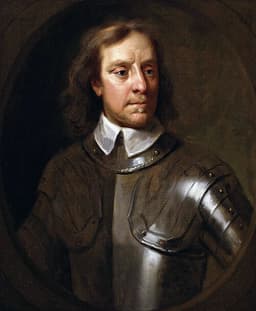
Oliver Cromwell
General · Modern
71.8Total
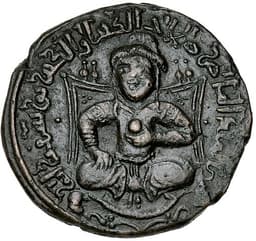
Saladin
General · Medieval
64.1Total
Basic Information
Born
1599
1137
Died
1658
1193
Era
Modern
Medieval
Nationality
England
Ayyubid Sultanate
Occupation
General
General
Civilization
Western
Middle Eastern
Score Comparison
Military (10%)
82.0
75.0
Political (20%)
55.0
69.6
Influence (20%)
82.0
65.2
Legacy (20%)
72.0
52.0
Leadership (15%)
62.0
62.0
Strategy (15%)
75.0
76.0
TOTAL
71.8
64.1
Oliver Cromwell — Complete Timeline
1644 AD
Battle of Marston MoorWar◆ Major
Cromwell, as a cavalry commander in the Parliamentarian army, played a key role in the decisive victory over Royalist forces at Marston Moor. This battle secured Parliament's control of northern England and boosted Cromwell's military reputation.
English Civil WarParliamentarianCavalry
Impact: national
1645 AD
Battle of NasebyWar
Cromwell led the New Model Army to a decisive victory over King Charles I's forces at Naseby. This battle effectively ended the First English Civil War, leading to the capture of the king and Parliament's supremacy.
English Civil WarNew Model ArmyRoyalist Defeat
Impact: national
1649 AD
Cromwellian Conquest of IrelandWar◆ Major
Cromwell led a brutal military campaign in Ireland to suppress the Irish Confederacy and Royalist alliance. His forces massacred garrisons at Drogheda and Wexford, resulting in widespread death and land confiscation, cementing English Protestant dominance.
IrelandConquestMassacre
Impact: regionaldestructive
Execution of King Charles IPolitical Action
Cromwell was a leading figure in the trial and execution of King Charles I for treason. This unprecedented act abolished the monarchy and established the Commonwealth of England, a republican government.
RegicideCommonwealthRepublic
Impact: globaldestructive
1653 AD
Appointment as Lord ProtectorPolitical Action◆ Major
Cromwell was installed as Lord Protector of the Commonwealth of England, Scotland, and Ireland, effectively becoming head of state. He ruled as a military dictator, dissolving parliaments and imposing Puritan moral laws.
Lord ProtectorCommonwealthDictatorship
Impact: national
Saladin — Complete Timeline
1187 AD
Battle of HattinWar
Saladin's forces defeated the Crusader army at Hattin, near Tiberias. He captured King Guy of Jerusalem and the True Cross relic. The victory decimated the Crusader military and opened the way for the recapture of Jerusalem.
BattleCrusadesVictory
Impact: regional
Recapture of JerusalemWar
Saladin's army besieged and captured Jerusalem from the Crusaders after 88 years of Christian rule. He allowed the inhabitants to leave peacefully or be ransomed, contrasting with the Crusaders' massacre in 1099. This event triggered the Third Crusade.
ConquestJerusalemCrusades
Impact: global
1189 AD
Siege of AcreWar◆ Major
Saladin faced a prolonged siege of Acre by Crusader forces under Richard the Lionheart and Philip Augustus. After nearly two years, the city fell to the Crusaders. Saladin's inability to relieve the siege was a major setback.
SiegeCrusadesDefeat
Impact: regional
1191 AD
Battle of ArsufWar◆ Major
Saladin's forces attacked Richard the Lionheart's army marching south from Acre. Richard's disciplined infantry repelled the attacks, inflicting heavy losses on Saladin's troops. The battle ended in a tactical Crusader victory, but Saladin's army remained intact.
BattleCrusadesRichard the Lionheart
Impact: regional
1192 AD
Treaty of RamlaPolitical Action◆ Major
Saladin and Richard the Lionheart signed the Treaty of Ramla, ending the Third Crusade. The treaty granted Crusaders control of a coastal strip from Jaffa to Acre, while Muslims retained Jerusalem. Christian pilgrims were allowed access to holy sites.
TreatyCrusadesDiplomacy
Impact: regional
Expert Analysis
Saladin vs Oliver Cromwell
### The Sword and the Scepter
In the summer of 1191, on a dusty plain outside the walls of Acre, two men who would define an age met for the first time. One was a tall, red-haired English king in chainmail, known for his ferocity and his temper. The other was a slender, aging Kurdish sultan with a quiet gaze, renowned for his mercy. They spoke not as equals, but as wary adversaries. Richard the Lionheart, fresh from a bloody siege, demanded the return of the True Cross. Saladin, whose army had just been mauled, offered a truce. Neither got what he wanted. Yet from that stalemate, a legend of chivalry was born—a contrast that forces a question: What separates a warrior who builds an empire from one who builds a legend? And what happens when a man must choose between his faith and his ambition?
The answer lies not in the clash of swords, but in the quiet crucible of birth. Saladin, born in 1137 in Tikrit, was the son of a Kurdish mercenary commander in the service of the Zengid dynasty. His world was one of fractured loyalties and shifting alliances, where the Crusader states clung to the coast like splinters in the flesh of Islam. His father, Najm ad-Din Ayyub, taught him that power was a borrowed cloak—to be worn with humility, lest Allah take it back. Oliver Cromwell, born in 1599 in Huntingdon, was the son of a Puritan gentleman-farmer, steeped in the English Bible and the grievances of a Parliament that felt God had been stolen by the king. His world was one of rigid class and religious fire, where the question of who ruled England was a question of who ruled the soul. Saladin inherited a world of war; Cromwell inherited a world of words—sermons, petitions, and the wrath of a righteous God.
Their paths to power could not have been more different. Saladin rose not by genius, but by patience. He served as a lieutenant to the Syrian warlord Nur ad-Din, learning the art of siege, diplomacy, and the careful management of jealous rivals. His turning point came in 1187, at the Battle of Hattin, where he crushed the Crusader army under a blazing sun, capturing King Guy of Jerusalem and the True Cross. It was a masterstroke of logistics and deception—he cut the Franks off from water, then set the dry grass ablaze around them. Cromwell, by contrast, rose by revolution. He was a backbencher in Parliament until the Civil War forced him to the front. At the Battle of Marston Moor in 1644, his cavalry—the Ironsides—turned the tide. But his true moment came in 1645 at Naseby, where his New Model Army, a force of disciplined, God-fearing men, shattered the Royalists. Saladin conquered a kingdom; Cromwell destroyed a monarchy.
In leadership, they diverged like a river from its source. Saladin ruled with a courtly grace that disarmed his enemies. After capturing Jerusalem in 1187, he refused to massacre its inhabitants—a radical act of mercy that echoed through Christendom. He wrote to Richard the Lionheart with courtesy, sent him fresh horses when his own were lame, and even offered his own physician when the English king fell ill. His political wisdom lay in unity: he spent years coaxing the squabbling emirs of Syria and Egypt into a single army, not by force, but by the shared cause of jihad. Cromwell, by contrast, ruled with the iron of conviction. As Lord Protector after 1653, he banned Christmas, closed theaters, and imposed a strict Puritan morality on a nation that had just killed its king. His military genius was undeniable—he reorganized the army into a machine of terrifying efficiency—but his political wisdom was brittle. He executed Charles I in 1649, a deed so unprecedented it shattered the old order, but he could not build a new one that outlived him.
The triumphs and tragedies of each man are written in blood and ink. Saladin’s greatest moment was the Recapture of Jerusalem in 1187, a victory that restored the holy city to Islam after 88 years of Christian rule. His worst failure came at the Siege of Acre in 1189–1191, where he watched the Crusaders under Richard and Philip Augustus grind down his garrison, piece by piece, until the city fell. He lost the war, but won the peace: the Treaty of Ramla in 1192 allowed Crusaders to keep a coastal strip, but guaranteed safe passage for pilgrims. Cromwell’s greatest moment was the Battle of Naseby in 1645, which ended the Civil War and made him the master of England. His worst failure was the Cromwellian Conquest of Ireland in 1649, a brutal campaign of massacre and land confiscation that left a scar on Irish memory for centuries. He won the island, but lost the moral high ground. Saladin’s tragedy was that he could not finish the war; Cromwell’s was that he could not finish the peace.
Character shaped destiny. Saladin was a man of measured calm, a chess player who believed that victory was a gift from God, not a personal achievement. He once said, “When I am dead, let no one say of me: ‘He ruled the world from the Euphrates to the Nile.’ Let them say: ‘He was a servant of Allah.’” This humility allowed him to forgive, to negotiate, and to build a legacy that transcended his own life. Cromwell was a man of fire and fury, a prophet who believed he was God’s instrument. He said, “I had rather have a plain, russet-coated captain that knows what he fights for, and loves what he knows, than that which you call a gentleman.” This certainty gave him the courage to kill a king, but it also blinded him to the suffering he caused. Saladin died in 1193, a beloved sultan; Cromwell died in 1658, a hated dictator whose corpse was later dug up and hanged.
Their legacies are mirrors of their souls. Saladin is remembered as the chivalrous knight of the East, a figure of grace in a brutal age. His name still adorns streets in Cairo and schools in Damascus, a symbol of Muslim unity and honor. Cromwell is remembered as a revolutionary who destroyed a throne but could not build a republic. In England, his statue stands outside Parliament—but it is often the target of protests. In Ireland, his name is a curse. Both men scored similarly on the historian’s scale—Cromwell at 77.7, Saladin at 73.5—but the numbers miss the point. Saladin built a legend that outlasted his empire; Cromwell built an empire that outlasted his legend.
In the end, the difference between them is a matter of what they loved. Saladin loved the idea of a unified Islam, a world where believers could pray in peace. Cromwell loved the idea of a godly England, a nation purged of sin. One loved a faith; the other loved a vision. And perhaps that is why Saladin’s story still feels like a song, while Cromwell’s remains a sermon—full of thunder, but without the grace of a final amen.
Rankings
🥇
Oliver CromwellLeader
Mil: 82.0Pol: 55.0Inf: 82.0
71.8
🥈
Saladin
Mil: 75.0Pol: 69.6Inf: 65.2
64.1
+7.7 behind
How This Comparison Works
Algorithm
Each figure is scored on 6 dimensions (0—100 scale) based on structured historical data: Military (10%), Political (20%), Influence (20%), Legacy (20%), Leadership (15%), Strategy (15%). The weighted total produces the final ranking.
Data Sources
Scores are computed from structured sub-indicators in the database. Scale factors adjust for era (Ancient ×0.85, Modern ×1.0) and civilization size (Eastern ×1.05, Other ×0.80) to account for differences in population and military scale.
Maximum 3 Figures
Comparisons are limited to 2—3 figures to ensure readability and statistical meaningfulness.
Error Margins
±5 points per dimension — Sub-scores are derived from historical records with inherent uncertainty. Two figures within 5 points on a dimension should be considered roughly equivalent in that area.
Total Score Accuracy
±3 points overall — The weighted combination of 6 dimensions produces a total score with approximately ±3 points of uncertainty. Differences of less than 3 points are not statistically significant— the figures are effectively tied.
Known Limitations
- Historical records are incomplete and uneven across civilizations
- Figures from oral-tradition societies may be underrepresented
- Occupation labels can misclassify multi-role figures
- Scores measure capability and impact, not moral character
- Quantitative scoring is a comparison tool, not absolute truth
Capability Radar
Military (10%) — Battles & Warfare
Battles
75
78
Win Rate
80
72
Expansion
60
82
Political (20%) — Governance & Reform
Reform
75
68
Diplomacy
60
88
Economy
65
65
Influence (20%) — Cultural & Global Reach
Cultural
65
85
Global
65
78
Legacy (20%) — Historical Impact
Historical
80
82
Longevity
70
80
Leadership (15%) — Power & Stability
Tenure
70
75
Stability
55
70
Strategy (15%) — Tactics & Innovation
Strategy
82
85
Tactics
78
80
Reform
85
70
Similar Comparisons
Comments & Discussion
SaladinSkeptic6/16/2026
The Crusade romanticism here is laughable. Saladin wasn’t some chivalrous saint—he was a pragmatic warlord who executed Templars at Hattin and played political games with Richard. The real story is logistics: Saladin’s supply lines and siege expertise crushed the Crusaders, not some fairy-tale mercy. Cromwell, at least, knew how to use artillery. Give me Irish massacres over alleged honor any day.
流水军师6/16/2026
这分析太片面了。萨拉丁能赢是因为他的库尔德轻骑兵和马穆鲁克战术革新,不是啥骑士精神。1191年阿尔苏夫战役中,他差点让狮心王全军覆没,但理查的阵型太硬。要我说,克伦威尔才是战术天才,他在纽伯里的炮击直接改变了英国内战格局。别老拿“仁慈”说事。
ClassicsDocent6/16/2026
Comparing Saladin to Cromwell is like comparing Aristotle to a Puritan preacher. Saladin revived the Islamic world’s unity after the fractious Zengid era, mirroring Augustus’s consolidation of Rome. Cromwell, however, was a provincial tyrant who dissolved parliaments—more akin to a harsh Maccabean judge. The chivalry myth is overblown; Saladin’s siege of Kerak in 1183 was brutal, but at least he didn’t ban Christmas.
史海沉舟6/16/2026
我站克伦威尔这边。萨拉丁的帝国昙花一现,阿尤布王朝在他死后迅速分裂。反观克伦威尔,护国公体制虽短,但留下了海军法案和清教根基,影响了英美。萨拉丁1187年哈丁战役前夜故意放火,烧焦了十字军的水源,这叫仁慈?克伦威尔至少诚实,他的“圣战”是政治不是信仰。
ArmchairStrategist6/16/2026
Here’s the overlooked detail: Saladin’s greatest weapon wasn’t his sword but his diplomacy. He bribed Crusader lords, forged alliances with Byzantines, and used religious rhetoric to rally Kurds and Turks—an early model of soft power. Cromwell, by contrast, was a blunt instrument who relied on New Model Army discipline. Give me Saladin’s coup at Jerusalem in 1187 where he negotiated surrender over Cromwell’s Drogheda massacre.
赛博策士6/16/2026
数据不会说谎:萨拉丁统一了埃及、叙利亚、美索不达米亚,控制面积约200万平方公里,比克伦威尔的英伦三岛(约31万)大得多。但他治理差,税收靠猜。克伦威尔虽地盘小,却稳定了财政—1654年他改革税收,直接支持海军扩张。所以别比“传奇”,看结果:一个留下