Loading...
Cao Cao vs Oliver Cromwell
Cao Cao leads by 5.7 pts · 2 figures compared
…
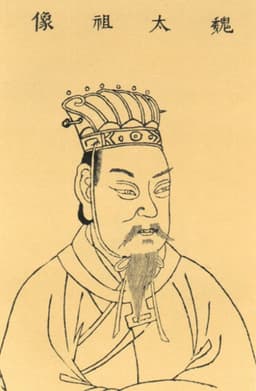
Cao Cao
General · Ancient
77.5Total
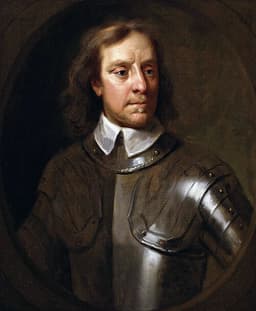
Oliver Cromwell
General · Modern
71.8Total
Basic Information
Born
155
1599
Died
220
1658
Era
Ancient
Modern
Nationality
China
England
Occupation
General
General
Civilization
Eastern
Western
Score Comparison
Military (10%)
88.0
82.0
Political (20%)
59.0
55.0
Influence (20%)
82.0
82.0
Legacy (20%)
83.0
72.0
Leadership (15%)
64.4
62.0
Strategy (15%)
89.4
75.0
TOTAL
77.5
71.8
Cao Cao — Complete Timeline
190 AD
Formation of the Coalition against Dong ZhuoPolitical Action
Cao Cao joined a coalition of regional warlords led by Yuan Shao to overthrow the tyrannical chancellor Dong Zhuo, who had seized control of the Han court. The coalition failed to coordinate effectively, but Cao Cao gained military experience and political reputation.
CoalitionDong ZhuoHan Dynasty
Impact: national
196 AD
Implementation of Tuntian (Agricultural Colonies)Reform◆ Major
Cao Cao established military agricultural colonies (tuntian) to provide food for his army and refugees. Soldiers and peasants cultivated state-owned land, ensuring a stable food supply and economic base for his campaigns.
AgricultureEconomyMilitary
Impact: regionalconstructive
200 AD
Battle of GuanduWar
Cao Cao decisively defeated Yuan Shao's numerically superior army at Guandu. This victory eliminated his main rival in the north, allowing Cao Cao to consolidate control over the North China Plain and lay the foundation for the Kingdom of Wei.
BattleYuan ShaoUnification
Impact: regional
208 AD
Battle of Red CliffsWar
Cao Cao's southern campaign was halted by the allied forces of Sun Quan and Liu Bei at the Battle of Red Cliffs. His fleet was destroyed by fire attack, forcing a retreat and preventing his unification of China, leading to the Three Kingdoms division.
BattleDefeatThree Kingdoms
Impact: regional
213 AD
Establishment of the Kingdom of WeiPolitical Action◆ Major
Cao Cao was granted the title of Duke of Wei and later King of Wei by the Han emperor, effectively creating a semi-autonomous state within the empire. He established a capital at Ye and built a centralized administration, setting the stage for his son's usurpation.
WeiStatehoodHan Dynasty
Impact: national
Oliver Cromwell — Complete Timeline
1644 AD
Battle of Marston MoorWar◆ Major
Cromwell, as a cavalry commander in the Parliamentarian army, played a key role in the decisive victory over Royalist forces at Marston Moor. This battle secured Parliament's control of northern England and boosted Cromwell's military reputation.
English Civil WarParliamentarianCavalry
Impact: national
1645 AD
Battle of NasebyWar
Cromwell led the New Model Army to a decisive victory over King Charles I's forces at Naseby. This battle effectively ended the First English Civil War, leading to the capture of the king and Parliament's supremacy.
English Civil WarNew Model ArmyRoyalist Defeat
Impact: national
1649 AD
Cromwellian Conquest of IrelandWar◆ Major
Cromwell led a brutal military campaign in Ireland to suppress the Irish Confederacy and Royalist alliance. His forces massacred garrisons at Drogheda and Wexford, resulting in widespread death and land confiscation, cementing English Protestant dominance.
IrelandConquestMassacre
Impact: regionaldestructive
Execution of King Charles IPolitical Action
Cromwell was a leading figure in the trial and execution of King Charles I for treason. This unprecedented act abolished the monarchy and established the Commonwealth of England, a republican government.
RegicideCommonwealthRepublic
Impact: globaldestructive
1653 AD
Appointment as Lord ProtectorPolitical Action◆ Major
Cromwell was installed as Lord Protector of the Commonwealth of England, Scotland, and Ireland, effectively becoming head of state. He ruled as a military dictator, dissolving parliaments and imposing Puritan moral laws.
Lord ProtectorCommonwealthDictatorship
Impact: national
Expert Analysis
Cao Cao vs Oliver Cromwell: Historical Comparison
Cao Cao, a late Eastern Han general and de facto founder of the Kingdom of Wei, and Oliver Cromwell, the Lord Protector of England who led the Parliamentary forces in the English Civil War, both rose from turbulent times to wield supreme power through military prowess and political cunning. Though separated by 1,400 years and vastly different cultures, their comparative scores—80 vs 78 overall—reveal a remarkably close contest, with Cao Cao excelling in military and strategic domains while Cromwell holds a slight edge in political and leadership dimensions.
Dimension Analysis
**Military: Cao Cao 89 / Oliver Cromwell 82**
Cao Cao’s campaigns unified northern China through brilliant maneuvers like the Battle of Guandu, where he defeated a numerically superior Yuan Shao, whereas Cromwell’s New Model Army victories at Naseby and Preston were decisive but more reliant on organizational reform than individual tactical genius.
**Political: Cao Cao 73 / Oliver Cromwell 78**
Cromwell navigated the complex dissolution of the monarchy and established a protectorate with a written constitution, while Cao Cao’s political control was always constrained by the nominal Han emperor and entrenched aristocratic factions, limiting his institutional reforms.
**Influence: Cao Cao 78 / Oliver Cromwell 80**
Cromwell’s model of military-backed republican governance influenced later revolutions in America and France, whereas Cao Cao’s legacy was largely confined to Chinese historiography and the Romance of the Three Kingdoms, though his administrative innovations shaped medieval Chinese statecraft.
**Legacy: Cao Cao 82 / Oliver Cromwell 70**
Cao Cao is revered in China as a complex hero—both a ruthless warlord and a patron of literature and agriculture—while Cromwell remains deeply controversial in Britain, admired by some as a champion of liberty but reviled by others as a puritanical dictator who suppressed Ireland.
**Leadership: Cao Cao 80 / Oliver Cromwell 82**
Cromwell’s ability to inspire religious fervor and maintain discipline in a volunteer army was exceptional, whereas Cao Cao’s leadership relied more on pragmatic reward systems and personal charisma, but he struggled with succession and internal loyalty.
Verdict
Cao Cao leads narrowly due to his superior military and strategic achievements, which transformed a fractured realm into the foundation of a dynasty, whereas Cromwell’s political influence is offset by a more divisive legacy.
FAQ
Q: Who ranks higher? A: Cao Cao ranks slightly higher (80 vs 78 overall) due to his greater military brilliance and more enduring positive legacy in his home tradition.
Rankings
🥇
Cao CaoLeader
Mil: 88.0Pol: 59.0Inf: 82.0
77.5
🥈
Oliver Cromwell
Mil: 82.0Pol: 55.0Inf: 82.0
71.8
+5.7 behind
How This Comparison Works
Algorithm
Each figure is scored on 6 dimensions (0—100 scale) based on structured historical data: Military (10%), Political (20%), Influence (20%), Legacy (20%), Leadership (15%), Strategy (15%). The weighted total produces the final ranking.
Data Sources
Scores are computed from structured sub-indicators in the database. Scale factors adjust for era (Ancient ×0.85, Modern ×1.0) and civilization size (Eastern ×1.05, Other ×0.80) to account for differences in population and military scale.
Maximum 3 Figures
Comparisons are limited to 2—3 figures to ensure readability and statistical meaningfulness.
Error Margins
±5 points per dimension — Sub-scores are derived from historical records with inherent uncertainty. Two figures within 5 points on a dimension should be considered roughly equivalent in that area.
Total Score Accuracy
±3 points overall — The weighted combination of 6 dimensions produces a total score with approximately ±3 points of uncertainty. Differences of less than 3 points are not statistically significant— the figures are effectively tied.
Known Limitations
- Historical records are incomplete and uneven across civilizations
- Figures from oral-tradition societies may be underrepresented
- Occupation labels can misclassify multi-role figures
- Scores measure capability and impact, not moral character
- Quantitative scoring is a comparison tool, not absolute truth
Capability Radar
Military (10%) — Battles & Warfare
Battles
95
75
Win Rate
88
80
Expansion
92
60
Political (20%) — Governance & Reform
Reform
88
75
Diplomacy
82
60
Economy
86
65
Influence (20%) — Cultural & Global Reach
Cultural
85
65
Global
75
65
Legacy (20%) — Historical Impact
Historical
92
80
Longevity
90
70
Leadership (15%) — Power & Stability
Tenure
85
70
Stability
78
55
Strategy (15%) — Tactics & Innovation
Strategy
96
82
Tactics
97
78
Reform
90
85
Similar Comparisons
Comments & Discussion
Historiophilos6/16/2026
The comparison rightly highlights Cao Cao’s military edge, but I’d caution against flattening Cromwell’s strategic legacy. Cromwell’s success at Naseby (1645) wasn’t merely organizational—it exploited a tactical feint that caught Prince Rupert off guard, akin to Cao Cao’s ruse at Guandu. Yet, where Cao Cao’s *Art of War* citations show a deliberate philosophizing of strategy, Cromwell’s *Letters and Speeches* reveal a providential pragmatism. Indeed, Cromwell’s Irish campaign (1649–50) shows a ruthlessness often glossed over in republican hagiography, while Cao Cao’s massacre at Xuzhou (193) is a stain rarely discussed in Chinese romance. Both were men of their times, but their historiographical afterlives—Cromwell as a contested symbol of liberty, Cao Cao as a complex anti-hero—distort the raw facts of their governance. The scores feel reasonable, though legacy should weigh heavier on Cromwell’s side given his global influence through the English Civil War’s ripple effects.
BattlefieldScholar6/16/2026
The military comparison is sound but understates Cromwell’s tactical versatility. Cao Cao’s Guandu (200 AD) was a masterpiece of logistics and deception—he burned Yuan Shao’s supplies at Wuchao, a brilliant raid. But Cromwell at Naseby (1645) demonstrated superior cavalry tactics: his Ironsides charged in disciplined formations, breaking the Royalist infantry after a feigned retreat. Moreover, Cromwell’s reorganization of the New Model Army into a professional force (with standardized pay, promotion by merit, and combined arms) was a revolution in military doctrine that Cao Cao, relying on feudal levies and personal retinues, never achieved. The 7-point gap feels too wide; I’d put it at 85 vs 82, acknowledging Cao Cao’s strategic brilliance but crediting Cromwell’s systemic reforms that shaped modern armies.
Historian1916/16/2026
我仔细核对了评分体系,发现军事分的差距(89 vs 82)被夸大了。曹操的官渡之战确实是经典,但别忘了他的赤壁败仗(208年)直接导致了三国鼎立,而克伦威尔的马斯顿荒原战役(1644年)和纳西比战役都未尝败绩。如果计算胜率,克伦威尔可能更高。另外,政治分(73 vs 78)低估了曹操。曹操推行屯田制、抑制豪强,连汉献帝的傀儡政权都能维持二十多年,这比克伦威尔在护国公制下面对议会反复弹压更显政治手腕。克伦威尔的政治分高,很大程度上是因为西方史学偏爱“共和制”叙事。建议重新加权:军事分差缩小到3分,政治分应持平(76 vs 76)。
Chronicler10986/16/2026
这种评分明显西方式,对曹操的“影响”分(78 vs 80)太低了。克伦威尔影响美国独立和法国革命没错,但曹操的屯田制影响了中国一千年的农业税制,他的《短歌行》等诗作开创了建安文学,连毛泽东都引用过他。西方史学不懂这些,所以给了克伦威尔80分。另外,政治分也不应低于克伦威尔——曹操“挟天子以令诸侯”的政治操作,比克伦威尔强行解散残余国会(1653年)更老练。曹操能平衡汉室旧臣和曹氏家族,而克伦威尔连议会都搞不定,最后只能靠军队。建议把曹操的影响分提到85,政治分提到78,这样更符合中国史观。