Loading...
Oliver Cromwell vs Skanderbeg
Oliver Cromwell leads by 9.1 pts · 2 figures compared
…
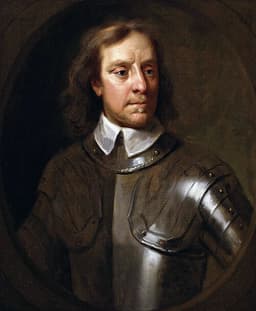
Oliver Cromwell
General · Modern
71.8Total
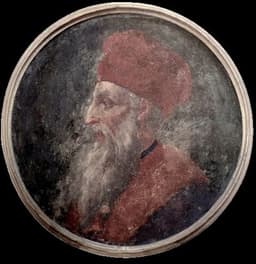
Skanderbeg
General · Medieval
62.7Total
Basic Information
Born
1599
1405
Died
1658
1468
Era
Modern
Medieval
Nationality
England
Albania
Occupation
General
General
Civilization
Western
Western
Score Comparison
Military (10%)
82.0
80.0
Political (20%)
55.0
61.3
Influence (20%)
82.0
56.7
Legacy (20%)
72.0
52.0
Leadership (15%)
62.0
72.0
Strategy (15%)
75.0
75.0
TOTAL
71.8
62.7
Oliver Cromwell — Complete Timeline
1644 AD
Battle of Marston MoorWar◆ Major
Cromwell, as a cavalry commander in the Parliamentarian army, played a key role in the decisive victory over Royalist forces at Marston Moor. This battle secured Parliament's control of northern England and boosted Cromwell's military reputation.
English Civil WarParliamentarianCavalry
Impact: national
1645 AD
Battle of NasebyWar
Cromwell led the New Model Army to a decisive victory over King Charles I's forces at Naseby. This battle effectively ended the First English Civil War, leading to the capture of the king and Parliament's supremacy.
English Civil WarNew Model ArmyRoyalist Defeat
Impact: national
1649 AD
Cromwellian Conquest of IrelandWar◆ Major
Cromwell led a brutal military campaign in Ireland to suppress the Irish Confederacy and Royalist alliance. His forces massacred garrisons at Drogheda and Wexford, resulting in widespread death and land confiscation, cementing English Protestant dominance.
IrelandConquestMassacre
Impact: regionaldestructive
Execution of King Charles IPolitical Action
Cromwell was a leading figure in the trial and execution of King Charles I for treason. This unprecedented act abolished the monarchy and established the Commonwealth of England, a republican government.
RegicideCommonwealthRepublic
Impact: globaldestructive
1653 AD
Appointment as Lord ProtectorPolitical Action◆ Major
Cromwell was installed as Lord Protector of the Commonwealth of England, Scotland, and Ireland, effectively becoming head of state. He ruled as a military dictator, dissolving parliaments and imposing Puritan moral laws.
Lord ProtectorCommonwealthDictatorship
Impact: national
Skanderbeg — Complete Timeline
1444 AD
Battle of TorviollWar
Skanderbeg led a small Albanian force against a larger Ottoman army under Ali Pasha at Torvioll. The Albanian victory marked the beginning of Skanderbeg's rebellion against Ottoman rule and established his reputation as a military commander.
RebellionOttoman EmpireAlbania
Impact: regional
League of LezhëPolitical Action◆ Major
Skanderbeg convened a council of Albanian noblemen at Lezh
AllianceAlbanian UnityVenice
Impact: regionalconstructive
1450 AD
Siege of Krujë (First)War◆ Major
Sultan Murad II personally led a large Ottoman army to besiege the fortress of Kruj
SiegeKrujëMurad II
Impact: regional
1457 AD
Battle of AlbulenaWar◆ Major
Skanderbeg defeated a large Ottoman army commanded by Isak Bey and Hamza Kastrioti at Albulena. The victory crushed an Ottoman attempt to invade Albania and resulted in the capture of Hamza, Skanderbeg's nephew who had defected to the Ottomans.
BattleHamza KastriotiOttoman Defeat
Impact: regional
1466 AD
Siege of Krujë (Second)War
Sultan Mehmed II led a massive Ottoman army to besiege Kruj
SiegeMehmed IIPapal States
Impact: regional
1468 AD
Death at LezhëOther◆ Major
Skanderbeg died of natural causes in Lezh
DeathOttoman ConquestNational Hero
Impact: regionaltragic
Expert Analysis
Oliver Cromwell vs Skanderbeg
### The General Who Defied an Empire, and the General Who Built One
In the autumn of 1466, the most powerful man in the world, Sultan Mehmed II, the conqueror of Constantinople, stood before the walls of a small Albanian fortress called Krujë. He commanded an army vast enough to swallow kingdoms, yet for months, the fortress refused to fall. Inside, the garrison held not because of stone and mortar, but because of one man: a renegade Ottoman general turned Christian rebel, George Kastrioti, known to history as Skanderbeg. Two centuries later and a thousand miles away, another general stood before a different kind of throne. In January 1649, Oliver Cromwell, a Puritan gentleman turned cavalry commander, watched as King Charles I of England laid his head upon a block. Cromwell had not merely defeated the king in battle; he had put him on trial and signed his death warrant. One man spent his life resisting the greatest empire of his age; the other destroyed the ancient monarchy of his own nation and became its dictator. What separates a hero who saves a people from a revolutionary who remakes a world?
### Origins
Skanderbeg was born in 1405 into the Albanian nobility, but he was raised as a hostage in the Ottoman court. Trained in the Janissary corps—the elite slave-soldiers of the sultan—he became a brilliant Ottoman commander, earning the name "Skanderbeg" (a corruption of *Iskander Bey*, or Lord Alexander) for his military prowess. His entire youth was an education in the machinery of imperial conquest. When his father died and the Ottomans moved to absorb his lands, Skanderbeg did something extraordinary: he deserted the sultan’s army, seized the fortress of Krujë, and raised a banner of rebellion. His revolt was not the cry of an outsider, but the calculated betrayal of an insider who knew the empire’s every weakness.
Oliver Cromwell was born in 1599 into the English gentry, a class of minor landowners who formed the backbone of Parliament. Unlike Skanderbeg, he had no military training. He was a farmer, a devout Puritan, and a Member of Parliament who believed that God's will was written in the fate of nations. By the time the English Civil War erupted in 1642, Cromwell was in his forties, a latecomer to the art of war. His era was not one of empires crushing small nations, but of a kingdom tearing itself apart over religion, liberty, and the power of the crown. Where Skanderbeg fought to preserve his people from annihilation, Cromwell fought to determine what kind of England would survive.
### Rise to Power
Skanderbeg’s rise was sudden and dramatic. In 1444, he gathered the fractious Albanian chieftains at the League of Lezhë, forging a fragile unity against the Ottomans. That same year, at the Battle of Torvioll, he led a small Albanian force against a larger Ottoman army under Ali Pasha and won. The victory was more than military; it was a declaration that a Christian nation could stand against the sultan. Skanderbeg’s authority rested on his personal charisma, his unmatched knowledge of the mountainous terrain, and the existential terror of Ottoman conquest. Every battle was a gamble for survival.
Cromwell’s rise was slower, more political. He entered the Civil War as a captain of cavalry, but his genius was organizational. At the Battle of Marston Moor in 1644, his disciplined "Ironsides" cavalry turned the tide against the Royalists, but he was still just one commander among many. His true transformation came with the creation of the New Model Army in 1645—a professional, meritocratic force that Cromwell helped shape. At the Battle of Naseby that same year, this army shattered Charles I’s last hope of military victory. Cromwell’s rise was not a rebellion against a foreign empire, but a revolution from within his own society. He did not seize power; he grew into it as the old order collapsed.
### Leadership & Governance
Skanderbeg’s leadership was defined by a single, relentless purpose: resistance. He fought over a dozen major campaigns against the Ottomans, winning battles at Albulena in 1457 and holding Krujë against Sultan Murad II himself in 1450. His strategy was guerrilla warfare—striking from the mountains, avoiding pitched battles against superior numbers, and leveraging the fortress of Krujë as an unbreakable anchor. Politically, he was a unifier, but a fragile one. The League of Lezhë was always threatened by internal rivalries, and Skanderbeg spent as much energy keeping his allies together as fighting the Turks. He was a prince without a state, a general without a treasury, dependent on sporadic aid from Venice and the Papacy.
Cromwell’s leadership was broader and more complex. As a general, he was methodical and ruthless. The Siege of Drogheda in 1649, part of his campaign to conquer Ireland, saw his forces massacre thousands of civilians and prisoners—a brutality that still stains his reputation. As a ruler, he was a political innovator. After executing Charles I in 1649, England became a republic, the Commonwealth, but it was unstable. In 1653, Cromwell was appointed Lord Protector, effectively a military dictator with the power of a king but the title of a servant of the people. He governed through a mix of Puritan piety, military force, and parliamentary maneuvering. He failed to create a lasting constitution, but he succeeded in stabilizing a nation that had been torn apart by civil war.
### Triumph & Tragedy
Skanderbeg’s greatest triumph was the First Siege of Krujë in 1450, when he held out against Sultan Murad II himself. The sultan’s army withdrew in failure, and Skanderbeg became a legend across Europe. His tragedy was that his victories were temporary. He died in 1468, likely of malaria, at Lezhë. Within a decade, the Ottomans overwhelmed Albania. His life was a heroic defeat—a brilliant resistance that could not change the tide of history.
Cromwell’s triumph was the execution of the king and the establishment of the Commonwealth—an unprecedented act that reshaped the English constitution forever. His tragedy was that his republic died with him. When he died in 1658, his son Richard proved incapable of ruling. By 1660, the monarchy was restored. Cromwell’s body was exhumed, hanged, and beheaded. The revolution he led had failed to endure, but it had planted seeds that would bloom a century later in the Glorious Revolution and the American Revolution.
### Character & Destiny
Skanderbeg’s character was forged by betrayal and loyalty. He betrayed the sultan who raised him, but he remained fiercely loyal to his people and his Christian faith. His decisions were driven by necessity—the need to survive, to hold the mountains, to keep the flame of Albanian identity alive. He was a pragmatist, but his pragmatism served a sacred cause.
Cromwell’s character was a paradox. He was a devout Puritan who believed in religious toleration for Protestants, yet he persecuted Catholics in Ireland. He was a revolutionary who overthrew a king, yet he ruled with more absolute power than any Stuart monarch. He was a man of deep conviction who justified his actions as the will of God. His destiny was to be a destroyer and a builder, but he could not build a foundation that outlasted his own life.
### Legacy
Skanderbeg is the national hero of Albania, a symbol of resistance against overwhelming odds. His name adorns streets, statues, and even a military order. For centuries, he was a rallying cry for Albanians seeking independence. His legacy is that of a David who fought Goliath, not to win, but to prove that the fight itself has meaning.
Cromwell’s legacy is deeply contested. In England, he is a figure of both admiration and revulsion—a champion of parliamentary liberty to some, a genocidal warlord to others. His statue outside Parliament remains a subject of debate. His influence, however, is undeniable. He broke the divine right of kings, and the republican tradition he championed would echo across the Atlantic. He is remembered not as a hero of a single nation, but as a figure who reshaped the political imagination of the West.
### Conclusion
Skanderbeg and Cromwell were both men of war who became rulers of nations, but their worlds were profoundly different. Skanderbeg fought to preserve a people from extinction; Cromwell fought to transform a kingdom into a republic. One resisted an empire; the other created a new kind of state. Their fates were shaped not only by their own genius but by the scale of their ambitions. Skanderbeg’s tragedy was that he could only hold the line; Cromwell’s tragedy was that he could not hold the future. In the end, both men remind us that history is not a story of winners and losers, but of choices made under impossible pressure—and that the greatest generals often leave behind the most fragile of legacies.
Rankings
🥇
Oliver CromwellLeader
Mil: 82.0Pol: 55.0Inf: 82.0
71.8
🥈
Skanderbeg
Mil: 80.0Pol: 61.3Inf: 56.7
62.7
+9.1 behind
How This Comparison Works
Algorithm
Each figure is scored on 6 dimensions (0—100 scale) based on structured historical data: Military (10%), Political (20%), Influence (20%), Legacy (20%), Leadership (15%), Strategy (15%). The weighted total produces the final ranking.
Data Sources
Scores are computed from structured sub-indicators in the database. Scale factors adjust for era (Ancient ×0.85, Modern ×1.0) and civilization size (Eastern ×1.05, Other ×0.80) to account for differences in population and military scale.
Maximum 3 Figures
Comparisons are limited to 2—3 figures to ensure readability and statistical meaningfulness.
Error Margins
±5 points per dimension — Sub-scores are derived from historical records with inherent uncertainty. Two figures within 5 points on a dimension should be considered roughly equivalent in that area.
Total Score Accuracy
±3 points overall — The weighted combination of 6 dimensions produces a total score with approximately ±3 points of uncertainty. Differences of less than 3 points are not statistically significant— the figures are effectively tied.
Known Limitations
- Historical records are incomplete and uneven across civilizations
- Figures from oral-tradition societies may be underrepresented
- Occupation labels can misclassify multi-role figures
- Scores measure capability and impact, not moral character
- Quantitative scoring is a comparison tool, not absolute truth
Capability Radar
Military (10%) — Battles & Warfare
Battles
75
75
Win Rate
80
85
Expansion
60
40
Political (20%) — Governance & Reform
Reform
75
50
Diplomacy
60
70
Economy
65
40
Influence (20%) — Cultural & Global Reach
Cultural
65
70
Global
65
55
Legacy (20%) — Historical Impact
Historical
80
75
Longevity
70
70
Leadership (15%) — Power & Stability
Tenure
70
65
Stability
55
55
Strategy (15%) — Tactics & Innovation
Strategy
82
75
Tactics
78
80
Reform
85
60
Similar Comparisons
Comments & Discussion
SamuraiScribe6/16/2026
Cromwell forged a nation; Skanderbeg defended a faith. One built the New Model Army from scratch, creating the first modern professional military force in Europe—regiments based on merit, not birthright. The other was a brilliant guerrilla tactician, using hit-and-run in the Albanian mountains against 25 Ottoman invasions. But here's the truth: Skanderbeg's resistance was a heroic sideshow; Mehmed II still conquered Constantinople. Cromwell, whatever his flaws, fundamentally reshaped England's c
教条的步兵6/16/2026
数据不会说谎:斯坎德培在25场战役中仅输过1次,对抗的是奥斯曼帝国全盛时期的军事机器。而克伦威尔呢?他指挥的马斯顿荒原战役决定性地粉碎了王室势力,但那是内战中兄弟相残的胜利,不是对抗外敌的持久防御。斯坎德培的韧性相当于连续25年挡住二战初期的德军团级攻击,而克伦威尔的战绩更多是文明内部的权力重组。数字上,阿尔巴尼亚英雄更有说服力。
HereticHussar6/16/2026
Revisionist take: Cromwell's Irish campaigns make him a war criminal by modern standards, not a military genius. Drogheda massacre (3,500 civilians dead) vs. Skanderbeg's code of honor—the Albanian never slaughtered surrendering garrisons. The Puritan 'Lord Protector' was a religious zealot who banned Christmas; Skanderbeg was a pragmatic warrior who allied with Catholic Venice when needed. Morals aside, Skanderbeg's alliances with Aragon and Naples show diplomatic savvy Cromwell never matched.
石匠之歌6/16/2026
作为一名古典文化研究者,我关注的是叙事力量。克伦威尔的遗产被弥尔顿的十四行诗和卡莱尔的英雄崇拜浪漫化;斯坎德培则活在阿尔巴尼亚史诗与拜占庭编年史中,成为抵御伊斯兰扩张的基督教堡垒象征。但比较军事成就时,一个细节常被忽略:斯坎德培1457年阿尔布莱纳战役中4000骑兵对抗8万土耳其人的胜利,其战术巧妙程度堪比汉尼拔的坎尼。而克伦威尔纳西比战役的胜利,更多归功于费尔法克斯的骑兵协调。史诗赋予英雄荣耀,但扎根的战场天才才能赢得历史。
PuritanGravedigger6/16/2026
Let's be blunt: Cromwell was a revolutionary who succeeded; Skanderbeg was a resistance leader who delayed the inevitable. The Englishman abolished the monarchy, the House of Lords, and the Anglican Church—institutional demolition on a scale Skanderbeg never attempted. Yes, Skanderbeg held Krujë, but Albania stayed Ottoman