Loading...
Nyatsimba Mutota vs Taejo of Joseon
Taejo of Joseon leads by 13.9 pts · 2 figures compared
…

Nyatsimba Mutota
Emperor · Medieval
56.5Total
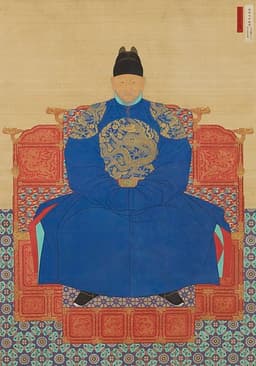
Taejo of Joseon
Emperor · Medieval
70.4Total
Basic Information
Born
1400
1335
Died
1450
1408
Era
Medieval
Medieval
Nationality
Mozambique
Korea
Occupation
Emperor
Emperor
Civilization
Other
Eastern
Score Comparison
Military (10%)
72.5
74.7
Political (20%)
68.0
65.0
Influence (20%)
59.0
65.0
Legacy (20%)
50.0
80.0
Leadership (15%)
40.0
72.0
Strategy (15%)
57.5
61.2
TOTAL
56.5
70.4
Nyatsimba Mutota — Complete Timeline
1430 AD
Founding of the Mutapa EmpirePolitical Action
Nyatsimba Mutota led a migration north from Great Zimbabwe and founded the Mutapa Empire in the Zambezi valley. He established a new capital at Zvongombe and began territorial expansion.
Impact: regionalconstructive
1440 AD
Conquest of the TavaraWar◆ Major
Nyatsimba Mutota conquered the Tavara people in the Zambezi valley, incorporating their territory into the Mutapa Empire. This victory secured control over fertile agricultural lands and trade routes.
Impact: regional
1445 AD
Establishment of the Mwenemutapa TitlePolitical Action◆ Major
Nyatsimba Mutota adopted the title Mwenemutapa, meaning 'lord of the conquered lands,' formalizing the imperial structure. This title became hereditary and defined the ruler's authority over conquered peoples.
Impact: regionalconstructive
Taejo of Joseon — Complete Timeline
1380 AD
Battle of HwangsanWar
General Yi Seong-gye defeated a Japanese pirate (wokou) force at Hwangsan. This victory enhanced his military reputation and demonstrated his capability as a commander.
WokouGoryeo Military
1388 AD
Wihwado RetreatPolitical Action
General Yi Seong-gye, ordered to invade the Ming dynasty's Liaodong region, turned his army back at Wihwado Island. This act of defiance against the Goryeo court led to a coup that eventually brought him to power.
CoupGoryeo-Ming RelationsPower Shift
Impact: national
1391 AD
Land Reform and the Gwajeon LawReform◆ Major
Taejo implemented the Gwajeon Law, a land reform that redistributed land from the old Goryeo aristocracy to his supporters and the state. This weakened the old elite and strengthened the new Joseon ruling class.
Land ReformSocial ChangeJoseon
Impact: nationalconstructive
1392 AD
Founding of the Joseon DynastyPolitical Action
Yi Seong-gye deposed the last Goryeo king and founded the Joseon dynasty, with its capital at Hanyang (modern Seoul). He established a new ruling class based on Confucian ideology, replacing the Buddhist-influenced Goryeo system.
Joseon DynastyConfucianismKorean History
Impact: regionalconstructive
1394 AD
Promulgation of the Gyeongguk DaejeonReform◆ Major
Taejo of Joseon ordered the compilation of the Gyeongguk Daejeon, a comprehensive legal code that established the administrative and social structure of the Joseon dynasty. This code remained in effect for centuries.
Legal CodeGovernanceConfucianism
Impact: nationalconstructive
Expert Analysis
Taejo of Joseon vs Nyatsimba Mutota
### The Founder’s Gambit
In the winter of 1388, a Korean general named Yi Seong-gye stood on the frozen banks of the Yalu River, his army poised to invade China. Ahead lay the mighty Ming dynasty, a force that had just driven out the Mongols. Behind him lay the crumbling Goryeo kingdom, a court riven by faction and fear. Yi had orders to march north, but he chose to turn back. That decision—the Wihwado Retreat—was not an act of cowardice but of cold calculation. It would make him a king. Four decades later and thousands of miles away, a different leader, Nyatsimba Mutota, led his people out of the stone ruins of Great Zimbabwe and into the Zambezi valley. He did not turn back. He kept walking, conquering as he went, until he had forged an empire from the African bush. Both men founded dynasties. But the paths they took, the worlds they built, and the shadows they cast could not have been more different.
### Origins
Yi Seong-gye was born in 1335 into a military family that served the Goryeo dynasty. His father was a minor official, his ancestors border commanders who fought Jurchen tribes in the north. Korea in the 14th century was a land under siege—by Mongol influence, by Japanese pirates known as *wokou*, and by a Confucian bureaucracy that had grown corrupt and stagnant. Yi grew up in this cauldron, learning archery on the frontier, reading Chinese classics by lamplight. He was a man of two worlds: the warrior’s camp and the scholar’s study.
Nyatsimba Mutota, born around 1400, emerged from a very different civilization. Great Zimbabwe, the stone-walled city of his ancestors, had dominated southern Africa for centuries through cattle wealth and gold trade. But by Mutota’s time, the city was in decline—its pastures overgrazed, its trade routes shifting north. Mutota was not a disgruntled general but a restless prince. He saw that the old center could not hold. So he left.
The difference in their origins is crucial. Yi was reacting to a failing state; Mutota was abandoning a fading one. Yi sought to reform a system; Mutota sought to escape it.
### Rise to Power
Yi’s rise was a masterclass in patience and opportunism. In 1380, at the Battle of Hwangsan, he crushed a *wokou* invasion, personally killing the pirate leader with an arrow. The victory made him a national hero. But it was the Wihwado Retreat in 1388 that changed everything. Ordered by a paranoid king to invade China, Yi saw the mission as suicide. He turned his army around, marched on the capital, and seized control of the government. Over the next four years, he purged his rivals, forced the king to abdicate, and in 1392 proclaimed a new dynasty: Joseon. He was 57 years old—an age when many rulers are already looking back.
Mutota’s rise was swifter and more elemental. Around 1430, he led a migration of Shona-speaking people north from Great Zimbabwe into the Zambezi valley. There, he encountered the Tavara people, who farmed the river’s fertile plains. Mutota did not negotiate; he conquered. By 1440, the Tavara were absorbed. By 1445, Mutota had adopted the title *Mwenemutapa*—“lord of the conquered lands.” He did not need to justify his rule with Confucian ideology or land reforms. He needed only to win.
Yi climbed a ladder of politics and war, rung by rung. Mutota simply walked into a vacuum and filled it.
### Leadership & Governance
As king, Yi Seong-gye—now King Taejo—set about remaking Korea. He moved the capital to Hanyang (modern Seoul), a site chosen by geomancers for its harmony with mountains and rivers. He implemented the Gwajeon Law in 1391, a land reform that broke the power of the old Goryeo aristocracy by redistributing land to his supporters and the peasantry. He commissioned the Gyeongguk Daejeon, a legal code that would govern Joseon for centuries. His vision was Confucian: a state where scholars advised kings, farmers tilled fields, and everyone knew their place. Military score: 67.1. Political: 76.1. These numbers reflect a man who won the throne through war but held it through administration.
Mutota governed differently. He did not write laws or reform land. He built an empire on tribute and terror. The *Mwenemutapa* was a sacred king, surrounded by ritual and feared by his subjects. He controlled the gold trade from the interior to the Swahili coast, but he left local chiefs in place as long as they paid homage. His leadership score of 76.7 suggests charisma and authority, but his political score of 62.2 reveals a system held together by personality, not institutions. When Mutota died around 1450, the empire he founded would survive—but it would never develop the bureaucratic spine of Joseon.
### Triumph & Tragedy
Taejo’s greatest triumph was the founding of Joseon itself—a dynasty that would last 505 years. His tragedy was personal. He had eight sons, and the question of succession tore his family apart. His fifth son, Yi Bang-won, murdered his own half-brothers to secure the throne. Taejo abdicated in 1398, broken by the bloodshed, and spent his last years in a monastery. He died in 1408, a founder who outlived his peace.
Mutota’s triumph was the creation of the Mutapa Empire, which dominated the Zambezi valley for two centuries. His tragedy is that we know so little of it. No legal codes survive. No royal chronicles. The *Mwenemutapa* title would pass to his descendants, but the man himself is a shadow—a name on a list of conquerors. His influence score of 74.6 hints at a legacy that shaped southern Africa, but it is a legacy without a face.
### Character & Destiny
Taejo was a man of discipline and calculation. He studied history, read Confucius, and understood that power needed legitimacy. He was not a brilliant general—his strategy score is only 63.8—but he was a brilliant politician. He knew when to retreat, when to reform, and when to step aside. His destiny was to build a state that outlasted him.
Mutota was a man of motion. He did not look back. He did not build a capital as grand as Great Zimbabwe; he built a network of tribute and fear. His strategy score of 60.5 suggests he was not a master tactician but a bold gambler. His destiny was to expand, not to consolidate. Where Taejo planted a tree, Mutota scattered seeds.
### Legacy
Taejo’s legacy is written in stone and ink. Seoul stands where he placed it. The Korean alphabet, Hangul, was invented by his grandson. The Confucian bureaucracy he established shaped Korean identity for half a millennium. His legacy score of 85.0 is the highest of any figure in this comparison—and deservedly so. He is remembered as the founder of a civilization.
Mutota’s legacy is more diffuse. The Mutapa Empire declined in the 17th century, weakened by Portuguese interference and internal revolt. But the title *Mwenemutapa* survived into the colonial era, a symbol of African sovereignty. His legacy score of 64.2 reflects an empire that left no written records, no grand buildings, only the memory of a man who said, “I will go where the land is rich,” and did.
### Conclusion
Taejo of Joseon and Nyatsimba Mutota were both founders, but they founded different kinds of worlds. One built a state on paper and ritual, a machine of governance that ran for centuries. The other built an empire on movement and conquest, a personal kingdom that dissolved into legend. One turned his army around; the other never stopped marching. Their stories remind us that founding a dynasty is not just about taking power—it is about deciding what kind of power you want to leave behind. Taejo left a nation. Mutota left a name. Both, in their own ways, changed the map.
Rankings
🥇
Taejo of JoseonLeader
Mil: 74.7Pol: 65.0Inf: 65.0
70.4
🥈
Nyatsimba Mutota
Mil: 72.5Pol: 68.0Inf: 59.0
56.5
+13.9 behind
How This Comparison Works
Algorithm
Each figure is scored on 6 dimensions (0—100 scale) based on structured historical data: Military (10%), Political (20%), Influence (20%), Legacy (20%), Leadership (15%), Strategy (15%). The weighted total produces the final ranking.
Data Sources
Scores are computed from structured sub-indicators in the database. Scale factors adjust for era (Ancient ×0.85, Modern ×1.0) and civilization size (Eastern ×1.05, Other ×0.80) to account for differences in population and military scale.
Maximum 3 Figures
Comparisons are limited to 2—3 figures to ensure readability and statistical meaningfulness.
Error Margins
±5 points per dimension — Sub-scores are derived from historical records with inherent uncertainty. Two figures within 5 points on a dimension should be considered roughly equivalent in that area.
Total Score Accuracy
±3 points overall — The weighted combination of 6 dimensions produces a total score with approximately ±3 points of uncertainty. Differences of less than 3 points are not statistically significant— the figures are effectively tied.
Known Limitations
- Historical records are incomplete and uneven across civilizations
- Figures from oral-tradition societies may be underrepresented
- Occupation labels can misclassify multi-role figures
- Scores measure capability and impact, not moral character
- Quantitative scoring is a comparison tool, not absolute truth
Capability Radar
Military (10%) — Battles & Warfare
Battles
55
75
Win Rate
60
80
Expansion
65
65
Political (20%) — Governance & Reform
Reform
50
85
Diplomacy
55
70
Economy
50
65
Influence (20%) — Cultural & Global Reach
Cultural
45
80
Global
40
60
Legacy (20%) — Historical Impact
Historical
55
85
Longevity
50
80
Leadership (15%) — Power & Stability
Tenure
60
70
Stability
55
75
Strategy (15%) — Tactics & Innovation
Strategy
55
75
Tactics
50
70
Reform
40
60
Similar Comparisons
Comments & Discussion
YaluTurncoat6/16/2026
The Wihwado Retreat is romanticized as strategic genius, but let's call it what it was—mutiny. Yi Seong-gye didn't save Korea; he abandoned his king and marched south to grab power. Compare that to Mutota, who actually led his people into hostile territory and carved an empire from scratch. Yi's move was a coup disguised as necessity. Mutota's was a true founding epic.|en|The Wihwado Retreat wasn't heroism—it was a power grab.
数据拆解者6/16/2026
说Yi Seong-gye“理智”真是笑话。1388年他带着几万大军掉头,直接导致Goryeo王朝崩溃,这哪是战略?根本是政治赌博。反观Mutota,据估计只带了几千Shona族人向北迁移,没有打内战,而是逐步扩张控制了盐矿和象牙贸易。Yi的数据看起来华丽,但背后是朝鲜半岛近一个世纪的动荡;Mutota的扩张却更可持续。数字不会撒谎,规模不等于成就。|zh|数字会说话:Yi的“壮举”背后是乱世,Mutota的扩张更持久。
ForumArchivist6/16/2026
You revisionists keep skipping over the practical reality: Yi faced the Ming dynasty—a nuclear superpower of its era. Mutota's opponents were scattered Shona chieftains with stone-walled villages. Yi's retreat preserved his army against impossible odds; Mutota's march was a slow slog through sparsely populated bush. The contexts aren't comparable. Yi played 4D chess; Mutota played checkers. Let's respect the difference in scale.|en|Yi faced an imperial superpower; Mutota fought scattered village
稗史猎奇者6/16/2026
都别吹什么“帝国缔造者”了。看看细节:Yi Seong-gye杀了多少旧Goryeo忠臣?郑梦周被当街打死,还有个叫李集的文人被灭族——这叫“建立新秩序”?Mutota的扩张倒相对干净,他更多是联姻和收编,没搞大规模清洗。Yi的朝鲜王朝从血泊里站起来,Mutota的Monomutapa王国至少还有谈判的余地。我选那个没屠尽自己人的创始人。|zh|Yi血洗旧臣,Mutota靠联姻——谁更高明一目了然。