Loading...
This comparison has not been analyzed yet.
One-time AI generation (~1 minute). Scores and timeline are already available below.
Nicephore Soglo vs Zhang Zhidong
Zhang Zhidong leads by 8.0 pts · 2 figures compared
…
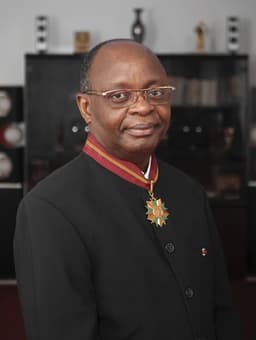
Nicephore Soglo
Politician · Modern
46.9Total
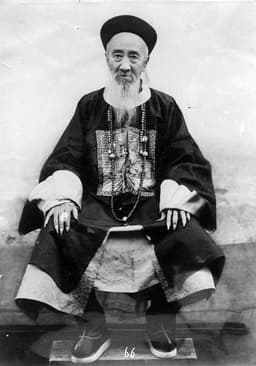
Zhang Zhidong
Politician · Modern
54.9Total
Basic Information
Born
1934
1837
Died
—
1909
Era
Modern
Modern
Nationality
Benin
China
Occupation
Politician
Politician
Civilization
Other
Eastern
Score Comparison
Military (10%)
36.0
36.6
Political (20%)
46.6
72.0
Influence (20%)
49.4
55.0
Legacy (20%)
41.7
56.0
Leadership (15%)
62.2
68.0
Strategy (15%)
42.3
25.0
TOTAL
46.9
54.9
Nicephore Soglo — Complete Timeline
1991 AD
Implemented economic reforms under IMF programsReform◆ Major
Soglo's government implemented structural adjustment programs mandated by the International Monetary Fund, including privatization of state enterprises and austerity measures. These reforms stabilized the economy but caused social hardship and protests.
Economic ReformIMFAusterity
Impact: national
Elected first democratically chosen President of BeninPolitical Action
Nicéphore Soglo won the 1991 presidential election, defeating incumbent Mathieu Kérékou. This marked Benin's first peaceful democratic transition of power and established Soglo as the first democratically elected president of the country.
DemocracyElectionBenin
Impact: nationalconstructive
1996 AD
Lost re-election to Mathieu KérékouPolitical Action◆ Major
Soglo was defeated in the 1996 presidential election by former dictator Mathieu K
ElectionDefeatDemocratic Transition
Impact: national
Zhang Zhidong — Complete Timeline
1889 AD
Governor-General of Huguang and implemented educational reformsReform◆ Major
As Governor-General of Huguang, Zhang Zhidong established modern schools, including the Lianghu Academy, and sent students abroad for technical training. These reforms aimed to modernize China's education system.
EducationReformModernization
Impact: regionalprogressive
1890 AD
Established the Hanyang Iron and Steel WorksInvention◆ Major
Zhang Zhidong founded the Hanyang Iron and Steel Works in Hubei, one of China's first modern industrial enterprises. The plant produced steel for railways, weapons, and infrastructure, advancing Qing industrialization.
IndustrializationSteelModernization
Impact: nationalconstructive
1898 AD
Promoted the 'Chinese learning as base, Western learning for use' doctrineCultural
Zhang Zhidong published 'Exhortation to Learn', advocating for preserving Confucian values while adopting Western technology and institutions. This doctrine became the ideological foundation of the Self-Strengthening Movement.
ReformConfucianismWestern Learning
Impact: nationalprogressive
This comparison has not been analyzed yet.
One-time AI generation (~1 minute). Scores and timeline are already available below.
Rankings
🥇
Zhang ZhidongLeader
Mil: 36.6Pol: 72.0Inf: 55.0
54.9
🥈
Nicephore Soglo
Mil: 36.0Pol: 46.6Inf: 49.4
46.9
+8.0 behind
How This Comparison Works
Algorithm
Each figure is scored on 6 dimensions (0—100 scale) based on structured historical data: Military (10%), Political (20%), Influence (20%), Legacy (20%), Leadership (15%), Strategy (15%). The weighted total produces the final ranking.
Data Sources
Scores are computed from structured sub-indicators in the database. Scale factors adjust for era (Ancient ×0.85, Modern ×1.0) and civilization size (Eastern ×1.05, Other ×0.80) to account for differences in population and military scale.
Maximum 3 Figures
Comparisons are limited to 2—3 figures to ensure readability and statistical meaningfulness.
Error Margins
±5 points per dimension — Sub-scores are derived from historical records with inherent uncertainty. Two figures within 5 points on a dimension should be considered roughly equivalent in that area.
Total Score Accuracy
±3 points overall — The weighted combination of 6 dimensions produces a total score with approximately ±3 points of uncertainty. Differences of less than 3 points are not statistically significant— the figures are effectively tied.
Known Limitations
- Historical records are incomplete and uneven across civilizations
- Figures from oral-tradition societies may be underrepresented
- Occupation labels can misclassify multi-role figures
- Scores measure capability and impact, not moral character
- Quantitative scoring is a comparison tool, not absolute truth
Capability Radar
Military (10%) — Battles & Warfare
Battles
24
5
Win Rate
22
5
Expansion
27
5
Political (20%) — Governance & Reform
Reform
40
75
Diplomacy
45
55
Economy
30
65
Influence (20%) — Cultural & Global Reach
Cultural
20
55
Global
15
45
Legacy (20%) — Historical Impact
Historical
30
60
Longevity
20
50
Leadership (15%) — Power & Stability
Tenure
35
60
Stability
25
40
Strategy (15%) — Tactics & Innovation
Strategy
32
15
Tactics
33
10
Reform
36
40
Similar Comparisons
Comments & Discussion
No comments yet. Be the first to share your thoughts!