Loading...
Alvaro Arzu vs Zhang Zhidong
Zhang Zhidong leads by 0.5 pts · 2 figures compared
…

Alvaro Arzu
Politician · Modern
54.4Total
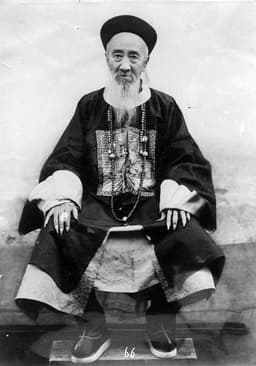
Zhang Zhidong
Politician · Modern
54.9Total
Basic Information
Born
1946
1837
Died
—
1909
Era
Modern
Modern
Nationality
Guatemala
China
Occupation
Politician
Politician
Civilization
Western
Eastern
Score Comparison
Military (10%)
49.3
36.6
Political (20%)
55.0
72.0
Influence (20%)
55.7
55.0
Legacy (20%)
49.2
56.0
Leadership (15%)
72.0
68.0
Strategy (15%)
42.1
25.0
TOTAL
54.4
54.9
Alvaro Arzu — Complete Timeline
1995 AD
Election as President of GuatemalaPolitical Action◆ Major
Arzú was elected president in a runoff election, defeating Alfonso Portillo. His victory represented a shift toward center-right politics and a mandate to pursue peace negotiations with the URNG guerrillas, which he had campaigned on.
ElectionDemocracyPeace Mandate
Impact: nationalconstructive
1996 AD
Implementation of economic liberalization policiesReform
Arzú's government implemented neoliberal economic reforms, including privatization of state-owned enterprises, trade liberalization, and fiscal austerity. These policies aimed to attract foreign investment but also increased inequality and social unrest.
NeoliberalismPrivatizationEconomic Reform
Impact: national
Signing of the Guatemalan Peace AccordsPolitical Action
Arzú signed the final peace accords with the Guatemalan National Revolutionary Unity (URNG), ending 36 years of civil war. The accords included provisions for human rights, indigenous rights, land reform, and demilitarization, though implementation was incomplete.
Peace AccordsCivil War EndURNG
Impact: nationalconstructive
Zhang Zhidong — Complete Timeline
1889 AD
Governor-General of Huguang and implemented educational reformsReform◆ Major
As Governor-General of Huguang, Zhang Zhidong established modern schools, including the Lianghu Academy, and sent students abroad for technical training. These reforms aimed to modernize China's education system.
EducationReformModernization
Impact: regionalprogressive
1890 AD
Established the Hanyang Iron and Steel WorksInvention◆ Major
Zhang Zhidong founded the Hanyang Iron and Steel Works in Hubei, one of China's first modern industrial enterprises. The plant produced steel for railways, weapons, and infrastructure, advancing Qing industrialization.
IndustrializationSteelModernization
Impact: nationalconstructive
1898 AD
Promoted the 'Chinese learning as base, Western learning for use' doctrineCultural
Zhang Zhidong published 'Exhortation to Learn', advocating for preserving Confucian values while adopting Western technology and institutions. This doctrine became the ideological foundation of the Self-Strengthening Movement.
ReformConfucianismWestern Learning
Impact: nationalprogressive
Expert Analysis
Origins
Alvaro Arzu was born on March 14, 1946, in Guatemala City into a wealthy political family. His father was a politician and businessman. Arzu studied at the University of San Carlos and later at the University of Texas, where he earned a degree in economics. He began his career in business and banking before entering politics.
Zhang Zhidong was born on September 2, 1837, in Xingyi, Guizhou, China, into a scholarly official family. He passed the imperial examinations at a young age, earning the jinshi degree in 1863. He served in various provincial posts before becoming a leading reformer in the late Qing dynasty.
Rise to Power
Arzu entered politics in the 1970s, serving as mayor of Guatemala City from 1986 to 1990. He gained national prominence for his administrative efficiency and anti-corruption efforts. In 1990, he ran for president but lost. He ran again in 1995 and won, defeating Alfonso Portillo in a runoff. His victory was seen as a mandate for peace and economic reform.
Zhang Zhidong rose through the ranks of the Qing bureaucracy, serving as governor of Shanxi and later as Governor-General of Huguang. He became a key figure in the Self-Strengthening Movement, advocating for military and industrial modernization. His influence peaked in the 1890s, when he published 'Exhortation to Learn' and implemented reforms in education and industry.
Leadership & Governance
Arzu's leadership style was pragmatic and centrist. He prioritized ending the 36-year civil war, signing the Guatemalan Peace Accords in 1996. The accords addressed human rights, indigenous rights, and economic inequality. He also implemented neoliberal economic policies, including privatization and trade liberalization, which boosted growth but increased inequality. His political score of 55.0 reflects his ability to navigate a divided society.
Zhang Zhidong was a conservative reformer who sought to strengthen China through selective Westernization. He promoted the doctrine 'Chinese learning as base, Western learning for use,' which aimed to preserve Confucian values while adopting Western technology. He founded the Hanyang Iron and Steel Works in 1890, a major industrial enterprise, and established modern schools. His political score of 72.0 indicates his effectiveness within the Qing system, but his influence was limited by imperial resistance.
Triumph & Tragedy
Arzu's greatest triumph was the peace accords, which ended one of Latin America's longest civil wars. He also presided over economic growth and infrastructure development. His failures include a 1999 referendum that rejected constitutional reforms needed to implement the accords, and allegations of corruption during his tenure. His legacy score of 49.2 reflects mixed long-term outcomes.
Zhang Zhidong's triumphs include the Hanyang Iron and Steel Works, which became a symbol of Chinese industrialization, and his educational reforms that produced a generation of modern thinkers. His tragedy lies in the limitations of his reforms: the Self-Strengthening Movement failed to prevent the Qing dynasty's collapse, and his doctrine was criticized for being too conservative. His legacy score of 56.0 highlights his lasting impact on Chinese modernization.
Character & Destiny
Arzu was known as a pragmatic negotiator, willing to make compromises for peace. His character shaped his destiny: his ability to bring warring parties to the table was his greatest strength, but his top-down approach alienated grassroots movements. Historians assess him as a transitional figure who ended war but failed to transform the underlying social structure.
Zhang Zhidong was a dedicated Confucian scholar who believed in gradual reform. His character reflected the tensions of late Qing China: loyal to the dynasty yet aware of its weaknesses. His destiny was to be a reformer whose efforts were too little, too late. Historians view him as a key figure in China's modernization, but one who could not overcome systemic inertia.
Legacy
Arzu's legacy is tied to the peace accords, which remain a framework for Guatemalan society. However, subsequent governments struggled with implementation, and violence persists. His economic policies left a mixed record: growth without equity. His influence score of 55.7 reflects his role as a peacemaker but limited global impact.
Zhang Zhidong's legacy is more enduring. The Hanyang Iron and Steel Works evolved into a major state-owned enterprise. His educational reforms laid the groundwork for modern Chinese education. The doctrine of 'Chinese learning as base, Western learning for use' influenced subsequent thinkers, including Mao Zedong. His influence score of 55.0 is comparable to Arzu's, but his long-term impact on China's development is arguably greater.
Conclusion
Comparing Alvaro Arzu and Zhang Zhidong reveals two reformers who faced different contexts: Arzu ended a civil war but left unresolved social issues; Zhang modernized parts of China but within a dying empire. Quantitatively, Zhang scores higher in political (72.0 vs 55.0) and legacy (56.0 vs 49.2), while Arzu leads in leadership (72.0 vs 68.0). Overall, Zhang Zhidong had greater impact because his reforms influenced China's trajectory for decades, while Arzu's peace accords, though significant, did not fundamentally alter Guatemala's long-term development. Zhang's total score of 54.9 edges Arzu's 54.4, reflecting a narrow but meaningful difference in historical weight.
Rankings
🥇
Zhang ZhidongLeader
Mil: 36.6Pol: 72.0Inf: 55.0
54.9
🥈
Alvaro Arzu
Mil: 49.3Pol: 55.0Inf: 55.7
54.4
+0.5 behind
How This Comparison Works
Algorithm
Each figure is scored on 6 dimensions (0—100 scale) based on structured historical data: Military (10%), Political (20%), Influence (20%), Legacy (20%), Leadership (15%), Strategy (15%). The weighted total produces the final ranking.
Data Sources
Scores are computed from structured sub-indicators in the database. Scale factors adjust for era (Ancient ×0.85, Modern ×1.0) and civilization size (Eastern ×1.05, Other ×0.80) to account for differences in population and military scale.
Maximum 3 Figures
Comparisons are limited to 2—3 figures to ensure readability and statistical meaningfulness.
Error Margins
±5 points per dimension — Sub-scores are derived from historical records with inherent uncertainty. Two figures within 5 points on a dimension should be considered roughly equivalent in that area.
Total Score Accuracy
±3 points overall — The weighted combination of 6 dimensions produces a total score with approximately ±3 points of uncertainty. Differences of less than 3 points are not statistically significant— the figures are effectively tied.
Known Limitations
- Historical records are incomplete and uneven across civilizations
- Figures from oral-tradition societies may be underrepresented
- Occupation labels can misclassify multi-role figures
- Scores measure capability and impact, not moral character
- Quantitative scoring is a comparison tool, not absolute truth
Capability Radar
Military (10%) — Battles & Warfare
Battles
27
5
Win Rate
33
5
Expansion
37
5
Political (20%) — Governance & Reform
Reform
70
75
Diplomacy
75
55
Economy
55
65
Influence (20%) — Cultural & Global Reach
Cultural
30
55
Global
45
45
Legacy (20%) — Historical Impact
Historical
55
60
Longevity
40
50
Leadership (15%) — Power & Stability
Tenure
60
60
Stability
50
40
Strategy (15%) — Tactics & Innovation
Strategy
39
15
Tactics
41
10
Reform
42
40
Similar Comparisons
Comments & Discussion
No comments yet. Be the first to share your thoughts!