Loading...
Dilma Rousseff vs Nicephore Soglo
Nicephore Soglo leads by 1.2 pts · 2 figures compared
…

Dilma Rousseff
Politician · Modern
45.7Total
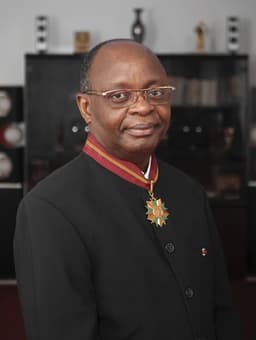
Nicephore Soglo
Politician · Modern
46.9Total
Basic Information
Born
1947
1934
Died
—
—
Era
Modern
Modern
Nationality
Brazil
Benin
Occupation
Politician
Politician
Civilization
Western
Other
Score Comparison
Military (10%)
14.2
36.0
Political (20%)
40.8
46.6
Influence (20%)
55.7
49.4
Legacy (20%)
43.3
41.7
Leadership (15%)
64.0
62.2
Strategy (15%)
38.2
42.3
TOTAL
45.7
46.9
Dilma Rousseff — Complete Timeline
2003 AD
Appointed Minister of Mines and EnergyPolitical Action
Rousseff was appointed Minister of Mines and Energy by President Lula in 2003. She oversaw the development of the pre-salt oil reserves and the expansion of Brazil's energy infrastructure.
MinistryEnergyBrazil
Impact: nationalconstructive
2005 AD
Appointed Chief of Staff of the PresidencyPolitical Action◆ Major
Rousseff was appointed Chief of Staff of the Presidency by President Lula in 2005, becoming his top advisor. She played a key role in coordinating government policies and was later chosen as Lula's successor.
Chief of StaffGovernmentBrazil
Impact: nationalconstructive
2010 AD
Elected President of BrazilPolitical Action
Dilma Rousseff was elected president of Brazil in 2010 as the candidate of the Workers' Party (PT), succeeding Luiz In
PresidencyWomen in PoliticsBrazil
Impact: nationalconstructive
2014 AD
Re-elected President of BrazilPolitical Action◆ Major
Rousseff was re-elected president in 2014, winning a narrow second-round victory against A
Re-electionPolitical CrisisBrazil
Impact: nationalconstructive
2016 AD
Impeached and Removed from OfficePolitical Action
Rousseff was impeached by the Brazilian Congress in 2016 on charges of fiscal mismanagement. She was removed from office on August 31, 2016, and replaced by Vice President Michel Temer. The impeachment was widely seen as politically motivated.
ImpeachmentPolitical CrisisBrazil
Impact: nationaltragic
Nicephore Soglo — Complete Timeline
1991 AD
Implemented economic reforms under IMF programsReform◆ Major
Soglo's government implemented structural adjustment programs mandated by the International Monetary Fund, including privatization of state enterprises and austerity measures. These reforms stabilized the economy but caused social hardship and protests.
Economic ReformIMFAusterity
Impact: national
Elected first democratically chosen President of BeninPolitical Action
Nicéphore Soglo won the 1991 presidential election, defeating incumbent Mathieu Kérékou. This marked Benin's first peaceful democratic transition of power and established Soglo as the first democratically elected president of the country.
DemocracyElectionBenin
Impact: nationalconstructive
1996 AD
Lost re-election to Mathieu KérékouPolitical Action◆ Major
Soglo was defeated in the 1996 presidential election by former dictator Mathieu K
ElectionDefeatDemocratic Transition
Impact: national
Expert Analysis
Origins
Dilma Rousseff was born on December 14, 1947, in Belo Horizonte, Brazil, to a Bulgarian immigrant father and a Brazilian mother. She grew up in a middle-class family and was exposed to political activism early. She studied economics at the Federal University of Minas Gerais and later joined leftist guerrilla groups opposing the Brazilian military dictatorship, leading to her imprisonment from 1970 to 1972. Nicéphore Soglo was born on November 29, 1934, in Lomé, Togo (then French Togoland), to a Beninese father and a Togolese mother. He studied law in France and became a magistrate in Benin. His early career included serving as a judge and later as a minister under President Mathieu Kérékou, gaining experience in governance.
Rise to Power
Rousseff's rise came through her technical expertise and loyalty to Luiz Inácio Lula da Silva. After her imprisonment, she worked in state government in Rio Grande do Sul and later became Minister of Mines and Energy in 2003, where she oversaw the pre-salt oil reserves. Lula appointed her Chief of Staff in 2005, and she was his chosen successor for the 2010 presidential election, which she won with 56% of the vote. Soglo rose to prominence as a technocrat under Kérékou, serving as Minister of Finance and later Prime Minister in 1990. He led the transition to democracy and won the 1991 presidential election against Kérékou, becoming Benin's first democratically elected president.
Leadership & Governance
Rousseff's leadership style was technocratic and hands-on, but she struggled with political coalition-building. She continued Lula's social programs like Bolsa Família but faced an economic downturn after 2014. Her government implemented fiscal policies that led to a recession, with GDP contracting 3.8% in 2015. Soglo's governance focused on economic liberalization under IMF programs, privatizing state enterprises and reducing inflation from 30% to single digits. However, his austerity measures caused social unrest. Soglo scored 62.2 in leadership, while Rousseff scored 64.0, reflecting their different contexts—Rousseff managing a larger economy, Soglo navigating a fragile democracy.
Triumph & Tragedy
Rousseff's greatest triumph was being Brazil's first female president, expanding social programs and maintaining growth until 2014. Her tragedy was her impeachment in 2016 on charges of fiscal mismanagement, stemming from a deep recession and corruption scandals in her coalition. Soglo's triumph was overseeing Benin's first peaceful democratic transition and stabilizing the economy. His tragedy was losing re-election in 1996 to Kérékou, partly due to unpopular reforms. Rousseff's political score of 40.8 reflects her failed coalition, while Soglo's 46.6 indicates better political navigation.
Character & Destiny
Rousseff was known for her stubbornness and lack of political flexibility, which alienated allies. Her technocratic focus ignored the need for coalition management, leading to her downfall. Soglo was pragmatic and reform-oriented, but his austerity measures cost him popular support. Both saw their fates tied to economic performance—Rousseff's recession and Soglo's IMF cuts. Rousseff's strategy score of 38.2 suggests poor strategic decisions, while Soglo's 42.3 indicates moderate strategic planning.
Legacy
Rousseff's legacy is mixed: she broke gender barriers but is associated with economic crisis and impeachment. Her influence on Brazil's politics is limited, with her party's reputation damaged. Soglo is remembered as a founding father of Benin's democracy, setting a precedent for peaceful transitions. His legacy score of 41.7 is slightly below Rousseff's 43.3, but his institutional impact—democratic consolidation—may be more enduring. Soglo's total score of 46.9 edges Rousseff's 45.7, reflecting his role in a critical democratic transition.
Conclusion
While Rousseff's presidency was consequential for Brazil, Soglo's impact on Benin's democratic trajectory is more profound. Soglo's peaceful transfer of power in 1991 and 1996 established norms that endure. Rousseff's impeachment highlighted institutional weaknesses but did not create lasting democratic structures. Soglo's total score of 46.9 versus Rousseff's 45.7, combined with his foundational role in democracy, positions him as having greater impact relative to their contexts.
Rankings
🥇
Nicephore SogloLeader
Mil: 36.0Pol: 46.6Inf: 49.4
46.9
🥈
Dilma Rousseff
Mil: 14.2Pol: 40.8Inf: 55.7
45.7
+1.2 behind
How This Comparison Works
Algorithm
Each figure is scored on 6 dimensions (0—100 scale) based on structured historical data: Military (10%), Political (20%), Influence (20%), Legacy (20%), Leadership (15%), Strategy (15%). The weighted total produces the final ranking.
Data Sources
Scores are computed from structured sub-indicators in the database. Scale factors adjust for era (Ancient ×0.85, Modern ×1.0) and civilization size (Eastern ×1.05, Other ×0.80) to account for differences in population and military scale.
Maximum 3 Figures
Comparisons are limited to 2—3 figures to ensure readability and statistical meaningfulness.
Error Margins
±5 points per dimension — Sub-scores are derived from historical records with inherent uncertainty. Two figures within 5 points on a dimension should be considered roughly equivalent in that area.
Total Score Accuracy
±3 points overall — The weighted combination of 6 dimensions produces a total score with approximately ±3 points of uncertainty. Differences of less than 3 points are not statistically significant— the figures are effectively tied.
Known Limitations
- Historical records are incomplete and uneven across civilizations
- Figures from oral-tradition societies may be underrepresented
- Occupation labels can misclassify multi-role figures
- Scores measure capability and impact, not moral character
- Quantitative scoring is a comparison tool, not absolute truth
Capability Radar
Military (10%) — Battles & Warfare
Battles
20
24
Win Rate
25
22
Expansion
26
27
Political (20%) — Governance & Reform
Reform
30
40
Diplomacy
40
45
Economy
25
30
Influence (20%) — Cultural & Global Reach
Cultural
35
20
Global
30
15
Legacy (20%) — Historical Impact
Historical
40
30
Longevity
20
20
Leadership (15%) — Power & Stability
Tenure
55
35
Stability
20
25
Strategy (15%) — Tactics & Innovation
Strategy
30
32
Tactics
36
33
Reform
40
36
Similar Comparisons
Comments & Discussion
No comments yet. Be the first to share your thoughts!