Loading...
Kurt Waldheim vs Zhang Zhidong
Zhang Zhidong leads by 2.0 pts · 2 figures compared
…

Kurt Waldheim
Politician · Modern
52.9Total
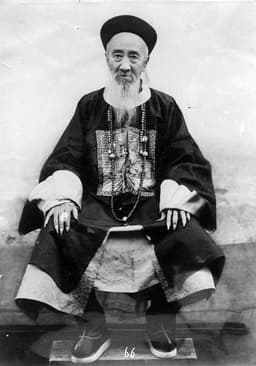
Zhang Zhidong
Politician · Modern
54.9Total
Basic Information
Born
1918
1837
Died
2007
1909
Era
Modern
Modern
Nationality
Austria
China
Occupation
Politician
Politician
Civilization
Western
Eastern
Score Comparison
Military (10%)
50.0
36.6
Political (20%)
54.7
72.0
Influence (20%)
54.9
55.0
Legacy (20%)
42.5
56.0
Leadership (15%)
68.0
68.0
Strategy (15%)
51.9
25.0
TOTAL
52.9
54.9
Kurt Waldheim — Complete Timeline
1972 AD
Elected Secretary-General of the United NationsPolitical Action◆ Major
Kurt Waldheim became the fourth Secretary-General of the United Nations, serving two terms from 1972 to 1981. His election was supported by both Western and Soviet blocs, and he focused on peacekeeping and development.
UN Secretary-GeneralLeadershipCold War
Impact: globalconstructive
1973 AD
Oversaw UN peacekeeping in the Middle EastPolitical Action◆ Major
Waldheim managed UN peacekeeping operations during the Yom Kippur War and its aftermath, including the deployment of UNEF II to supervise the ceasefire between Israel and Egypt.
Middle EastPeacekeepingYom Kippur War
Impact: regional
1986 AD
Elected President of AustriaPolitical Action◆ Major
Waldheim was elected President of Austria, but his campaign was overshadowed by revelations about his wartime service in the German army. He served as president until 1992, despite international isolation.
PresidencyAustriaControversy
Impact: national
Revelations of Nazi pastPolitical Action◆ Major
During his presidential campaign, documents revealed Waldheim had served as a Wehrmacht officer in the Balkans and may have been involved in Nazi war crimes. He denied knowledge, but the controversy led to his diplomatic isolation.
Nazi PastWar CrimesControversy
Impact: globaldestructive
1987 AD
Placed on the US watch listPolitical Action◆ Major
The United States placed Waldheim on a watch list, barring him from entering the country due to suspicions of involvement in Nazi war crimes. This further damaged his reputation and Austria's international standing.
US SanctionsDiplomatic IsolationWar Crimes
Impact: globaldestructive
Zhang Zhidong — Complete Timeline
1889 AD
Governor-General of Huguang and implemented educational reformsReform◆ Major
As Governor-General of Huguang, Zhang Zhidong established modern schools, including the Lianghu Academy, and sent students abroad for technical training. These reforms aimed to modernize China's education system.
EducationReformModernization
Impact: regionalprogressive
1890 AD
Established the Hanyang Iron and Steel WorksInvention◆ Major
Zhang Zhidong founded the Hanyang Iron and Steel Works in Hubei, one of China's first modern industrial enterprises. The plant produced steel for railways, weapons, and infrastructure, advancing Qing industrialization.
IndustrializationSteelModernization
Impact: nationalconstructive
1898 AD
Promoted the 'Chinese learning as base, Western learning for use' doctrineCultural
Zhang Zhidong published 'Exhortation to Learn', advocating for preserving Confucian values while adopting Western technology and institutions. This doctrine became the ideological foundation of the Self-Strengthening Movement.
ReformConfucianismWestern Learning
Impact: nationalprogressive
Expert Analysis
Origins
Kurt Waldheim was born on December 21, 1918, in Sankt Andrä-Wördern, Austria, into a Catholic family. His father was a school inspector. Waldheim studied law at the University of Vienna, earning a doctorate in 1944. He joined the Austrian diplomatic service in 1945.
Zhang Zhidong was born on September 2, 1837, in Xingyi, Guizhou, China, into a scholar-official family. He passed the imperial civil service examinations, earning the jinshi degree in 1863. He served in various provincial posts before becoming a leading reformer.
Rise to Power
Waldheim's diplomatic career advanced steadily: he served as Austria's ambassador to Canada (1958-1960) and later as Permanent Representative to the UN (1964-1968). He became Austria's Foreign Minister in 1968. In 1971, he was elected UN Secretary-General, taking office on January 1, 1972, with support from both Western and Soviet blocs.
Zhang Zhidong rose through the Qing bureaucracy, becoming Governor of Shanxi in 1882. His key turning point came as Governor-General of Huguang (1889-1907), where he implemented modernization projects. He gained influence as a leading voice for moderate reform within the Qing court.
Leadership & Governance
As UN Secretary-General, Waldheim managed international diplomacy during the Cold War. He oversaw peacekeeping operations, including UNEF II after the Yom Kippur War in 1973. His leadership style was cautious and bureaucratic, focusing on maintaining consensus. He scored 68.0 in Leadership, reflecting competent but uncharismatic management.
Zhang Zhidong governed Huguang province with a pragmatic approach. He founded the Hanyang Iron and Steel Works in 1890, one of China's first modern steel mills, and established modern schools like Lianghu Academy. His doctrine "Chinese learning as base, Western learning for use" shaped reform. His Political score of 72.0 reflects his success in navigating Qing politics while promoting change.
Triumph & Tragedy
Waldheim's greatest success was his role in expanding UN peacekeeping and mediating conflicts, such as the Cyprus talks. However, his legacy was destroyed by revelations during his 1986 presidential campaign: documents showed he served as a Wehrmacht officer in the Balkans and may have been involved in Nazi reprisals. He was placed on the US watch list, barring him from entering the US. His total score of 52.9 reflects this downfall.
Zhang Zhidong's greatest achievement was industrializing parts of China, particularly the Hanyang Iron and Steel Works, which produced steel for railways and military. He also modernized education, sending students to Japan and Europe. However, his reforms were limited by the Qing dynasty's decline; the Self-Strengthening Movement failed to prevent the 1911 Revolution. His total score of 54.9 is slightly higher than Waldheim's.
Character & Destiny
Waldheim was meticulous and diplomatic but evasive about his past. His decision to conceal his wartime service defined his fate, as the controversy overshadowed his UN achievements. Historians assess him as a competent bureaucrat whose moral failings undermined his legacy.
Zhang Zhidong was a pragmatic reformer who believed in gradual change within the Confucian framework. His character—cautious yet innovative—allowed him to push modernization while maintaining imperial support. However, his inability to address fundamental structural issues contributed to the Qing's collapse.
Legacy
Waldheim's legacy is permanently tarnished by his Nazi associations. He remains a cautionary tale about hidden pasts. His UN work, though significant, is largely forgotten. Legacy score: 42.5.
Zhang Zhidong's legacy is more positive: his industrial and educational projects laid groundwork for China's modernization. His "Chinese learning as base, Western learning for use" influenced later reformers. Legacy score: 56.0.
Conclusion
Zhang Zhidong had greater impact. Despite the Qing dynasty's fall, his concrete contributions to China's industrialization and education outlast Waldheim's diplomatic achievements, which were overshadowed by scandal. Zhang's total score of 54.9 versus Waldheim's 52.9 reflects this, but the gap is wider in legacy and political effectiveness. Zhang's reforms, though incomplete, directly shaped modern China, while Waldheim's legacy is defined by his failures.
Rankings
🥇
Zhang ZhidongLeader
Mil: 36.6Pol: 72.0Inf: 55.0
54.9
🥈
Kurt Waldheim
Mil: 50.0Pol: 54.7Inf: 54.9
52.9
+2.0 behind
How This Comparison Works
Algorithm
Each figure is scored on 6 dimensions (0—100 scale) based on structured historical data: Military (10%), Political (20%), Influence (20%), Legacy (20%), Leadership (15%), Strategy (15%). The weighted total produces the final ranking.
Data Sources
Scores are computed from structured sub-indicators in the database. Scale factors adjust for era (Ancient ×0.85, Modern ×1.0) and civilization size (Eastern ×1.05, Other ×0.80) to account for differences in population and military scale.
Maximum 3 Figures
Comparisons are limited to 2—3 figures to ensure readability and statistical meaningfulness.
Error Margins
±5 points per dimension — Sub-scores are derived from historical records with inherent uncertainty. Two figures within 5 points on a dimension should be considered roughly equivalent in that area.
Total Score Accuracy
±3 points overall — The weighted combination of 6 dimensions produces a total score with approximately ±3 points of uncertainty. Differences of less than 3 points are not statistically significant— the figures are effectively tied.
Known Limitations
- Historical records are incomplete and uneven across civilizations
- Figures from oral-tradition societies may be underrepresented
- Occupation labels can misclassify multi-role figures
- Scores measure capability and impact, not moral character
- Quantitative scoring is a comparison tool, not absolute truth
Capability Radar
Military (10%) — Battles & Warfare
Battles
29
5
Win Rate
30
5
Expansion
36
5
Political (20%) — Governance & Reform
Reform
30
75
Diplomacy
55
55
Economy
40
65
Influence (20%) — Cultural & Global Reach
Cultural
20
55
Global
50
45
Legacy (20%) — Historical Impact
Historical
30
60
Longevity
25
50
Leadership (15%) — Power & Stability
Tenure
60
60
Stability
45
40
Strategy (15%) — Tactics & Innovation
Strategy
36
15
Tactics
41
10
Reform
45
40
Similar Comparisons
Comments & Discussion
No comments yet. Be the first to share your thoughts!