Loading...
Alan Garcia vs Neville Chamberlain
Neville Chamberlain leads by 10.8 pts · 2 figures compared
…

Alan Garcia
Politician · Modern
46.4Total
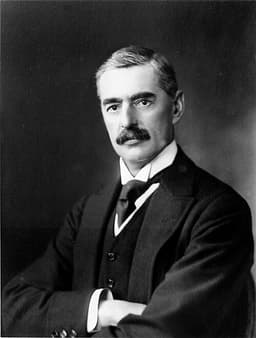
Neville Chamberlain
Politician · Modern
57.2Total
Basic Information
Born
1949
1869
Died
—
1940
Era
Modern
Modern
Nationality
Peru
United Kingdom
Occupation
Politician
Politician
Civilization
Western
Western
Score Comparison
Military (10%)
12.4
50.0
Political (20%)
46.6
68.0
Influence (20%)
51.0
60.0
Legacy (20%)
41.7
52.0
Leadership (15%)
74.0
65.0
Strategy (15%)
39.1
42.1
TOTAL
46.4
57.2
Alan Garcia — Complete Timeline
1985 AD
First Presidency and Hyperinflation (1985-1990)Political Action◆ Major
Alan García assumed the presidency of Peru at age 36. His administration implemented heterodox economic policies, including price controls and a refusal to pay foreign debt. This led to hyperinflation exceeding 7,000% annually, economic collapse, and the rise of the Shining Path insurgency.
Economic CrisisHyperinflationDebt Crisis
Impact: nationaldestructive
2006 AD
Second Presidency and Economic Growth (2006-2011)Political Action◆ Major
García won a second term, this time pursuing free-market policies. His administration oversaw a period of strong economic growth driven by high commodity prices and foreign investment. He signed a free trade agreement with the United States and expanded social programs, reducing poverty.
Economic GrowthFree TradePoverty Reduction
Impact: nationalconstructive
2019 AD
Corruption Scandals and Suicide (2019)Other◆ Major
García was implicated in the Odebrecht corruption scandal, accused of receiving bribes during his second term. Facing imminent arrest, he shot himself in his home in Lima. His death ended a major corruption investigation and highlighted the widespread impact of the Odebrecht case in Latin America.
CorruptionOdebrechtSuicide
Impact: regionaltragic
Neville Chamberlain — Complete Timeline
1938 AD
Munich AgreementPolitical Action
Chamberlain met Hitler in Munich and agreed to the cession of the Sudetenland from Czechoslovakia to Germany. Chamberlain returned to Britain claiming 'peace for our time'. The agreement was widely praised at first but later condemned as appeasement that encouraged Nazi aggression.
AppeasementNazi GermanyCzechoslovakia
Impact: global
1939 AD
Declaration of War on GermanyWar
Following the German invasion of Poland on 1 September 1939, Chamberlain issued an ultimatum to Germany. When no response came, Britain declared war on Germany on 3 September 1939, beginning the Second World War. Chamberlain announced the declaration in a radio broadcast.
World War IIDeclaration of WarPoland
Impact: global
British Guarantee to PolandPolitical Action◆ Major
After Germany occupied the rest of Czechoslovakia, Chamberlain's government issued a guarantee of Polish independence in March 1939. This marked a shift from appeasement to a policy of deterrence, committing Britain to defend Poland against German aggression.
PolandDeterrenceWorld War II
Impact: global
1940 AD
Resignation as Prime MinisterPolitical Action◆ Major
After the failure of the Norwegian campaign and a vote of confidence that saw his majority fall, Chamberlain resigned as Prime Minister in May 1940. He was succeeded by Winston Churchill, who formed a coalition government to lead Britain through the war.
ResignationWorld War IIChurchill
Impact: national
Expert Analysis
Origins
Alan García (1949–2019) was born in Lima, Peru, into a middle-class family. He studied law at the Pontifical Catholic University of Peru and later earned a doctorate in law from the University of Paris. His early political involvement was with the American Popular Revolutionary Alliance (APRA), a party with a long history of populism and social reform. García rose quickly within APRA, becoming its leader in 1982.
Neville Chamberlain (1869–1940) was born in Birmingham, England, into a wealthy political family—his father was Joseph Chamberlain, a prominent statesman. He attended Rugby School and then Birmingham University, studying metallurgy. He entered politics later, serving as Lord Mayor of Birmingham, Minister of Health, and Chancellor of the Exchequer before becoming Prime Minister in 1937.
Rise to Power
García became president in 1985 at age 36, the youngest in Peru's history. He won a landslide victory on a populist platform, promising to limit foreign debt payments and implement social reforms. His rise was fueled by public frustration with economic crisis and the previous government's austerity.
Chamberlain rose to power through steady administrative service. He was Chancellor of the Exchequer under Stanley Baldwin and succeeded him as Prime Minister in 1937. His rise was based on his reputation as a competent administrator, not on charismatic leadership. He faced the growing threat of Nazi Germany, which defined his premiership.
Leadership & Governance
García's first term (1985–1990) was marked by heterodox economic policies: price controls, exchange rate manipulation, and a refusal to pay foreign debt. This led to hyperinflation (over 7,000% in 1990), economic collapse, and increased violence from the Shining Path insurgency. In his second term (2006–2011), he reversed course, pursuing free-market policies, signing trade agreements, and overseeing a commodity-driven boom. Growth averaged over 7% annually, but corruption scandals tainted his legacy.
Chamberlain's governance centered on appeasement. He believed Hitler's demands were limited and that war could be avoided through diplomacy. The Munich Agreement (1938) ceded the Sudetenland to Germany. When Hitler broke the agreement by occupying the rest of Czechoslovakia in 1939, Chamberlain shifted to a policy of guarantees, pledging to defend Poland. After Germany invaded Poland, he declared war on September 3, 1939. His leadership during the early war was criticized as indecisive, leading to his resignation in 1940.
Triumph & Tragedy
García's greatest success was his second-term economic turnaround, which lifted many Peruvians out of poverty. His failure was the catastrophic first term, which destroyed Peru's economy and fueled insurgency. His suicide in 2019 while facing arrest for corruption was a tragic end.
Chamberlain's triumph was his early administrative reforms in housing and local government. His tragedy was the failure of appeasement, which allowed Hitler to grow stronger and precipitated World War II. He died in 1940, just months after resigning, widely reviled.
Character & Destiny
García was charismatic and intellectually confident, but also arrogant and unwilling to compromise. His early radicalism gave way to pragmatic neoliberalism, but his inability to escape corruption ultimately destroyed him. Historians score his leadership at 74.0, reflecting his ability to win elections and implement policies, but his strategy score is only 39.1, indicating poor long-term planning.
Chamberlain was methodical, cautious, and sincere in his desire for peace. However, he misjudged Hitler's nature and was slow to adapt. His political score of 68.0 reflects his parliamentary skills, but his military score of 50.0 shows his limitations in wartime. His legacy is permanently tied to appeasement.
Legacy
García is remembered in Peru as a figure of dramatic contrasts: a president who caused economic disaster and later presided over a boom, but who ended his life facing corruption charges. His influence score of 51.0 reflects his impact on Peruvian politics, but his legacy score of 41.7 is low due to the corruption.
Chamberlain's legacy is more global: his policy of appeasement is synonymous with failed diplomacy. He is often ranked among the worst British prime ministers. However, his early warnings about the need for rearmament and his role in building up Britain's air force are sometimes acknowledged. His total score of 57.2 exceeds García's 46.4, indicating a higher overall historical assessment.
Conclusion
While García's impact was largely confined to Peru and his economic policies had severe consequences, Chamberlain's decisions shaped the course of World War II and global history. Chamberlain's total score of 57.2 is 10.8 points higher than García's 46.4, reflecting his greater influence on world events. Despite his failures, Chamberlain's choices had a magnitude that García's did not. Therefore, Neville Chamberlain had a greater historical impact.
Rankings
🥇
Neville ChamberlainLeader
Mil: 50.0Pol: 68.0Inf: 60.0
57.2
🥈
Alan Garcia
Mil: 12.4Pol: 46.6Inf: 51.0
46.4
+10.8 behind
How This Comparison Works
Algorithm
Each figure is scored on 6 dimensions (0—100 scale) based on structured historical data: Military (10%), Political (20%), Influence (20%), Legacy (20%), Leadership (15%), Strategy (15%). The weighted total produces the final ranking.
Data Sources
Scores are computed from structured sub-indicators in the database. Scale factors adjust for era (Ancient ×0.85, Modern ×1.0) and civilization size (Eastern ×1.05, Other ×0.80) to account for differences in population and military scale.
Maximum 3 Figures
Comparisons are limited to 2—3 figures to ensure readability and statistical meaningfulness.
Error Margins
±5 points per dimension — Sub-scores are derived from historical records with inherent uncertainty. Two figures within 5 points on a dimension should be considered roughly equivalent in that area.
Total Score Accuracy
±3 points overall — The weighted combination of 6 dimensions produces a total score with approximately ±3 points of uncertainty. Differences of less than 3 points are not statistically significant— the figures are effectively tied.
Known Limitations
- Historical records are incomplete and uneven across civilizations
- Figures from oral-tradition societies may be underrepresented
- Occupation labels can misclassify multi-role figures
- Scores measure capability and impact, not moral character
- Quantitative scoring is a comparison tool, not absolute truth
Capability Radar
Military (10%) — Battles & Warfare
Battles
21
27
Win Rate
28
30
Expansion
27
35
Political (20%) — Governance & Reform
Reform
40
40
Diplomacy
45
30
Economy
30
50
Influence (20%) — Cultural & Global Reach
Cultural
25
30
Global
20
60
Legacy (20%) — Historical Impact
Historical
30
70
Longevity
20
60
Leadership (15%) — Power & Stability
Tenure
65
60
Stability
20
20
Strategy (15%) — Tactics & Innovation
Strategy
33
39
Tactics
32
39
Reform
40
43
Similar Comparisons
Comments & Discussion
No comments yet. Be the first to share your thoughts!