Loading...
Nestor Kirchner vs Truong Chinh
Nestor Kirchner leads by 2.8 pts · 2 figures compared
…
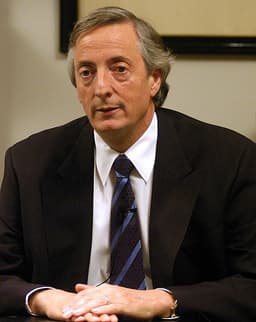
Nestor Kirchner
Politician · Modern
54.4Total
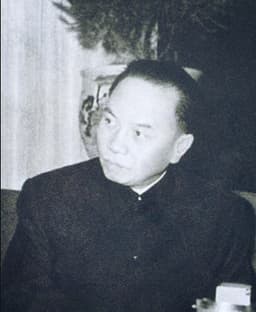
Truong Chinh
Politician · Modern
51.6Total
Basic Information
Born
1950
1907
Died
—
1988
Era
Modern
Modern
Nationality
Argentina
Vietnam
Occupation
Politician
Politician
Civilization
Western
Eastern
Score Comparison
Military (10%)
50.0
11.6
Political (20%)
59.3
68.0
Influence (20%)
57.2
56.4
Legacy (20%)
47.5
49.2
Leadership (15%)
66.0
68.0
Strategy (15%)
44.0
36.1
TOTAL
54.4
51.6
Nestor Kirchner — Complete Timeline
2003 AD
Oversaw strong economic recovery and growthReform◆ Major
Under Kirchner, Argentina experienced rapid economic growth, with GDP expanding by 8-9% annually from 2003 to 2007. This was driven by high commodity prices, a competitive exchange rate, and increased domestic demand, reducing poverty and unemployment.
Economic GrowthRecoveryPoverty Reduction
Impact: nationalconstructive
Elected President of ArgentinaPolitical Action◆ Major
On April 27, 2003, N
ElectionPeronismNew Leadership
Impact: national
Pushed for human rights trials and annulled pardonsPolitical Action◆ Major
In 2003, Kirchner pushed Congress to annul the 1990 pardons granted to military leaders by Menem. He also supported the reopening of human rights trials for Dirty War crimes. This led to the prosecution of hundreds of former officials.
Human RightsTransitional JusticeDirty War
Impact: nationalconstructive
2005 AD
Restructured Argentina's defaulted debtPolitical Action◆ Major
In 2005, Kirchner's government successfully restructured 76% of Argentina's defaulted sovereign debt, offering bondholders a steep haircut of about 65%. This allowed Argentina to return to international capital markets and reduced the debt burden.
Debt RestructuringEconomic PolicySovereign Default
Impact: globalconstructive
2007 AD
Did not seek re-election, paving way for his wifePolitical Action◆ Major
In 2007, Néstor Kirchner chose not to run for re-election, instead supporting his wife, Cristina Fernández de Kirchner, as the Peronist candidate. She won the presidency. This decision established a political dynasty in Argentina.
Political DynastySuccessionPeronism
Impact: national
Truong Chinh — Complete Timeline
1941 AD
General Secretary of the Communist PartyPolitical Action◆ Major
Truong Chinh became General Secretary of the Communist Party of Vietnam, serving during the First Indochina War. He was a close ally of Ho Chi Minh and helped lead the resistance against French colonial rule.
General SecretaryFirst Indochina WarHo Chi Minh
Impact: nationalconstructive
1950 AD
Land reform theoristCultural◆ Major
Truong Chinh was a leading communist theorist who advocated for radical land reform in North Vietnam. His policies led to the redistribution of land from landlords to peasants, but also caused widespread famine and repression.
Land reformCommunist theoryFamine
Impact: nationaldestructive
1956 AD
Resignation over land reform failuresPolitical Action◆ Major
Truong Chinh resigned as General Secretary after the disastrous land reform campaign caused widespread unrest and famine. He was blamed for the excesses but remained a senior party figure.
ResignationLand reformFamine
Impact: nationaltragic
1960 AD
Chairman of the National AssemblyPolitical Action
Truong Chinh was elected Chairman of the National Assembly of Vietnam, a largely ceremonial role. He continued to influence party policy and ideology until his death.
National AssemblyChairmanCeremonial
Impact: nationalconstructive
Expert Analysis
Origins
Nestor Kirchner was born on February 25, 1950, in Río Gallegos, Santa Cruz, Argentina. He studied law at the National University of La Plata and joined the Peronist Youth. His early political career was in Santa Cruz, where he became mayor of Río Gallegos in 1987 and governor in 1991. Kirchner's provincial leadership focused on public works and fiscal discipline.
Truong Chinh was born on February 9, 1907, in Hanh Thien, Nam Dinh Province, Vietnam. His birth name was Dang Xuan Khu. He studied at the Lycée Albert Sarraut in Hanoi and became involved in anti-colonial movements. He joined the Communist Party of Vietnam in 1930 and adopted the pseudonym Truong Chinh, meaning "Long March." He was a Marxist theorist and close associate of Ho Chi Minh.
Rise to Power
Kirchner rose to national prominence after Argentina's 2001 economic crisis. In 2003, he won the presidency with 22% of the first-round vote after Carlos Menem withdrew from the runoff. Kirchner's campaign emphasized anti-corruption and economic recovery. His political score of 59.3 reflects his ability to navigate the Peronist party and consolidate power.
Truong Chinh rose through the Communist Party ranks as a theoretician. He became General Secretary in 1941, succeeding Ho Chi Minh. He led the party during the First Indochina War against France. His political score of 68.0 indicates his influence within the party, but his strategy score of 36.1 highlights flawed policy implementations.
Leadership & Governance
Kirchner's leadership style was pragmatic and populist. He restructured 76% of Argentina's defaulted debt in 2005, offering a 65% haircut to bondholders. This allowed Argentina to return to international markets. He oversaw 8-9% annual GDP growth from 2003 to 2007, driven by high commodity prices and export taxes. Kirchner also pushed for human rights trials, annulling pardons for military juntas. His leadership score of 66.0 reflects effective crisis management.
Truong Chinh was a dogmatic communist who implemented radical land reform in North Vietnam in 1953-1956. His policies redistributed land from landlords to peasants, but execution led to executions of thousands and widespread famine. The campaign caused an estimated 15,000 deaths and mass unrest. He resigned as General Secretary in 1956, taking responsibility for the failures. His leadership score of 68.0 is tempered by the disastrous outcomes of his land reform.
Triumph & Tragedy
Kirchner's greatest success was stabilizing Argentina's economy after the 2001 default. He reduced unemployment from 20% to 8% and poverty from 54% to 20%. His human rights legacy includes reopening trials for crimes during the dictatorship. However, his economic model relied on commodity exports and created inflation, which later reached 20% annually. Kirchner's strategy score of 44.0 reflects short-term gains without structural reforms.
Truong Chinh's triumph was his role in the First Indochina War, where he helped guide the communist victory against France in 1954. He also contributed to Marxist theory in Vietnam. His tragedy was the land reform catastrophe, which tarnished his reputation. He later served as Chairman of the National Assembly (1960-1981) and briefly as General Secretary again in 1986, but his influence waned.
Character & Destiny
Kirchner was known for his confrontational style and decisiveness. He often clashed with the media and foreign creditors. His decision not to seek re-election in 2007, instead supporting his wife Cristina Kirchner, was a strategic move to maintain power through a surrogate. His character shaped Argentina's political realignment toward leftist populism.
Truong Chinh was a loyal communist ideologue who prioritized doctrinal purity over practical outcomes. His adherence to Marxist land reform theories led to disaster. He accepted responsibility and resigned, showing a sense of party discipline. His character made him a reliable but inflexible leader.
Legacy
Kirchner's legacy is mixed. He is credited with rescuing Argentina from crisis, but his policies sowed the seeds of future economic problems. The Kirchner dynasty influenced Argentine politics for over a decade. His legacy score of 47.5 reflects this duality.
Truong Chinh's legacy is primarily as a communist theorist and architect of failed land reform. He is remembered as a party loyalist who served in various roles. His legacy score of 49.2 is slightly higher than Kirchner's, but his negative impact on millions is undeniable.
Conclusion
Nestor Kirchner had a greater impact on his nation than Truong Chinh. Kirchner's total score of 54.4 versus Chinh's 51.6 reflects this. Kirchner's economic recovery and human rights advances directly improved the lives of millions, whereas Chinh's land reform caused suffering. Kirchner's pragmatic leadership contrasts with Chinh's ideological rigidity. Despite flaws, Kirchner's crisis management was more effective than Chinh's doctrinal approach. Therefore, Kirchner emerges as the more successful leader.
Rankings
🥇
Nestor KirchnerLeader
Mil: 50.0Pol: 59.3Inf: 57.2
54.4
🥈
Truong Chinh
Mil: 11.6Pol: 68.0Inf: 56.4
51.6
+2.8 behind
How This Comparison Works
Algorithm
Each figure is scored on 6 dimensions (0—100 scale) based on structured historical data: Military (10%), Political (20%), Influence (20%), Legacy (20%), Leadership (15%), Strategy (15%). The weighted total produces the final ranking.
Data Sources
Scores are computed from structured sub-indicators in the database. Scale factors adjust for era (Ancient ×0.85, Modern ×1.0) and civilization size (Eastern ×1.05, Other ×0.80) to account for differences in population and military scale.
Maximum 3 Figures
Comparisons are limited to 2—3 figures to ensure readability and statistical meaningfulness.
Error Margins
±5 points per dimension — Sub-scores are derived from historical records with inherent uncertainty. Two figures within 5 points on a dimension should be considered roughly equivalent in that area.
Total Score Accuracy
±3 points overall — The weighted combination of 6 dimensions produces a total score with approximately ±3 points of uncertainty. Differences of less than 3 points are not statistically significant— the figures are effectively tied.
Known Limitations
- Historical records are incomplete and uneven across civilizations
- Figures from oral-tradition societies may be underrepresented
- Occupation labels can misclassify multi-role figures
- Scores measure capability and impact, not moral character
- Quantitative scoring is a comparison tool, not absolute truth
Capability Radar
Military (10%) — Battles & Warfare
Battles
27
16
Win Rate
32
19
Expansion
32
19
Political (20%) — Governance & Reform
Reform
75
55
Diplomacy
65
50
Economy
70
40
Influence (20%) — Cultural & Global Reach
Cultural
40
40
Global
45
40
Legacy (20%) — Historical Impact
Historical
55
50
Longevity
30
45
Leadership (15%) — Power & Stability
Tenure
60
60
Stability
55
45
Strategy (15%) — Tactics & Innovation
Strategy
41
21
Tactics
43
29
Reform
43
27
Similar Comparisons
Comments & Discussion
No comments yet. Be the first to share your thoughts!